A New Chapter in Bauxite Downstream Processing Toward National Aluminum Self-Sufficiency
By Teti Purwanti | CNBC Indonesia
24 November 2026
JAKARTA — Indonesia is entering a new chapter in mineral resource management through downstream processing, a key pillar of national industrial development under the Asta Cita policy agenda. Domestic processing creates opportunities to reduce import dependence while generating greater economic value.
The challenge now is ensuring that mineral processing can support industrial demand and strengthen national economic independence. For aluminum, this requires integration between bauxite supplies, alumina refining facilities, and smelters that produce aluminum products ready for downstream industries.
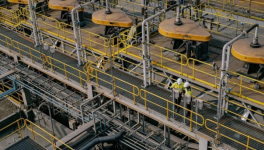
Bauxite is the primary raw material for aluminum production. The ore is processed into alumina through the Bayer process, after which the alumina is smelted into aluminum.
Aluminum is subsequently processed and utilized across various sectors, including aviation, defense, electricity, transportation, electronics, electric vehicles, and infrastructure.
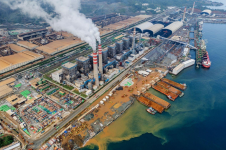
This is the production chain currently being developed by PT Indonesia Asahan Aluminium (Persero), or INALUM, together with its holding group, MIND ID, in Mempawah, West Kalimantan. The development includes the Smelter Grade Alumina Refinery (SGAR) II and Aluminum Smelter II.
MIND ID President Director Maroef Sjamsoeddin said the project would strengthen domestic aluminum production capabilities and demonstrate Indonesia's increasing ability to reduce its dependence on aluminum imports.
"This project represents MIND ID Group's contribution to creating domestic added value, strengthening the economy, and reinforcing national sovereignty in the mineral sector for Indonesia's future civilization," Maroef said in a written statement quoted on Friday (October 9, 2026).
Meanwhile, INALUM President Director Melati Sarnita described the downstream processing of bauxite into aluminum as a strategic national agenda to strengthen Indonesia's industrial independence.
She expressed hope that Indonesia's target of achieving national aluminum self-sufficiency by 2030 could be realized.
"Accelerating the construction of aluminum smelters and alumina refineries is an effort to reduce import dependence, improve competitiveness, and establish an integrated aluminum supply chain from upstream to downstream that can generate economic growth for Indonesia," Melati said.
Built in the same area as SGAR I, which has an annual production capacity of one million tonnes of alumina, SGAR II will also have an annual production capacity of one million tonnes. The facility is managed by PT Borneo Alumina Indonesia (BAI), a joint venture between INALUM and PT ANTAM (Persero) Tbk.
Consequently, alumina production capacity within INALUM's ecosystem will increase to two million tonnes annually, consuming six million tonnes of bauxite ore per year. The ore will be supplied from ANTAM's mining concession areas in Mempawah and Landak regencies, West Kalimantan.
Meanwhile, electricity for the second aluminum smelter is planned to be supplied by a coal-fired power plant developed by PT Bukit Asam (Persero) Tbk.
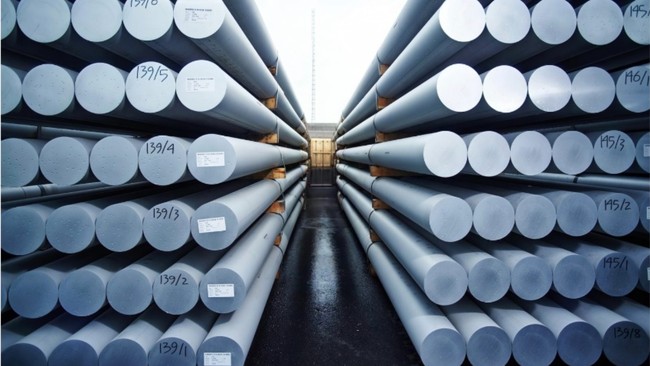
Aluminum Smelter II will have an annual production capacity of 600,000 tonnes, with its entire output prioritized to meet domestic aluminum demand. Combined with production from INALUM's existing smelter in Kuala Tanjung, Batu Bara Regency, INALUM's total aluminum production capacity will reach approximately 900,000 tonnes annually.
The construction and operation of these integrated aluminum processing and smelting facilities form part of a National Strategic Program, with a total investment exceeding Rp100 trillion, or more than US$6 billion.
The project plays a strategic role in strengthening raw material supply security for Indonesia's aluminum industry, reducing import dependence, and improving Indonesia's position in the global aluminum supply chain.
Furthermore, the project's multiplier effect is expected to significantly increase domestic economic output.
The project is estimated to increase Indonesia's gross domestic product (GDP) by approximately Rp71.8 trillion annually and generate additional state revenue of around Rp6.6 trillion per year.
The integrated facilities also have the potential to create approximately 65,000 direct and indirect jobs, covering construction, operational activities, and supporting sectors.
Melati emphasized that the development of bauxite processing, alumina refining, and aluminum smelting facilities in Mempawah demonstrates INALUM and MIND ID Group's commitment to accelerating sustainable mineral downstream processing in Indonesia.
"Through collaboration among domestic corporations, government policy support, and the strengthening of upstream-to-downstream supply chains, INALUM is optimistic that the development of a self-sufficient and globally competitive national aluminum ecosystem that generates added value for Indonesia's economy can be realized over the long term," Melati concluded.
Furthermore, INALUM's efforts in bauxite downstream processing and the development of Indonesia's aluminum value chain have received recognition from S&P Global Ratings.
S&P Global Ratings assigned INALUM a 'BBB-' issuer credit rating with a Stable outlook, placing the company in the investment-grade category.
In its report published on September 7, 2026, S&P highlighted INALUM's position within MIND ID Group and government support through the state-owned mining holding company. S&P also considered INALUM's role in bauxite downstream processing and the development of Indonesia's aluminum value chain.
In addition to S&P's rating,
INALUM secured a corporate credit rating upgrade from idAA-/Stable to idAA/Stable (Double A; Stable Outlook) from Indonesian credit rating agency PT Pemeringkat Efek Indonesia (PEFINDO), covering the period from August 18, 2026, to July 1, 2027.
INALUM Finance Director Ramadi Ken Permana explained that the company maintains its credit ratings by consistently strengthening its financial fundamentals.
First, the company maintains financial discipline through a prudent capital structure, healthy liquidity, and a well-managed debt maturity profile.
Second, it ensures that expansion projects proceed according to schedule and budget, building on its track record of successfully completing SGAR I.
Third, the company diversifies its funding sources and strengthens strategic partnerships while maintaining collaboration within MIND ID Group.
Fourth, it implements sound corporate governance and sustainability practices while maintaining transparent and regular communication with investors, credit rating agencies, and all stakeholders.
"With these foundations, we are committed to maintaining the trust of investors, financial institutions, and stakeholders on a sustainable basis," Ken Permana concluded.
Indonesia memulai hilirisasi sumber daya mineral untuk memperkuat industri nasional. Proyek aluminium INALUM diharapkan kurangi ketergantungan impor

www.cnbcindonesia.com