MNZGamerX
Registered Member

Bangladesh successfully changed its rulers two years ago, but the historic task of changing the system itself remains unfinished.
By Shafi Md Mostofa
July 19, 2026
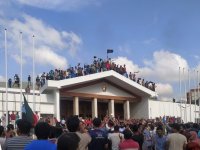
On July 4, Bangladesh’s Prime Minister Tarique Rahman joined the July National Conference-2026, organized to mark the second anniversary of the July revolutionary mobilization. “The conference is being held in remembrance of the bloody July Revolution. The program is dedicated to the martyrs,” Rahman’s additional press secretary Atikur Rahman Rumon said.
The July Revolution ended the 15-year authoritarian rule of Sheikh Hasina. This was a 36-day-long mass protest, which initially ignited over civil service quota reforms and then rapidly transformed into a nationwide revolutionary movement that culminated in Hasina’s ouster from power on August 5, 2024. She fled to India that day. Several ministers, parliamentarians, police officers, high court justices, bureaucrats, military officers, university teachers and central mosque imams (clerics) either fled abroad or went into hiding in Bangladesh.
In the 24 months since the July Revolution, Bangladesh has gone through immense turmoil due to institutional transitions and mob violence.
Nobel laureate Muhammad Yunus took charge as head of an interim government. On February 12 this year, a general election was held, which brought the Bangladesh Nationalist Party (BNP) under the leadership of Rahman to power. Bangladesh’s largest Islamist party, the Jamaat-e-Islami, is the main opposition party.
When the BNP came to power, it refused to take the oath of office as members of the Constitution Reform Council, thereby declining to give effect to the results of the February 2026 referendum. The referendum was about the approval of the July National Charter. Nearly 68% voted “Yes,” giving a political mandate to restructure governance and authorizing parliament to act as a constituent assembly to enact reforms.
In doing so, it rejected the referendum’s “yes” vote and the aspirations of the July protestors calling for radical political changes.
The aspirations of the July Revolution were documented in the July National Charter of 2025, where all political parties, including the BNP, agreed on several principles of state reformation such as limiting the prime minister’s tenure to 10 years, maintaining the independence of the Judiciary and Election Commission, protection of human rights, and establishing a 100-member Upper House.
Mahfuj Alam, the then information adviser and student leader in the July protests, said that “the July Declaration represents the vision and aspirations of the July uprising and stands as a documentary proof of the historic movement.” “It’s a great day. It’s the beginning of New Bangladesh,” Yunus said.
After signing the July National Charter on October 17, 2025, Jamaat-e-Islami called for holding the referendum before the national election. Its rationale was that issues of constitutional reformation should not be left to the agendas or preferences of individual political parties. However, the Jamaat’s sequence did not materialize.
Following the election, the BNP and the Jamaat-led alliance diverged in their approaches to reforms, each pursuing distinct paths. The Jamaat and the student-led National Citizen Party (NCP) wanted immediate implementation of the referendum, while the BNP wanted to slow down the process.
A BNP intellectual told The Diplomat that his party “wants to bring changes to the constitution as per the BNP’s 31-point outline, which has many similarities with the July National Charter.“ However, the party “does not want to make changes to the constitution the way NCP and Jamaat suggest.”
Home Minister Salahuddin Ahmed, who was the BNP’s point person to discuss the July National Charter with the interim government, told parliament that the July National Charter Implementation Order was an “illegal order.” The BNP had refrained from speaking out on its concerns at that time “for the sake of elections,” he said. He admitted that the BNP “compromised on many issues and signed the charter so that elections would not be obstructed under the pretext of reform.”
Therefore, the BNP maintained a political ambiguity about the July reforms and referendum, which led critics to point out that the party had chosen political conservatism at a time of radical political changes. Only time will tell whether BNP chooses the right path or a very narrow path to liberal democracy.
I was present at a recent discussion at Dhaka University organized by the Jatiya Chatra Shakti, the student wing of the NCP, where Nahid Islam and other student leaders were present. Describing the July Revolution as “a half revolution,” they promised to bring in all the changes the student protestors wanted. The auditorium was full of youth energy, an anti-fascist vibe, and aspirations to bring radical changes to the state structure. Many blamed the BNP for acting as a barrier to the fulfilment of the complete revolution.
The NCP, despite being in the parliamentary opposition alongside Jamaat-e-Islami, still holds street power and moral authority. They will not easily allow the July National Charter to be permanently shelved or neutralized by the ruling elites. The July Revolution was a rejection of the idea that an election victory translates into absolute and unchecked power. If the new BNP government uses its two-thirds majority to nullify the spirit of the July National Charter, it risks alienating the very demographic that made its return to power possible.
Interestingly, the BNP, Jamaat and NCP are on the same page on Hasina’s return to Bangladesh. Akhter Hossen, the member secretary of the NCP, called for the return of the “fallen autocrat” Sheikh Hasina and all those involved in genocide and crimes against humanity during the July 2024 mass uprising so that their punishment could be enforced without delay. Home Minister Ahmed said that the fate of the Awami League will be decided “through a completely legal and judicial process” rather than by executive action. “Wherever Sheikh Hasina surrenders, whether in India or Bangladesh, she will have to go to jail first,” said Shama Obayed, the state minister for foreign affairs
The Jamaat continues to demand the trial of the Awami League and describes Hasina’s return to Bangladesh as an “underlying mystery and conspiracy.”
Their positions on Hasina and the Awami League are the only point of convergence among Bangladesh’s main parties.
Hasina recently told Reuters that she and other senior Awami League leaders will return from India to Bangladesh by December. This could force a tactical alliance among the BNP, NCP, and Jamaat. This would shift the focus of their politics from reform to security.
Bangladesh has successfully changed its rulers, but the historic task of changing the system itself remains unfinished two years after the July Revolution.
By Shafi Md Mostofa
July 19, 2026
On July 4, Bangladesh’s Prime Minister Tarique Rahman joined the July National Conference-2026, organized to mark the second anniversary of the July revolutionary mobilization. “The conference is being held in remembrance of the bloody July Revolution. The program is dedicated to the martyrs,” Rahman’s additional press secretary Atikur Rahman Rumon said.
The July Revolution ended the 15-year authoritarian rule of Sheikh Hasina. This was a 36-day-long mass protest, which initially ignited over civil service quota reforms and then rapidly transformed into a nationwide revolutionary movement that culminated in Hasina’s ouster from power on August 5, 2024. She fled to India that day. Several ministers, parliamentarians, police officers, high court justices, bureaucrats, military officers, university teachers and central mosque imams (clerics) either fled abroad or went into hiding in Bangladesh.
In the 24 months since the July Revolution, Bangladesh has gone through immense turmoil due to institutional transitions and mob violence.
Nobel laureate Muhammad Yunus took charge as head of an interim government. On February 12 this year, a general election was held, which brought the Bangladesh Nationalist Party (BNP) under the leadership of Rahman to power. Bangladesh’s largest Islamist party, the Jamaat-e-Islami, is the main opposition party.
When the BNP came to power, it refused to take the oath of office as members of the Constitution Reform Council, thereby declining to give effect to the results of the February 2026 referendum. The referendum was about the approval of the July National Charter. Nearly 68% voted “Yes,” giving a political mandate to restructure governance and authorizing parliament to act as a constituent assembly to enact reforms.
In doing so, it rejected the referendum’s “yes” vote and the aspirations of the July protestors calling for radical political changes.
The aspirations of the July Revolution were documented in the July National Charter of 2025, where all political parties, including the BNP, agreed on several principles of state reformation such as limiting the prime minister’s tenure to 10 years, maintaining the independence of the Judiciary and Election Commission, protection of human rights, and establishing a 100-member Upper House.
Mahfuj Alam, the then information adviser and student leader in the July protests, said that “the July Declaration represents the vision and aspirations of the July uprising and stands as a documentary proof of the historic movement.” “It’s a great day. It’s the beginning of New Bangladesh,” Yunus said.
After signing the July National Charter on October 17, 2025, Jamaat-e-Islami called for holding the referendum before the national election. Its rationale was that issues of constitutional reformation should not be left to the agendas or preferences of individual political parties. However, the Jamaat’s sequence did not materialize.
Following the election, the BNP and the Jamaat-led alliance diverged in their approaches to reforms, each pursuing distinct paths. The Jamaat and the student-led National Citizen Party (NCP) wanted immediate implementation of the referendum, while the BNP wanted to slow down the process.
A BNP intellectual told The Diplomat that his party “wants to bring changes to the constitution as per the BNP’s 31-point outline, which has many similarities with the July National Charter.“ However, the party “does not want to make changes to the constitution the way NCP and Jamaat suggest.”
Home Minister Salahuddin Ahmed, who was the BNP’s point person to discuss the July National Charter with the interim government, told parliament that the July National Charter Implementation Order was an “illegal order.” The BNP had refrained from speaking out on its concerns at that time “for the sake of elections,” he said. He admitted that the BNP “compromised on many issues and signed the charter so that elections would not be obstructed under the pretext of reform.”
Therefore, the BNP maintained a political ambiguity about the July reforms and referendum, which led critics to point out that the party had chosen political conservatism at a time of radical political changes. Only time will tell whether BNP chooses the right path or a very narrow path to liberal democracy.
I was present at a recent discussion at Dhaka University organized by the Jatiya Chatra Shakti, the student wing of the NCP, where Nahid Islam and other student leaders were present. Describing the July Revolution as “a half revolution,” they promised to bring in all the changes the student protestors wanted. The auditorium was full of youth energy, an anti-fascist vibe, and aspirations to bring radical changes to the state structure. Many blamed the BNP for acting as a barrier to the fulfilment of the complete revolution.
The NCP, despite being in the parliamentary opposition alongside Jamaat-e-Islami, still holds street power and moral authority. They will not easily allow the July National Charter to be permanently shelved or neutralized by the ruling elites. The July Revolution was a rejection of the idea that an election victory translates into absolute and unchecked power. If the new BNP government uses its two-thirds majority to nullify the spirit of the July National Charter, it risks alienating the very demographic that made its return to power possible.
Interestingly, the BNP, Jamaat and NCP are on the same page on Hasina’s return to Bangladesh. Akhter Hossen, the member secretary of the NCP, called for the return of the “fallen autocrat” Sheikh Hasina and all those involved in genocide and crimes against humanity during the July 2024 mass uprising so that their punishment could be enforced without delay. Home Minister Ahmed said that the fate of the Awami League will be decided “through a completely legal and judicial process” rather than by executive action. “Wherever Sheikh Hasina surrenders, whether in India or Bangladesh, she will have to go to jail first,” said Shama Obayed, the state minister for foreign affairs
The Jamaat continues to demand the trial of the Awami League and describes Hasina’s return to Bangladesh as an “underlying mystery and conspiracy.”
Their positions on Hasina and the Awami League are the only point of convergence among Bangladesh’s main parties.
Hasina recently told Reuters that she and other senior Awami League leaders will return from India to Bangladesh by December. This could force a tactical alliance among the BNP, NCP, and Jamaat. This would shift the focus of their politics from reform to security.
Bangladesh has successfully changed its rulers, but the historic task of changing the system itself remains unfinished two years after the July Revolution.