“Can’t Wait to Fast‑Forward to September 3”: Chinese Netizens Rally Around Upcoming Military Parade】
The phrase that has been lighting up Chinese social media for weeks – “想快进到9月3日看阅兵,” loosely rendered in English as “Can’t wait to fast‑forward to September 3rd to watch the military parade” – has become a shorthand for a wave of patriotic fervor that is sweeping the nation. While the line itself is a simple expression of excitement, the sentiment behind it offers a window into how China’s citizens, officials and state media are framing a forthcoming display of military power, historical memory and national identity.
21 August 2025
Weibo
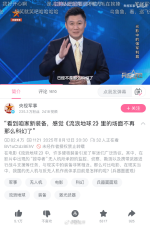
The hashtag #想快进到9月3日看阅兵# first trended on Weibo in early August, drawing tens of thousands of posts that ranged from squealing anticipation to earnest speculation about the equipment that will roll across Tiananmen Square. Users peppered their comments with vivid descriptors – “中国排面一步一个大写的帅” (China’s formation looks impossibly impressive) and “热血沸腾” (blood boiling with excitement) – underscoring how the prospect of a September 3rd parade has captured the public imagination.
The date is not arbitrary. September 3rd marks the anniversary of China’s victory in the War of Resistance against Japanese Aggression, a cornerstone of the nation’s collective memory. The most recent large‑scale celebration of that moment occurred in 2015, when the People’s Liberation Army (PLA) staged a grand parade in Tiananmen Square to mark the 70th anniversary of the end of World War II. More than 12,000 uniformed troops, 56 senior generals – the first time senior officers led formations in a People’s Republic parade – and a host of historic veterans and children of martyrs marched beneath the gaze of President Xi Jinping, who inspected the troops as General Secretary of the Communist Party, President of the People’s Republic and Chairman of the Central Military Commission. The event was attended by foreign dignitaries, including South Korean President Park Geun‑hye, and observed by delegations from 31 countries, underscoring the parade’s diplomatic as well as domestic significance.

Now, a new parade is being teased for September 3rd, 2025, which would coincide with the 80th anniversary of the same victory. The “fast‑forward” sentiment therefore reflects both a longing to relive the emotional resonance of 2015 and a curiosity about how the PLA will showcase its evolution over the intervening decade. State media, particularly CCTV News, has been feeding the buzz with footage of troops rehearsing in crisp, synchronized steps, the clang of rifles, and the resonant strains of a combined military band. The upcoming ensemble is planned to have 14 ranks – a symbolic nod to the 14 years of the Anti‑Japanese War – while an eight‑dozen‑strong honor guard will lead the march, representing the 80 years since the historic victory.
Beyond the pageantry, the spectacle serves several intertwined purposes. On the societal level, the parade is a collective ritual that reinforces national pride and a shared historical consciousness. The involvement of veterans, “support models” and the children of martyrs signals a bridge between past sacrifice and present strength, allowing the public to feel a direct, emotional link to the nation’s wartime narrative. The social media conversation reflects this, with users describing how the music of the military band and the sight of battle flags moved them to tears, a testament to the deep-seated reverence for the sacrifices of earlier generations.
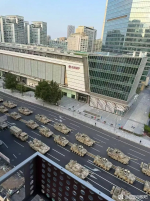
Politically, the event is a calculated projection of power. Analysts on Chinese platforms have already dissected the likely display of “杀手锏装备” – so‑called “trump‑card” weapons such as new‑generation main battle tanks, advanced missile systems and, potentially, unmanned aerial or ground platforms. Commentary has linked these reveals to broader strategic narratives, notably the emphasis on “联合” (joint operations) and “多域精确作战” (Multi‑Domain Precision Warfare). The PLA’s shift toward integrated, cross‑service combat capabilities signals to both domestic audiences and foreign observers that China is modernizing its force structure in line with the demands of a high‑technology battlefield.
The timing of the parade also carries geopolitical weight. Discussions on Weibo have noted that the show of force could influence U.S. calculations in the Taiwan Strait, with some users suggesting that the “priority deterrence” strategies Washington employs elsewhere may not be sufficient to counter a China that can now demonstrate advanced joint capabilities in a public forum. While such speculation is inevitably colored by nationalist optimism, it underscores the dual role of military displays: bolstering internal legitimacy while sending a signal to the international community.
The organizational machinery behind the event mirrors the narrative it seeks to convey. The Central Committee of the Communist Party and the Central Military Commission are the principal architects, with Deputy Director Wu Zekuan of the Joint Staff Department’s Operations Bureau publicly outlining the parade’s structure and objectives. Their emphasis on cultivating a “joint (operations) culture” indicates a doctrinal shift that goes beyond spectacle, embedding the idea of seamless coordination across land, sea, air and cyber domains into the public consciousness.
Even the numbers have been choreographed for symbolic impact. The 14‑ranked band, the 80‑member honor guard, and the precise alignment of troops echo the anniversaries they commemorate. These details are not lost on the online audience, who delight in decoding the layers of meaning behind each formation.
The public’s enthusiasm, however, is not purely earnest. A lighter strand of commentary has emerged, with some users joking about already looking forward to a “2049 parade,” hinting at a long‑term vision of perpetual commemoration. This blend of solemnity and humor reflects a broader cultural trend in which national milestones become both a source of pride and a touchstone for community interaction.
In short, the surge of “I wish I could fast‑forward to September 3rd” messages on Chinese platforms is more than a meme; it is an indicator of how a nation prepares to celebrate its past while showcasing its present capabilities and future aspirations. As the date draws nearer, the rehearsal footage, the symbolic numbers and the curated narratives will coalesce into a grand tableau that seeks to reaffirm the Chinese people’s belief in their country’s historical destiny and its modern military prowess. Whether the parade will live up to the sky‑high expectations of a nation eager to “fast‑forward” through time remains to be seen, but the fervor behind the phrase alone tells a compelling story of patriotism, memory and strategic intent.