2025 China Victory Day Parade

JL-3: Marking a New Height in the Advancement of China's Strategic Nuclear Forces

The Chinese Navy publicly showcased the JL-3 submarine-launched ballistic missile for the first time during a military parade, a moment that signifies a new phase in the of China's strategic weapons. As the successor to the JL-2, the JL-3 boasts comprehensive improvements in range, survivability, and payload performance, and is regarded as the pinnacle achievement of China's strategic missile research and development over the past two decades.

The JL-3 is estimated to have a range of between 9,000 and 12,000 kilometers, enabling nuclear submarines operating in the deep waters of the South China Sea to directly strike nearly all targets on the U.S. mainland, far exceeding the interception range of most Western anti-submarine platforms. In the future, it will be equipped on the active Type 094A nuclear submarines as well as the Type 096 strategic nuclear submarines currently under construction, providing China's sea-based nuclear forces with transoceanic strike capabilities.

The missile employs a solid-fuel engine and an improved guidance system, and is equipped with multiple independently targetable reentry vehicle (MIRV) technology, capable of penetrating missile defense systems and striking multiple targets simultaneously. Western analysts generally believe that each JL-3 can carry 3 to 5 nuclear warheads and can incorporate decoys and penetration aids, posing a direct challenge to the U.S. mainland's missile defense systems.

Unlike the JL-2, which was limited in range and could only function effectively within a regional scope, the debut of the JL-3 signifies that China has joined the ranks of true "triad" nuclear deterrent powers. It not only fills the strategic gap in sea-based nuclear strike capabilities but also positions China to begin competing on equal footing with the U.S. Trident II D5 and Russia's Bulava missiles in terms of capability

In fact, the JL-2 was larger than Bulava, only slightly smaller than the Trident II D5.

For Russia, the 8000 KM Bulava will be suffice to hit the US from the Arctic ocean.

For China, the 8000 KM JL-2 will not be enough to reach the eastern coast of the US.

The JL-3 has the same size as the JL-2, but with more powerful solid propellant and more MIRV warheads, and its range has been increased by 50% up to 12000 KM, and has surpassed the D5 missile with similar payload.

The JL-3 has also integrated with hypersonic maneuverability, and make its more difficult to be intercepted compared to other SLBMs.
 
To view this content we will need your consent to set third party cookies.
For more detailed information, see our cookies page.
 
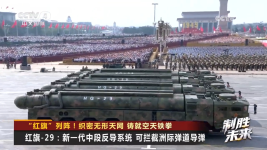
Official explanation:
HQ-29. It is a new-generation mid-course missile defense system capable of intercepting ICBMs.
1757402659277.png
 
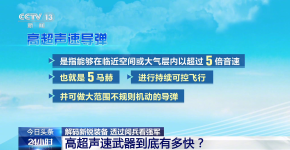
Chinese officials define a hypersonic missile as:

A missile capable of sustained, controlled flight in near-space or within the atmosphere at speeds exceeding Mach 5 and capable of performing large-scale, irregular maneuvers.

1757403055923.png
========================================
Special Notes:
1. in near-space or within the atmosphere
When the missile flies at a speed exceeding Mach 5, the ballistic altitude does not exceed 100 km.
2. sustained, controlled flight......capable of performing large-scale, irregular maneuvers.
It is controllable while flying at sustained speeds exceeding Mach 5 and is capable of performing a wide range of erratic maneuvers on command.
 
In fact, the JL-2 was larger than Bulava, only slightly smaller than the Trident II D5.

For Russia, the 8000 KM Bulava will be suffice to hit the US from the Arctic ocean.

For China, the 8000 KM JL-2 will not be enough to reach the eastern coast of the US.

The JL-3 has the same size as the JL-2, but with more powerful solid propellant and more MIRV warheads, and its range has been increased by 50% up to 12000 KM, and has surpassed the D5 missile with similar payload.

The JL-3 has also integrated with hypersonic maneuverability, and make its more difficult to be intercepted compared to other SLBMs.
Why not just sail to the western coast of the US and then launch JL-2 at the eastern coast.
 
Why not just sail to the western coast of the US and then launch JL-2 at the eastern coast.

China didn't have a strong naval power to escort its SSBNs when it did rely on the Type 094 + JL-2 as its sea-based nuclear deterrence which was a decade ago.
 
Xi Jinping didn't dye his hair, and he probably won't run in the 2027 election. Jiang Zemin and Hu Jintao also started to stop coloring their hair two years before their retirement.

China's next leader is likely to be Ding Xuexiang.
As Xi’s chief of staff and a very loyal cadre from Shanghai, you are probably right. With Ding in charge, Xi will ensures Xi Jinping thought continues by and large. The Shanghai group continues.
 
In fact, the JL-2 was larger than Bulava, only slightly smaller than the Trident II D5.

For Russia, the 8000 KM Bulava will be suffice to hit the US from the Arctic ocean.

For China, the 8000 KM JL-2 will not be enough to reach the eastern coast of the US.

The JL-3 has the same size as the JL-2, but with more powerful solid propellant and more MIRV warheads, and its range has been increased by 50% up to 12000 KM, and has surpassed the D5 missile with similar payload.

The JL-3 has also integrated with hypersonic maneuverability, and make its more difficult to be intercepted compared to other SLBMs.
If we consider the Bohai bay, as a Bastion, in the way the soviets did with the arctic, a 12,000 km missile could DC.

Does China look to employ a Bastion strategy or try to patrol in the open pacific? Beyond the first island chain?
 
China didn't have a strong naval power to escort its SSBNs when it did rely on the Type 094 + JL-2 as its sea-based nuclear deterrence which was a decade ago.
SSBN only needs some escort when it leaves the port and before it reaches the deep water. After that, if it still needs escort, it defeats the purpose of being a submarine.
 
If we consider the Bohai bay, as a Bastion, in the way the soviets did with the arctic, a 12,000 km missile could DC.

Does China look to employ a Bastion strategy or try to patrol in the open pacific? Beyond the first island chain?

Bohai is too shallow, and China's Type 094A and Type 096 mostly lurk in the South China Sea or western Pacific Ocean to launch its missiles.
 
SSBN only needs some escort when it leaves the port and before it reaches the deep water. After that, if it still needs escort, it defeats the purpose of being a submarine.

The Type 094 that carried the JL-2 did venture into the eastern Pacific Ocean, but right now the Type 094A and Type 096 that carried the JL-3 are now much more safe bet as China's naval nuclear deterrence.
 
Bohai is too shallow, and China's Type 094A and Type 096 mostly lurk in the South China Sea or western Pacific Ocean to launch its missiles.
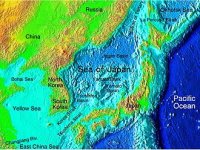
What about the Sea of Japan? Seems deep; would it be considered deep enough? Average depth is 1750 meters and therefore a port on the Tumen river (connected to the Bohai bay via a Canal) could be what China needs; to send subs into an relatively safe bastion China could flood with ASW ships to keep an eye out for hostile subs. It could also be a way for ships to quietly slip into the Sea of Okotosk and northern pacific.

1757551485482.jpeg
 
Interesting find, this guy works in Norinco

”I'd also like to mention that the new generation of armored platform fire control systems is quite impressive. The integrated intelligent algorithm can automatically assess the target threat level, distinguish between mobile targets and individual soldiers, such as armored vehicles, anti-tank gunners, armed soldiers, and unarmed civilians, and automatically select the type of ammunition and aim. After firing, it can compare the target's appearance at the time of aiming and automatically analyze and assess whether a second strike is necessary. The firepower response time is top-notch.”
 

Keep These LADIES Far, Far Away From Eric Swalwell​

To view this content we will need your consent to set third party cookies.
For more detailed information, see our cookies page.
 
Age-wise, what you say does exist as a possibility. But there is no precedent in China for moving from Premier to CCP General Secretary and President.

Because Because they are theoretically the highest positions at the same level, the CCP General Secretary manages the day-to-day work of the CCP, while the Premier manages the administrative work of the government. The powers of the two are mutually reinforcing and balanced.

Once an official has the power and seniority of both systems, the balance is upset.
Either way, as long as the succession is clear enough that the world knows there will be an immediate successor; on the day of Xi’s death.

Because there are those planning to get shady things done while Beijing is not looking.

To view this content we will need your consent to set third party cookies.
For more detailed information, see our cookies page.


@Beijingwalker
 

Users who are viewing this thread

Pakistan Defence Latest

Latest Posts

Back
Top