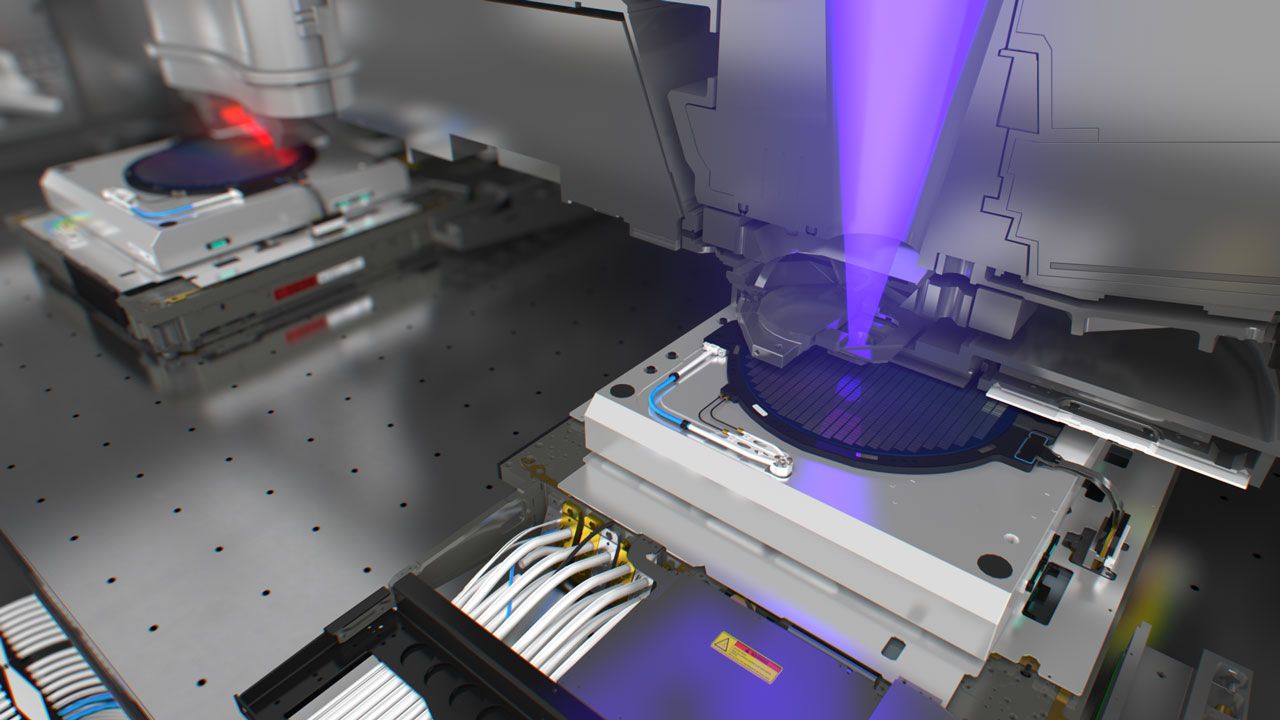
A Look Inside Huawei’s Phone Shows How China’s Chip Advance Has Stalled

China can’t even meet 7nm AI chip demand. It barely does so for Huawei smartphones, and SMICs 7nm is shit.

All China has is an EUV patent

Kirin 9020 has proven otherwise.

It has already maxed out the 7 nm capability with the performance exceeding the 5 nm, and close to the 3 nm.
 
In the tense geopolitical rivalry between China and the United States for control of advanced technology, Huawei is often in the middle.

The Chinese telecommunications giant is a main target of a U.S. trade blacklist and other controls intended to keep Chinese companies from buying or making advanced computer chips. Officials in Washington say these tiny chips, used to power chatbots and smartphones, are also essential for China’s efforts to build its military might.

Huawei is determined to prove that Washington’s trade barriers cannot hold it back. Last year, the company released a line of smartphones, the Mate 60, with chips more advanced than any previously made in China.

But Huawei’s new series of phones, the Mate 70, released last month, indicates that the company has made little progress toward more advanced chips in the past year, according to a new analysis. The chips inside Huawei’s latest devices appear to have been made using the same manufacturing processes as the ones in last year’s phones, said Alexandra Noguera, an analyst at TechInsights, a Canadian research firm.

Ms. Noguera and her colleagues examined the chips inside two models of the Mate 70 series and concluded that they were made by China’s top chipmaker, Semiconductor Manufacturing International Corporation, known as SMIC.

The analysts compared the chips with others made by SMIC, including those in Huawei’s breakthrough Mate 60 phone. “Every dimension fits exactly what we have seen for the past two years,” Ms. Noguera said.

That is not a surprise: SMIC is the only company in China that can make such chips. The finding is notable, however, because it suggests that U.S. restrictions are at least stalling the country’s advances in chip technology.

“The primary impact of the export controls has not been reversing China’s progress, it has been making it very difficult for SMIC to increase production capacity,” said Gregory C. Allen, a technology expert at the Center for Strategic and International Studies, a Washington think tank.

SMIC did not respond to a request for comment. Huawei declined to comment.

The Chinese government has made the manufacturing of computer chips and other advanced technology a major policy priority. China has poured billions of dollars into its chip industry, helping to fund a major expansion of factories.

SMIC, which has close ties to the government, has built factories at a blistering pace. It has grown into one of the largest contract chipmakers in the world, making products that are designed by its clients, including Huawei.

U.S. officials have progressively tightened restrictions to slow SMIC’s progress by limiting the kinds of chip-making tools it can buy from other countries. They have pushed Dutch and Japanese officials to stop their companies from supplying crucial machinery and equipment to SMIC’s most advanced factories.

That means SMIC depends on dated machinery. It is making even its most advanced chips using a manufacturing process that the world’s leading chipmaker, Taiwan Semiconductor Manufacturing Company, had perfected by 2018.

The latest Huawei devices do not contain more advanced chips because SMIC is probably unable to make them at a large enough scale, Ms. Noguera said.

“If they could, they would have,” she said.

Huawei’s devices are hugely popular in China. Its sales have grown faster than any other brand in China during the past year, according to Counterpoint Research, which analyzes the smartphone market.

But widespread commercial success for Huawei’s latest devices will depend in part on its ability to secure a steady supply of chips from SMIC.

And experts say SMIC is already pushing the limits of its outdated tools and factory processes to make enough chips for Huawei’s existing phones — a costly strategy that results in a high number of faulty chips.

In part to further slow SMIC’s advances, the Biden administration this month announced broader restrictions on advanced technology that can be sent to China. The updated rules add more than 100 Chinese companies, many of which make the tools and machinery needed to manufacture chips, to a restricted trade list.

Since the Mate 60 Pro was launched last year, Huawei has been eating into Apple’s yearslong dominance in China. In 2022, three-quarters of high-end smartphones sold in China were iPhones. This year, the portion was about half, as Huawei’s share more than doubled, according to Canalys, a market research firm.

“SMIC, like Huawei, has obviously suffered from U.S. restrictions,” said Dan Wang, a fellow at the Paul Tsai China Center at Yale Law School. “But what matters for Beijing is not its yield rate or profitability as much as whether it is able to deliver the technology that China needs.”
Another 15 more days and the CIA 1.6B ad. bonus close shops. Fart more, get more cuts....
 
Huawei is in effect dead outside of China and not even top 5 in smartphone sales anymore. It’s only alive due to government subsidies and Chinese nationalistic sentiment.
But why you said Huawei is dead couples of years ago and didn't say inside China or outside China, why you keep changing your words? you just want brazen out your lies again?
 
How is the US doing on bringing EUV tech onshore?
Seems strange to be relying on a Dutch company for such a critical tech.
 
The chinos keep ignoring that huawua gets CCP subsidies and would not exist on its own.

Similarly Apple market exists because Huawei - the main competitor, which would have ended the chapter of IOS phones together with Samsung, was banned.

Similarly American automobiles are surviving because US hit Chinese cars with 100% tariff otherwise it would have been the end of Tesla's hype, Rivian can become same as Fisker and become a thing of past. GMC & Ford already have so many issues with their electric cars. GM was bailed out by government, Stellantis is on the verge of bankruptcy, Ford facing 5 billion $ loss in EVs.

And how many people buy fords, chevys and crystlers outside of the US? Their market share outside of USA is also negligible. And are being kept alive by pseudo nationalism and government favors.

If you try to twist and fabricate facts, nothing would happen to the facts but you will live in a fools paradise. If China is such a looser country why US is so threatened by China? Why not there be free trade?
 
You’re an idiot if you think China will do something like this if it leaves them completely vulnerable. China most likely has plans to mass produce competitive or even superior chips it has already secretly developed if it is making such openly hostile moves against Nvidia.

You and your fellow little pinks are mega coping.

China can barely produce enough 7nm chips for Huawei’s smartphones , with only 50% yield, and nowhere near what it needs for its AI chips with 20% yield.

China has reached the limit of DUV technology, with no EUV machines in sight.
 
Kirin 9020 has proven otherwise.

It has already maxed out the 7 nm capability with the performance exceeding the 5 nm, and close to the 3 nm.

China hasn’t proven anything. China has hit the DUV wall, and it has no EUV machines to advance to the next stage of development.
 
Misleading as that figure most probably refers to the amount of chips that are 100% fine.

It is natural to have the majority of the chips in a die be defective and so some cores are disabled and sold as a cut down version.

This is what happens with US vendors like Nvidia where only a minority of chips are the "full" version and so most GPUs have to sold as a lower end chip with cores disabled due to defects. As an example RTX 4080S is the "full version" whereas the RTX 4070 Ti Super is the "binned" version with defects in the chip and so some of the cores are disabled and sold at lower cost.

China can’t mass produce 7nm A100 level AI chips.

Mass production of NVIDIAs 3nm Rubin architecture begins in 6-12 months.

The rest is cope
 
You and your fellow little pinks are mega coping.

China can barely produce enough 7nm chips for Huawei’s smartphones , with only 50% yield, and nowhere near what it needs for its AI chips with 20% yield.

China has reached the limit of DUV technology, with no EUV machines in sight.
China already has a EUV prototype in sight.


Once they get that down, it will be over for ASML.
 

Huawei EUV Scanner Patent Suggests Sub-7nm Chips for China​

News
By Anton Shilov
published 23 December 2022
Huawei files a patent application covering EUV scanners.
You do know that Patents are never peer reviewed. It means, there is no guarantee that a patent will work.
 
Patents are never peer reviewed or even require to be working. Only thing needed for patent is novalty. Patent means nothing here.

Most patents amount to nothing.

Bored housewives and crank loonies file patents for anti-gravity machines. Companies don't file frivolous patents. If a company files for a patent, they have spent serious resources researching the tech.
 
Bored housewives and crank loonies file patents for anti-gravity machines. Companies don't file frivolous patents. If a company files for a patent, they have spent serious resources researching the tech.
Actually this is false. Bored housewives do not file any patent because patenting is a rather expensive legal process for an individual. Its the companies that file most and a lot of frivolous patents.

As someone who holds 7 patents for my employer, I know their motivation to file patent is rather very different. Companies file patents to ensure other companies are not able to threaten them. Having patents allows one major thing: it allows you to cross license patents and negotiate a deal out of legal threat of stopping the introduction of your product.

This is why likes of IBM are such a prolific patent filing company. Patents are primarily a tool for negotiation. Their working or not working or how well they are working is not that important. What is important is that your so called invention is interpreted so broadly that you can threaten others about violation of your patents if they threaten you with IPR violations lawsuits.
 

Users who are viewing this thread

Latest Posts

Back
Top