ghazi52
THINK TANK: CONSULTANT


- Thread starter
- #16
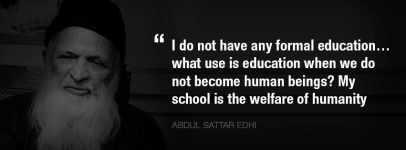
Abdul Sattar Edhi: The greatest humanitarian to have come out of Pakistan
Anis Shivani

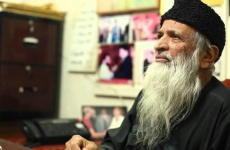
Photo by Tapu Javeri | White Star
Abdul Sattar Edhi is the Herald’s most influential Pakistani after Muhammed Ali Jinnah, topping a list also comprising three assassinated prime ministers, two military dictators, a poet, a performer, a human rights campaigner and a sports star-turned-philanthropist-turned politician. Below is an an excerpt from Edhi's profile in the Herald's August 2017 cover story, which features nine other profiles of notable leaders.
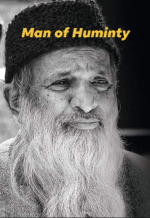
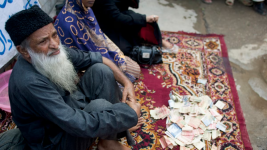
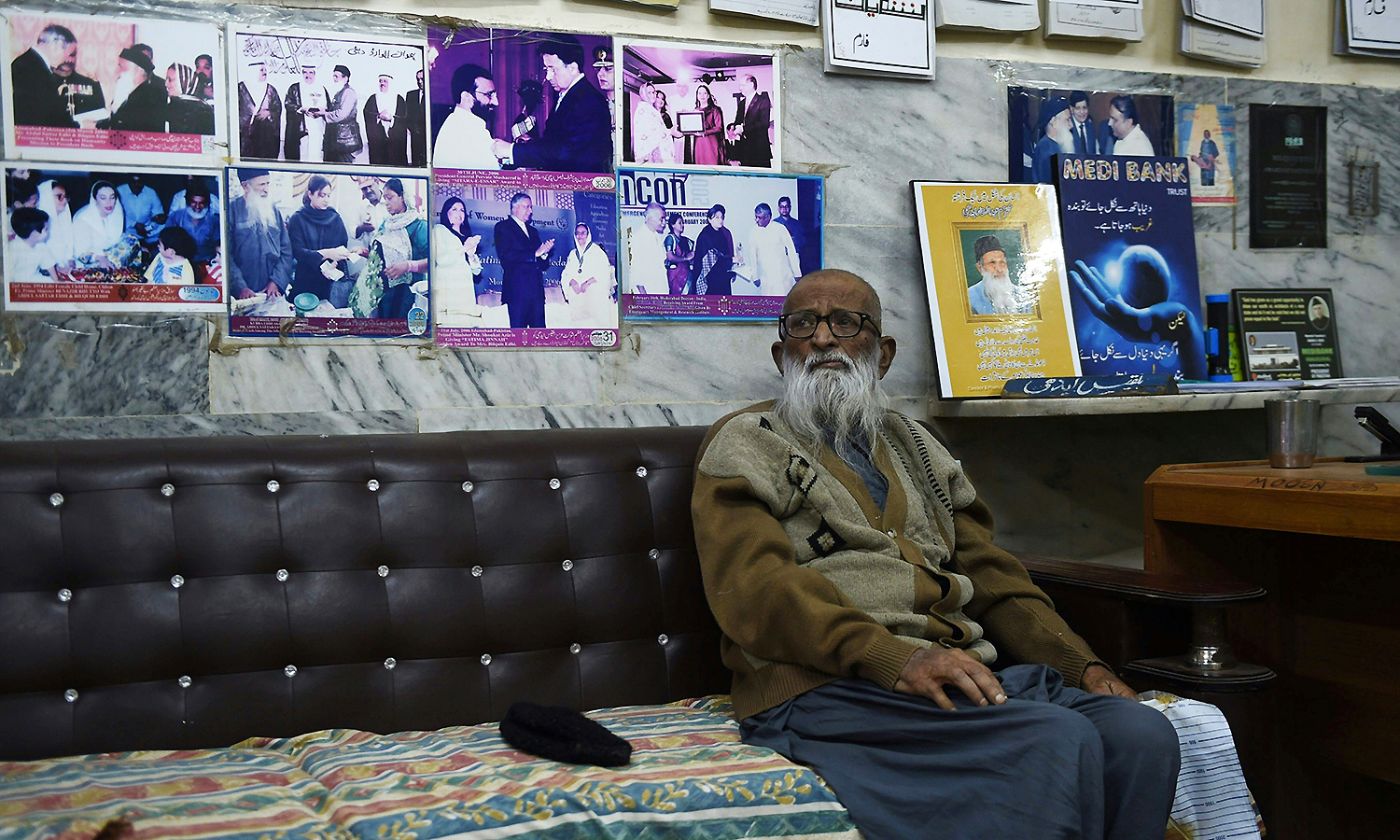
One of my earliest memories as a child is being taken by my father (along with my mother and sister) to Abdul Sattar Edhi’s clinic in Karachi’s Mithadar area where the great man himself was at the counter to receive our donation. If I remember correctly, he was dressed in his trademark plain dark clothes and had his Jinnah cap on, though his beard was darker.
There must have been some reason why this memory has stayed with me. When we were young, whenever there was money to give, he was the go-to guy, more trustworthy than anyone else. In later years, when I was no longer in Pakistan, I knew my parents unfailingly sent him money in place of sacrificing goats every Eidul Azha.
The Mithadar-Kharadar-Jodia Bazaar setting for Edhi’s headquarters seems apt. This almost medieval labyrinthine area near Karachi’s port, with narrow winding streets and congested paths (some steeply ascending from what I remember), is a stark rebuke to every modern method of conducting business — even philanthropy. If Edhi needed money, he would simply stand on the footpath and beg of passers-by who were likely to be closest to those he was actually helping in his healthcare facilities, orphanages — and, yes, morgues.
To rescue a foundling, a dying person or a hurt animal was for him as immediate as stepping on the street and gathering what was out there. Kharadar, where Edhi lived and breathed until the end (having moved there only days after Partition), stubbornly insists on not being complicit with the blindness of affluence — not always out of necessity but sometimes, as in the case of Edhi and others from his Memon community I have known who were beholden to radical simplicity, as a matter of choice.
The modern welfare state promises guardianship of the individual from cradle to grave in return for allegiance to the national creed. Consider Edhi’s unwavering attention to both the cradle and the grave, the origin and the end of life, from a different moral posture.
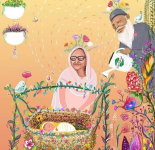
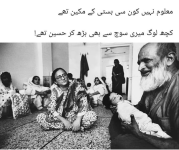
Think of the jhoolas (cradles) that famously stand outside his shelters where unwanted children can be dropped off, no questions asked — the idea being to demolish the distinction between legitimate and illegitimate when it comes to children or any form of sentience. Consider the number of corpses he must have washed and cared for during his long life.
This is a non-partisan outlook, not in the way of postmodern, New Age, neo-liberal distance from ideology but as a way to get us thinking about laying the foundations of civilisation again — block by block, starting from the beginning of life and moving to its very end. Though dedicated to Pakistan (his refusal to seek treatment for his terminal illness abroad was of a piece with his beliefs), his was a morality free of the puny understandings of nationalism that usually define official heroes.
Anis Shivani
Photo by Tapu Javeri | White Star
Abdul Sattar Edhi is the Herald’s most influential Pakistani after Muhammed Ali Jinnah, topping a list also comprising three assassinated prime ministers, two military dictators, a poet, a performer, a human rights campaigner and a sports star-turned-philanthropist-turned politician. Below is an an excerpt from Edhi's profile in the Herald's August 2017 cover story, which features nine other profiles of notable leaders.
One of my earliest memories as a child is being taken by my father (along with my mother and sister) to Abdul Sattar Edhi’s clinic in Karachi’s Mithadar area where the great man himself was at the counter to receive our donation. If I remember correctly, he was dressed in his trademark plain dark clothes and had his Jinnah cap on, though his beard was darker.
There must have been some reason why this memory has stayed with me. When we were young, whenever there was money to give, he was the go-to guy, more trustworthy than anyone else. In later years, when I was no longer in Pakistan, I knew my parents unfailingly sent him money in place of sacrificing goats every Eidul Azha.
The Mithadar-Kharadar-Jodia Bazaar setting for Edhi’s headquarters seems apt. This almost medieval labyrinthine area near Karachi’s port, with narrow winding streets and congested paths (some steeply ascending from what I remember), is a stark rebuke to every modern method of conducting business — even philanthropy. If Edhi needed money, he would simply stand on the footpath and beg of passers-by who were likely to be closest to those he was actually helping in his healthcare facilities, orphanages — and, yes, morgues.
To rescue a foundling, a dying person or a hurt animal was for him as immediate as stepping on the street and gathering what was out there. Kharadar, where Edhi lived and breathed until the end (having moved there only days after Partition), stubbornly insists on not being complicit with the blindness of affluence — not always out of necessity but sometimes, as in the case of Edhi and others from his Memon community I have known who were beholden to radical simplicity, as a matter of choice.
The modern welfare state promises guardianship of the individual from cradle to grave in return for allegiance to the national creed. Consider Edhi’s unwavering attention to both the cradle and the grave, the origin and the end of life, from a different moral posture.
Think of the jhoolas (cradles) that famously stand outside his shelters where unwanted children can be dropped off, no questions asked — the idea being to demolish the distinction between legitimate and illegitimate when it comes to children or any form of sentience. Consider the number of corpses he must have washed and cared for during his long life.
This is a non-partisan outlook, not in the way of postmodern, New Age, neo-liberal distance from ideology but as a way to get us thinking about laying the foundations of civilisation again — block by block, starting from the beginning of life and moving to its very end. Though dedicated to Pakistan (his refusal to seek treatment for his terminal illness abroad was of a piece with his beliefs), his was a morality free of the puny understandings of nationalism that usually define official heroes.