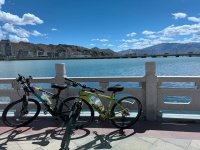
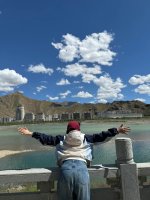
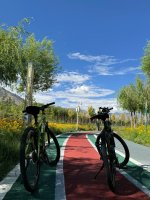
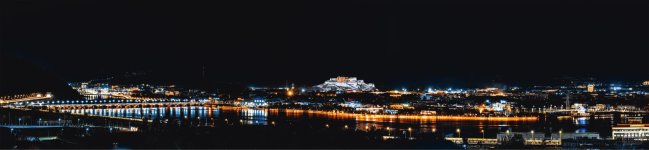
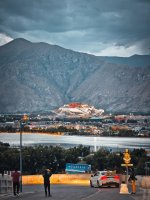
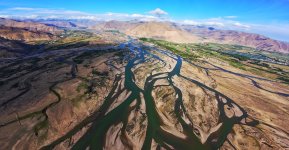
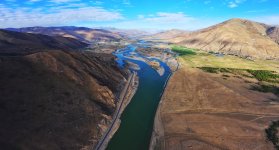
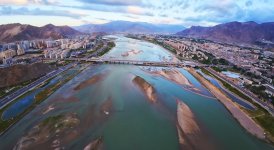
Aerial view of Lhasa River, Tibet - River close to the sky

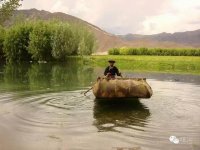
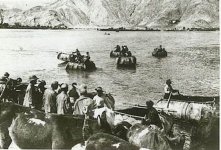
1987年6月的拉萨河
Lhasa River June 1987
No bridges over the river and people crossed the river with simple primitive yak skin rafts
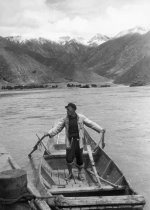
1987年6月的拉萨河
Lhasa River June 1987
No bridges over the river and people crossed the river with simple primitive yak skin rafts
记忆_1_小飛熊_来自小红书网页版.jpg

记忆_2_小飛熊_来自小红书网页版.jpg

调整大小 微信图片_20250504224942.png

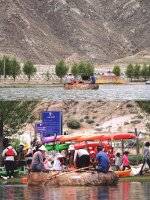
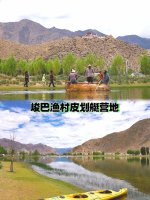
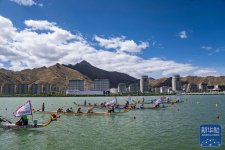
Now yak skin raft riding is a popular tourist program which locals and tourists pay to try and get a feel of what life was in Lhasa 20 years ago. How time changed in just two decades in Lhasa.
曲水游记.峻巴渔村皮划艇营地_9_寒绕地球_来自小红书网页版.jpg
曲水游记.峻巴渔村皮划艇营地_1_寒绕地球_来自小红书网页版.jpg
 
Dalai Lama, Indian and American media claim that China had turned Tibet into " Hell On Earth".

wei-xin-tu-pian_20250419182930-png.113108
 
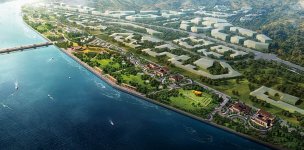
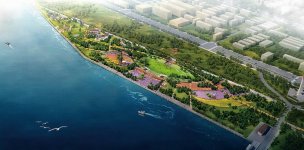
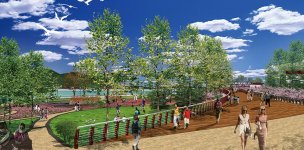
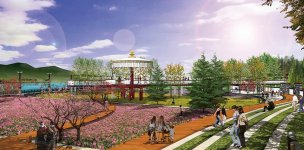
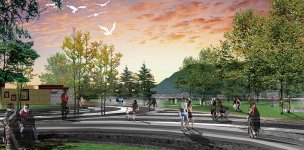
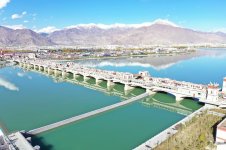
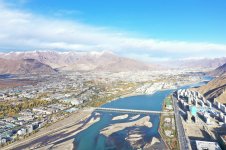
Lhasa River landscape renavation project, almost finished after 5 years construction.

LANDSCAPE RENOVATION PROJECT OF LHASA RIVER
Tibet, China

调整大小 1_20200628164335aa0b5.jpeg

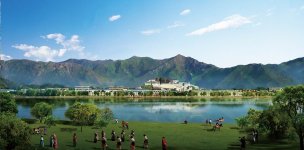
The Lhasa River is called "Jiqu" in Tibetan. It is located on the Qinghai-Tibet Plateau at an altitude of 3,600 meters and is one of the highest urban rivers in the world.

Lhasa River landscape construction starts from the Najin Bridge in the east and ends at the Xinlagong Highway Bridge in the west. It is located between the century-old embankment and the sub-embankment in the urban section of the Lhasa River. It has a total length of about 20 kilometers and a total area of about 400 hectares.

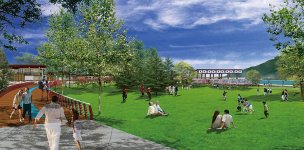
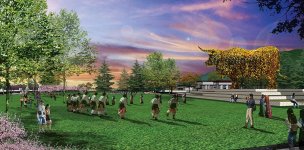
The "Xueyu Qiongdao" is connected to the Xianzu Island Bridge and is adjacent to the urban residential and commercial areas of Xianzu Island. It is built as a waterfront leisure and cultural park serving the citizens. At the same time, the area also provides a good urban interface for the Cijiaolin on the opposite bank. Therefore, in the landscape design, colorful structures and green planting spaces are used to form a continuous, layered, and ethnic cultural landscape interface. In combination with the traditional culture of Lhasa kites, an open lawn space is set up in the waterfront area, so that people can enjoy the pleasure brought by kites in the natural space by the Lhasa River.

The "holy land Fugu" faces the Snowy Qiongdao across the water, and is located on the Lhasa landscape axis centered on the Potala Palace. It is a sacred and peaceful place with Buddha's light shining everywhere. The land is connected to the Cijiaolin Cultural Tourism Resort in the south, and is an extension of the cultural tourism industry to the waterside. A water system is introduced into the area to form an inner lake. A large King Gesar sculpture square is set up in the center of the lake, and cultural performances are carried out using the surrounding venues and water surface. A cultural corridor that links the inside and outside is designed to cooperate with cultural displays and folk tradition displays.

"Jixuewotang" is located in the transition section between the ecological river channel of Lhasa River and the urban river channel. The overall landscape is dominated by natural ecology, and cultural landscape nodes such as traditional Tibetan villages, farmlands, Tibetan medicine gardens, Krabi water mills and Tibetan auspicious cloud pattern land art are arranged in between. It symbolizes the rich land nourished by the Lhasa River, which has grown a splendid Tibetan farming culture, and presents people with the original ecological and natural landscape characteristics of the plateau holy land.

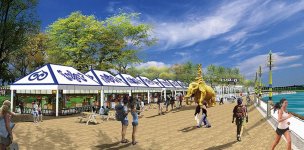
The "Jade Belt and Clear Rainbow" is adjacent to Liuwu New District and Liuwu Bridge, and is connected to Lhasa Railway Station through the urban landscape corridor. It is a window for tourists to experience Lhasa and the Lhasa River at the first time. In the planning and design of this area, the plateau yak culture is combined, and large-scale landscape structures are designed at the focal position of the urban landscape corridor to enhance the attractiveness of the river landscape. Tibetan tents, traditional textile craft streets, flower plantations and other nodes are designed, and cultural activities such as Tibetan opera, traditional songs and dances, and craft experiences are carried out to fully display the rich and colorful culture of the Tibetan people and form a vibrant rainbow on the green jade belt of the Lhasa River.

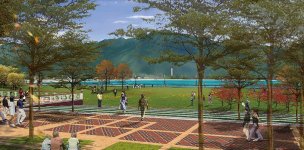
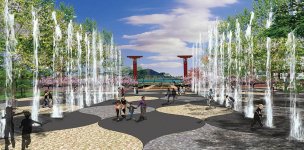
"Tibetan Shangpa" is connected to important city nodes such as the Potala Palace, Norbulingka, and Deji Road, directly showing the urban appearance and glorious cultural history of Lhasa. The overall landscape is dominated by open green space, combined with venues of appropriate scale, to provide conditions for traditional activities such as festival celebrations and visiting the linka. The auspicious square is built by the water, creating a quiet landscape atmosphere for people. Urban roads such as Deji Road extend to the river bank, and traditional commercial pedestrian streets are designed based on this. The fountain square landscape avenue is set up in the waterfront area to increase the possibility and safety of people's water activities.

"Highland New Art" is adjacent to the future urban commercial center. The overall planning focuses on the creation of commercial and leisure green space. The landscape design reflects the value of urban rivers in providing urban leisure space. A waterfront pedestrian landscape space is created on a more intimate scale. It focuses on traditional Tibetan art experience, and carries out leisure projects such as Tibetan opera performances, Tibetan cuisine, and handicraft production. It is closely connected to the opposite bank through a lock bridge and a dock, so that commercial plots and parks can be combined and work together to bring together more and richer cultural activities.
 
Lhasa River landscape renavation project, almost finished after 5 years construction.

LANDSCAPE RENOVATION PROJECT OF LHASA RIVER
Tibet, China

调整大小 1_20200628164335c8539.jpeg
调整大小 1_202006281643345b36b.jpeg调整大小 1_20200628164334fe62a.jpeg调整大小 1_202006281643358016c.jpeg
 
Lhasa River landscape renavation project, almost finished after 5 years construction.

LANDSCAPE RENOVATION PROJECT OF LHASA RIVER
Tibet, China
调整大小 1_2020062816433553ada.jpeg调整大小 1_2020062816433545eba.jpeg
 
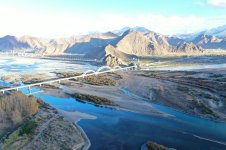
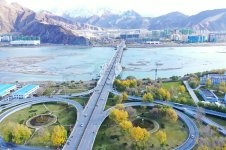
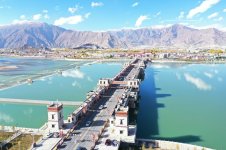
Some recently built bridges over the Lhasa River

W020201217676684986733.jpg
W020201217676685321578.jpg
W020201217676685209676.jpg
W020201217676685100144.jpg
W020201217676685575628.jpg
 
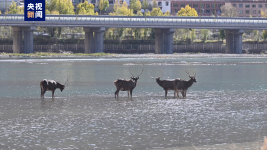
Class A protected animal White-lipped deers spotted at the Lhasa River in urban Lhasa City
White-lipped deer are under the first-class state protection in China

20221019232559084.png
 
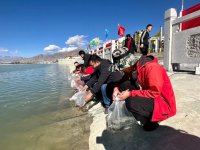
Locals release fish into the Lhasa River, in Tibetan Buddism, setting free capture animals would bring good karma.

4527-64b7c405eca83c9ed5b7c5d26b56431b.jpg
 
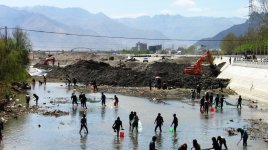
Famous Historic photo from 2013

In 2013, at the start of The Lhasa River landscape construction , the river was temporarily diverted for the construction , Many Lhasa locals hurried down to the drying river bed to try to save as many fish as they could.

008.jpg
 

Users who are viewing this thread

Latest Posts

Back
Top