Afghanistan: General News and Discussion

Taliban leader urges opponents to accept his rule, return to Afghanistan​


by The Frontier Post

Hibat-1024x576-1-810x456.jpg


KABUL (Amu tv): Hibatullah Akhundzada, the Taliban’s supreme leader, used his Eid al-Adha sermon on Wednesday to call on political and military opponents to abandon their resistance, return to Afghanistan and accept Taliban rule.

Speaking for about 50 minutes at Kandahar’s grand mosque, Akhundzada devoted much of his remarks to the importance of obedience to Taliban leadership, arguing that unity among Muslims depends on loyalty to a single ruler.

“Lay down your weapons. We have no issue with you,” Akhundzada said. “We forgave you before and we forgive you now. Come back. This is your country, your land and your system.”

His appeal appeared aimed at former government officials, exiled political figures and armed opposition groups that continue to reject Taliban rule nearly five years after the movement returned to power.

Akhundzada warned against political divisions and said disagreements could threaten the country’s stability. He argued that Muslims are religiously obligated to obey a ruler and said unity would be impossible without a recognized leader.

“It is obligatory for Muslims to have an emir,” he said. “If a person dies without being in obedience to the emir, his death is a death of ignorance.”

The Taliban leader has repeatedly emphasized loyalty to his authority since the Taliban’s return to power in August 2021. During that period, he has issued dozens of decrees that have reshaped Afghanistan’s society, including measures that have severely restricted the rights of women and girls.
 
To view this content we will need your consent to set third party cookies.
For more detailed information, see our cookies page.
 

Afghanistan ranked among least peaceful countries​


The Frontier Post

Untitled-10-810x486.jpg


KABUL (Ariana News): Afghanistan has been ranked as the seventh least peaceful country in the world in the 2026 Global Peace Index (GPI), remaining near the bottom of the global ranking that measures levels of peace, security, conflict, and militarization across 163 countries and territories.

The annual report, released by the Institute for Economics and Peace, placed Afghanistan 157th out of 163 countries. Only South Sudan, Israel, Ukraine, the Democratic Republic of the Congo, Sudan, and Russia ranked lower.

According to the report, Afghanistan’s overall peace score deteriorated by 0.5 percent over the past year, despite modest improvements in several areas. The country recorded a 1.5 percent improvement in safety and security indicators, while political instability improved by 10 percent.

The report attributed these gains largely to the Islamic Emirate’s consolidation of control over political institutions and security structures, as well as a decline in organized opposition activity. However, it cautioned that the concentration of power, political restrictions, and Afghanistan’s ongoing international isolation could pose challenges to long-term stability.

At the same time, the index recorded a 1.9 percent deterioration in Afghanistan’s ongoing conflict score. Deaths linked to external conflicts increased by 19.2 percent, a trend the report associated with clashes and rising tensions between Afghanistan and Pakistan.

The findings also showed that Afghanistan remains the least peaceful country in South Asia.
 

Afghan govt staff abandon smartphones​


AFP
June 18, 2026

tribune


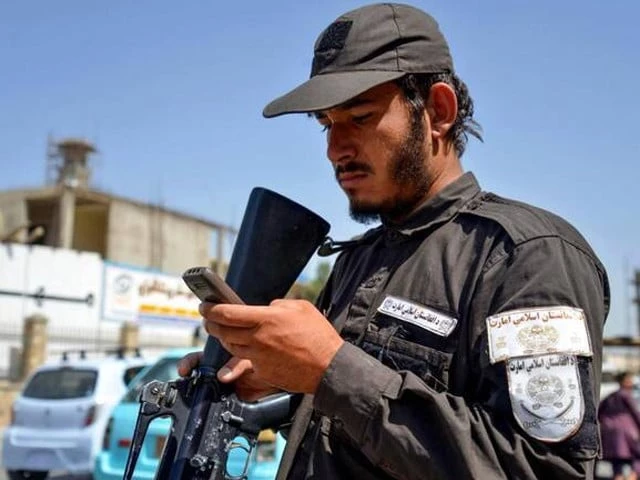
KABUL: Government workers in different parts of Afghanistan have started switching off their smartphones, following an order imposed Wednesday that they told AFP came from Supreme Leader Hibatullah Akhundzada.

A letter announcing the ban on smartphones for all government employees started circulating on social media last week under the emblem of the Supreme Court, which has not responded to AFP’s requests to comment.

“All the heads of departments in their respective provinces are advised to inform their staff, higher-ranking or lower-ranking, that using smartphones is strictly banned effective 17 June,” said the letter.

It referred to all employees of the military and civilian departments, mentioning that exemptions could only be granted by the supreme leader.

As of Wednesday afternoon, multiple central government departments were still publishing information through their WhatsApp groups.

Two spokesmen for the Afghan government did not respond to AFP’s requests to comment on the decision.

In Ghazni province, located between the capital Kabul and the seat of the supreme leader, Kandahar, government employees started signing off from their smartphones on Tuesday evening.
 

Users who are viewing this thread

Pakistan Defence Latest

Back
Top