
Hamartia Antidote
Elite Member


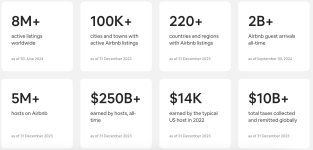
About us - Airbnb Newsroom
Airbnb Press Room is a home for news and announcements from Airbnb, a global community of hosts and travelers.
 news.airbnb.com
Follow along with the video below to see how to install our site as a web app on your home screen.
Note: This feature may not be available in some browsers.
news.airbnb.com

 hbr.org
Research: When Airbnb Listings in a City Increase, So Do Rent Prices
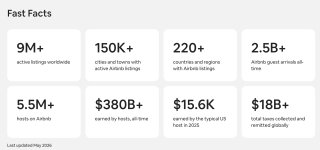
Airbnb has listings for millions of properties around the world, but what does its popularity mean for the cities it operates in? According to a new study, it leads to an increase in rents. The authors examined zip code–level data on rent prices and demographic data across the U.S. Controlling...
a 1% increase in Airbnb listings is causally associated with a 0.018% increase in rental rates and a 0.026% increase in house prices. While these effects may seem very small, consider that Airbnb’s year-over-year average growth is about 44%.
This means that, in aggregate, the growth in home-sharing through Airbnb contributes to about one-fifth of the average annual increase in U.S. rents and about one-seventh of the average annual increase in U.S. housing prices
It obviously is logical that every unit removed from the long term rental pool is simply going to lessen the number of available units leading to more competition and thus higher rental rates.
However you can also claim that there must either be a hotel room shortage or serious hotel price gouging occurring in these areas if Airbnb's are becoming so popular that it is actually affecting local rental rates.
For instance this past July I wanted to book a hotel room in the Big Island of Hawaii for 12 days and the room rates were approaching $400/night for anything half-decent. Meanwhile you could get an Airbnb full-condo unit with a pool for $150/night that was more than passable.
That adds up quick.
If anything you can claim Airbnb increases tourism.
The problem is that the difference between hotel rates and residential rental rates is likely to be highest in the poorest regions.
I don't know if there have been studies whether Airbnb improves tourism or simply chases it.
 www.wbur.org
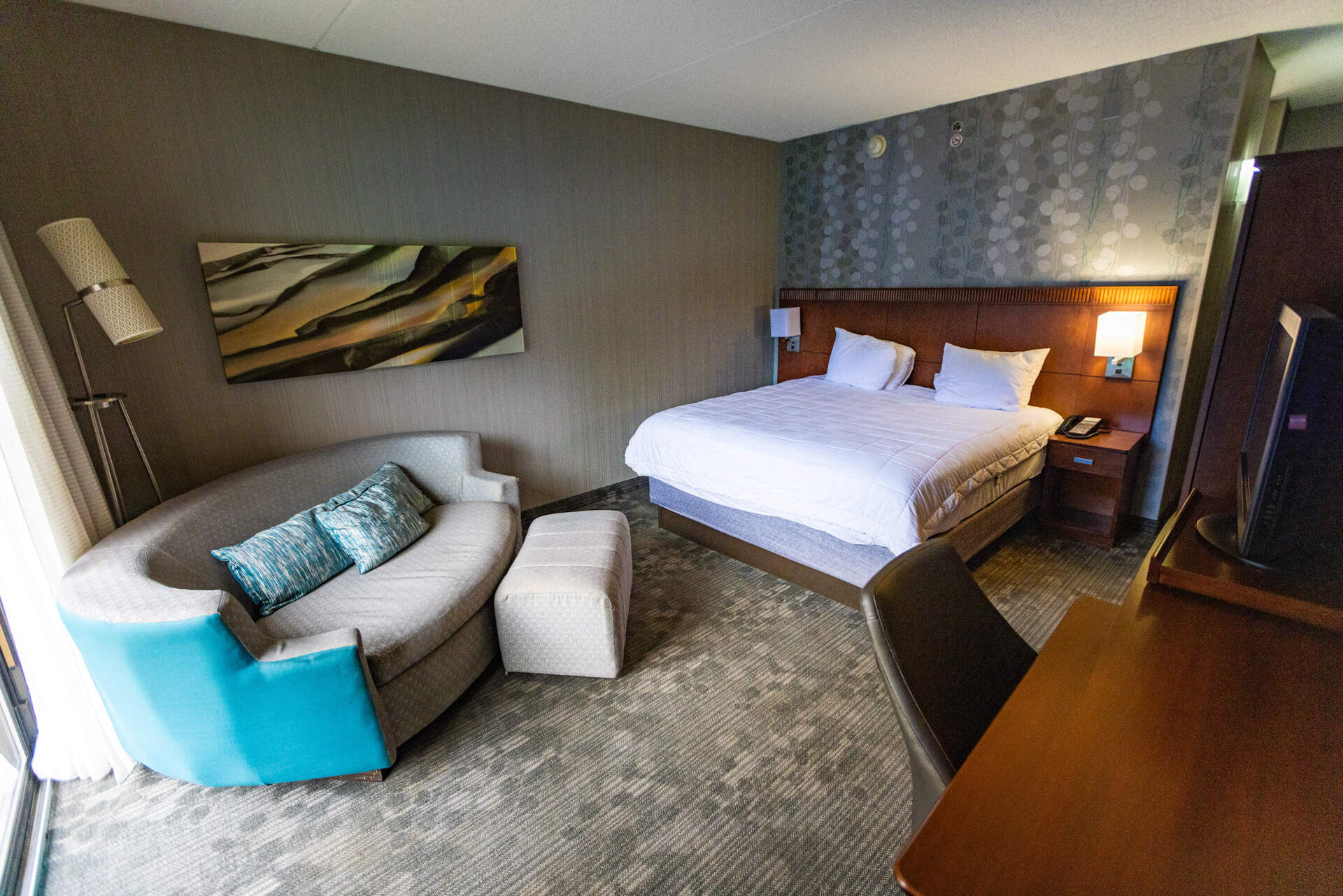
Well are you saying tourists like to visit poor areas? I'm assuming that if the amount of units converted to Airbnb locations is affecting the local rental markets it must be in a place with a high tourism demand.
 au.finance.yahoo.com
Now of course yes this could easily be ANY major US metro area where the housing market is insane due to high demand across the entire income spectrum. So for these areas Airbnb is definitely exacerbating the problem.
However you could also argue these same cities may have exorbitant hotel rates which is scaring off tourism. I'm pretty sure the main reason people are risking staying at an Airbnb is because of sticker shock from the local hotel prices.
If cities want to take back housing from Airbnb they should maybe authorize more hotel rooms or analyze why the room costs are so high.
True. Plus Airbnb is the money collector so the landlords know they are guaranteed to be paid one way our another.The term 'poor' is always relative. Locals simply cannot compete with the high returns on tourist rentals.
Well in US cities this has been going on for a lot longer than Airbnb has been around. I call it the "Friends syndrome" (after the tv show) where instead of landlords renting to families with children for $X they know if they can jam 3 or 4 unrelated people into a unit they can actually get $X + $3Y. I have seen this first hand in my parents Boston neighborhood. There are no families anymore. There's no kids at all during Halloween. You are correct that Airbnb just makes it even worse.I suspect the first pushback would come from homeowners. While Airbnb investors would push up the house prices in a neighborhood, most other residents would not like their neighborhood turned into a hostel or hotel area. Even apartments lower the value of homes in a neighborhood and Airbnb is essentially the worst of apartments and hotels combined: every few days, you see some random new people wandering around the neighborhood.
I suspect the rise in house prices, driven by Airbnb investors and the housing market in general, has placated many homeowners for now but the mood could turn if the market heads south.
Every day the ratio of landlords to homeowners increases as landlords overpay for any housing that comes on the market. Then hold onto it forever.
I don't remember US tax laws but I think the deduction on rental property losses, i.e. expenses (mortgage interest, etc.) minus rental income, is severely limited for regular tax payers in the US (not sure). However, it wouldn't surprise me one bit if there are loopholes involving trusts and whatnot to get around these limits.
Australia has no such limits so rich investors can write off literally hundreds of thousands of dollars of mortgage interest on their investment properties.
 www.bostonindicators.org
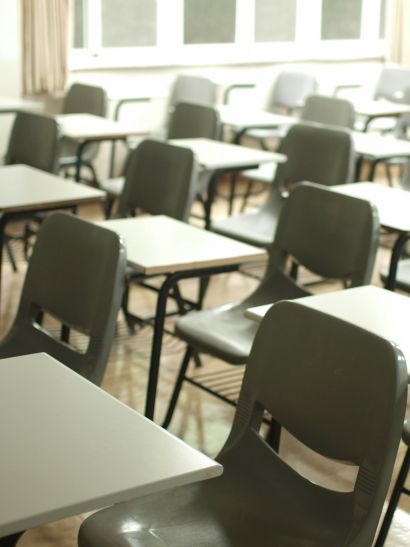
A few generations ago, Boston was a much more vibrant city for families, with more than twice as many kids enrolled in our public schools. Yet even as the city’s population increased by between 80,000 and 140,000 people from 1980 (depending on your choice of estimates for Boston’s current population), its school-aged population of 5-to-17-year-olds declined by almost 28,000.

 startupfortune.com


