Al - Haider VT-4 MBT - The Premier PA Ground Asset [Developments]

It is an older platform and not sure why there is “emotional” attachment to the AK by certain folks.
Agreed, even The VT4 is also a purchase of necessity because we lack options. In the global sense it’s a strictly last generation design, an evolution of the Al-Khalid design, but for our purposes it is good enough. If however india decides to purchase a next generation platform (they too have very limited options), we risk losing the technological edge the Haider has given us.
 
They should induct 1000 al haiders why so much different tanks in service . India simply has two t90 and t72 each in thousand. Divide it in Al khalid 1 and al Haiders/vt4 for PA
Necessity, we never had the opportunity or the funds to standardize on a single type, otherwise that’s what the Al-Khalid and Al-Zarrar combo was always envisioned to be.

That being said, there’s a lot of logistical commonality between all types in the PA, it’s certainly not as odd as the various types the IAF or even PAF operates when it comes to aircraft.
 
Agreed, even The VT4 is also a purchase of necessity because we lack options. In the global sense it’s a strictly last generation design, an evolution of the Al-Khalid design, but for our purposes it is good enough. If however india decides to purchase a next generation platform (they too have very limited options), we risk losing the technological edge the Haider has given us.
For Pakistan, "chasing the wind" is not a good option, especially if it's following China's "wind."

In recent years, China's weaponry has advanced at an alarming pace. As military enthusiasts, we simply can't keep up with the pace of development in the military industry.
"The Wandering Earth" director Guo Fan has been mocked by Chinese military enthusiasts recently. He's currently working on "The Wandering Earth 3," but his thinking simply can't keep up with the pace of development in China's military industry. He was once a science fiction director, but suddenly he's become a period film director.

China has recently launched the Type 100 MBT. If Pakistan wants to purchase it, the basic process is:
1. Express interest to China and begin inspecting and evaluating this new tank. This will take at least one to two years.
2. Discuss details, handle technical platform adaptation, identify customized requirements, and communicate with Chinese factories to develop a customized solution. This will take at least two to four years.
3. Negotiate pricing and contracts, including payment arrangements and delivery times. This step will be very lengthy.
4. Reach a contract, and China begins production. Pakistan awaits delivery...
By the time all this was completed, China's new generation of more powerful tanks had emerged. Some Pakistani friends were once again expressing disdain for the Type 100 MBT...

I suggest that Pakistan should delve deeper into the achievements it has already made, such as the VT-4 MBT(Haider MBT).
First, we will thoroughly study the VT-4's design logic and technical details to gain a thorough understanding of its design technology.
Next, we will resolve all production technical challenges and achieve 100% localized production. If certain subsystems remain unresolved, we will also enable independent replacement and adaptation of other subsystems. For example, we will independently adapt other power packs to provide a wider range of options.
Finally, based on a thorough understanding of the VT-4 MBT's design principles, we will begin developing new variants. For example, we will utilize the VT-4 MBT's chassis to develop new vehicles, thereby forming a comprehensive family of armored vehicles.

Once Pakistan has a fully independent family of armored vehicles, it will only need to import or independently develop new subsystems to update these armored vehicles, such as replacing them with more powerful power packs, or replacing them with more advanced detection and defense systems.
 
For Pakistan, "chasing the wind" is not a good option, especially if it's following China's "wind."

In recent years, China's weaponry has advanced at an alarming pace. As military enthusiasts, we simply can't keep up with the pace of development in the military industry.
"The Wandering Earth" director Guo Fan has been mocked by Chinese military enthusiasts recently. He's currently working on "The Wandering Earth 3," but his thinking simply can't keep up with the pace of development in China's military industry. He was once a science fiction director, but suddenly he's become a period film director.

China has recently launched the Type 100 MBT. If Pakistan wants to purchase it, the basic process is:
1. Express interest to China and begin inspecting and evaluating this new tank. This will take at least one to two years.
2. Discuss details, handle technical platform adaptation, identify customized requirements, and communicate with Chinese factories to develop a customized solution. This will take at least two to four years.
3. Negotiate pricing and contracts, including payment arrangements and delivery times. This step will be very lengthy.
4. Reach a contract, and China begins production. Pakistan awaits delivery...
By the time all this was completed, China's new generation of more powerful tanks had emerged. Some Pakistani friends were once again expressing disdain for the Type 100 MBT...

I suggest that Pakistan should delve deeper into the achievements it has already made, such as the VT-4 MBT(Haider MBT).
First, we will thoroughly study the VT-4's design logic and technical details to gain a thorough understanding of its design technology.
Next, we will resolve all production technical challenges and achieve 100% localized production. If certain subsystems remain unresolved, we will also enable independent replacement and adaptation of other subsystems. For example, we will independently adapt other power packs to provide a wider range of options.
Finally, based on a thorough understanding of the VT-4 MBT's design principles, we will begin developing new variants. For example, we will utilize the VT-4 MBT's chassis to develop new vehicles, thereby forming a comprehensive family of armored vehicles.

Once Pakistan has a fully independent family of armored vehicles, it will only need to import or independently develop new subsystems to update these armored vehicles, such as replacing them with more powerful power packs, or replacing them with more advanced detection and defense systems.
All good points but at the end this was achieved for the Type 85-90 series with Pakistan but got too late.
The same will happen with VT-4. Eventually the platform’s core is no longer viable for further upgrades.
It is the same as any PC case - you can add additional components, upgrades etc - but if at the end your case simply can not hold or sustain the latest and is not optimized - you need a new case.
This is why Al Khalid was left on despite Pakistan having all that was needed for the hull and chassis manufacturing.
 
All good points but at the end this was achieved for the Type 85-90 series with Pakistan but got too late.
The same will happen with VT-4. Eventually the platform’s core is no longer viable for further upgrades.
It is the same as any PC case - you can add additional components, upgrades etc - but if at the end your case simply can not hold or sustain the latest and is not optimized - you need a new case.
This is why Al Khalid was left on despite Pakistan having all that was needed for the hull and chassis manufacturing.
It depends on whether you truly understand the relevant technology or merely claim it for publicity. This is the fundamental difference.

If you truly understand the technology, you can manufacture it 100% independently. Furthermore, you understand not only the manufacturing techniques but also the underlying design principles and logic.
When you fully master these technologies, you can independently develop your own family of armored vehicles. If you can't yet, it means you still lack mastery of many technologies.

Whether it's the JF-17 or the Al Khalid, Pakistan must thoroughly research every parameter. Why is the angle this number? Can it be changed to another number? What are the potential consequences of such a change? What are the advantages and disadvantages of such a design?

Once Pakistan has gained some knowledge, it can begin to experiment with minor modifications to the original design and gradually expand its scope. This involves many risks, but it's a necessary price to pay.

China has sacrificed many elite soldiers and technical experts along this journey. Their sacrifices have yielded valuable parameters. ------ You can't expect any other country to voluntarily provide these parameters.

This step is extremely difficult.
 
It depends on whether you truly understand the relevant technology or merely claim it for publicity. This is the fundamental difference.

If you truly understand the technology, you can manufacture it 100% independently. Furthermore, you understand not only the manufacturing techniques but also the underlying design principles and logic.
When you fully master these technologies, you can independently develop your own family of armored vehicles. If you can't yet, it means you still lack mastery of many technologies.

Whether it's the JF-17 or the Al Khalid, Pakistan must thoroughly research every parameter. Why is the angle this number? Can it be changed to another number? What are the potential consequences of such a change? What are the advantages and disadvantages of such a design?

Once Pakistan has gained some knowledge, it can begin to experiment with minor modifications to the original design and gradually expand its scope. This involves many risks, but it's a necessary price to pay.

China has sacrificed many elite soldiers and technical experts along this journey. Their sacrifices have yielded valuable parameters. ------ You can't expect any other country to voluntarily provide these parameters.

This step is extremely difficult.
I can assure you that Pakistan R&D along with contrived interests ensure that even if you are able to get subject matter experts who get close to understanding the technology the social and economic conditions force such people to migrate.
 
It depends on whether you truly understand the relevant technology or merely claim it for publicity. This is the fundamental difference.

If you truly understand the technology, you can manufacture it 100% independently. Furthermore, you understand not only the manufacturing techniques but also the underlying design principles and logic.
When you fully master these technologies, you can independently develop your own family of armored vehicles. If you can't yet, it means you still lack mastery of many technologies.

Whether it's the JF-17 or the Al Khalid, Pakistan must thoroughly research every parameter. Why is the angle this number? Can it be changed to another number? What are the potential consequences of such a change? What are the advantages and disadvantages of such a design?

Once Pakistan has gained some knowledge, it can begin to experiment with minor modifications to the original design and gradually expand its scope. This involves many risks, but it's a necessary price to pay.

China has sacrificed many elite soldiers and technical experts along this journey. Their sacrifices have yielded valuable parameters. ------ You can't expect any other country to voluntarily provide these parameters.

This step is extremely difficult.
I generally agree with you - but I have to say two things here - first; the issue you’ve mentioned goes beyond the defense industry, Pakistan not being able to research and understand these technologies at a basic level as you mentioned comes down to the overall problems with industry and academia which are still on the reproduction phase of tech rather than at the design phase. A country of Pakistans size should be at a the design phase but it’s lagged behind for all sorts of geopolitical, political and internal reasons that are too many to get into here.

The second is to counter your final point about “necessary sacrifices” and “risks” and how no country “voluntarily provides such parameters” - with all due respect, China stole a huge number of the designs, research, technology, and hard work done by the West and the USSR to set up the initial success of its defense industry (and many other industries, the automobile industry comes to mind).

While there’s no doubt in my mind that a lot of hard work was done by the Chinese after this to get to where they are now (fully capable of designing and producing defense and consumer products that can compete on the world stage), it is a little unfair to say that it was done purely by Chinese sacrifice and ingenuity.

I don’t find any problem with China doing any of this, it did so because it was cost effective and in favor of its national interests, and if Pakistan had the opportunity to do so, I’d support Pakistan doing the same, national interests are above any such morality.

I bring this up because the sentiment that no country will just give these to Pakistan is somewhat unfair, with the goals and expectations China has with its defense equipment sales to Pakistan, there is a case to be made that China should be doing it in a way that is of long-term benefit to Pakistan rather than short term sales, and while I’m fully aware that Pakistan is itself also at fault for not showing proper interest in getting long-term help from China (and not paying enough, nothing is free), I would also like to point out that China has done next to nothing, and has at often times even forced Pakistan, to accept short term solutions or accept worst terms/products because it is in China’s interests (the development of the JF-17s future blocks, making Pakistan buy ToT for VT4 and then giving design documents so poor that the whole thing had to be reverse engineered etc).

One can argue that China is just being a good salesman and doing what’s right for itself, as all countries should, or that Pakistan is just incompetent or not developed enough, but then the argument should not presented that China is so easy to approach or convince to give what should be given.

Negotiating designs with Chinese factories/designers/engineers and payments terms regarding ToT and licenses with Chinese government officials is one of the most frustrating experiences in weapon sales globally - and it remains one of the biggest hurdles in Chinese defense exports, despite how advanced Chinese tech is now, either due to this or geopolitical reasons, there are not many buyers.
 
I generally agree with you - but I have to say two things here - first; the issue you’ve mentioned goes beyond the defense industry, Pakistan not being able to research and understand these technologies at a basic level as you mentioned comes down to the overall problems with industry and academia which are still on the reproduction phase of tech rather than at the design phase. A country of Pakistans size should be at a the design phase but it’s lagged behind for all sorts of geopolitical, political and internal reasons that are too many to get into here.
If you can't break through this step, it means you'll always be dependent on imports and will never be able to build a truly advanced system of your own.
If you're certain you can't break through this step, you should change your direction.
The second is to counter your final point about “necessary sacrifices” and “risks” and how no country “voluntarily provides such parameters” - with all due respect, China stole a huge number of the designs, research, technology, and hard work done by the West and the USSR to set up the initial success of its defense industry (and many other industries, the automobile industry comes to mind).
No matter how friendly two countries may be, a technologically superior nation will only tell you what to do, but never why.
China-Soviet, China-US, China-Russia... all technology transfers, collaborations, or what you might call "stealing"—they only yield knowledge about "how to do something," never "why to do it."

For example:
Russia can teach Pakistan how to build the RD-93 engine. They'll tell you how to make turbofan blades and nozzles, but they'll never tell you, "Why are the blades designed this way? Why is the nozzle angle this way?"
China can teach Pakistan how to build the JF-17 fighter jet. But by the same token, we won't tell you the reasons behind every detail of its design parameters.

Trying to master this knowledge requires constantly experimenting with certain data points to explore the effects of these changes. However, for fighter jets, this approach is extremely risky.

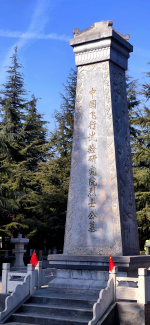
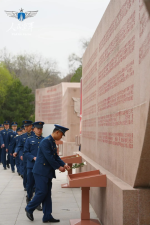
China's early imitations of Soviet-era fighter jets didn't have a high crash rate. Starting in the 1990s, China began experimenting with this technology. Early models like the J-10, JH-7, and Y-8 all suffered numerous crashes. The military testing phase is not public, but the actual accident rate is very high. To date, the PLAAF's test pilot unit has lost a total of 32 elite pilots...
1757701740548.png
1757701690753.png
No one would dare to trade this knowledge, earned with the blood of heroes, for money.

As for your complaints about China, you need to first understand the basic rules of international politics. I don't want this thread to turn into a verbal battleground.
 
Mark this, Haider program wont go numbers like t80UD, 300 only or maybe even less. Times have changed and Haider MBT is basically boosted AK or AK1.
 
So are we going after Type 100 then?
I dont know, I meant all AK's will have at same modular items of Haider that are doable. Al Khalid production was slow and then Ukraine war happened means no more Ukrainian engines has got us to Al Haider. Pakistan had the idea of AK2 as heavier and more powerful AK. Which is not possible now. Chinese engines are good or not will decide if HIT needs to continue with AK 2.
 
I dont know, I meant all AK's will have at same modular items of Haider that are doable. Al Khalid production was slow and then Ukraine war happened means no more Ukrainian engines has got us to Al Haider. Pakistan had the idea of AK2 as heavier and more powerful AK. Which is not possible now. Chinese engines are good or not will decide if HIT needs to continue with AK 2.
AK platform is on its way out and shop areas are going to be repurposed for VT-4.
 
AK platform is on its way out and shop areas are going to be repurposed for VT-4.
Not that easy. AK has still life left and its potent tank. the repurpose will be for limited vt4 for now. I only see vt4 as only option that is easy to procurer nothing else.
 
Not that easy. AK has still life left and its potent tank. the repurpose will be for limited vt4 for now. I only see vt4 as only option that is easy to procurer nothing else.
Easy to procure and also only easy to procure that is very suited for infrastructure in Pakistan.

Since the Oplot is a gone question for now and Russia isn’t a supplier - while Altay or Leo for that matter are ridiculously expensive at scale while potentially having track footprints that wont work on Pakistani logistics lines.
 

Users who are viewing this thread

Pakistan Defence Latest

Back
Top