Michael
VIP Member

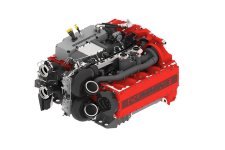
As for hybrid powertrains, yes, they are promising, but I don’t think they will be able to be retrofitted into existing designs without major modifications (which might render a project too costly). For example, where does one place the batteries? How does one do all the extra wiring? You also need an entire energy conversion mechanism to be added.
The main advantages of electric-powered main battle tanks are:Hence why I think the PA and HIT will see how China gets it done and see if it’s worth the cost and effort.
1. Silent operation.
When powered purely by electricity, they produce extremely low noise and infrared signatures.
2. Advanced detection and attack capabilities.
They possess a powerful power supply. AESA, APS, electro-optical sensors, AI processing systems, UAV control systems, electronic countermeasures systems, directed energy weapons systems, and more—advanced equipment that is difficult or limited to use on traditional tanks—can be incorporated into these new tanks, further amplifying their operational power.
Of course, it also serves as the command and control center for front-line unmanned combat systems. Soldiers can command and control unmanned combat vehicles, detection UAVs, suicide FPVs, combat robot dogs and other unmanned weapons in a safe environment.
But at this stage, its technology still needs further development, and the biggest problem is the battery pack. Chinese official agencies have not disclosed the detailed specifications of the Type 100 MBT.
According to numerous analyses by professionals in related fields on Chinese social media, the main issues with the Type 100 MBT are:
1. It cannot operate purely on electric power for extended periods of time and over long distances. Pure electric power can only sustain slow driving for a few hours or high-speed driving for tens of minutes. Of course, this is more than enough for a tank with a hybrid system.
2. When the vehicle's power-hungry weapons and detection systems are operating at full power, the vehicle's speed is significantly limited. While it can dynamically allocate energy, it cannot support it simultaneously. At high speeds, the maximum operating power of its electronic equipment decreases.
Currently, China's battery technology is still developing rapidly. New solid-state battery technologies and high-energy-density battery technologies are already in small-scale commercial trials. Once these new technologies mature, they will bring even more changes to future hybrid armored vehicles.
Thus, PA will need to wait and see for a few more years.
However, what the PA can do now is to increase the informationization of the army's weapons and equipment and the research and deployment of unmanned combat equipment. When China's hybrid armored vehicle technology is fully mature and then introduced to the PA, it will directly unleash the power of the army's systematic combat tactics.
Otherwise, when PA introduces these weapon systems, it will be difficult to bring out their capabilities.