Navigation
Install the app
How to install the app on iOS
Follow along with the video below to see how to install our site as a web app on your home screen.
Note: This feature may not be available in some browsers.
More options
Style variation
You are using an out of date browser. It may not display this or other websites correctly.
You should upgrade or use an alternative browser.
You should upgrade or use an alternative browser.
Ancient Egypt civilization
- Thread starter The SC
- Start date
More options
Who Replied?
r3alist
Elite Member


LOL, I have seen the usual ancient aliens and amazing technology videos. They are all crap, always exaggerated or outright false, and always explained by modern science.
It's entertaining
How do we explain this
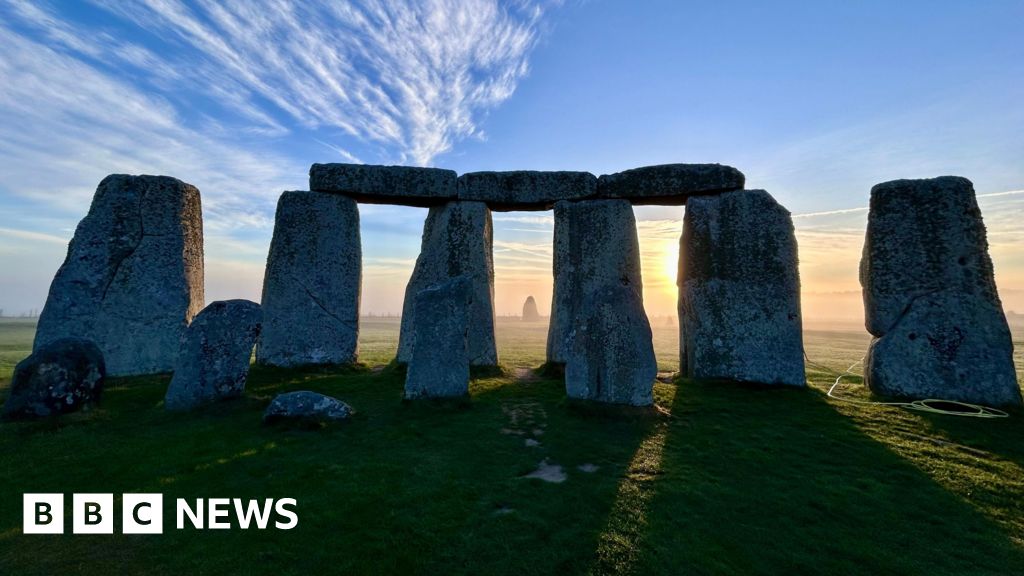
Stonehenge: Central Altar Stone from Scotland not Wales
Stonehenge's famous Altar Stone came from Scotland not Wales as previously thought, new analysis shows.
 www.bbc.com
You are hunter gatherer, why bother? Why the specificity?
I am not proposing ancient et, just normal questions to ponder

Developereo
Elite Member

It's entertaining
How do we explain this
Stonehenge: Central Altar Stone from Scotland not Wales
Stonehenge's famous Altar Stone came from Scotland not Wales as previously thought, new analysis shows.
You are hunter gatherer, why bother? Why the specificity?
I am not proposing ancient et, just normal questions to ponder
I don't think Stonehenge people were hunter gatherers: they had a well developed society with cities, religion, and political structure.
Almost every advanced culture of ancient times had an obsession with large stone structures, probably because they symbolized permanence and, therefore, power.
We haven't travelled far: we build skyscrapers to show off our wealth and power.
r3alist
Elite Member
I don't think Stonehenge people were hunter gatherers: they had a well developed society with cities, religion, and political structure.
Almost every advanced culture of ancient times had an obsession with large stone structures, probably because they symbolized permanence and, therefore, power.
We haven't travelled far: we build skyscrapers to show off our wealth and power.
There always seems to be two camps, one that dismissively thinks it's pre modern grunts putting stones on top of each other, the other camp imagining something more incredible
Sky scrapers serve a notional function and they don't come at the sort of human endeavour that these old buildings did
We cannot superimpose modern thinking and motives to thousands of years back, it won't do.
Why go to this considerable effort,risk and cost to do anything other than survive
Developereo
Elite Member
There always seems to be two camps, one that dismissively thinks it's pre modern grunts putting stones on top of each other, the other camp imagining something more incredible
Sky scrapers serve a notional function and they don't come at the sort of human endeavour that these old buildings did
We cannot superimpose modern thinking and motives to thousands of years back, it won't do.
Why go to this considerable effort,risk and cost to do anything other than survive
Once again, these were not hunter gatherers scraping by to 'survive' the day. These were all advanced societies with access to massive resources. The megalithic structures they left behind were a civilizational statement about their wealth and power.
The skyscrapers of today serve the same purpose. Nobody 'needs' to build taller and taller skyscrapers. They are a statement of wealth and prestige.
The ancients did it using human labor, we do it using machines. Other than that, they have the same motivation.
P.S. This reminds me of the famous poem Ozymandias
I met a traveller from an antique land,
Who said—“Two vast and trunkless legs of stone
Stand in the desert. . . . Near them, on the sand,
Half sunk a shattered visage lies, whose frown,
And wrinkled lip, and sneer of cold command,
Tell that its sculptor well those passions read
Which yet survive, stamped on these lifeless things,
The hand that mocked them, and the heart that fed;
And on the pedestal, these words appear:
My name is Ozymandias, King of Kings;
Look on my Works, ye Mighty, and despair!
Nothing beside remains. Round the decay
Of that colossal Wreck, boundless and bare
The lone and level sands stretch far away.”
We may think we are different from the ancients but we are not. Human nature remains the same.
Last edited:
r3alist
Elite Member
Once again, these were not hunter gatherers scraping by to 'survive' the day. These were all advanced societies with access to massive resources. The megalithic structures they left behind were a civilizational statement about their wealth and power.
The skyscrapers of today serve the same purpose. Nobody 'needs' to build taller and taller skyscrapers. They are a statement of wealth and prestige.
The ancients did it using human labor, we do it using machines. Other than that, they have the same motivation.
When you said massive resources what does that mean?
Were they able to create surplus in their societies? what technology did they use that enabled surplus of food and labour? I am thinking of stone henge here
A skyscraper is nothing like a civilizational statement in the way these structures were, to say these structures are just to show wealth and power is entirely inadequate, that's just bringing modern thinking to ancient times, contradiction by default
Developereo
Elite Member
When you said massive resources what does that mean?
It means they were not scrounging for food from day to day as you seem to think.
Were they able to create surplus in their societies? what technology did they use that enabled surplus of food and labour? I am thinking of stone henge here
I don't know the specifics of Stonehenge but the other megaliths in Africa, South America and Asia were built by advanced societies who had plenty of surplus. They had cities, armies, and specialized, well trained professionals in all sorts of trades. They forecasted their consumption cycles, and planned their production cycles.
They were modern in every sense of the word. Except for their level of technology, they were not very different from us.
A skyscraper is nothing like a civilizational statement in the way these structures were
By 'skyscrapers' I am talking about people chasing the tallest building race. Nobody cares about ordinary tall buildings because they are a dime a dozen.
, to say these structures are just to show wealth and power is entirely inadequate, that's just bringing modern thinking to ancient times, contradiction by default
You see a contradiction because you refuse to accept the sociological connection across the ages. The connection is human nature: it doesn't change.
In the old days, they used royal decree or religion to amass the necessary resources, today we use economics, but the underlying motivation behind all of them is a show of prestige and power.
r3alist
Elite Member
It means they were not scrounging for food from day to day as you seem to think.
I don't know the specifics of Stonehenge but the other megaliths in Africa, South America and Asia were built by advanced societies who had plenty of surplus. They had cities, armies, and specialized, well trained professionals in all sorts of trades. They forecasted their consumption cycles, and planned their production cycles.
They were modern in every sense of the word. Except for their level of technology, they were not very different from us.
By 'skyscrapers' I am talking about people chasing the tallest building race. Nobody cares about ordinary tall buildings because they are a dime a dozen.
You see a contradiction because you refuse to accept the sociological connection across the ages. The connection is human nature: it doesn't change.
In the old days, they used royal decree or religion to amass the necessary resources, today we use economics, but the underlying motivation behind all of them is a show of prestige and power.
Ok, interesting and fair points
I don't know for sure, i just ask the questions


The SC
INT'L MOD
- Thread starter
- #40
In fact, the ancient Egyptian civilization is 39 thousand years old!!
 Ok, what is the mysterious phrase that the priests of Heliopolis said to Herodotus that he could not explain?
The historian Herodotus quoted from the priests of Heliopolis a strange incident that they told him about, and he recorded it in his book without fully understanding it.
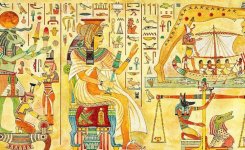
They told him: “The sun rose twice from where it sets now, and set twice from where it rises now.”
A French mathematician named Schuyler de Laubitz had a very convincing opinion on this issue
This movement only occurs every 13 thousand years, meaning that in order for it to occur twice, this exchange still occurred twice in 39 thousand years.
If Schuyler’s hypothesis is correct, this means that the Heliopolis scholars were relying on records that dates back to at least 39 thousand years BC
This is what was called (Zeb Tepe), or "The first time"
The phrase (the sun rose twice from where it sets now, and set twice from where it rises now) does not come true unless the civilization is 39 thousand years old.
It agrees with the antiquity of Egyptian civilization, which historians recorded, quoting Manuton

This is not strange, Egyptian scientists discovered a cemetery in Fayoum containing pottery tools that they estimated to be 32,000 years old..
Ok, what is the mysterious phrase that the priests of Heliopolis said to Herodotus that he could not explain?The historian Herodotus quoted from the priests of Heliopolis a strange incident that they told him about, and he recorded it in his book without fully understanding it.
They told him: “The sun rose twice from where it sets now, and set twice from where it rises now.”
A French mathematician named Schuyler de Laubitz had a very convincing opinion on this issue
This movement only occurs every 13 thousand years, meaning that in order for it to occur twice, this exchange still occurred twice in 39 thousand years.
If Schuyler’s hypothesis is correct, this means that the Heliopolis scholars were relying on records that dates back to at least 39 thousand years BC
This is what was called (Zeb Tepe), or "The first time"
The phrase (the sun rose twice from where it sets now, and set twice from where it rises now) does not come true unless the civilization is 39 thousand years old.
It agrees with the antiquity of Egyptian civilization, which historians recorded, quoting ManutonThis is not strange, Egyptian scientists discovered a cemetery in Fayoum containing pottery tools that they estimated to be 32,000 years old..


Ali_Baba
VIP Member
In fact, the ancient Egyptian civilization is 39 thousand years old!!
The historian Herodotus quoted from the priests of Heliopolis a strange incident that they told him about, and he recorded it in his book without fully understanding it.
View attachment 76169
They told him: “The sun rose twice from where it sets now, and set twice from where it rises now.”
A French mathematician named Schuyler de Laubitz had a very convincing opinion on this issue
This movement only occurs every 13 thousand years, meaning that in order for it to occur twice, this exchange still occurred twice in 39 thousand years.
If Schuyler’s hypothesis is correct, this means that the Heliopolis scholars were relying on records that dates back to at least 39 thousand years BC
This is what was called (Zeb Tepe), or "The first time"
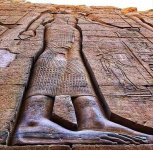
The phrase (the sun rose twice from where it sets now, and set twice from where it rises now) does not come true unless the civilization is 39 thousand years old.
View attachment 76171
This is not strange, Egyptian scientists discovered a cemetery in Fayoum containing pottery tools that they estimated to be 32,000 years old..
There is also the “King’s list” which also goes back to a similar timeline that you have posted here but “for some reason historians have drawn a magic line that arbitrarily says anyone before this point is made up fiction”…
Egypt is old.
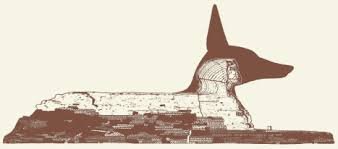
The Sphinx, based on water weathering of stone analysis, is even older than what we think of as Egypt … many think it was either a lion/dog based on the current head being too small for the body itself ?
Last edited:
The SC
INT'L MOD
- Thread starter
- #44
 Egypt
Egypt  which Plato left for the island of Crete
People saw him scratching his head and asked him why, so he said
I want to make sure my brain is still in place..He almost lost me in it
It is a country of merchants who buy anything from you
Egypt, which Alexander the Great reached and shoutedWhat paradise is that?
Egypt, where Napoleon set foot and shouted:What fire is this?
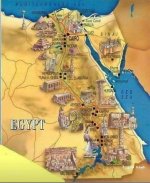 Egypt, which Amr bin Al-Aas entered and said:
This is a green tree
Egypt, which Ibn Khaldun came to and said:I now see the complex of the world and the gathering of nations
Egypt, where Julius Caesar was besieged, so he shouted:I will not stay in this hell for a single moment
Egypt, which the traveler Al-Maqdisi visited and said:It is the miracle of peace and the store of dreams

The Egypt that Ibn Battuta said about:
It is the mother of the country, its conqueror of nations
Egypt, to which Abdullah bin Omar came and said:Whoever wants to look at Paradise, let him look at it when its crops are green and its fruits grow
Egypt, which Al-Maqrizi wrote about, saying:“It is among the morals of Egypt to refrain from considering the consequences."
 The Egypt that Ibrahim Pasha said about:
I am not Egyptian, but the Egyptian sun made me Egyptian
Egypt, which Mustafa Kamel said about:If I were not Egyptian, I would like to be Egyptian
It has the first government the world has known in five thousand yearsIn it, the first revolution in history against feudalism took place four thousand years ago
Ramesses II was first to sign thereA peace treaty in world history with the Hittites
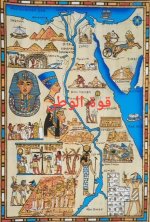 Egypt is where the science of astronomy arose and the sciences of medicine, mummification, and engineering appearedAkhenaten appeared as the first to call for monotheism in historyOur master Abraham, peace be upon him, immigrated to it from the Chaldean countries to escape paganism.In it, Hagar, the mother of the Arabs, was born
In it, Isaac, the father of the Jews, was born
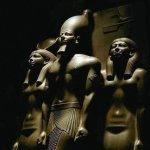 From it stemmed the first administrative laws in historyThere appeared the poet Bentaour first poet in historyTo it entered our Prophet Joseph (peace be upon him) in the reign of its first king Ababi ITo her the children of Israel fled the famine in PalestineThe Prophet Moses (peace be upon him) appeared and spoke to God on Mount Al-Tur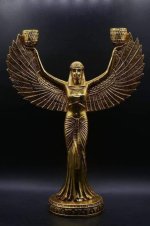
The SC
INT'L MOD
- Thread starter
- #45
The Virgin Mary and her son, Jesus Christ, peace be upon him, took refuge in it Homer, the great Greek poet, came to itThe delegation of the famous legislator Solor came to itThe Greek mathematician Pythagoras came to it
The great Greek writer Euripides came to itThe first Islamic peace treaty was concluded between Amr ibn al-Aas and al-Muqawqis.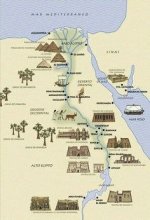 Lady Zeinab took refuge in her after the killing of Imam Hussein Imam Al-Shafi’i, Al-Mutanabbi, Al-Afghani and others resorted to it Its people were the first to raise the slogan of freedom against the Hyksos and the RomansWith its soldiers and army, the Crusaders were defeated in the Battle of HattinIt was the end of the Tatar invasion at the hands of Sultan Qutuz and al-Zahir Baibars.
 On its land, the October War of the Tenth of Ramadan took place against Israel, where the Bar Lev Line was demolished, the strongest military fortresses in history. Historians recognized Egypt as a pioneer in everything, and that it was unique among all the countries of the world in receiving divine honor in the Holy Qur’an in more than one verse. Since the dawn of history, Egypt has been opening its chest to everyone and embracing everyone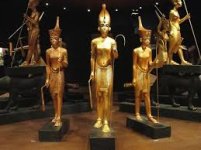

Attachments

Users who are viewing this thread
Total: 4 (members: 0, guests: 4)
Pakistan Defence Latest
-
-
 KP govt backs out of counterterrorism commitments during talks: Naqvi (10 Viewers)
- Latest: hydrabadi_arab
-

-
Country Watch Latest

Latest Posts
-
-
 Russian lab worker dies of suspected plague as 200 enter medical observation (6 Viewers)
- Latest: PK781
-
-

-
