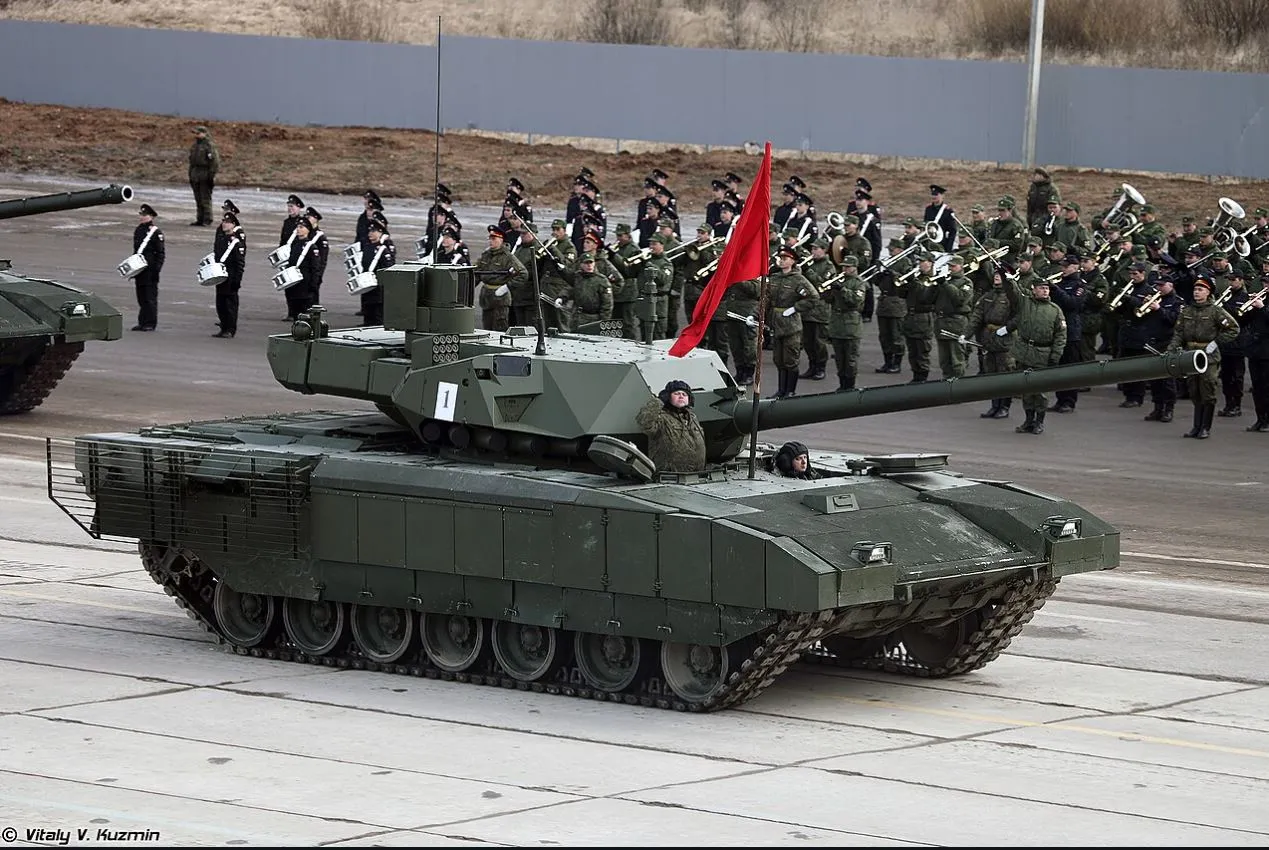
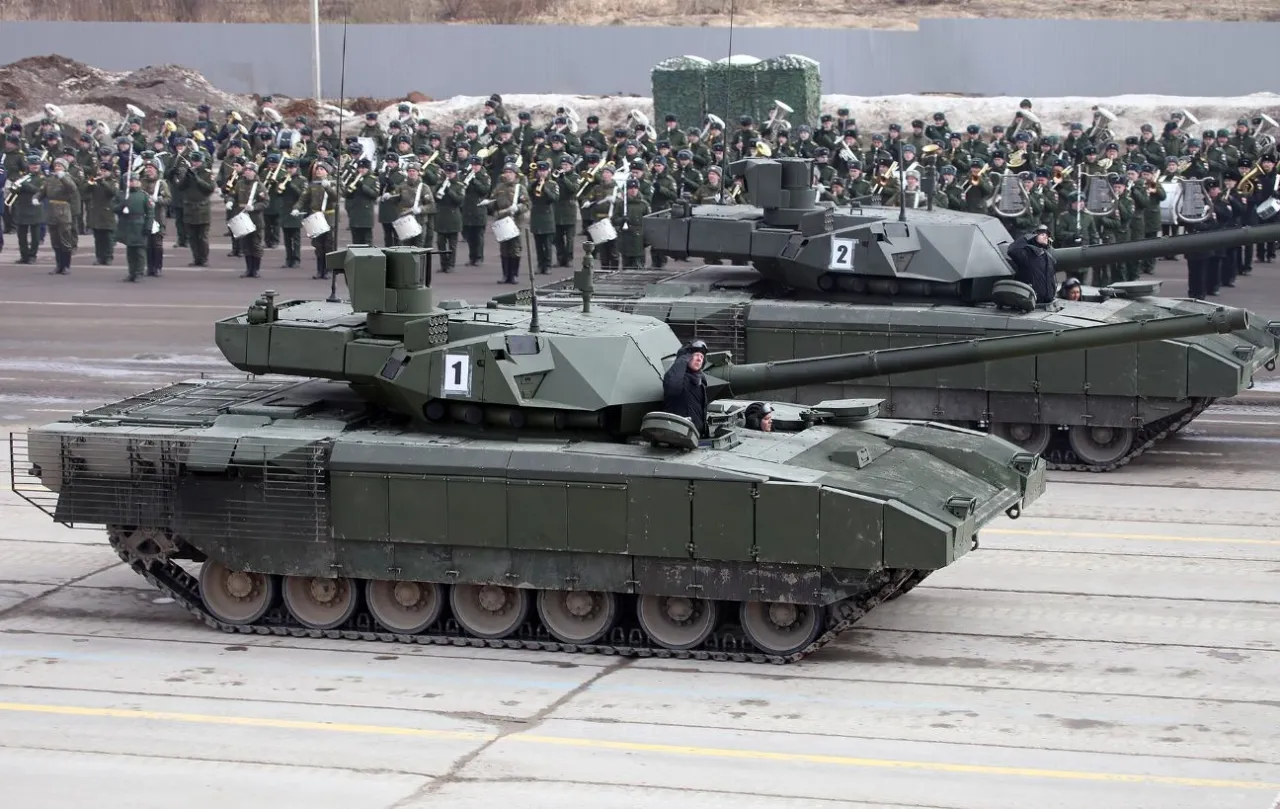
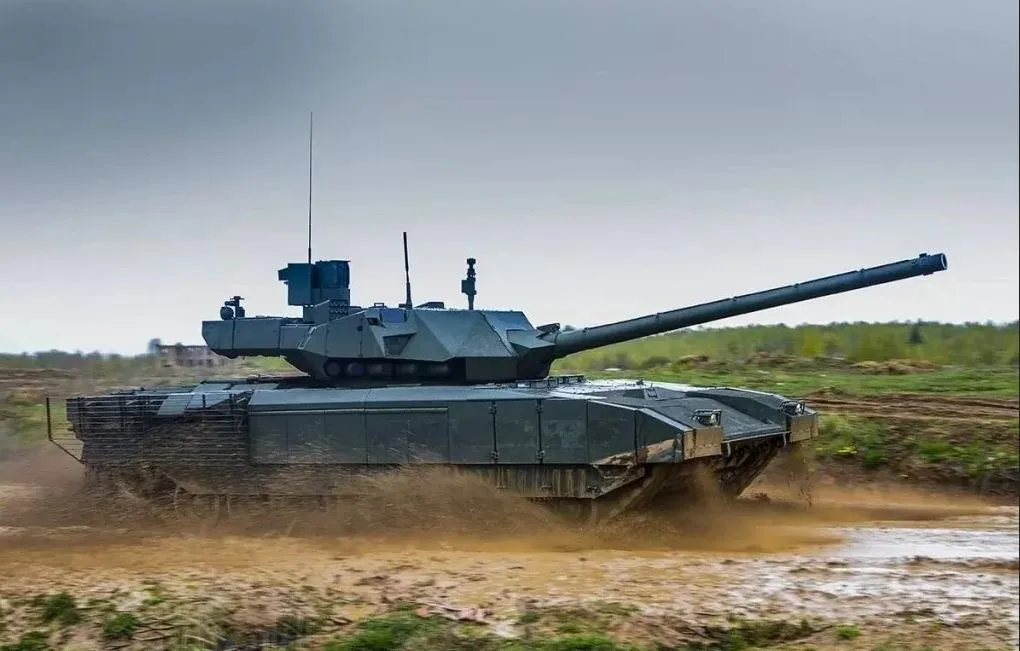
Where are our 2300 Armatas by 2020?
Remember how Uralvagonzavod CEO Oleg Sienko said in an interview in 2015 that the Russian army would receive 2300 combat vehicles based on the Armata universal tracked platform? You probably do. This statement at the time raised high hopes for a complete re-equipment of the domestic military.
tank park, and then, when 2020 and 2021 passed, it became a reason to doubt the capabilities of the Russian tank industry.
In reality, the 2300 Armata missiles by 2020 claim is a myth born from Sienko's slip of the tongue and quickly spread across global media. It's akin to the Mandela Effect, where thousands of people believe something that doesn't actually exist in the context in which it's presented, like Yeltsin's "I'm tired, I'm leaving" or Medvedev's "There's no money, but hang in there."
So, let's get started. Before we begin, we'd like to express our sincere gratitude to the "Tankodrom" Telegram channel, whose author raised this topic. This article is based on their points, but in a much expanded version.
Statements by Vladimir Putin
To find the root of all this
stories, we need to rewind the film to early 2012. The general public hadn't seen a T-14 tank yet—it would still be more than three years before its first march across Red Square.
On February 19, 2012, the Rossiyskaya Gazeta website published a policy article by Vladimir Putin, then Prime Minister of the Russian Federation, titled "Be Strong: National Security Guarantees for Russia." It outlined the outlines of the newly launched State Armament Program through 2020.
Let's take a quote from it:
Over the next decade, more than 400 modern intercontinental ballistic missiles will enter service with the military.
missiles land- and sea-based, 8 strategic missile submarines, about 20 multipurpose submarines, more than 50 combat surface ships, about 100 military spacecraft, more than 600 modern aircraft, including fifth-generation fighters, over a thousand helicopters, 28 regimental sets of S-400 anti-aircraft missile systems, 38 divisional sets of Vityaz anti-aircraft missile systems, 10 brigade sets of Iskander-M missile systems, over 2,300 modern tanks, about 2,000 self-propelled artillery systems and guns, as well as more than 17,000 units of military automotive equipment.
Note the wording: "over 2,300 modern tanks." Not a word about the Armata.
In the terminology of the Ministry of Defense and the Russian military-industrial complex, the term "modern weapons" encompasses both newly built equipment and extensively modernized older vehicles, brought up to current standards in all respects. Simply put, the goal was to increase the number of modern vehicles in Russia's tank fleet to the overwhelming majority, by mass-producing existing equipment at Uralvagonzavod and Omsktransmash.
Remember, Vladimir Putin was the first to announce the number of modern tanks at 2300. The Armata wasn't mentioned at all, although it was implied to be among the total number of new vehicles.
There was no talk of a quick start to production of the T-14
2015 is approaching—the year of the Armata's official debut at the Victory Parade. Public interest in the secret tank is at fever pitch, and journalists are hanging on every word from Uralvagonzavod representatives.
On January 26, 2015, Vyacheslav Khalitov, then Deputy General Director of Uralvagonzavod for Special Equipment, appeared on the Arsenal program on the Ekho Moskvy radio station.
What does Khalitov say? First, he recalls the target set by the Supreme Commander-in-Chief for the decade—those same 2300 tanks as part of the army modernization program. Second, he offers a sober assessment of the situation with Western sanctions imposed in 2014, which have hit the supply of foreign electronics.
In a TASS report from January 26, 2015, Khalitov's words are quoted directly: the import substitution program in the field of electronic components will take 4-5 years.
Incidentally, Khalitov proved quite accurate here. One of the main stumbling blocks at the time was the French thermal imaging sensors from Thales.
Systematic work to replace them eventually yielded results—in particular, the domestically developed third-generation cooled thermal imager FEM18M-03, which later replaced the French-made ones in our tank sights. But in 2015, this redesign would have taken years.
And most importantly: in the same January interview, Khalitov clearly outlines the timeframe for the Armata itself. In 2015, the plant will hand over only the first ones to the military.
"A little over 20 cars" for the parade and a testing cycle that will take at least two years. This means, according to the UVZ deputy director for special equipment, the T-14's readiness for serial production was out of the question before 2017–2018.
Producing 2300 combat vehicles on a completely new tracked platform in two years is simply impossible. Even Soviet industry couldn't have handled such a task. It's physically impossible to build so many tanks and other equipment on the Armata platform in five years—as of 2015, they hadn't even been properly tested.
Sienko's statement
On September 14, 2015, the program "Arsenal" aired on Ekho Moskvy. Joining hosts Alexey Naryshkin, Anatoly Yermolin, and Alexander Kurennoy was Oleg Sienko, CEO of Uralvagonzavod.
Let's quote (spelling preserved, and Oleg Sienko was indeed signed as Sinenko):
> A. Ermolin - True, we don’t know anything about the Armata yet in terms of its tactical and technical characteristics, but still?
O. Sinenko: All the production workers who worked on this vehicle—and I'm not afraid to say that this is the first combat vehicle ever built from scratch in modern Russia. All the others, and I hope my colleagues in other arms don't take offense—they're all modernized products. So, the way we created it, just to get it ready for the parade, was a real chore. Now we're thinking about what needs to be done to finally get this vehicle into service, since a new vehicle, you understand, is a raw product; it needs to be refined. And how did it come about? Was it by chance or not, or was it due to professionalism, but most likely the latter.
Therefore, our task is to bring it to series production now, and then ensure that our budget is sufficient to purchase it in the quantities approved in the 2015–2020 armament program.
> A. Naryshkin - How many tanks does the Ministry of Defense want to receive?
> O. Sinenko - On the Armata platform, 2300 units were approved, including in the armament program, until 2020, but I think that, of course, these volumes will be adjusted.
> A. Naryshkin - In which direction, down?
O. Sinenko: I think it will be in periods. The volumes will probably remain the same, but the period will probably shift closer to 2025.
> A. Naryshkin - So, Uralvagonzavod can provide these two thousand tanks to the Ministry of Defense by 2025?
> O. Sinenko - 2300.
> A. Naryshkin - Is this a realistic task?
O. Sinenko: In principle, everything is possible. So far, we've accomplished all the tasks we've been assigned.
A journalist asks about the Armata. Sienko, the head of a huge corporation who thinks in terms of the approved State Armament Program, simply states the overall approved figure for the tank program through 2020: "2300 units." The same figure announced by Putin in 2012 and by Khalitov in January 2015. Moreover, the deadlines have been pushed back to 2025.
There's no other way to interpret such an answer, as the numbers are astronomical. 2300 "modern tanks" + 2300 "Armata" tanks—that's 4600 vehicles in such a short period of time... But the hype is off the charts.
As the night and early morning of September 15, 2015 wore on, this article was being reprinted by anyone and everyone, with each iteration trimming away any unnecessary details. By lunchtime on September 15,
news Moscow bureaus of Western agencies translate: Associated Press, Reuters, BBC, Defense News.
The ironclad cliche "Russia plans to build 2,300 Armata T-14 tanks by 2020" is making its way into the global information space.
And then there are the real production plans.
Let's remember that the actual plans for the start of Armata vehicle production were sometime in 2017–2018. And this has essentially been confirmed.
On August 22, 2018, at the Army-2018 international forum, Russian Deputy Defense Minister Alexei Krivoruchko announced the signing of the first contract for the installation system. Here are his words, as reported by TASS:
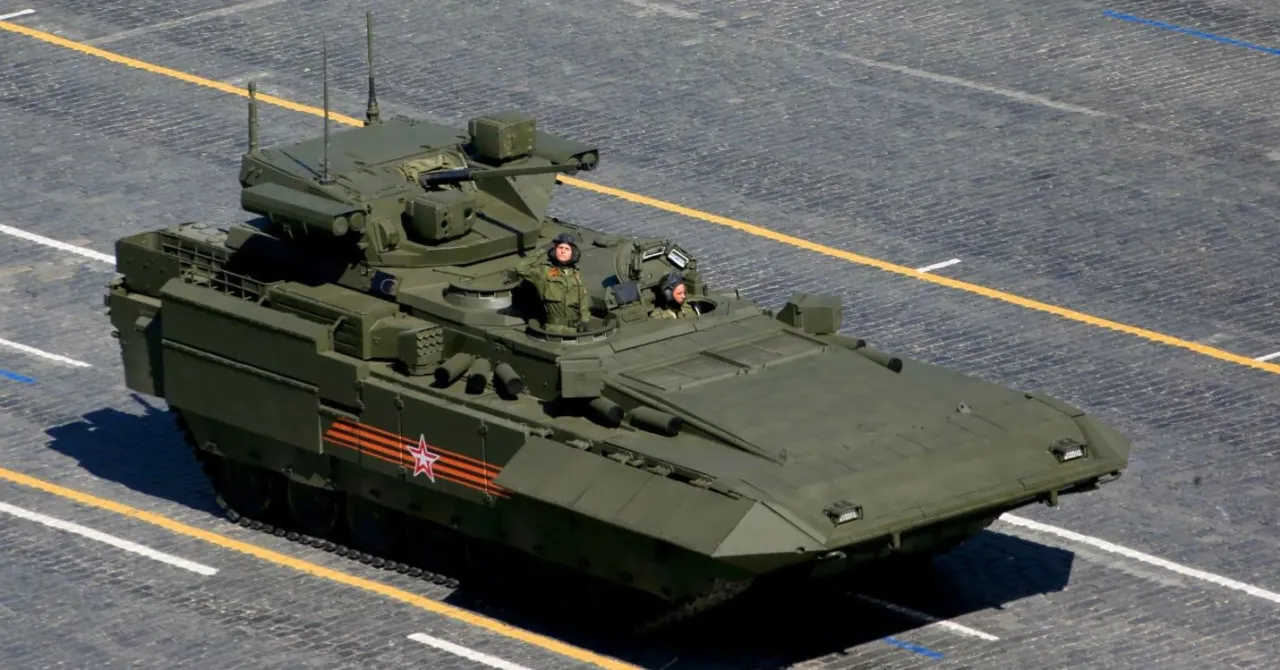
A contract for 132 T-14 and T-15 vehicles has been signed. We will receive the first nine vehicles this year.
It was later clarified that these 132 units included not only T-14 tanks and T-15 heavy infantry fighting vehicles, but also T-16 armored repair and recovery vehicles.
This is such a wave out of nowhere.
Regardless of how the Armata is viewed today—and there's plenty of criticism of it, including that it's a waste of public funds—the actual plans for producing 2300 units by 2020 have never been stated in any known contract or leaked Ministry of Defense document. One spoke vaguely, while others, misunderstanding the context, blasted it to the world.
Information sources:
Telegram channel "Tankodrom"
V. Putin's programmatic article "
Be Strong: National Security Guarantees for Russia»
Interview with Vyacheslav Khalitov on Echo of Moscow (the site is not working today, but you can use it
service to view an archived copy of the page)
Oleg Sienko's interview on Echo of Moscow (the site is not working today, but you can use it
service to view an archived copy of the page)
Statement by Alexey Krivoruchko on the signing of a contract for the supply of vehicles based on the Armata UGP