Attack on Army School bus on Quetta-Khuzdar corridor— 6 Children martyred 43 injured.

Stability also dictates dos/donts, which means we can tell what is unlawful, who is an enemy, what is right etc. Now, one group can chant anything against the army and one can't and many other examples which create divisions and uncertainty, which lead to chaos.
Give me a second and I will explain what can be done in the long run beyond the required military operation - which is coming BTW, a very big one.
 
[Part 1]

Okay this will end up being a very academic topic and I don't want to bore the pants off people here.

First before I start lets get some fundamentals out of the way:

Okay let's look at this for a moment objectively.

Firstly we need to revaluate and I mean some serious introspection into what counter terrorism looks like:

Ask most people and they will picture this:
cobra-us-one-sheet-poster-featuring-sylvester-stallone-2495184116.jpg


But being realistic what we should first examine are two white elephants in the room. NAP and NACTA need an overhaul, two white elephants that need to be addressed first and foremost.

You can have all the super duper action men squads but without strategy and direction they will just be like Elite Police Force standing at a check post in the afternoon rotting in the sun.

Make no Mistake the thread to Pakistan is EXTERNAL - looking at it from a purely internal lens and blaming ethnic minorities for terrorists is dangerous for national cohesion. There is ample empirical evidence to support the opinion that the majority of terrorist threats operate from, originate from, and draw support from outside of Pakistan - some visual aids:
1748025300626.png
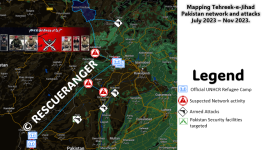
In the above map I have mapped the known UNHCR refugee camps inside Pakistan along with areas from previous IBOs and TA's that suggest known T-e-J and TTP networks are active. I have also mapped the most recent number of armed attacks against Pakistan Security facilities. What makes this mapping most important is the critical piece in the puzzle and that is the Thikar Province, Afghanistan (I have marked its boundary and highlighted in Blue) more on this province and its importance later in the thread.

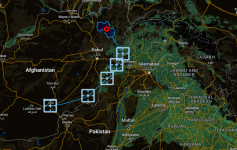
I have also mapped the locations where all senior TTP leaders have met their end inside Afghanistan starting from 2019 to Dec 2023:
1748025309443.png
Incident tracker as updated using available reports from ISPR/GOP/Local LEA:
  • 29th August 2019, Qari Saifullah Mehsud, the leader of Tehreek-e-Taliban Pakistan's Qari Hussain Suicide Brigade, was sent to hell in Khost, Afghanistan.
  • 10th January 2022, TTP senior commander & spokesperson Khalid Balti alias Muhammad Khurasani was sent to hell in Nangarhar, Afghanistan.
  • 7th August 2022 Mualana Uqabi Bajauri, a key Tehrik-e-Taliban Commander, was killed in a "landmine blast" and sent to hell in Kunar, Afghanistan.
  • 8th August 2022, the leader of the Jamat-Ul-Ahrar, Omar Khaled Khorasani, was sent to hell in Paktika Province, Afghanistan.
  • 27th October 2022, a TTP commander, known as "Asadullah Pehelwan", was sent to hell in Kandahar province.
  • 29 September 2022, TTP leader Akhtar Khalil was sent to hell in Nangarhar, Afghanistan.
  • 10th September 2023, Badshah Khan Mehsud, considered to be the right-hand man and extremely close confidante of the TTP Chief, Mufti Noor Wali Mehsud was injured in Paktika province of Afghanistan.
  • 8th October 2023, A top commander of the TTP from Lakki Marwat, Tipu Gul Marwat, was sent to hell in Kunar, Afghanistan.
  • 11th October 2023, A senior TTP terrorist commander Atiqur Rehman aka Tipu Gul Marwat, was sent to hell in Kunar, Afghanistan.
  • 23rd October 2023, TTP commander Chamtu Waziristani was sent to hell by unidentified gunmen along with 3 other terrorists in Khost province, Afghanistan.
  • 5th November 2023, Fazal Ameen, a prominent TTP commander who had prior associations with Lashkar-e-Islam and subsequently joined TTP and JuA, was blown to smithereens in Marko, Nangarhar province, Afghanistan.
----
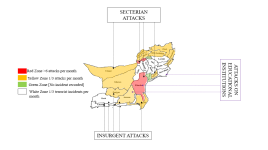
History of hostilities in Balochistan:
1748025484458.png
Image 1: Mapping historic attack types across Balochistan [My Own Work - Map Adopted from copyright free academic literature***]
1748025503854.png
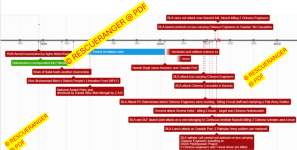
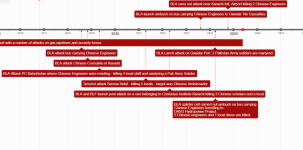
FAH used as a force to destabilise Pakistan from 2002 to present day: Notice the number of attacks carried out by FAH and their affiliates against CPEC/Chinese Nationals and Pakistan's national interests:
1748025590643.png
These large, complex and well-organised attacks are the the type of hit and run attacks carried out by miscreants or rebels wearing flipflops, these are well planned, funded operations with a clear strategy to:
  • Dehumanise Pakistan
  • Damage Pakistan
  • Destabilise Pakistan
 

Attachments

  • 1748025800520.png
    1748025800520.png
    262.5 KB · Views: 10
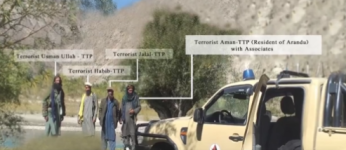
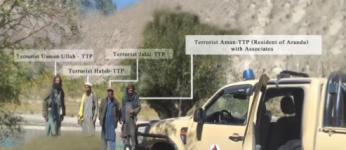
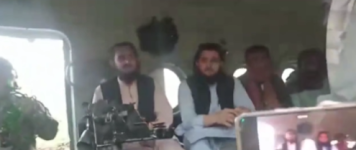
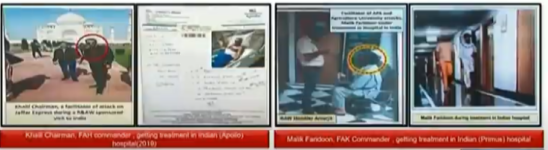
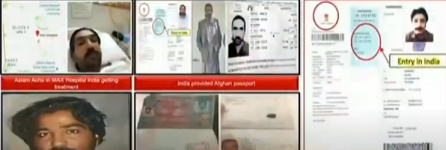
Foreign support for FAH and FAK to destabilise Pakistan:
1748026019440.png
TTP lieutenants can be seen in this video alongside an Afghan Government vehicle

1748026039470.png
TTP leadership seen here in an Afghan MI-17

FAK commanders and hard-core terrorists reciving medical treatement inside India:
1748026072155.png

1748026078573.png

Indian Media glorifying terrorist atrocities carried out by FAH inside Pakistan:
To view this content we will need your consent to set third party cookies.
For more detailed information, see our cookies page.

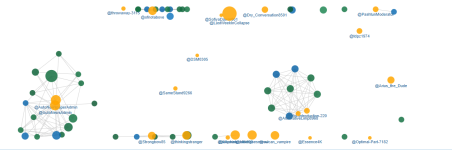
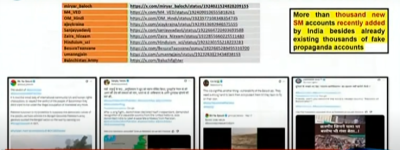
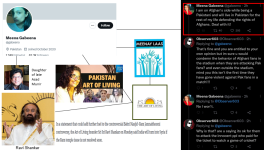
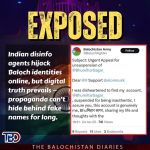
Use of Fake accounts run by Indian agents to Dehumanise Pakistan and Destabilise Pakistan:
1748026258804.png

1748026275974.png
---
Where does the money come from?
To view this content we will need your consent to set third party cookies.
For more detailed information, see our cookies page.
 
Last edited:
Whilst my above analysis is focused on the threat emanating from across the border, this is by no means an excuse to not consider the ever present malaise of extremism and extremism narratives in our own country for which there is a fertile domestic audience, it is therefore vital to have a multi pronged approach to this problem one which looks at the immediate needs of security and one that works to counter extremist violence and extremist narratives though education, dialogue, opportunities and inclusion.

To examine the issue of domestic terrorism and extremism narratives we must first come to a consensus that terrorism is mainly driven by ideology which is nurtured by people who exploit communities or groups who feel they have lost a sense of agency or feel disillusioned and disenfranchised. To counter the menace of terrorism what you need is a cultural change, this comes initially through a deep dive study into the drivers of terrorism.

1699779732011.png

Borum's Four-Stage Model of the Terrorist Mindset
Despite the noise, we do have a good understanding of the drivers that cause people to move from "disillusioned and disenfranchised" to "disgruntled" through to the "activist" stage - this is the stage where you need to counter the toxic narrative though a number of confidence building measures in the community which can range from inclusion in the democratic process and to build a sense of "ownership" for the communities and a unified identity.

What is required now is for the larger public to understand the "bigger picture" which is a working strategy which needs to consist of education, information, communication, prevention, protection, engagement and enforcement. Fighting ideas with guns and bombs never works in the long run. What is needed is to starve the vipers of their pool of potential recruits by wining hearts and minds and changing the sense of "us against them" narrative.

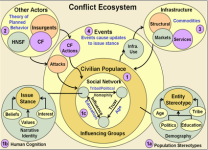
We need to re-examine our COIN strategy in line with the established "three pillars" of COIN and to do this we need to look at the present conflict ecosystem.

1699778518099.png


We understand the security and political motivators behind insurgency in Pakistan, we need to start addressing the economic drivers behind the present situation, and work hard for narrative building around counter-ideology, counter-sanctuary and motivation.

1699778474078.png


What some members here are choosing to ignore either due to ignorance or arrogance by dismissing the relevance of removing Afghans from Pakistan is Kilcullen's strategy on counter insurgency spheres. Kilcullen argues that the conflict ecosystem comprises of the following:
1748026382618.png
WE MUST AVOID STEREOTYPING PASHTUN AND BALOCH PEOPLE
1. Sphere of civilian control and spheres of influence: the civilian population and the influential groups [see PTM et.al], the force behind influence and "clash of civilizations" comes from
1a. Population stereotypes: Entity Stereotypes [see ethnocentrism]
1b. Human cognition: beliefs, values and interests [validation of stereotypes and building of "filter bubbles"].
1c Education and lack thereof

--
Aarhus model argues that these issues mentioned in [1] and the mindset o [clash of civilization/Orientalism] is then capitalized on by 2:
2. actors including: Insurgents, hostile non-state actors
--
We need to counter narrative building by hostile non-state actors and persistent threat actors at the first two stages of the Borum Model:

1699780281837.png


To counter this we need to focus on revisiting the counterinsurgency doctrine and how we deal with countering violent extremism [CVE]

1699779247865.png
 
Last edited:
To help achieve this we need a better understanding and narrative building around "us/them" mindset.
Whilst we have a good understanding of commentators such as Bushra Gohar Mariam Solamankhil, lets just examine closely one popular Pashtun opinionator on SM:
1748026533401.png

A closer examination of the popular hashtag #AfghanRefueesInPakistan and visualizing the shares and content across multiple platforms shows us engagement and content is driven by a few accounts and retweeted by bots [managed OUTSIDE PAKISTAN]
1748026683344.png

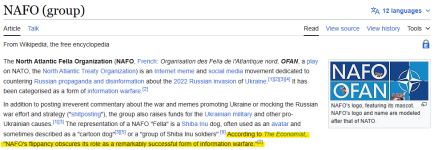
To counter this anti-state narrative building by we need educated, informed and unified counter-narrative campaign on SM beyond that provided by the likes of Pro-Pakistan Army SM accounts and opinionators, I propose that patriotic Pakistanis focus on developing accounts similar to NAFO or [Rising Falcon (Pakistani Social Media group who counter Indian propaganda]
1748026714643.png

Education, Education, Education:
We need to adopt a holistic approach to internal security,
This is achieved through what is called ICE: Information, Communication, Education - this can be audio, visual, written or communicated through social mobilizers like the polio education scheme, After all terrorism and violent extremism is no different to any other pandemic.
1748026787621.png
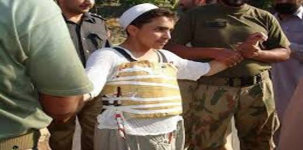
Child suicide bomber who surrendered in 2023
Interview of FAH female suicide bomber who surrendered to Pak Security forces:
To view this content we will need your consent to set third party cookies.
For more detailed information, see our cookies page.

The key here is "Early intervention" "Early Engagement" and "Public Cooperation":

1748026872306.png
Only through achieving community "buy-in" and active participation can you counter the menace of terrorism, deny terrorists the funding, freedom of movement and space to share their toxic ideology with a powerful full spectrum counter-terrorism and CVE (Countering Violent Extremism) strategy.

To view this content we will need your consent to set third party cookies.
For more detailed information, see our cookies page.


Such a program requires a broad spectrum of input from professionals from all walks of life ranging from humanitarians, community activists, educators, academics, legal professionals, health care (including mental health) professionals, law enforcement, military, and policy makers.

1748026999508.png

To give citizens a stake in countering terrorism both at the prevent and protect stage Pakistan should consider a program in-line with the popular "First Observer" scheme in the USA:

To view this content we will need your consent to set third party cookies.
For more detailed information, see our cookies page.
 
Last edited:
Counter-Terrorism and Resilience.

1. Counter Terrorism: We really need to examine existing models on intelligence fusion and full spectrum models rather than dusty 100 page plans that never get used.

A plan that should ultimately look to reduce the "risk" from terrorism using the RARA model:

RARA-2611074897.JPG

Only through constant dynamic and strategic risk assessment and threat identification can we develop working strategies.

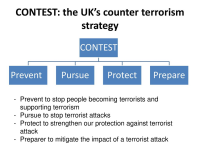
This brings me to our national strategy, it should focus on the widely accepted model of combating terrorism through preventing, pursuing, protecting and preparing (all actions that help reduce risk).

Prevent: Safeguard people from becoming terrorists or supporting terrorists (Outcome: Reduce intent) start in schools, madaris, colleges and universities. Make an educational curriculum that helps educate and counter extremist voices.

Pursue: Stop terrorist attacks happening in Pakistan and outside Pakistan (Outcome: Reduce capability) This is not just about policing but stricter controls on Ammonia based fertiliser, stricter controls on transport and storage of commercial explosives, policing online space to counter extremist narratives online or in the print media.

Disrupting the terrorist supply chain both domestically and internationally by working with partners and cross border policing.

Protect: Strengthen our protection against terrorist attack (Outcome: Reduce vulnerability)

Prepare: Mitigate the impact of a terrorist incident if it occurs (Outcome: Reduce Impact).

^ All of the above should be holistic and organic and constantly evaluated. With prevent being the bread and butter if our strategy, remember prevention is better than cure.

Intelligence Fusion Model:

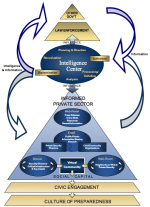
Intelligence is the lifeblood of all law enforcement agencies. Accurate and timely intelligence, gathered, collated and analysed in a professional manner, must be at the centre of law enforcement activity.

Intelligence gathering shouldn't be limited to professionals alone, members of the public should be encouraged to play their part as citizens by reporting suspicious activity and the gathering, assessment and information sharing should be multi layered.
figure-3-633318997.jpg

All intelligence gathered in Pakistan should be graded using the widely accepted 3 x 5 x 2 model:
1742022310591.png

Without intelligence all the best weapons, highly trained and capable professionals are useless.

Let us examine the current law enforcement framework of Pakistan:
1742022437329.png


You will notice that NACTA sits as its own body underneath the Ministry of Interior whilst the CTC is controlled wholly by the IB and ISI feeding into the Federal Government and trickling down to the relevant law enforcement bodies. There is no focus on grass-roots community led intelligence here, it is all very top down and this approach is a major contributor to our problems in Pakistan.

This system by and large works but there needs to be a greater focus on what actions the community, the citizens and business sector of Pakistan can provide to assist the state in fighting terrorism.

1742023105258.png


Engaging citizens to play a wider role in intelligence gathering, educating the public about the importance of reporting suspicious activity:

Similar to the UK ACT( Action counter's terrorism) program
To view this content we will need your consent to set third party cookies.
For more detailed information, see our cookies page.
 
Child suicide bomber who surrendered in 2023
Interview of FAH female suicide bomber who surrendered to Pak Security forces:
shared it before, too. Understand youth. We cannot win if we can't see through their lens.
To view this content we will need your consent to set third party cookies.
For more detailed information, see our cookies page.


I could only understand the Borum diagram as it was self-explanatory.
 
shared it before, too. Understand youth. We cannot win if we can't see through their lens.
To view this content we will need your consent to set third party cookies.
For more detailed information, see our cookies page.


I could only understand the Borum diagram as it was self-explanatory.

Tariq Parvez and Naasir Khan Durrani were diamonds of policing in Pakistan. Anyone who has worked in these circles will tell you these men are held in very high regard.
 
Terror Financing:
Terrorist networks and operations feed on financial resources. Preventing and effectively curbing terrorism financing is therefore among the most important steps for countering terrorism. Curbing terrorism financing is indeed tantamount to nipping the evil in the bud.

The global efforts on combatting terrorism recognize the importance of terrorism financing as key ingredient of the operational capacity of the terrorist groups. Curbing the availability of finances, and the capacity to transfer and use them for operations, is high on policy agenda of counter terrorism regimes.

The global approach for dealing with terrorism financing considers money laundering as a similar criminal act. It is based on the following assumptions:

i. Overlap of sources of funding in similar predicate crimes.
ii. Overlap of similar transfer channels used for the both.
iii. Risk Based Approach is applicable to both, including for assessing the causal relationship among threat, vulnerability and risk.
iv. Both occur in weak regulatory environments.
v. Both are very good at adapting to changes.
vi. Both use largely illegitimate money.
vii. Similar legal, regulatory and enforcement measures can curb and restrict the both.

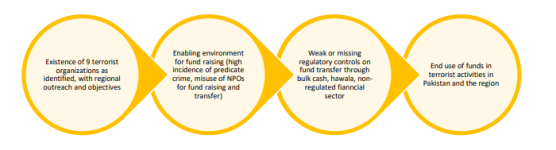
The Process Flow of TF: The multiple factors of high risk profile, high incidence of predicate crime, existence of UNSC-proscribed terrorist organizations, and availability of weakly regulated or non-regulated channels of funds transfer enable a process of flow of terrorism financing, which is explained in the following diagram:
1748029321886.png
This process flow of terrorism financing is because of existence of different vulnerabilities within the public and private spheres. As these vulnerabilities have become opportunities for terrorism financing, these need to be closely examined and analysed to understand the process.

Institution-wise analytics to ascertain the risk of terrorism financing: [MER refers to Mutual Evaluation report carried out between GOP and FATF & IMF]

Policy Level
Institutions and FunctionTF stage and relationshipMER assessmentRecommendations
NEC, GC, MoF,MoI, MoFA(legislative and policy-level recommendations)All 4 stages(collection, stashing, conveyance and use).
Demonstration deficit in assessing risk and applying risk based approach for policy action (PC) (No TF risk assessment of legal persons, NPOs, Waqfs, trusts; risks associated with funding of TOs; No analysis of new technologies; and lesser focus on cross border (cash smuggling).

Regulatory level - Federal Government
Institutions and FunctionTF stage and relationshipMER assessmentRecommendations
SBP and SECP(regulatory level)Stashing and transfer/conveyance(including cash).Limited understanding at the time of onsite visit. However SBP and SECP have issued regulations for CDD, and EDD, which have been incorporated by banks. FIs do not have adequate systems to provide STRs on high-risk predicate crimes like drug trafficking.Improve regulations of FIs and demonstrate risk assessment of legal persons(SECP); there was no risk understanding of STR reporting on legal persons.
PSX (Pakistan Stocks Exchange)Stashing and transferPSX is regulated by SECP and has data on public limited companies (legal persons).Improvement in CDD and risk based approach regarding TF should be observed (only 926 cases of CDD, KYC breaches were detected till 2019; not commensurate with the risk profile).
Pakistan Post and Central Directorate of National Savings(CDNS) –undocumented and unregulated agenciesStashing of funds and transferMore than 13,000 Post offices across the country performing agency function (Saving Bank)and PLI on behalf of Ministry of Finance. Transactions manual and no understanding of TF risks

CDNS issues bearer bonds and National Saving Certificates which are alternate legal tender; a similar high risk profile as for Pakistan Post.
Raising TF risk understanding and regulating these hitherto unregulated agencies, at the institutional and operational levels. Establishing reporting mechanisms is also crucial.
Implementation level-Federal
Institutions and FunctionTF stage and relationshipMER assessmentRecommendations
Financial Monitoring Unit (STRs and CTRs)Detection- Financial intelligence for preventing stashing and conveyance
CTDs don’t have direct access to FMU intelligence; only though court order.

FMU has no access to tax database.

No formal linkage between FMU and NACTA.

No formal exchange of info between FMU and foreign similar agencies.

Currency seizure cases are shared with FMU by customs on monthly basis.

FMU does not share data with NACTA.

1394 proactive Intel cases provided by FMU16.
Gives detail of use of FMU agency wise.
FMU to be strengthened further and its role in providing financial intelligence may be strengthened; also needs capacity building.

CTDs to directly access FMU data proactively.

Besides FIA, CTD persons to be deputed to FMU.
FIAInvestigation and prosecution TF casesDemonstrated low capacity and use of FI for proactive investigation, e.g. 81 cases of TF proactively reported to FIA (27closed and 54 at inquiry stage).The capacity of FIA for investigation of TF may be augmented. A Federal CTD may also be established with amendments in FIA Act.
NACTAPolicy coordination at all levels for all stages of TF (TF-Sub Committee with in NACTA)
NACTA has not access to FMU(not an investigation agency).

TF Committee is working, SOP issued in 2018, and now TF investigation policy approved and issued by PM office


NACTA’s strategic role to be increased. FMU data to be shared with NACTA for trends analysis. High frequency meetings of TF sub-committee be held.
ANFDrugs trafficking a major predicate crime(Collection stage in TF).4951 investigations (2,785convictions and 3,396 persons convicted – TF angle was not a major concern.18 CNSA has provision for MLA and is made use of by ANF.Parallel TF investigation made part of drug trafficking investigation.
Amendment in CNSA2007 and sub-ordinate legislation be framed accordingly
CustomsCash transfer (cross border) and smuggling a predicate crime.Pakistan Customs confiscated a total of USD 4.32 million currency at various borders between 2012 and 2018.
TF angle to be included as cash smuggling and smuggling are major predicate crimes. It is being done, however it needs to be strengthened and mainstreamed.
Implementation level-Provincial
Institutions and FunctionTF stage and relationshipMER assessmentRecommendations
Provincial Police and CTDs
Investigation at all stages of TF(collection-stashing conveyance and use)
CTD Punjab stands out as having better understanding of TF and also has established an R&W Wing. It cannot directly access FMU data or proactive TF related financial intelligence.CTDs to be provided direct access to FMU data and CTD personnel to be placed in FMU on deputation for viewing STRs CTRs with TF angle
Prosecution departmentsProsecution of all TF stages of crimeLow understanding of TF.Rigorous training for prosecution departments.
Home DepartmentProscription of TOsLack of data is the main issue regarding Home Departments.High frequency data sharing and availability is urged.
Social Welfare DepartmentStashing of funds and means of conveyance through cooperative societies.The information on cooperative societies was meager.Mapping of all cooperative societies (including beneficial owners) and uploading data on all websites (RTI provisions for proactive disclosure).
AuqafStashing of funds in property.Waqf properties.A mapping exercise to be undertaken and information about beneficial owner, use of rent earnings to be documented and displayed under RTI legislation (proactive disclosures).

Hawala/hundi or Money Value Transfer Service (MVTS):

‘Promissory notes,’ a traditional and informal mode of money transfer, have been increasingly used for TF. Anecdotal evidence points out that the hundi/hawala business in Pakistan is around USD 12 billion;20 it works around the Foreign Exchange Regulation Act 1947.

This ancient system of cash transfer poses a huge TF risk, as was also recognized in Pakistan’s NRA report of 2017. The illegal MVTS operators have opened shops across Pakistan making it a thriving business and a channel for largely less educated Pakistani diaspora.

To facilitate remittances through formal, the government implemented the Pakistan Remittance Initiative (PRI) in 2015. The success of this initiative is sub-optimal as reflected in NRA by Pakistan in 2017 and noted in MER in 2019.

Civil society and nonprofit organizations: [NGO's]

NPOs are considered among high-risk areas because of their possible misuse for terrorism financing; the NPOs’ misuse of donation, as assessed through STRs analysis, is 0.14%.23 Although SECP has issued guidelines for NPOs to evaluate risks, the MER was not convinced by the regulators’ understanding and thus outcome in terms of checking the misuse of NPOs for terror financing.

What compounds the problem is multiple types of NPOs such as so-called liberal non-governmental organizations or CSOs, Islamic charities (usually involved in relief and collective goods activities), traders bodies, and manufacturing associations.

SECPhowever also de-registered many NGOs. According to some reports, there were 46,000 NGOs operating in Pakistan and after the regulatory focus was diverted to this sector only 16,000-17,000remained.

The charity factor: Pakistan has proscribed many so-called welfare or charity organizations, which were reportedly linked to banned militant and religious groups, such as Falah-e-Insaniyat Foundation (FIF), Al-Rasheed Trust, and Al-Khair Trust, among others.

However, the 2019 Mutual Evaluation Report noted that these charitable organizations were still operating, especially the ambulance service of FIF. Pakistan is one of the most charity giving nations in the world.

It is considered a social safety net for poor and needy. A study published in 2016 revealed that just in the year 2014, PKR 239.7 billion were given in charity.

Type of givingAmount (PKR in billions)Percentage
Non-Zakat/monetary70.830
Zakat [an Islamic obligation]25.411
In-kind [giving]35.114
Time [volunteered]83.234
Usher [or agricultural levy]13.96
Animal hides4.92
[Giving at] shrines6.43
Total239.7100

There are Zakat and Ushar Departments in provincial government, but they don’t have a regulatory mandate. The banks deduct Zakat on 1st of Ramadan but the volume of official Zakat collection is very small; people generally tend to give Zakat directly. The volume of non-Zakat charity is even higher than Zakat.

Pakistan’s Anti-Terrorism Act 1997 (as amended from time to time) is the principal substantive law which governs the offence of terrorism. A 2019 report by Law and Justice Commission of Pakistan on police reforms noted that 48% cases registered under ATA were discharged by the courts. There port also stated that 4.6% cases registered under ATA between 2005 and 2011 were related to bombing, including suicide and complex attacks, in Punjab; therefore about 96% of registered cases were not strictly terrorism offences.

ATA should also have provisions for MLA[Money laundering] on the pattern of CNSA especially regarding TF [Terrorism Financing].

Witness Protection Laws should be enacted (Federal and Punjab laws have been) and special allocation to be made under these laws in recurrent budgets of all LEAs.


While terrorism has been dealt with the use of force, or kinetic responses, the issue of terrorism financing has hardly been treated even as an ancillary part in investigation, prosecution and conviction. At the policy level, the National Action Plan’s (NAP) 20 clauses entail one on curbing terrorism financing, which says that ‘financial sources of terrorists and terror organisations will be cut’. But many contest the effectiveness of NAP as a whole.

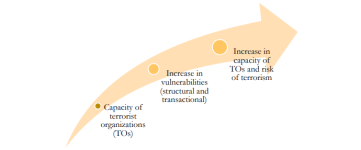
Terror financing happens below the radar of law enforcement. Therefore, the most plausible approach to curb this secretive crime is to reduce the risk of it by reducing vulnerabilities. The capacity of TOs[Terrorist Organisations] has a directly proportional relation with the vulnerabilities existing on structural and transactional levels. The following diagram illustrates this concept:
1748031426490.png

The government of Pakistan must work amend legal instruments by introducing specific legislation pertaining to money laundering in relation to terrorism financing, it must increase the punishment for suspects involved in such crimes and the government has to work at pace to strengthen the legal frame-work and empower investigative agencies at the federal and provincial level to identify, investigate and prosecute terrorism financing.
 
Technical colleges, where youth can learn citizenship, skills that will guarantee them skilled labour such as bricklayer, electrician, joiner, plumber, labourer, mechanic, office jobs, driver etc.

Waziristan KPK and Baloch

The two insurgencies (though financed and kept boiling by same evil entity) stem out of two very different reasons and causes. Waziristan, Swat, KPK is all wrapped in religious colors and has kept 90% of Pakistanis confused for a very long time. They were not attacking us for freedom they wanted to take over.

Baloch insurgency and protests are trying to portray Pakistani state as an oppressor and have freedom as end goal. It is purely ethnicity based.

The problem with Balochi people is they protest against Pakistan but they do not protest against their real oppressors the Sardar of Balochistan. Even suppose if they break away from Pakistan, the condition of ordinary Baloch is not going to change, he / she will still remain property of his / her respective sardar.

Pakistan as a state has failed to free Balochi people from clutches of these sardar, we have very little understanding of problems and condition of ordinary Baloch, they are not represented the way they should be, to be very honest majority Pakistanis do not feel their pain and are indifferent to them. Pakistani policies keep making these sardar and their hold on the common people more and more strong. Baloch should protest for and demand their basic rights, YES, however, those protests should also demand freedom from sardarana nizam.
 
Waziristan KPK and Baloch

The two insurgencies (though financed and kept boiling by same evil entity) stem out of two very different reasons and causes. Waziristan, Swat, KPK is all wrapped in religious colors and has kept 90% of Pakistanis confused for a very long time. They were not attacking us for freedom they wanted to take over.

Baloch insurgency and protests are trying to portray Pakistani state as an oppressor and have freedom as end goal. It is purely ethnicity based.

The problem with Balochi people is they protest against Pakistan but they do not protest against their real oppressors the Sardar of Balochistan. Even suppose if they break away from Pakistan, the condition of ordinary Baloch is not going to change, he / she will still remain property of his / her respective sardar.

Pakistan as a state has failed to free Balochi people from clutches of these sardar, we have very little understanding of problems and condition of ordinary Baloch, they are not represented the way they should be, to be very honest majority Pakistanis do not feel their pain and are indifferent to them. Pakistani policies keep making these sardar and their hold on the common people more and more strong. Baloch should protest for and demand their basic rights, YES, however, those protests should also demand freedom from sardarana nizam.
You are correct about the sardar, nawab and malik system. It needs to be thrown in the bin.
 
To view this content we will need your consent to set third party cookies.
For more detailed information, see our cookies page.
 
Mai ne suna tha buhat khatarnaak wala Operation hona tha? kia hua uska ? yeah phir hum as nation has moved on already like always?
 

Users who are viewing this thread

Country Watch Latest

Back
Top