Attacks on Sufis and Their Shrines are Growing in Bangladesh

The Jamaat-e-Islami and affiliated groups are attacking Bangladesh’s long tradition of cultural and social pluralism.

By Purnima Chowhan
May 25, 2026

View attachment 198850

In the last two months, at least two Sufi shrines have come under attack by Islamist mobs in Bangladesh. The first was on April 11, when a Pir (spiritual leader) was beaten to death by a mob of around 300-400 people in an attack on a shrine in Kushtia in western Bangladesh. Then, on May 14, a mob vandalized the centuries-old shrine of Hazrat Shah Ali Baghdadi in Mirpur, Dhaka, where they beat people up with sticks.

The Bangladesh Jamaat-e-Islami, the country’s largest Islamist party, was allegedly involved in the two attacks. Although it has denied the allegations, evidence points in the direct of the Jamaat, which is now the main opposition party in Bangladesh.

Following the attack on the shrine in Mirpur on May 14, police arrested three men reportedly linked to the Jamaat based on video footage. Local parliamentarian Meer Ahmad Bin Qasem Arman, who was elected in the recent February 12 general elections on a Jamaat ticket, admitted that some of those arrested worked in his election campaign. Similarly, the murder of the Pir in Kushtia was reportedly led by a former district president of Chhatra Shibir, Jamaat’s student wing.

When they target Sufis, their places of worship and practices, Islamists often claim that their attacks are carried out in the name of the “Tauhidi Janata” (monotheistic masses).

Radical Islamists view the mystical and syncretic nature of Sufism as an intolerable deviation from their fundamentalist ideology. Hardliners consider the Sufi practices of visiting shrines, seeking intercession from saints, and playing devotional music (such as qawwali) to be bid’ah (an un-Islamic innovation) and a form of shirk (polytheism). Because Sufism emphasizes spiritual inclusivity, often integrating localized cultural traditions and attracting Hindus and Buddhists, Islamists view it Sufism as a threat to their monolithic worldview.

Since the fall of the Sheikh Hasina government on August 5, 2024, the violent targeting of shrines, Sufi institutions, and spiritual centers across Bangladesh has surged.

Several of these attacks are the work of the Jamaat, its leaders and activists.

During the 1971 Liberation War, the Jamaat-e-Islami was opposed to independence and collaborated with the Pakistan military in the horrific violence that was unleashed on the Bangladeshi people. Its leaders were convicted on charges of crimes against humanity by a special war crimes tribunal in Bangladesh.

In recent years, and especially in the run-up to the February general election, Jamaat leaders claimed the party had changed its position and supported Bangladesh’s emergence as an independent nation and promised to not seek to apply Shariah law. Importantly, they claimed to have adopted an inclusive ideology that was more accepting of Bangladesh’s religious minorities, even allowing a Hindu to contest on the Jamaat ticket. However, the Jamaat continues to target minorities violently.

Conflict Between Ideology and Political Strategy

Ideologically, Jamaat-e-Islami is a hardline Sunni Islamic political party inspired by the doctrines of Maulana Abul A’la Maududi. The party is opposed to Sufism, shrine culture, and Pir-centric religious practices. This ideological opposition is not new, but concern arises when it crosses into violence.

Viewed separately, the attacks on Sufis appear to be spontaneous expressions of religious anger. But the repetition of similar tactics, rhetoric, and organizational patterns raises several questions: Are these really isolated incidents, or part of a wider ideological and political project? Why is violence fueled by religious sentiment spreading so rapidly in Bangladesh? Many of these attacks on shrines, looting, and even killings happen in the full view of the administration.

Jamaat has long been accused of using religious sentiment as a tool of political mobilization. Its rhetoric frequently invokes themes such as “defending Islam,” “upholding morality,” or “protecting religious values.” But when such language contributes to violence, the issue moves beyond political discourse and becomes a matter of public security.

Mobilizing the public through religious sentiment increasingly functions as a political tool for the party. The process often begins with an allegation framed around religion, followed by organized mobilization and public incitement. Over time, this has become a recognizable pattern.

Rise of Mob Politics and Impunity

The rise of “mob justice” has become increasingly visible in Bangladesh, particularly after the fall of Hasina’s government and during the interim administration led by Dr. Muhammad Yunus. According to a recent study by the think-tank Maqam: Center for Sufi Heritage, at least 97 shrines were attacked over the 17 months when Yunus was at the helm. Three people were killed and 468 others were injured in these attacks.

Several attacks have involved bulldozing, arson, and looting. In Sherpur, the Murshidpur Darbar shrine was looted and burned in November 2024, while in Rajbari, the grave of “Nura Pagla,” a Sufi dervish, was exhumed and his remains burned in September 2025.

Reports from multiple incidents alleged the involvement of Jamaat leaders, alongside members of the ruling BNP and the National Citizen Party. In Sylhet, the centuries-old Urs festival at Shah Paran’s shrine was halted in September 2004, after madrasa students with local administrative support unleashed violence.

Despite the scale of the violence, only 11 cases were reportedly filed between August 2024 and February 2026, and most investigations have shown little progress. Video evidence circulated publicly, yet law enforcement agencies failed to act.

These attacks that target shrines, minorities, journalists, and cultural organizations reflect a larger cultural intolerance in the country. It appears that perpetrators of mob violence operate under political protection, often linked to Jamaat or allied groups. Repeated involvement of affiliated activists suggests tacit endorsement. Meanwhile, administrative inaction – even during attacks witnessed by police or security forces – has deepened public doubts about political pressure and impunity.

Which Path Is Bangladesh Taking?

If any group can repeatedly incite crowds to impose its ideology through violence, the issue threatens the social foundations of the state itself. Beyond being simply religious disputes, attacks on shrines strike at Bangladesh’s long tradition of cultural and social pluralism.

This is why Jamaat-e-Islami’s name repeatedly surfaces in discussions surrounding these attacks. The party’s ideological position, grassroots networks, and history of mobilizing religious sentiment consistently place it at the center of suspicion. Although direct party involvement may be difficult to prove in every case, the identities of those accused continue to reinforce public doubts.

History shows that once mob culture becomes normalized, it rarely remains under anyone’s control. An attack on a shrine today may become an attack on another religious or social group tomorrow. Unless political forces take a firm stand against violence, this cycle will continue.

How much of this is linked to the people in power? I didn't know JI Bangladesh were like this. Pakistani JI are nothing like this. It may be a more extreme faction.
 
How much of this is linked to the people in power? I didn't know JI Bangladesh were like this. Pakistani JI are nothing like this. It may be a more extreme faction.
JI is islamist organisation, they are extreme when they are needed to be and sweet and moderate when they are needed. In Pakistan JI used to say Pakistan army soldiers are not martyrs during military operations, but when they're realised army will not be defeated they became moderate. Back in the days peope used to believe the so called mujahdeens are undefeatable. The major issue is they share same ideology as the extremists and behind the scenes give them political and moral support, just like what's happening in Bangladesh.
 
Mullahs can never be trusted. They have no loyalty to their own kind, own nation, or own interests.

Time and time again they've been selling it out to extremists for a fantasy land of pan-ummahism that runs on ideas of exploiting locals.

Dont trust them
 
23m votes for Jamat Islami and allies is huge number, but isn't Jamat Islami in opposition. So the main policies are being implemented by BNP and allies. Ofcourse with main opposition party JI their influence is growing, they are very strong at grass root level. Pakistan influence is being overplayed by India, the main power is China. India is not happy because they want anti Pakistan regime, so a well balanced government is not acceptable.

Jamaat Islami only got that many votes due to the absence of the Awami League from the elections ... This was the objective of the minus 2 formula during 1/11 to give a boost to the Jamaat but that failed to Indian intervention ... The Jamaat being now in opposition their influence should be growing but isn't as there is strong resistance to them attaining power in Bangladesh because they are not trusted and due to incompetence of the leadership which lacks charisma and intelligence and who rely on social media activists and a bot army for support but this hasn't worked ... Now some Jamaati types are talking of an Islamic revolution which will presumably be backed by the Americans ... Pakistan influence in Bangladesh has grown sharply since 2024 and continues under the BNP as they appear to fear another regime change operation directed at them ... The Indians are not happy about the BNP as they helped them to power and now appear to be turning their backs and leaning towards the US and Pakistan and to some extent China ...
 
This video shows a furious argument between a BNP and Jamaat Islami leader over the significance of 71 and 24 and the Jamaat appears to lose this argument as they are not particularly great thinkers and just steal from my book without understanding or supporting it or giving credit -

To view this content we will need your consent to set third party cookies.
For more detailed information, see our cookies page.
 
India + awami low life fascists and their cheap hasbara propaganda. LOL.
.
Folks here are getting played by indias hasbara propaganda and indian sleeper cell agents posing as neutral. Indians copied a classic zionist tactic...
.
Can so called sufis shrines hold mujra (strip dance) party? ganja (weed) party? peddle drugs? And still call themselves part of Islam?
.
Can so called Sufi Pirs claim themselves as Nabi (messenger of god), demand Sijdah from their followers and still call themselves part of Islam?
.
What's next, Ahmadiyas are Muslim too? Whoever violets Islams main Pillers can't claim to be part of Islam or Muslim. If they do there will be problems...
.
Indian sleeper cell agents here are trying to demonize Jamat alone. While Bangladeshi social media space has already identified BNPs student wing members were leading the charge against those so called sufi shrines on multiple occasions...
.
Our islamists has their fair share of issues but as of now, a strong islamist force is a must for Bangladeshs survival...
 
India + awami low life fascists and their cheap hasbara propaganda. LOL.
.
Folks here are getting played by indias hasbara propaganda and indian sleeper cell agents posing as neutral. Indians copied a classic zionist tactic...
.
Can so called sufis shrines hold mujra (strip dance) party? ganja (weed) party? peddle drugs? And still call themselves part of Islam?
.
Can so called Sufi Pirs claim themselves as Nabi (messenger of god), demand Sijdah from their followers and still call themselves part of Islam?
.
What's next, Ahmadiyas are Muslim too? Whoever violets Islams main Pillers can't claim to be part of Islam or Muslim. If they do there will be problems...
.
Indian sleeper cell agents here are trying to demonize Jamat alone. While Bangladeshi social media space has already identified BNPs student wing members were leading the charge against those so called sufi shrines on multiple occasions...
.
Our islamists has their fair share of issues but as of now, a strong islamist force is a must for Bangladeshs survival...
If people are doing wrong things at shrines then ban them from attending, or arrrest them but why do terrorist attacks on graves, this exposes the hypocrisy. The same with so called Pir, if hes dodgy leave him or get him arrested. People do wrong things at mosques aswell, we have fake Imams, pedo imams, people steal in mosques, people beg. What do you suggest? A suicide attack. People misuse Islam, to make money, name etc, this doesnt mean we blame Islam. This is what the atheist do, find faults in Muslims and then blame Islam.

Anyways what's wrong is wrong, no need to cover it up.
 
If people are doing wrong things at shrines then ban them from attending, or arrrest them but why do terrorist attacks on graves, this exposes the hypocrisy. The same with so called Pir, if hes dodgy leave him or get him arrested. People do wrong things at mosques aswell, we have fake Imams, pedo imams, people steal in mosques, people beg. What do you suggest? A suicide attack. People misuse Islam, to make money, name etc, this doesnt mean we blame Islam. This is what the atheist do, find faults in Muslims and then blame Islam.

Anyways what's wrong is wrong, no need to cover it up.
Sir ji, Im staying within the gray area. I will neither endorse nor condemn attack on those drag peddling, twerking so called sufis...
.
I just shared that those so called sufis and shrines were not innocent victims. Indian and their bootlickers are twisting some facts to paint a picture they want to peddle...
 
JI is islamist organisation, they are extreme when they are needed to be and sweet and moderate when they are needed. In Pakistan JI used to say Pakistan army soldiers are not martyrs during military operations, but when they're realised army will not be defeated they became moderate. Back in the days peope used to believe the so called mujahdeens are undefeatable. The major issue is they share same ideology as the extremists and behind the scenes give them political and moral support, just like what's happening in Bangladesh.

Some things to know about Jamaat e Islami.

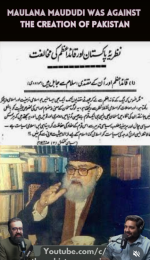
#1. They opposed the creation of Pakistan and failed.

1780210340244.png

#2. They opposed the creation of Bangladesh and failed.

#3. They are disliked by more orthodox Muslim scholars in Bangladesh including Deobandis, Salafis/Ahlul Hadith, Sufis (e.g. look at this thread), all of whom are stronger in their own ways than the Jamaatis particularly the Deobandis and the Sufis.

#4. They are disliked by most Bangladeshis because of 71 and are viewed like the Nazi party.

#5. Go on twitter and you will see Bangladeshi nationalists e.g. BNP accounts heavily dislike them and Bangladeshi nationalists are aware the the Jamaatis have a long-term multi-decade program (like the RSS and BJP) of starting grass roots organisations which win hearts and create future generations of loyal activists and cadres in all spheres of life e.g. business, education, health, military etc. In other words they are like the Gulenists in Turkey prior to the 2016 attempted coup there.

The "problem" for Jamaatis is:

a: There are too many people and groups who hate them e.g. religious Muslims (Deobandis, Salafis, Sufis), liberals, non-Muslims, business people who know we need good relations with India for economic growth, military (which they have infiltrated heavily btw) and others.

b: From a 'Ruhaani' viewpoint (spiritual) the zulm which they did in 1971 and all the bo-dua (prayers against them) are too much and they have very bad karma, which many of their rank and file lack the deeper knowledge of theology and spirituality to realise.

The Americans will try to use them to cause trouble, but Bangladeshis are too strong for the Americans and we know what their game plan is.
 
We call them sufis but they were sunni Muslims who practised spirituality, were scholars etc.

This is not only taking place in Bangladesh but also many other muslim countries around the world, their aim is to destroy historical Islam and promote a modern version as demanded by their funders.

Libya:


View attachment 199187

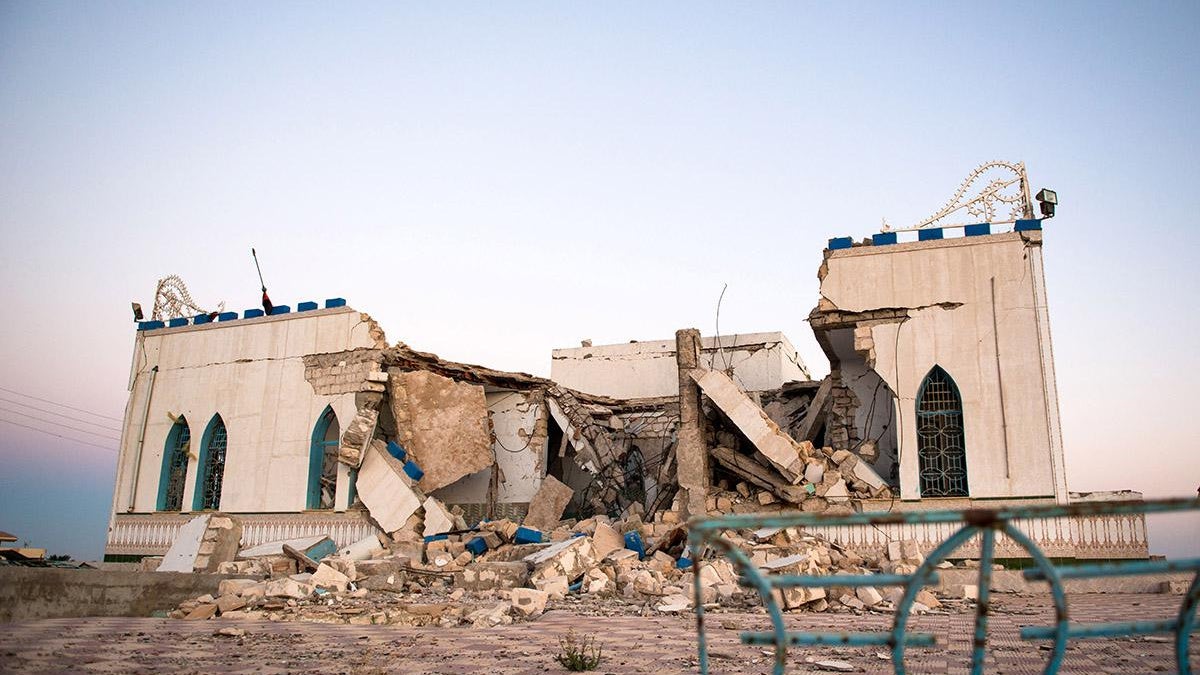
Somalia:
View attachment 199188

Mali:
View attachment 199189

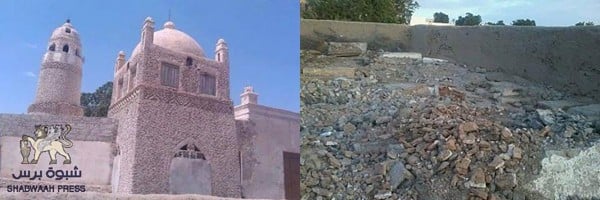
Yemen:
View attachment 199190

Iraq: They didnt even spare graves of Prophets Peace be upon them.
View attachment 199191


These groups are essentially hired guns, actors deployed to create chaos in Muslim countries. They do not represent real Islam in any meaningful sense.

As for the shrines in Pakistan and Bangladesh, as long as they are not promoting shirk or bid‘ah, they can operate under proper state regulation, similar to how Turkey manages its religious sites. But in Pakistan, many shrines have turned into commercial empires. Around them you see urs festivals mixed with drugs, exploitation, and all kinds of corrupt practices carried out in the name of religion.

In my opinion, all shrines in Pakistan should be brought under direct government control. The practice of ‘chadar poshi’ or ‘chadar charhana’ should be limited to a single, state‑managed ceremony each year. Shrines should not remain in the hands of mafias or private networks that exploit people’s faith for profit.
 
These groups are essentially hired guns, actors deployed to create chaos in Muslim countries. They do not represent real Islam in any meaningful sense.

As for the shrines in Pakistan and Bangladesh, as long as they are not promoting shirk or bid‘ah, they can operate under proper state regulation, similar to how Turkey manages its religious sites. But in Pakistan, many shrines have turned into commercial empires. Around them you see urs festivals mixed with drugs, exploitation, and all kinds of corrupt practices carried out in the name of religion.

In my opinion, all shrines in Pakistan should be brought under direct government control. The practice of ‘chadar poshi’ or ‘chadar charhana’ should be limited to a single, state‑managed ceremony each year. Shrines should not remain in the hands of mafias or private networks that exploit people’s faith for profit.

Around the Muslim world groups like Jamaatis, ISIS and other radical terrorist groups are used by the Americans to destabilize both Muslim countries and America's rivals e.g. Russia, China, even the EU and India.

On social media many Muslims regularly asks why ISIS never attacks Israel but only Muslims or people who ISIS declares as non-Muslims.

However most Muslims reject these terrorists and extremists in the same way most Bangladeshis reject Jamaatis.
 
As for the shrines in Pakistan and Bangladesh, as long as they are not promoting shirk or bid‘ah, they can operate under proper state regulation, similar to how Turkey manages its religious sites. But in Pakistan, many shrines have turned into commercial empires. Around them you see urs festivals mixed with drugs, exploitation, and all kinds of corrupt practices carried out in the name of religion.

In my opinion, all shrines in Pakistan should be brought under direct government control. The practice of ‘chadar poshi’ or ‘chadar charhana’ should be limited to a single, state‑managed ceremony each year. Shrines should not remain in the hands of mafias or private networks that exploit people’s faith for profit.

Shirk and Bid'ah are the core problems
  • Many people go to shrines more often than to masjids
  • Many sufis are unauthenticated (IMO)
  • In any case, they are not miracle workers
  • Number of living and possibly dead dubba peers is growing by the minutes - In Sindh; Karachi and Hyderabad seem to have become hotbed for these fellows. I have seen wide spread marketing being done.
Provincial government in Pakistan do have a shrine maintenance and regulatory body called Auqaf. But they too appear to be involved in monetising of the shrines.

I am not a Wahabi. On the contrary, I am anti-Wahabi. But it is my opinion that authenticated sufi shrines (however we can interpret this) should be regulated in ways that does not permit Shirk and Bid'a and are not monitised in anyway. Those that are random should be dismantled, and successional peeri-mureedi should be outlawed unless the so-called peer has qualification in religious education.
 
Shirk and Bid'ah are the core problems
  • Many people go to shrines more often than to masjids
  • Many sufis are unauthenticated (IMO)
  • In any case, they are not miracle workers
  • Number of living and possibly dead dubba peers is growing by the minutes - In Sindh; Karachi and Hyderabad seem to have become hotbed for these fellows. I have seen wide spread marketing being done.
Provincial government in Pakistan do have a shrine maintenance and regulatory body called Auqaf. But they too appear to be involved in monetising of the shrines.

I am not a Wahabi. On the contrary, I am anti-Wahabi. But it is my opinion that authenticated sufi shrines (however we can interpret this) should be regulated in ways that does not permit Shirk and Bid'a and are not monitised in anyway. Those that are random should be dismantled, and successional peeri-mureedi should be outlawed unless the so-called peer has qualification in religious education.
You see brother this piri mureedi and shrine culture is used to make billions, the bad people in society use it to make money but the good religious folks get defamed for it aswell, the modern method is youtube Facebook Twitter mullahs, they use exact same methods but in a modern style, in order to confuse people and recruit to make money, the same way foreign funding is sent to Pakistan and other poor Muslims nations to open maddrassas masjids do charity work but behind the scenes their aim is to make money, get loyal zombies, use them for political power or to spread their own ideology. The people in upper circles always want to make wealth, power and political power. All this dodgy shrine stuff happens in government led shrines or fake shrines, the shrines in control of local religious people are strict on salah etc unless ofcourse theyre fake ones. Piri muridi is just teacher and student relation, same way we have modern mullahs and they give you membership to their cult or organization. The issue is always fake people or manipulaters hijack due to lack of basic religous knowledge.

Anyways my point was it gives no excuse for suicide bombings, killing of 1000s. Most of it is propaganda if we forget Pakistan india Bangladesh, even place in Africa, Middleeast are attacked, even blessed Madina Shareef wasnt spared when ISIS tried to bomb Rauza Paak because they saw shirk and bidah, ISIS even wanted to destroy Kaba because they claim its shirk. Those who accuse others of shirk n bidah were labelled the same.

Yes state must keep eye on shrines Madrassas Majsids Schools and even universities. JI recruits from universities.
 
Around the Muslim world groups like Jamaatis, ISIS and other radical terrorist groups are used by the Americans to destabilize both Muslim countries and America's rivals e.g. Russia, China, even the EU and India.

On social media many Muslims regularly asks why ISIS never attacks Israel but only Muslims or people who ISIS declares as non-Muslims.

However most Muslims reject these terrorists and extremists in the same way most Bangladeshis reject Jamaatis.

Over generalizing is not good, one should not label Jamat-e-Islami as a terrorist organization. It's like saying that Tablighi Jamat is terrorist organization.

Anyone can be hired to carry a flag and represent xyz group.
 
Very alarming situation in Bangladesh. Years of mass scale corruption and political upheaval have resulted in an extremist, radicalised and polarized society stretched between constant 'revolution' and an inherent identity crisis.

The volatile situation in Bangladesh poses direct security risks for bordering countries like India and Myanmar.
 

Users who are viewing this thread

Pakistan Defence Latest

Back
Top