
Michael Corleone
Elite Member


Interesting video making a case for Attack Helo
This man taught me more about tanks than anyone else. Chieftain and his world of tanks sponsored tank videos are awesome
Follow along with the video below to see how to install our site as a web app on your home screen.
Note: This feature may not be available in some browsers.
Interesting video making a case for Attack Helo
Interesting video making a case for Attack Helo


Good summery. These cocnepts are explained in details and more in "ATP 3-04.1 Aviation Tactical Employment" & 'FM 3-04 Army Aviation'. (US army publications) Both of which I have read. And I recommend them if you lots of free time and more importantly, have already read and comprehended ADPs first.
However, this isn't relevant to our context.

Big worry for India as after Pakistan now Bangladesh gets ready to buy J-10C fighter jet from China
Source: Indian Defence Research Wing
How authentic is it?


 idrw.org
In order:
1. Nationwide MRSAM network
2. Suicide and surveillance drones.
3. 2-3 squadrons of 5th generation i personally
They also said the same thing about Rafale last month .. so its not verified but if bd goes for 10c what are the quantities will be ??Sensationalism aside, the source said 'potential' indicating it may be a possible choice for BAF. This is nothing concrete regarding the final choice.
View attachment 88539
Bangladesh Air Force Aims to Strengthen Fleet with J-10CE Jets from China - Indian Defence Research Wing
SOURCE: AFI In a significant statement aimed at modernizing its aerial capabilities, Air Chief Marshal Hasan Mahmud Khan of the Bangladesh Air Force (BAF) has expressed the force’s commitment to upgrading its fleet. Addressing the media, he stated, “We’re devotedly trying to acquire multirole...
They also said the same thing about Rafale last month .. so its not verified but if bd goes for 10c what are the quantities will be ??


Here my smartass arguing why attack helicopter is still relevant after US army cancelled it next Gen FARA program earlier this year.
"We are learning from the battlefield – especially in Ukraine – that aerial reconnaissance has fundamentally changed," Chief of Staff of the Army Gen. Randy George said in a statement accompanying the announcement. "Sensors and weapons mounted on a variety of unmanned systems and in space are more ubiquitous, further reaching, and more inexpensive than ever before. I am confident the Army can deliver for the Joint Force, both in the priority theater and around the globe, by accelerating innovation, procurement and fielding of modern unmanned aircraft systems, including the Future Tactical Unmanned Aircraft System, Launched Effects, and commercial small unmanned aircraft systems."
Army Cancels High-Speed Armed Reconnaissance Helicopter Program
The Army's decision to cancel the Future Attack Recon Aircraft program is part of a larger shakeup in its future aviation plans.
I think it is important to understand what is going on here before we reach any definitive conclusions.
See that, FARA was set to replace OH-58 Kiowa. Both are primarily reconnaissance platforms with limited attack capability. It was supposed to complement AH-64E and increase the tactical ISR capability of the field commanders.
Now, turns out, these type of UAV systems (see below) are more efficient when it comes to increasing tactical ISR capability.
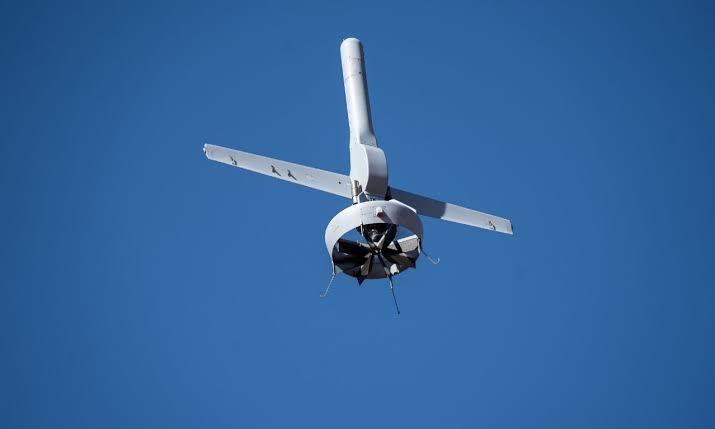
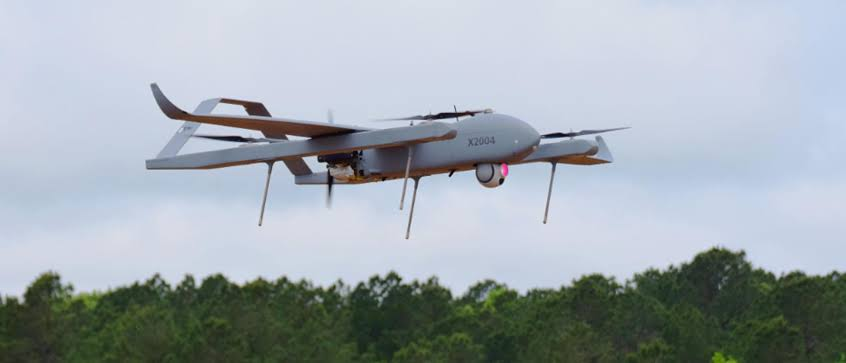
See, FARA is much more expensive and complex system to manufacture. However, as a very fast & highly maneuverable rotary-wing platform (coupled with its inbuilt countermeasures) it is more survivable than these types of tactical UAV. But, simply not survivable enough to justify its cost and expense. On the other hand, these tactical UAVs are far more cost effective and simpler to built, hence highly attritable.
In essense, US army is trading moderate survivability of limited numbers of expensive FARA, with far higher attritability of large numbers of cost effective future tactical unmanned aircraft system. (Even though FARA can carry more sophisticated & longer range sensor payload, future tactical UAS program will compensate for that by fielding higher numbers of platforms and distributing them cross the battlefield.) This is a very good trade-off.
And today's networking revolution & increasing sensor to shooter connectivity has decreased the need to mount firepower and sensor package on the same platform. Hence, wherever feasible (by prioritising modularity, cost effectiveness & ease of manufacturing) more and more simpler, separate sensor and shooter platforms are being built.
However, it does not necessarily always negate the need of combining sensor package & heavy weapons in a single expensive platform. In fact, those are also imperative in highly contested battefield and combat scenarios.
In that same spirit, heavy attack helicopters will continue to have its relevance as the primary rotary-wing heavy CAS platforms. (Note that, just 9 months ago US Army has ordered 184x latest variant of AH64E.)
Firstly, we know that AH-64 used to be an excellent ISR asset. (It still is) As it was more survivable as a low flying, highly maneuverable rortaty-wing platform compared high flying slow non-maneuverable large drones like MQ-9. Which are more vulnerable to medium and long range AD than AH-64. But now with small and highly attritable UAVs like ORLAN-30 or RQ-21B flying over the treeline without worrying much about being shot down, largely negate that unique advantage that AH-64 provided previously.
However, where heavy attack helicopters like Apache or T929 is really unmatched, is in their ability to very rapidly concentrated heavy (direct & indirect) firepower at a time and place of necessity or commander's choosing.
That can be largely understood in three ways.
*Scenario No.1– Let's say you have lots of UAV sensoring all over the battlefield and it is totally transparent to you. Also, you have capable UAV to artillery (sensor to shooter) networking. However, you are defending a large area where you don't have sufficient numbers of tanks & IFVs (close combat platforms) to cover all the potential axis of enemy advance. (Now, artillery is very lethal when it comes to stopping enemy advance. However, it is not always sufficient nor can it replace the need for direct combat platforms. I.e. tanks & IFV.) Let's suppose with UAV sensoring you discover a rapid enemy mechanized & armored thrust through an unexpected axis of advance. Where you don't have sufficient direct combat platforms (tanks & IFVs) of your own. And artillery may not be enough here to completely halt the enemy thrust. So, what can you do? By the time you call in your mechanized and armored untis from other sectors in an hour, enemy penetration has been achieved already and serious damage is done. So, you call in your 'flying tanks', which will reach the area within 10 minutes and by engaging the enemy with heavy firepower, will buy you some very critical time until armored & mechanized units reaches there.
Scenario No. 2– Remember that Ukrainian assault in early week of the counter offensive with Bradleys & leopards that ended in disaster? Leading such assault against a prepared enemy with heavy attack helicopters In a combined arms manner will increase the chances of success and inflict more damage on the enemy. When treversing such highly prepared defesive line, attack helicopters are not vulnerable to mines, dragon's teeth, anti armor trenches & artillery like th way tanks & IFVs are. It offers greater flexibility and freedom of maneuver with tank like firepower in such restricted scenario. (Specially if it comes equipped with DIRCM.)
3. Scenario No. 3– As a security element for the mainbody, attack helicopters offer higher flexibility compared to ground units becaues of their ability to cover large areas in a short timespan. This is very useful when conducting screening and guarding tasks. Let's say you want to advance rapidly through an avenue. Yet you don't have the time nor enough ground unit resources to set up sufficient flanking security forces along the way. So, you task these 'flying tanks' to provide security for your mainbody.
Large UAVs (even though can carry heavy firepower) can't perform these tasks the same way these rotary-wing platforms can do. As they are high-flying, slow, non-maneuverable platforms. Hence highly vulnerable to MRSAMs & LRSAM.
Thats what i am saying the j10c news can be not trueDon't know about numbers of J-10Cs. Though the news regarding potential Rafale offer from France was already debunked.
CA's press wing calls report on potential France-Bangladesh Rafale deal 'untrue'
The Chief Adviser's press wing has dismissed a report about a potential deal with France for Rafale fighter jets, calling the claims "unfounded". This response comes after a report by the Indian publication The Sunday Guardian claimed "France aims to finalise Rafale deal with Bangladesh" thanks...www.tbsnews.net
Thats what i am saying the j10c news can be not true
Thats what i am saying the j10c news can be not true
J-35A would then be available for export.
The BAF won't be able to acquire them even in the 2027-2028 period. At best, Chinese 4th gen fighters for now and by then if they want to go that path.

I meant it will be "available" for export and as a very knowledgeable poster says China is developing an export version. If BAF places an order in 2027-2028, then do not expect any to arrive till 2029-2030.
Unless BD shows hostile intentions to China, then export version of J-35A will be approved for sale.


