Bangladesh Army’s new battalion has Umar, Abu Bakr, Ali and Usman companies

Afif

VIP Member
Joined
Jan 6, 2024
Messages
1,682
Reaction score
4,684
Reputation
3,281.2
Country of Origin
Country of Residence
MOD EDIT - HINDUTVA PROPAGANDA - but discussion allowed to discuss the agenda behind this fake news.


Naming the four companies after close companions and fathers- and sons-in-law is a sign of growing Islamisation within the rank and file of the Bangladesh Army
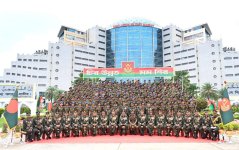
1782794290261.jpeg


A newly raised Bangladesh Army battalion has named the four companies comprising this unit after the distinguished companions (sahabas) of Prophet Muhammad, testifying to the growing Islamisation of an organisation that draws its inspiration from the 1971 liberation war.

The names of the four companies are: Umar, Abu Bakr, Ali and Usman.

On June 18, 2026, the 2nd Bangladesh Battalion (BD Bn) was formally raised at the Bangladesh Military Academy (BMA), Bhatiary. The battalion was inaugurated by Army Chief General Waker-Uz-Zaman, who was on a Hajj pilgrimage in late May this year.

Bangladesh Army sources said that initially the battalion will begin its functions by using the BMA’s existing infrastructure and facilities. It will gradually be relocated to a separate location in due course.

Growing Islamisation and shifting religious dynamics within the Bangladesh Army have become prominent topics of geopolitical and domestic concern following the August 2024 regime change. Observers point to several visible, institutional, and cultural shifts indicating a more religiously conservative environment within the military

Gen Waker-Uz-Zaman, who became Chief of Army Staff in June 2024, has been widely noted for sporting a beard, a visible religious marker that breaks with the long-standing secular, clean-shaven tradition held by previous heads of the post-liberation Bangladesh Army.


In late 2025, Bangladesh’s International Crimes Tribunal issued arrest warrants and took into custody scores of current and former military officers—predominantly those associated with the previous, secular-leaning Awami League administration.

Critics and regional analysts characterise these purges as an ideological restructuring aimed at replacing secular officers with those more sympathetic to an Islamist vision.

Following the ouster of Sheikh Hasina in early August 2024, the Mohammad Yunus-led interim administration—heavily influenced by fundamentalist groups like the Jamaat-e-Islami—has pushed to erase secularism as a defining pillar of the Bangladesh state.

This broader societal and political shift directly impacts the institutional ethos of the armed forces.

There have been increased reports of a changing strategic landscape with closer ties to Pakistan’s military apparatus.

Intelligence assessments indicate that Pakistan’s Inter-Services Intelligence (ISI) is actively attempting to re-establish influence within Bangladesh to institutionalise radical Islamic networks.

A few days ago, a small band of Bangladeshi soldiers on patrol was videographed with the armed men raising slogans such as Nara-e-Taqbeer, Allahu Akbar, which translates to The slogan is that Allah (God) is the Greatest.

@LeonBlack08 @AbuShalehRumi @Bengal71 e al.
 
Intelligence assessments indicate that Pakistan’s Inter-Services Intelligence (ISI) is actively attempting to re-establish influence within Bangladesh to institutionalise radical Islamic networks.
lol


A few days ago, a small band of Bangladeshi soldiers on patrol was videographed with the armed men raising slogans such as Nara-e-Taqbeer, Allahu Akbar, which translates to The slogan is that Allah (God) is the Greatest.
lmfao

indians are so funny man
 
Naming the four companies after close companions and fathers- and sons-in-law is a sign of growing Islamisation within the rank and file of the Bangladesh Army.

View attachment 203861


A newly raised Bangladesh Army battalion has named the four companies comprising this unit after the distinguished companions (sahabas) of Prophet Muhammad, testifying to the growing Islamisation of an organisation that draws its inspiration from the 1971 liberation war.

The names of the four companies are: Umar, Abu Bakr, Ali and Usman.

On June 18, 2026, the 2nd Bangladesh Battalion (BD Bn) was formally raised at the Bangladesh Military Academy (BMA), Bhatiary. The battalion was inaugurated by Army Chief General Waker-Uz-Zaman, who was on a Hajj pilgrimage in late May this year.

Bangladesh Army sources said that initially the battalion will begin its functions by using the BMA’s existing infrastructure and facilities. It will gradually be relocated to a separate location in due course.

Growing Islamisation and shifting religious dynamics within the Bangladesh Army have become prominent topics of geopolitical and domestic concern following the August 2024 regime change. Observers point to several visible, institutional, and cultural shifts indicating a more religiously conservative environment within the military.

Gen Waker-Uz-Zaman, who became Chief of Army Staff in June 2024, has been widely noted for sporting a beard, a visible religious marker that breaks with the long-standing secular, clean-shaven tradition held by previous heads of the post-liberation Bangladesh Army.


In late 2025, Bangladesh’s International Crimes Tribunal issued arrest warrants and took into custody scores of current and former military officers—predominantly those associated with the previous, secular-leaning Awami League administration.

Critics and regional analysts characterise these purges as an ideological restructuring aimed at replacing secular officers with those more sympathetic to an Islamist vision.

Following the ouster of Sheikh Hasina in early August 2024, the Mohammad Yunus-led interim administration—heavily influenced by fundamentalist groups like the Jamaat-e-Islami—has pushed to erase secularism as a defining pillar of the Bangladesh state.

This broader societal and political shift directly impacts the institutional ethos of the armed forces.

There have been increased reports of a changing strategic landscape with closer ties to Pakistan’s military apparatus.

Intelligence assessments indicate that Pakistan’s Inter-Services Intelligence (ISI) is actively attempting to re-establish influence within Bangladesh to institutionalise radical Islamic networks.

A few days ago, a small band of Bangladeshi soldiers on patrol was videotaped with the armed men raising slogans such as Nara-e-Taqbeer, Allahu Akbar, which translates to The slogan is that Allah (God) is the Greatest.

@LeonBlack08 @AbuShalehRumi @Bengal71 e al.
India needs to realize that the majority of Bangladeshis hate India more than they hate Pakistan. Specially youth. There is rising anti-India sentiment in Bangladeshi youth against India, and soon it would reflect in their Armed Forces as well. INSHALLAH, Bangladesh will be the third front against India, and my prediction is that sooner or later a major Fidayeen Attack will take place inside India, and India will blame Bangladesh for it. Bangladesh will be attacked and bombed and that would be the starting point for Bangladesh to build their Armed Forces the way they should have done from day one. Bangladesh will eventually become a force with the Army alone around 400000, and the Navy and Air Force separate and much bigger fighter jet fleet and a fleet of warships and submarines.
 
Naming the four companies after close companions and fathers- and sons-in-law is a sign of growing Islamisation within the rank and file of the Bangladesh Army

View attachment 203861


A newly raised Bangladesh Army battalion has named the four companies comprising this unit after the distinguished companions (sahabas) of Prophet Muhammad, testifying to the growing Islamisation of an organisation that draws its inspiration from the 1971 liberation war.

The names of the four companies are: Umar, Abu Bakr, Ali and Usman.

On June 18, 2026, the 2nd Bangladesh Battalion (BD Bn) was formally raised at the Bangladesh Military Academy (BMA), Bhatiary. The battalion was inaugurated by Army Chief General Waker-Uz-Zaman, who was on a Hajj pilgrimage in late May this year.

Bangladesh Army sources said that initially the battalion will begin its functions by using the BMA’s existing infrastructure and facilities. It will gradually be relocated to a separate location in due course.

Growing Islamisation and shifting religious dynamics within the Bangladesh Army have become prominent topics of geopolitical and domestic concern following the August 2024 regime change. Observers point to several visible, institutional, and cultural shifts indicating a more religiously conservative environment within the military

Gen Waker-Uz-Zaman, who became Chief of Army Staff in June 2024, has been widely noted for sporting a beard, a visible religious marker that breaks with the long-standing secular, clean-shaven tradition held by previous heads of the post-liberation Bangladesh Army.


In late 2025, Bangladesh’s International Crimes Tribunal issued arrest warrants and took into custody scores of current and former military officers—predominantly those associated with the previous, secular-leaning Awami League administration.

Critics and regional analysts characterise these purges as an ideological restructuring aimed at replacing secular officers with those more sympathetic to an Islamist vision.

Following the ouster of Sheikh Hasina in early August 2024, the Mohammad Yunus-led interim administration—heavily influenced by fundamentalist groups like the Jamaat-e-Islami—has pushed to erase secularism as a defining pillar of the Bangladesh state.

This broader societal and political shift directly impacts the institutional ethos of the armed forces.

There have been increased reports of a changing strategic landscape with closer ties to Pakistan’s military apparatus.

Intelligence assessments indicate that Pakistan’s Inter-Services Intelligence (ISI) is actively attempting to re-establish influence within Bangladesh to institutionalise radical Islamic networks.

A few days ago, a small band of Bangladeshi soldiers on patrol was videographed with the armed men raising slogans such as Nara-e-Taqbeer, Allahu Akbar, which translates to The slogan is that Allah (God) is the Greatest.

@LeonBlack08 @AbuShalehRumi @Bengal71 e al.

Bollywood. Weed. Some alcohol. And you have a new article to publish.

On a serious note - this is just the beginning of Hindutva-Zionist nexus vilifying Bangladesh military establishment and Bangladesh in general.

Just the other day Israeli ambassador to India claimed Hamas is active in Bangladesh and Pakistan.

These things don't happen in random. They sow seeds and years later act on it. There will be more outlandish claims before some sort of false flag will be used to justify some sort of invasion into Bangladesh in the not so distant future.

If Bangladeshi armed forces don't wake up and prepare themselves to defend the country against any future aggression, there will be no one to blame. Signs are there, we were too inept to recognize them.
 
Also for those unaware - Bangladeshi armed forces have long used names of religious figures especially in the navy. For example - BNS Abu Bakar, BNS Umar Farooq, BNS Khalid Bin Walid etc.
 
Also for those unaware - Bangladeshi armed forces have long used names of religious figures especially in the navy. For example - BNS Abu Bakar, BNS Umar Farooq, BNS Khalid Bin Walid etc.
Does the BNS Umar Farooq always retreat from action like its namesake? where is the BNS Abu Sufiyan "the hero of Islam" ship? or perhaps the BNS "Hinda" or BNS Yazid ibn Muaibiya. khalid Bin Walid was a great tactician but the other 2 are definitely Traitors, specially the callous Umar. Lived all his life as a coward. Ran away from every situation of danger calling it "God's will".

Disgusting fellow that. Ofcouese Umayyadi historians paint him as a great pious leader. Truth is he was a sore loser of the worst kind who didnt even appoint Khalid Bin Walid as the rightful commander of the arab armies at the time. His reasoning being victory cant been seen as attributed to Khalid but to god alone. As if the people didnt understand that and were a dumb pack of sheep.

In true, it was because Khalid would grow more popular than him and might kick his usurpar's ass. The guy was the worst kind of creature among men and a traitor to the Prophet's family. Was also the reason why Fatima (Her eminence be blessed) had a miscarriage and died. Umar ibn traitor is the father of modern day ugly foul bearded ISIS orcs.
 
Does the BNS Umar Farooq always retreat from action like its namesake? where is the BNS Abu Sufiyan "the hero of Islam" ship? or perhaps the BNS "Hinda" or BNS Yazid ibn Muaibiya. khalid Bin Walid was a great tactician but the other 2 are definitely Traitors, specially the callous Umar. Lived all his life as a coward. Ran away from every situation of danger calling it "God's will".

Disgusting fellow that. Ofcouese Umayyadi historians paint him as a great pious leader. Truth is he was a sore loser of the worst kind who didnt even appoint Khalid Bin Walid as the rightful commander of the arab armies at the time. His reasoning being victory cant been seen as attributed to Khalid but to god alone. As if the people didnt understand that and were a dumb pack of sheep.

In true, it was because Khalid would grow more popular than him and might kick his usurpar's ass. The guy was the worst kind of creature among men and a traitor to the Prophet's family. Was also the reason why Fatima (Her eminence be blessed) had a miscarriage and died. Umar ibn traitor is the father of modern day ugly foul bearded ISIS orcs.

You take your retarded shia bullshit somewhere else.
 
Chandan ki doli mein, gobarchand ki jholi mein
Gobarzada aayi meri
Khushiyan woh layi meri
Palko ke dar se woh aankhon ke ghar mein rahe....
 

Users who are viewing this thread

Back
Top