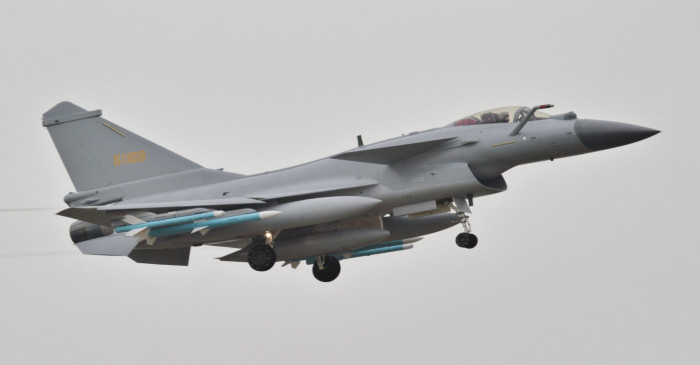
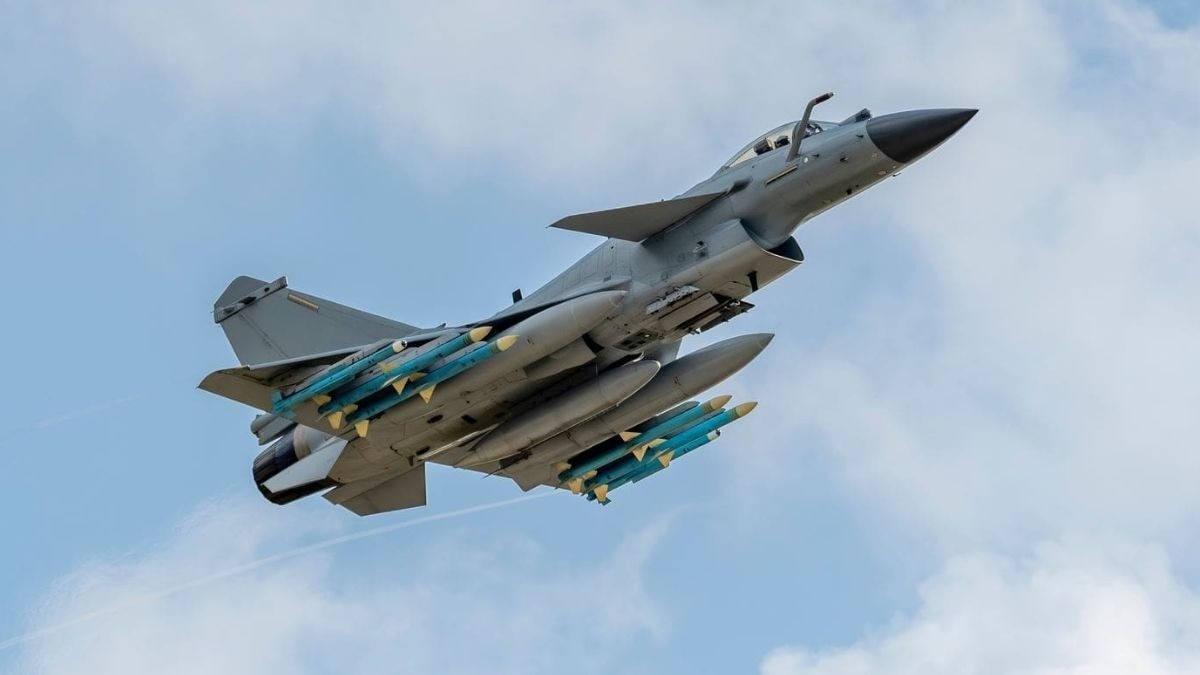
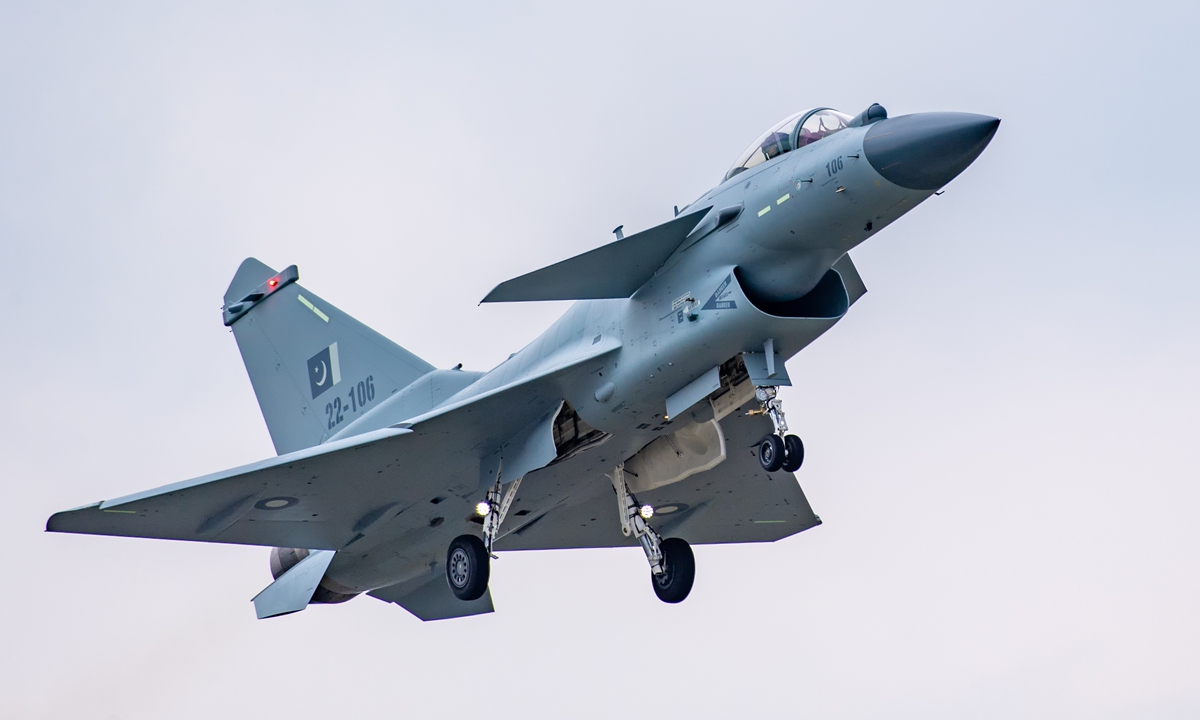
Bangladesh plans $2.2b purchase of 20 Chinese J-10 fighter jets

The way warfare is headed to, Bangladesh doesn’t need Squadrons of jets. There are other more effective & less visible options to build deterrence & security. Big powers are almost always bullies, it’s the nature of power. But they are almost always easier to manipulate too & successfull smaller powers are always more manipulative & clever. Bangladesh is clever as any other nationality or state in the region.
They need to be an elite version of Hezbollah than a proper national army; even the Swiss are a better model than what they are trying to become, aka Indian or Pakistani army 2.0.
Bangladesh needs a porcupine defense.
Pakistan to be like a cheetah: fast, effective, agile, but not too burdensome.
India is fine with its elephant army.
 
Although it’d be extremely foolish of India to attack or get in to hostilities with Bangladesh, but you can’t put it past the low iq lecherous lot in charge of India these days. In their desperation & in a bid to save their image they might just do the unthinkable.

the current bangladeshi army is more than capable in tying down invading Indian forces
 
Perfect recipe for escalation ladder in a relatively peaceful neighbourhood. Obviously it can only come out of oversmart Pakistani brain.

I would like to see stand of BD members on this.

Let me tell you something, BD is going to modernize its military for minimum credible deterrence regardless of what others think without being anyone else's cannon folder. Because it is within our reasonable capacity to have it this way.
 
Last edited:
Let me tell you something, BD is going to modernize its military for minimum credible deterrence regardless of what others think without being anyone else's cannon folder. Because it is within our reasonable capacity to have it this way.
Hm.. Totally okay to develope capabilities of own. But Read the quoted Pakistani comment again.
It's talking about BD giving it's land to Pk or China for military or espionage purpose.
 
Perfect recipe for escalation ladder in a relatively peaceful neighbourhood. Obviously it can only come out of oversmart Pakistani brain.

I would like to see stand of BD members on this.
In my personal opinion, Bangladeshis tend to be more low-key, pragmatic, and rational. In contrast, some Pakistanis—not all, but a certain segment of them—can be quite ignorant, arrogant, and ill-informed. They often seem more inclined to look for faults, provoke conflicts, and criticize others than to focus on hard work and their own personal development.
 
Bangladesh to sign deal for 24 Chinese fighter jets in August; China to gift 20 locomotives

Beijing pushes ahead with a fighter-jet deal as Dhaka balances ties with China, Washington, Moscow and New Delhi

by Enayet Kabir June 23, 2026

Tarique-China.jpg

Ahead of Bangladeshi Prime Minister Tarique Rahman’s visit to China, several special Chinese delegations visited Dhaka last week.

During the upcoming Beijing trip, Bangladeshi representatives held preliminary discussions to finalize separate meetings with China’s defence and foreign ministers regarding the purchase of 24 advanced J-10CE multirole fighter aircraft and 20 locomotive engines from China.

Chinese representatives sought assurances on whether Bangladesh would be able to move beyond any conditions under the Reciprocal Trade Agreement (RTA) that might restrict military and commercial agreements with third countries without U.S. approval.

Bangladeshi officials reportedly stated that, despite maintaining a U.S.-oriented foreign policy, there would be no obstacle to finalizing plans to purchase 24 advanced J-10CE multirole fighter jets from China.

The Chinese representatives who visited Bangladesh during Prime Minister Tarique Rahman’s China tour, which began on Monday, June 22, 2026, came primarily to confirm the proposed agreements concerning the fighter aircraft and railway engines.

Several diplomatic sources in both China and Bangladesh, speaking on condition of anonymity, confirmed that the final agreement for the fighter aircraft purchase could be signed by August this year.

Under the proposed deal, the estimated market value of each advanced Chinese fighter jet has been set at approximately US$40 million. In addition, China has proposed gifting Bangladesh 20 railway locomotive engines.

Today (Tuesday, June 23), Prime Minister Tarique Rahman held a courtesy meeting with Alois Zwinggi, President and CEO of the World Economic Forum.

The meeting took place at 5:00 p.m. local time at the Dalian International Conference Center in China.

Bangladeshi diplomats are hopeful that following the formal bilateral meeting between Prime Minister Tarique Rahman and Chinese Premier Li Qiang, the two countries may issue a joint declaration elevating their current strategic relationship to a “Shared Future Partnership.”

Bangladesh also intends to continue discussions regarding the Teesta Barrage Master Plan despite China’s apparent reluctance to become involved.

The current BNP-led government is attempting to pursue a balanced, multi-vector foreign policy similar to that followed by the previous Awami League government.

The objective is to maintain active relations simultaneously with Washington, Beijing, Moscow, and New Delhi. Despite various criticisms, the current government has kept in force the reciprocal tariff agreement with the United States.

Officials say that Prime Minister Tarique Rahman is also planning a future visit to India to repair the deterioration in Bangladesh-India relations that occurred during the interim government’s tenure.

However, all parties acknowledge that restoring relations with New Delhi will be a complicated process.

Analysts view recent attempts at forced border pushbacks and the prolonged detention of adviser Zahed Ur Rahman at New Delhi Airport as clear indications of ongoing tensions in bilateral relations.

Bangladesh’s foremost economic priority is the creation of new jobs. The previous Awami League government sought to attract both foreign and domestic investment into manufacturing through the establishment of economic zones.

If Chinese manufacturing operations can be relocated to Bangladesh, it could create employment opportunities for thousands of unemployed young people.

Meanwhile, Bangladesh Foreign Secretary Asad Alam Siam has stated that during the Prime Minister’s visit, the two countries are expected to sign approximately two agreements, 15 memoranda of understanding (MoUs), and several declarations.

The two sides have also agreed to jointly advance the modernization project of Mongla Port, Bangladesh’s second-largest seaport, which has long suffered from infrastructure limitations and underutilization.

To increase the port’s economic significance, Bangladesh has completed preparations to allocate a 110-acre Special Economic Zone (SEZ) in Mongla for China.

This industrial park was originally designated for Indian investment, and an MoU had previously been signed with a Mumbai-based company for its development.

However, an official from the Bangladesh Investment Development Authority (BIDA) confirmed that Dhaka has recently canceled that agreement with India, making the land directly available to Chinese investors.

Just one week before this decision, the government approved an exclusive Chinese industrial park in Chattogram, where Beijing has already pledged US$500 million in investment.

Diplomatic analysts believe that the rapid expansion of Dhaka’s ties with Beijing will be closely monitored by neighbouring India.

Bangladesh and India share a 4,096-km-long border and are deeply interconnected through trade, security cooperation, and the management of shared river waters.

Diplomatic sources also indicate that Dhaka hopes to strengthen commercial ties with the United States—the world’s largest economy—by increasing imports of soybeans, corn, and cotton from the U.S., thereby leveraging America’s influential agricultural lobby.

However, Dhaka’s diplomatic outreach extends beyond Washington and Beijing to Moscow as well. Earlier this month, Bangladeshi Foreign Minister Khalilur Rahman visited Russia and reaffirmed the longstanding relationship between the two countries.

Diplomatic sources believe that Moscow will fully support Bangladesh’s efforts to join BRICS, one of the world’s leading economic blocs, in which China plays a central role.

 
Bangladesh eyes J-10CE fighter jet deal as Dhaka resets foreign policy

Jun 22, 2026

1782144840_38ff57f3ccc73f4458ef.jpg


Bangladesh is expected to advance plans to acquire 24 Chinese J-10CE multi-role fighter jets during Prime Minister Tarique Rahman's visit to China beginning Monday, as Dhaka and Beijing prepare to deepen cooperation across defense, infrastructure, trade and investment. "We hope to sign the fighter jet purchase agreement by August this year," a senior government official told Daily Waadaa on condition of anonymity. The official said each aircraft is valued at approximately $40 million.

A Chinese delegation visited Dhaka last week to accelerate negotiations, while Bangladeshi officials are expected to hold separate meetings with China's foreign and defense ministers during the visit to finalise key details of the proposed acquisition.

The defense discussions form part of a broader agenda that officials say could significantly elevate Bangladesh-China relations.

Government officials expect the two countries to upgrade ties from a strategic partnership to a "community of shared future," a formulation likely to be reflected in a joint communique following talks between Prime Minister Rahman and Chinese Premier Li Qiang.

Foreign Secretary Asad Alam Siam said up to 17 agreements, memoranda and communiques are expected to be signed during the visit.

Among the major initiatives under discussion is a joint feasibility study for the Teesta River barrage project.

The two sides are also expected to go forward with the plans for the modernization of Mongla Port, Bangladesh's second-largest seaport, which has long struggled with infrastructure constraints and underutilisation.

Bangladesh is also preparing to offer China a 110-acre Special Economic Zone in Mongla, according to government officials.

The industrial park had previously been earmarked for Indian investment and was to be developed by a Mumbai-based company under an earlier memorandum of understanding.

However, a Bangladesh Investment Development Authority official confirmed that Dhaka recently cancelled the agreement, clearing the way for Chinese investors.

The move follows the government's approval last week of an exclusive Chinese industrial park in Chattogram, where Beijing has pledged $500 million in investment.

"Our immediate priority is job creation," the senior official told Waadaa. "Attracting large-scale relocation of Chinese manufacturing to Bangladesh has the potential to generate tens of thousands of local employment opportunities."

Geopolitical balance

Officials acknowledge that the rapid expansion of ties with Beijing is likely to be closely scrutinized in New Delhi. Bangladesh and India share more than 4,000 kilometres of border and remain deeply interconnected through trade, security and transboundary river management.

Analysts have pointed to recent developments—including reported increases in push-in attempts across sections of the border and the widely discussed delay that left Adviser Zahed ur Rahman stranded at New Delhi airport—as indications of growing strains in bilateral relations.

Historically, former prime minister Sheikh Hasina made India the destination of her first major overseas visits, underscoring the importance of the relationship with New Delhi.

In contrast, officials say the current BNP-led administration is pursuing a multi-aligned foreign policy that seeks to maintain active engagement with Washington, Beijing, Moscow and New Delhi simultaneously.

The government has maintained the Agreement on Reciprocal Tariffs with the United States despite criticism from some left-leaning political groups.

Officials say Dhaka is leveraging the U.S. agricultural lobby as a critical building block to deepen economic ties with the world's largest economy by scaling up imports of American soybeans, corn, and cotton.

The outreach has extended to Moscow as well. Foreign Minister Khalilur Rahman visited Russia earlier this month to reaffirm long-standing bilateral ties.

Officials expect Moscow to support Bangladesh's planned bid to join BRICS, the economic grouping in which China plays a leading role.

Officials said Prime Minister Tarique Rahman intends to visit India in the near future in an effort to stabilise relations that deteriorated during the tenure of the Interim Government.

However, they acknowledge that the path toward repairing ties remains complicated.

"India is not making it easy," the senior official said, describing the treatment of Adviser Zahed ur Rahman at New Delhi airport as a "deliberate" diplomatic snub.

 
India - yeah. there is a 250,000 man Bangladeshi army to resist

Myanmar - really??

I dont wish for that, but we will see.

And dont be shocked at myanmar. What is afghanistan in comparison to Pakistan ? Yet we are facing terrorism, cross-border attacks and have to spend money on operations in afghanistan. So afghanistan on a good day is costing us 100-200 billion rupees per year in losses and operational costs. Is myanmar capable of doing this to bangladssh ? Yes. Because unlike Afghanistan, it even have an active army.
 

Users who are viewing this thread

Pakistan Defence Latest

Back
Top