
MNZGamerX
Registered Member

The two countries announce a “new era” in ties during Prime Minister Tarique Rahman’s trip.
By Michael Kugelman, the writer of Foreign Policy’s weekly South Asia Brief and a senior fellow for South Asia at the Atlantic Council.
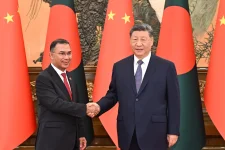
At first glance, Rahman’s itinerary may not seem like a big deal. China is a top partner and donor of Bangladesh, and bilateral ties have deepened significantly over more than a decade. But the trip was more than just another high-level visit—it has potentially problematic implications for India, China’s rival and a traditional close friend of Bangladesh.
Dhaka and Beijing have called their relationship a strategic partnership since Bangladeshi Prime Minister Sheikh Hasina visited Beijing in July 2024, just before she was ousted amid mass protests. But Rahman’s visit produced a joint statement declaring that the strategic partnership will be elevated to “build a China-Bangladesh community with a shared future in the new era.”
Based on the raft of agreements announced during the visit, this appears to mean that the partnership is branching out into wider areas of cooperation. The countries agreed to partner on connectivity, port modernization projects, and water management. They discussed relocating Chinese factories to Bangladesh to stimulate the latter’s weak private sector.
The two sides announced a 2+2 dialogue between their defense and foreign ministries, an arrangement reserved for especially deep partnerships. One memorandum of understanding even commits Bangladesh schools to teach Mandarin—portending a Chinese soft-power play. Beijing pledged to support Dhaka’s accession to BRICS and the Shanghai Cooperation Organisation.
This is all striking, given expectations that Rahman’s government would seek rapprochement with India. Bangladesh-India ties have sunk since Hasina’s ouster, but some ruling Bangladesh Nationalist Party (BNP) leaders have signaled a desire to get things back on track. A smoother relationship would make it easier to engage on critical issues from trade and connectivity to border security.
However, there are also understandable reasons for Rahman to make this landmark visit to China so early in his term. Bangladesh’s economy—once a regional success story—is sputtering, and it could use Chinese capital in the long term. More broadly, Bangladesh has few deep and multifaceted partnerships; China’s global stature makes it a useful exception.
Finally, among the Bangladeshi public, there is robust pro-China sentiment and strong anti-India sentiment. Rahman’s visit gives a political boost to a young government, while a trip to India at this juncture would have presented considerable political risks.
Rahman’s visit amounts to a strategic disappointment for India, which likely quietly welcomed the election victory of the BNP. New Delhi sees the BNP as a more palatable partner than its ally-turned-rival Jamaat-e-Islami, an Islamist party. India has also signaled a desire to patch up ties with the Rahman government, but the China visit is a reminder of why that won’t be easy.
However, Rahman’s trip does carry some risk for Dhaka. The new government has declared a “Bangladesh first” policy, essentially a form of nonalignment that entails pursuing diplomacy that advances Bangladesh’s interests and avoids deferring to any one country. But if Dhaka appears to be moving too close to Beijing, that undercuts the policy.
Bangladesh’s leaders have actually called for nonalignment since the country’s earliest years, despite Dhaka’s explicit tilt toward New Delhi during the Hasina years. Today, Bangladesh has an opportunity to reassert this policy, if it can balance all its ties.
By Michael Kugelman, the writer of Foreign Policy’s weekly South Asia Brief and a senior fellow for South Asia at the Atlantic Council.
Bangladesh, China Hail ‘New Era’ of Ties
Last week, Bangladeshi Prime Minister Tarique Rahman spent four days in China. The trip, which included an initial stop in Malaysia, was his first abroad since taking office in February.At first glance, Rahman’s itinerary may not seem like a big deal. China is a top partner and donor of Bangladesh, and bilateral ties have deepened significantly over more than a decade. But the trip was more than just another high-level visit—it has potentially problematic implications for India, China’s rival and a traditional close friend of Bangladesh.
Dhaka and Beijing have called their relationship a strategic partnership since Bangladeshi Prime Minister Sheikh Hasina visited Beijing in July 2024, just before she was ousted amid mass protests. But Rahman’s visit produced a joint statement declaring that the strategic partnership will be elevated to “build a China-Bangladesh community with a shared future in the new era.”
Based on the raft of agreements announced during the visit, this appears to mean that the partnership is branching out into wider areas of cooperation. The countries agreed to partner on connectivity, port modernization projects, and water management. They discussed relocating Chinese factories to Bangladesh to stimulate the latter’s weak private sector.
The two sides announced a 2+2 dialogue between their defense and foreign ministries, an arrangement reserved for especially deep partnerships. One memorandum of understanding even commits Bangladesh schools to teach Mandarin—portending a Chinese soft-power play. Beijing pledged to support Dhaka’s accession to BRICS and the Shanghai Cooperation Organisation.
This is all striking, given expectations that Rahman’s government would seek rapprochement with India. Bangladesh-India ties have sunk since Hasina’s ouster, but some ruling Bangladesh Nationalist Party (BNP) leaders have signaled a desire to get things back on track. A smoother relationship would make it easier to engage on critical issues from trade and connectivity to border security.
However, there are also understandable reasons for Rahman to make this landmark visit to China so early in his term. Bangladesh’s economy—once a regional success story—is sputtering, and it could use Chinese capital in the long term. More broadly, Bangladesh has few deep and multifaceted partnerships; China’s global stature makes it a useful exception.
Finally, among the Bangladeshi public, there is robust pro-China sentiment and strong anti-India sentiment. Rahman’s visit gives a political boost to a young government, while a trip to India at this juncture would have presented considerable political risks.
Rahman’s visit amounts to a strategic disappointment for India, which likely quietly welcomed the election victory of the BNP. New Delhi sees the BNP as a more palatable partner than its ally-turned-rival Jamaat-e-Islami, an Islamist party. India has also signaled a desire to patch up ties with the Rahman government, but the China visit is a reminder of why that won’t be easy.
However, Rahman’s trip does carry some risk for Dhaka. The new government has declared a “Bangladesh first” policy, essentially a form of nonalignment that entails pursuing diplomacy that advances Bangladesh’s interests and avoids deferring to any one country. But if Dhaka appears to be moving too close to Beijing, that undercuts the policy.
Bangladesh’s leaders have actually called for nonalignment since the country’s earliest years, despite Dhaka’s explicit tilt toward New Delhi during the Hasina years. Today, Bangladesh has an opportunity to reassert this policy, if it can balance all its ties.


