The R6000 tiltrotor drone takes off like an airplane, lands like a helicopter, and promises autonomous military logistics throughout the Indo-Pacific region.
Published On: July 2, 2026 at 10:35 AM
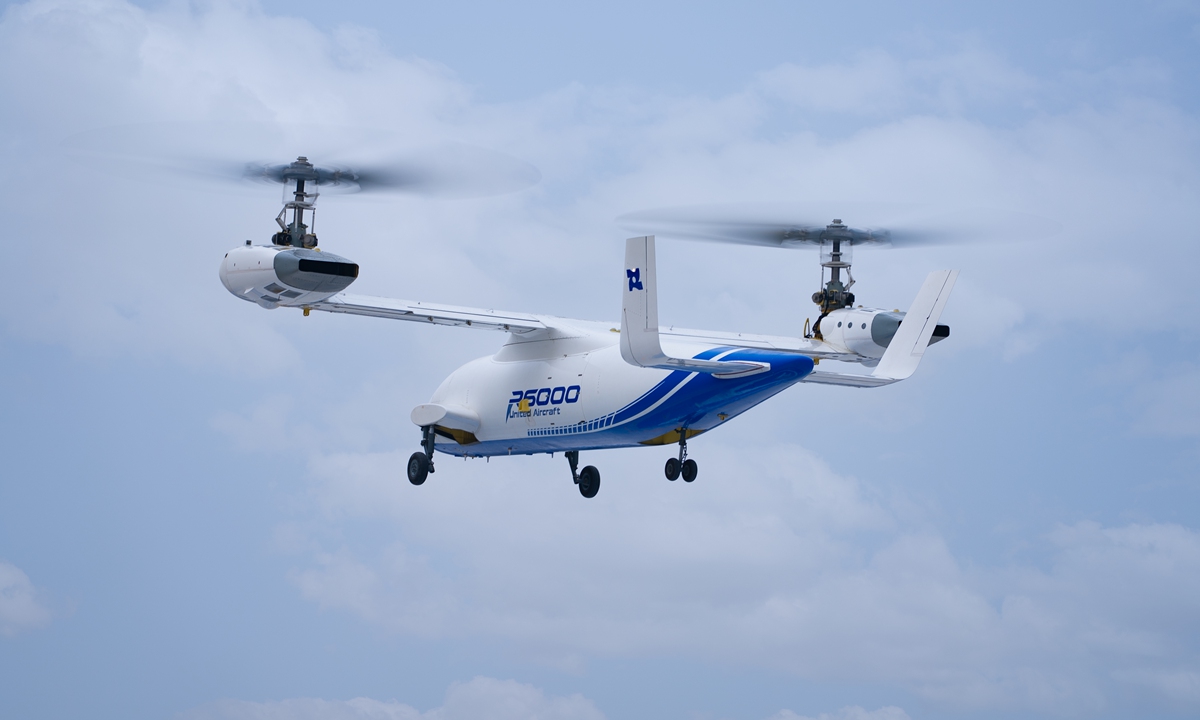
China’s R6000 Lanying is not just another large drone. New footage reported in June 2026 shows the six-ton tiltrotor aircraft moving beyond tethered hover trials into free flight, a step that matters because this kind of machine is designed to lift like a helicopter and cruise like an airplane.
Why should anyone outside an aerospace lab care? Because runways are easy to spot, easy to damage, and hard to replace in a crisis. If the R6000 can mature into a reliable
autonomous transport platform, it could give China a way to move cargo, equipment, and possibly people across islands, mountain regions, offshore sites, and contested areas without depending on fixed air bases.
A drone built for hard places
The R6000 is being developed by
United Aircraft, a Chinese company that describes the aircraft as a six-ton tiltrotor combining vertical takeoff and landing with fixed-wing cruising speed. In simple terms, it is meant to land where a normal plane cannot, then fly farther and faster than a conventional helicopter.
United Aircraft lists a maximum takeoff weight of about 13,450 pounds, a maximum payload of roughly 4,400 pounds, a cruising speed near 342 mph, and a maximum range of about 2,485 miles. It also lists a service ceiling of about 25,000 feet and a mission radius of about 932 miles, numbers that put the R6000 well beyond the usual image of a small battlefield drone.
That mix is the whole point. Effectively, a platform like this could deliver supplies to a remote island, support emergency rescue after a storm, or reach a damaged road network without needing a runway, a control tower, or a large aviation footprint.
The latest flight milestone
The R6000 completed its
maiden flight on December 28, 2025, in Sichuan Province, according to reporting that cited information from United Aircraft. The company positioned the aircraft for point-to-point travel across cities, sea routes, and mountain regions, while also emphasizing its domestic development.
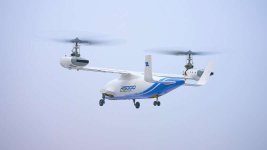
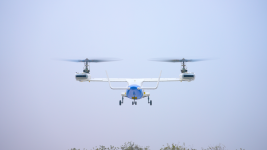
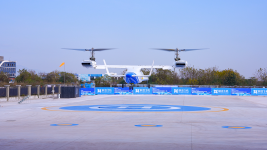
The more recent June footage appears to show the drone in vertical flight, rotating in a hover, and sustaining forward flight with its proprotors tilted. That does not mean the aircraft is ready for service, but it does show the program moving into a more demanding part of testing.
Tiltrotors are famously difficult machines. The hard part is not only taking off vertically or flying forward, but managing the transition between both modes safely and repeatedly. That is where engineering stops being a brochure and starts becoming reality.
The R6000 Lanying tiltrotor drone, developed by United Aircraft, demonstrates vertical flight capabilities as it advances toward long-range autonomous cargo, rescue, and military logistics missions.
Why militaries are watching
Officially, United Aircraft presents the R6000 as a civil platform for logistics, emergency rescue, passenger travel, and all-terrain missions. The company says it can support cargo transportation, medical evacuation, and flights into mountains, islands, and narrow urban spaces.
The same qualities that make it useful for disaster relief, however, also make it interesting for defense planners. A large autonomous aircraft that does not need a runway could help sustain dispersed forces, isolated outposts, or ships operating far from established bases.
That matters in the
Indo-Pacific, where distance is its own kind of battlefield. The ocean is vast, islands are spread out, and in a conflict, big fixed bases could become early targets. A drone that can move supplies from point to point without risking a pilot starts to look less like a novelty and more like a logistics tool.
The engineering choice
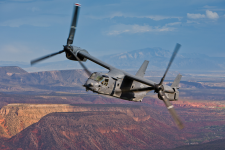
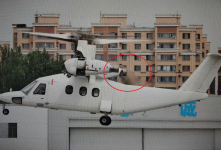
The R6000 uses a tiltrotor layout with fixed engine nacelles and hinged proprotors, a design approach that has drawn comparisons with
Bell’s MV-75A Cheyenne II, the U.S. Army’s future tiltrotor derived from the V-280 Valor. That differs from the
V-22 Osprey’s first-generation layout, where the full nacelle pivots.
United Aircraft says the R6000 uses a tilting rotor shaft arrangement rather than a fully rotating engine nacelle. According to company-linked reporting, that setup is meant to reduce problems from high-temperature exhaust during takeoff and landing, especially near people or on maritime platforms.
Small detail? Not really. For shipboard use, rough landing sites, or crowded forward positions, exhaust and heat are not minor issues. They can shape where an aircraft can safely land and how often it can be used.
Civil market, defense value
China’s pitch for the R6000 fits neatly into its push for a “low-altitude economy,” a broad effort to turn drones and other low-flying aircraft into everyday transport tools. United Aircraft’s own product page highlights passenger travel, cargo delivery, emergency rescue, and all-weather operations.
Still, dual-use technology is rarely that tidy. A cargo drone that can carry commercial goods to a mountain village can also move ammunition, sensors, medical gear, or spare parts to a remote military site. At the end of the day, the aircraft does not care whether the box inside is civilian or military.
That is why the R6000’s
runway independence may be its most important feature. Speed and payload grab headlines, but the real advantage is flexibility. When roads are blocked, airfields are hit, or weather squeezes options, having another way to move essential cargo can change the tempo of operations.
Big promise, big hurdles
The R6000 is still a developmental aircraft, and that should not be glossed over. Free flight is important, but certification, reliability, autonomous control, maintenance, weather tolerance, and safe transition flight all remain serious hurdles before any large-scale use.
There is also the question of how much of the advertised performance will hold under real operating conditions. Payload, range, altitude, weather, and mission profile always trade against one another. A 2,485-mile maximum range on paper does not automatically mean that every military or rescue mission will see that number.
Even so, the direction is clear. China is pushing
large autonomous aircraft into roles once reserved for helicopters, turboprops, and crewed military transports. The R6000 may not be operational yet, but it points toward a future where the most valuable logistics aircraft may be the one that does not need a runway at all.
The official product information was published on
United Aircraft.
China's R6000 tiltrotor drone combines airplane speed with helicopter landings for autonomous logistics missions.

www.vozpopuli.com