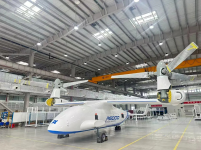
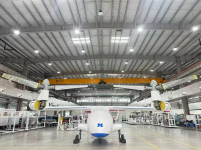
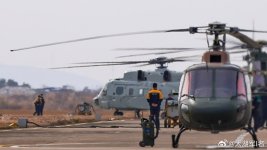
Chinese future high-speed rotorcraft developments

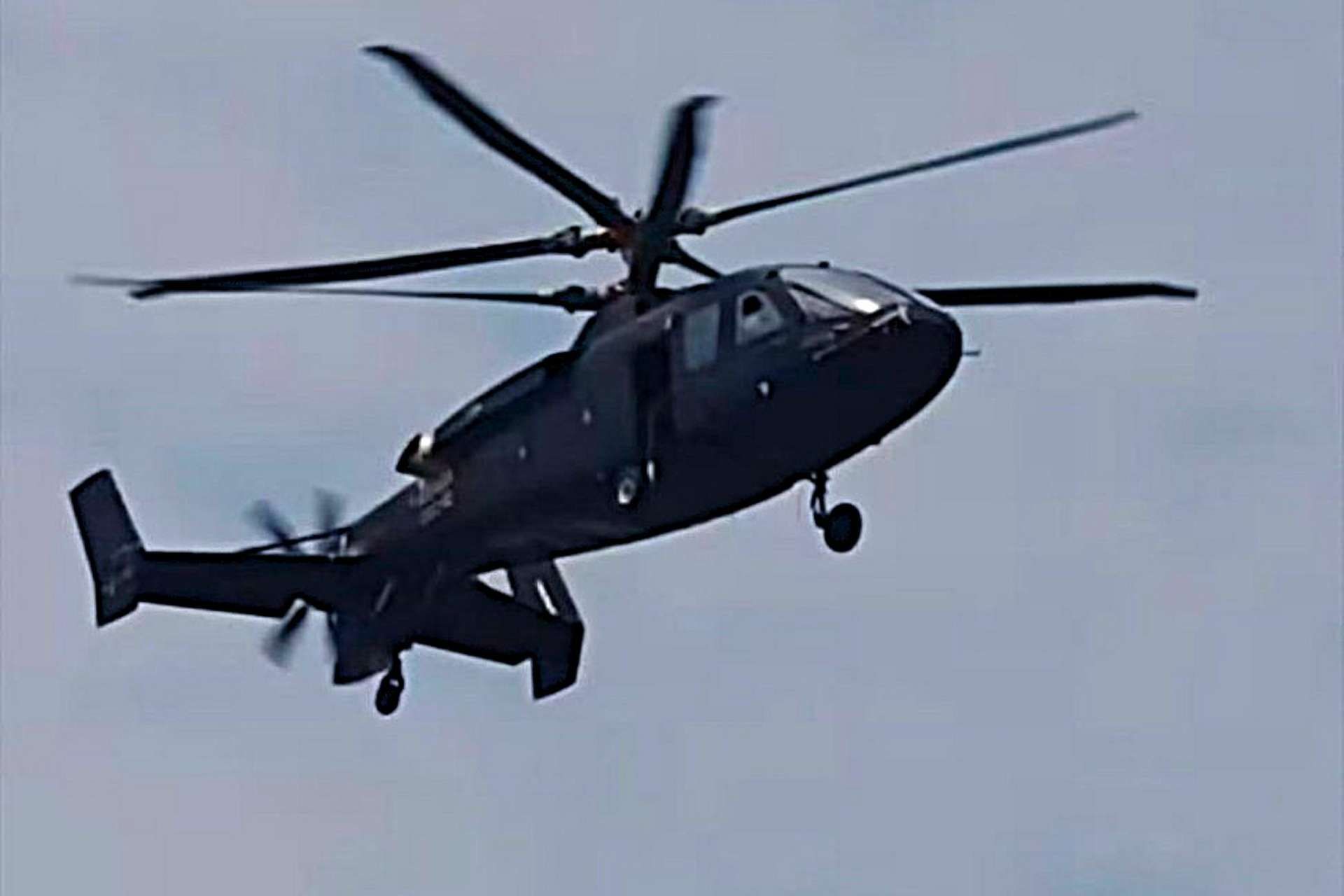
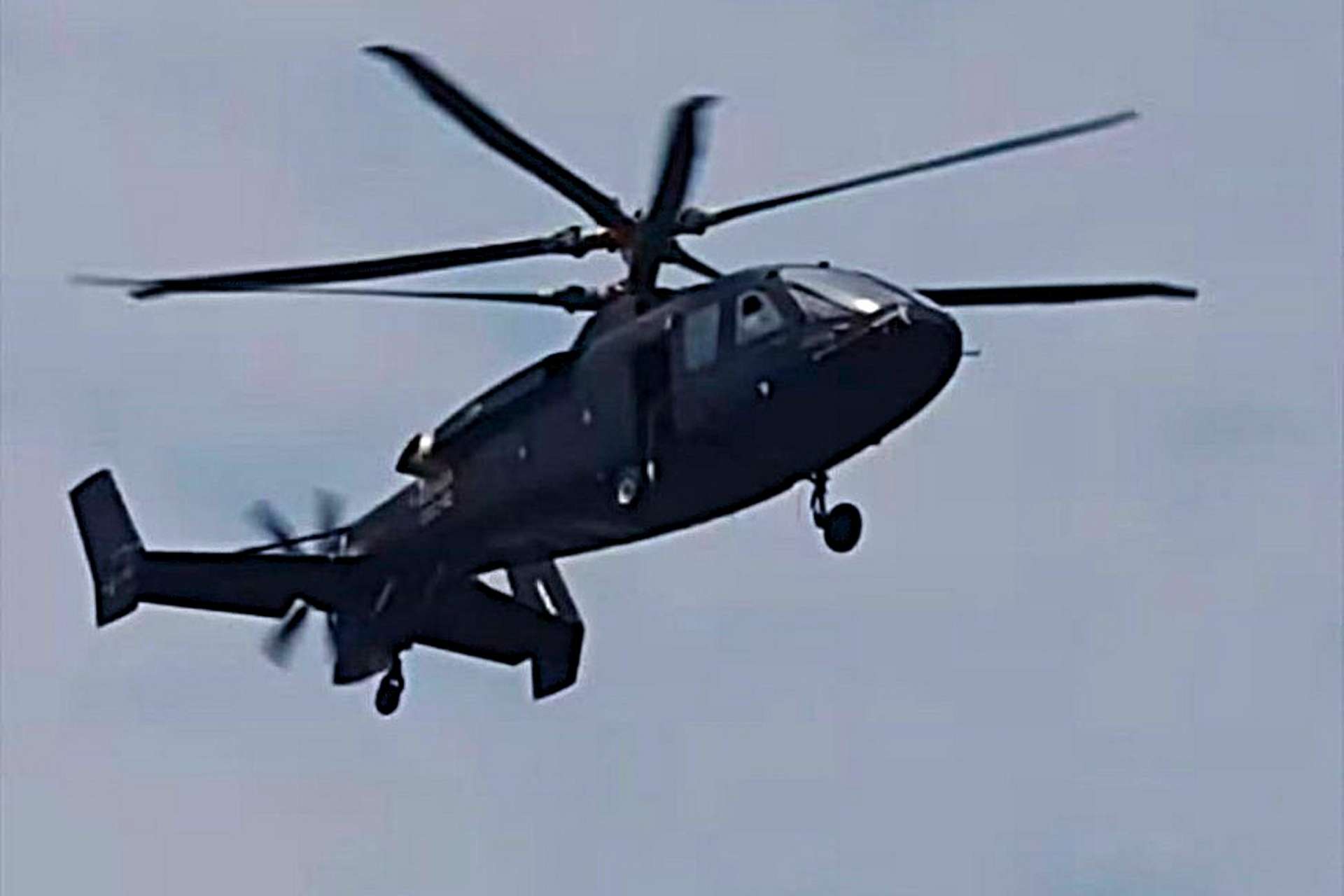
Images leaked on Chinese social media. Please make your own judgment.
via Weibo@Captain小潇
View attachment 142114View attachment 142115View attachment 142116
@Deino
I can't find the right thread to post these images.
Can you please address this?
1. Move this post to the appropriate thread.
2. Rename this thread "Chinese Helicopters and Related Projects."
OK, people on weibo said the pic was from April, nobody taken this seriously because people thinks it's fake until recently the other tech demonstrator was seen testing.
 
To view this content we will need your consent to set third party cookies.
For more detailed information, see our cookies page.
 

China develops new high-speed helicopter, a coaxial rotor system paired with a pusher propeller in the tail​

Aug 21, 2025

Captures via TikTok
Captures via TikTok

China has developed what appears to be a new high-speed helicopter that closely resembles the U.S.-made Sikorsky S-97 Raider, drawing scrutiny from military analysts.

A video of the new aircraft surfaced online showing the helicopter during a test flight.

The footage revealed a coaxial rotor system paired with a pusher propeller in the tail, an identical configuration to the U.S. Raider. According to Chinese social media posts, the video was first published in April 2025 on a domestic version of TikTok but only recently gained wide attention.

The helicopter, sometimes referred to as the “Future High Speed Helicopter,” is presented as part of China’s effort to explore advanced rotorcraft designs. Aviation analysts noted that the design closely tracks U.S. prototypes, reinforcing a pattern in which Chinese defense industries adopt features pioneered abroad.

Andreas Rupprecht, a leading expert on Chinese military aviation, wrote: “And the surprises from China do not stop – it seems as if one currently wants to burn off true fireworks of news – because today this coaxial helicopter (probably a test carrier) was shown for the first time.”

The U.S. Sikorsky S-97 Raider, developed under the Future Vertical Lift program, introduced this coaxial design to deliver higher speeds, improved agility, and enhanced survivability compared to conventional helicopters. China’s apparent adoption of the same features suggests Beijing is testing similar performance concepts for its next generation of rotorcraft.

Photo courtesy of Sikorsky/Lockheed MartinS-97 Raide. Photo courtesy of Sikorsky/Lockheed Martin

The new Chinese aircraft is still believed to be in a testing phase. Analysts caution that copying an airframe design does not guarantee equal performance, as success depends on propulsion, avionics, and flight control systems—areas where China continues to close gaps but faces technical hurdles.
 

Breaking News: New Chinese High-Speed Coaxial Helicopter Resembling US Sikorsky Raider Raises Concerns​


On August 21, 2025, new images of a Chinese prototype helicopter circulated on the Chinese social media platform Weibo, sparking debate among military observers. The footage, showing the rotorcraft in flight, revealed a design nearly identical to the U.S.-made Sikorsky S-97 Raider, with a coaxial rotor system and tail-mounted pusher propeller. The release comes at a time when China is accelerating its development of advanced aviation technologies to match Western capabilities. Analysts stress the relevance of this prototype, as it could signal Beijing’s ambition to expand into the high-speed helicopter domain, a field so far dominated by U.S. industry.
Follow Army Recognition on Google News at this link

Breaking_News_New_Chinese_High-Speed_Coaxial_Helicopter_Resembling_US_Sikorsky_Raider_Raises_Concerns-4d0c453e.jpeg

The appearance of China’s new high-speed helicopter prototype, with its striking resemblance to the U.S. S-97 Raider, highlights both Beijing’s ambitions and its technical hurdles in the rotorcraft domain (Picture source: X-account/RupprechtDeino)

The Chinese aircraft, sometimes referred to as the “Future High-Speed Helicopter,” integrates a coaxial counter-rotating rotor system coupled with a pusher propeller at the tail, designed to provide both lift efficiency and airplane-like forward thrust. Its narrow fuselage, tandem seating, and aerodynamic shaping suggest ambitions for reconnaissance and light assault missions in contested environments. While the visual similarities with Sikorsky’s Raider are striking, details such as fixed landing gear, bulkier tail structures, and simplified airframe elements indicate that the Chinese model remains at a less mature stage of development. The Sikorsky Raider positions its engine exhaust outlets directly beneath the main rotor and oriented to the rear, a configuration designed to streamline airflow and reduce thermal signature. By contrast, the Chinese prototype features engine outtakes located on either side of the fuselage between the rotor system and the tail boom, suggesting a less refined approach that may impact both aerodynamics and infrared management.

Operationally, the prototype reflects a broader pattern in Chinese defense aviation, where experimental designs often follow American or Russian breakthroughs before moving into localized adaptation. Comparisons with the S-97 Raider are inevitable: the U.S. platform has undergone years of testing under the Future Vertical Lift program, proving speeds of up to 400 km/h and advanced agility, while the Chinese helicopter is only now entering its early evaluation stage.

In terms of advantages, adopting the coaxial rotor and pusher propeller architecture could allow Chinese forces to eventually field a rotorcraft with higher speeds, improved survivability, and greater tactical flexibility than conventional helicopters such as the Z-20. However, as past developments have shown, success depends on mastery of engines, avionics, and flight control systems, areas where China still trails. The S-97 Raider itself builds upon decades of U.S. research into the Advancing Blade Concept, a lineage dating back to the 1970s. By contrast, China is only beginning to validate similar configurations, which could leave gaps in performance and reliability.

Strategically, the emergence of this prototype underscores Beijing’s intent to reduce dependence on imported designs and claim a place in the race for next-generation rotorcraft. Should the platform progress, it could reshape regional dynamics by giving the People’s Liberation Army access to high-speed air mobility for reconnaissance, rapid troop insertion, or special operations. Geopolitically, the move reinforces China’s pattern of replicating U.S. technologies, which may heighten tensions with Washington and its allies. Militarily, even a limited production model would complicate calculations for regional forces, particularly in the Indo-Pacific, where rapid deployment capabilities could prove decisive.

The appearance of China’s new high-speed helicopter prototype, with its striking resemblance to the U.S. S-97 Raider, highlights both Beijing’s ambitions and its technical hurdles in the rotorcraft domain. While the design mirrors proven American concepts, its early-stage refinements reveal a program still far from maturity. Yet the strategic signal is clear: China intends to challenge U.S. dominance in advanced helicopter technology, a move that could alter the balance of regional military capabilities if development succeeds.


China Tests Its New Helicopter with Coaxial Rotor System and Pusher Propeller​

To view this content we will need your consent to set third party cookies.
For more detailed information, see our cookies page.
 

China Tests Its New Helicopter with Coaxial Rotor System and Pusher Propeller​

To view this content we will need your consent to set third party cookies.
For more detailed information, see our cookies page.


One thing I like about china is that they are not blinded by ego and won't go to reinventing the wheel bullshit.

If someone have already tested a concept and it works. And there is requirement for it. Just built it the way it's already built elsewhere.
 
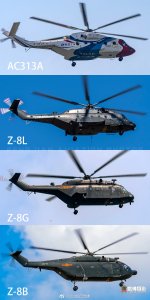
The latest version of the Z-8 series helicopter.
The specific code suffix letter is still unknown.
9f519e8bgy1i4lr1wuahwj20u016cjst.jpg
 
Very interesting. Just wonder if the push propeller is powered by an electric motor or gas turbine.
 
The latest version of the Z-8 series helicopter.
The specific code suffix letter is still unknown.
View attachment 142235
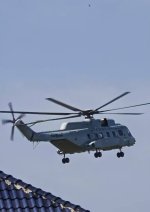
Official news: The official designation of this helicopter is Z-8C. It is a three-engine, shipborne transport helicopter developed specifically to meet the needs of the navy.
1766022364338.png

==============================================

The second R6000 tiltrotor aircraft has completed its test flights.
1766022761713.png
1766022777372.png
1766022540965.png
The factory that manufactures this aircraft is in the city next to mine. Perhaps I can find some time to go and visit it.
 
What China REALLY needs is mastering VTOL/STOVL technologies and come up with a variant of J-35 that can take off and land like F-35. China is taking estimated 2+ years in building an aircraft carrier. While it can probably build 5+ Landing Helo Docs (LHD's) like the one Japan is using. That means in 5 years, China could have smaller 25 LHD's, projecting 25 squadrons across the globe. That's huge air power outside of its aircraft carriers.


Osprey's have been in service for like 50 years and served so many conflicts on front duty. These are also ideal for special force and a small battalion sized weapon load deployment for certain operations. Not sure why you think "they keep crashing".
These technologies have been studied but currently do not align with the development strategy of the Chinese military. We believe that the range and payload of vertical take-off/short take-off and landing fighter jets are insufficient and do not meet current needs.

If rapid response is required, the Type 076 assault ship can catapult various types of large drones, offering better economic efficiency and strike effectiveness for this tactic.
 
Official news: The official designation of this helicopter is Z-8C. It is a three-engine, shipborne transport helicopter developed specifically to meet the needs of the navy.
View attachment 165851

==============================================

The second R6000 tiltrotor aircraft has completed its test flights.
View attachment 165853
View attachment 165854
View attachment 165852
The factory that manufactures this aircraft is in the city next to mine. Perhaps I can find some time to go and visit it.
Is the PLAN adopting the Z-8 variants with the even larger fuel tanks? Or is that limited to the PLA land forces?

1766082788816.jpeg
 
As it seems in PLAN service it is called Z-8D

Z-8D operational.jpgZ-8D best so far - 洋务先驱张之洞.jpgZ-8D PLAN MC maybe - 太湖军I名 better.jpg
 

Users who are viewing this thread

Latest Posts

Back
Top