Chinese future high-speed rotorcraft developments

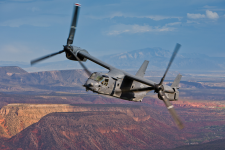
Osprey's have been in service for like 50 years and served so many conflicts on front duty. These are also ideal for special force and a small battalion sized weapon load deployment for certain operations. Not sure why you think "they keep crashing".
It enetered service in 2007 with 4 hull losses during development and 13 more later in service. Many of these were attributed to design and material issues, specifically it's proprotor gearboxes and clutches due to their complexity, giving it a bad reputation with regards to safety.

Navy Investigation Finds Osprey Safety Issues Were Allowed to Grow for Years


Material failure involved in more than half of serious Osprey safety incidents since 2021


Excuse my ignorance but what exactly does tilt rotor offer in addition to what a normal single winged helicopter does other than maybe speed due to two engines/motors and manoeuvrability?

Think of it as a fixed wing aircraft with VTOL capabilities due to the tilting rotors, and not a helicopter. Once in cruise the rotors are meant to only provide thrust with the wings generating the lift, offering greater payload, endurance, altitude, and speed in flight, just like other fixed wing aircraft.


1766088881455.png

Very interesting. Just wonder if the push propeller is powered by an electric motor or gas turbine.

Fossil fuel. That's engine exhaust.

1766089280139.png
 
Last edited:
Is the PLAN adopting the Z-8 variants with the even larger fuel tanks? Or is that limited to the PLA land forces?

View attachment 165931
1. In early versions of the Z-8 series helicopters, the fuel tanks were located beneath the cargo compartment floor. This posed a safety hazard. In subsequent improvements, the fuel tanks of some Z-8 models were relocated to the sides of the fuselage. This was done for safety reasons, not simply to increase fuel capacity.
2. The "AC-xxx" series helicopters are civilian helicopter designations. They share some lineage with the military "Z-xx" series helicopters, but there are significant differences.
As it seems in PLAN service it is called Z-8D
Currently, only the "Z-8C" code has been officially confirmed, and it has been confirmed as a version specifically for the PLA Navy.

The "Z-8D" has not yet received official recognition from any official agency. At least, I haven't seen any official institutions using this code yet. If you have any relevant evidence, could you please provide it?
 
1. In early versions of the Z-8 series helicopters, the fuel tanks were located beneath the cargo compartment floor. This posed a safety hazard. In subsequent improvements, the fuel tanks of some Z-8 models were relocated to the sides of the fuselage. This was done for safety reasons, not simply to increase fuel capacity.
2. The "AC-xxx" series helicopters are civilian helicopter designations. They share some lineage with the military "Z-xx" series helicopters, but there are significant differences.

Currently, only the "Z-8C" code has been officially confirmed, and it has been confirmed as a version specifically for the PLA Navy.

The "Z-8D" has not yet received official recognition from any official agency. At least, I haven't seen any official institutions using this code yet. If you have any relevant evidence, could you please provide it?


I agree, none official site but hey, this type hasn't been mentioned by any official site anyway and at least within the community it is called that way! But yes, let's wait for the official news some day.
 

China’s 1st 6-ton-class tiltrotor aircraft makes maiden flight​

Lanying R6000, world’s first aircraft of its kind, can smoothly transition between vertical takeoff and high-speed horizontal flight​

Berk Kutay Gokmen |28.12.2025 - Update : 28.12.2025

China’s 1st 6-ton-class tiltrotor aircraft makes maiden flight


File Photo

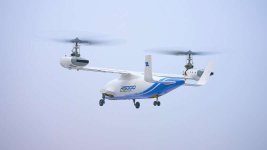
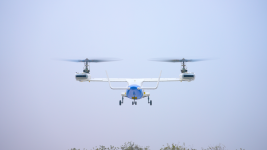
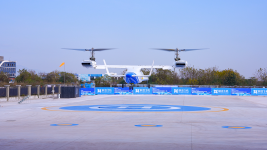
The Lanying R6000, a 6-ton-class tiltrotor aircraft developed by a Chinese company and the world’s first aircraft of its kind, made its maiden flight on Sunday in China’s southwestern Sichuan province.

Designed for point-to-point air commuting in cities, across seas, and through mountainous areas, the R6000 aims to reduce travel time and connect regions, according to a statement sent to the Global Times by the developer, United Aircraft.

Project manager Zhao Fengming told the Global Times that the R6000 marks China’s entry into the global lead in tiltrotor aviation, breaking a long-standing technological monopoly.

Equipped with the AES100 engine independently developed by AERO Engine Corporation of China, the R6000 features advanced tiltrotor technology.

It can smoothly transition between vertical takeoff and high-speed horizontal flight.

This combines the vertical takeoff and precise hovering of helicopters with the long range, large payload, and speed of fixed-wing aircraft, creating a unique dual-mode platform.

The R6000 can cruise at 550 km/h (342 mph), twice the speed of traditional helicopters. It has a maximum commercial payload of 2,000 kg (4,409 lbs) and a range of 4,000 km (2,485 miles), four times that of typical helicopters.

Its service ceiling of 7,620 meters (25,000 feet) is twice as high as that of traditional helicopters. Additionally, it features wing-folding and blade-retraction technologies that minimize its size for easier parking and storage in confined spaces.

 
World's first 6-ton-class tiltrotor aircraft, independently developed by Chinese company, completes maiden flight

By Liu Caiyu and Fan Wei
Published: Dec 28, 2025 05:14 PM

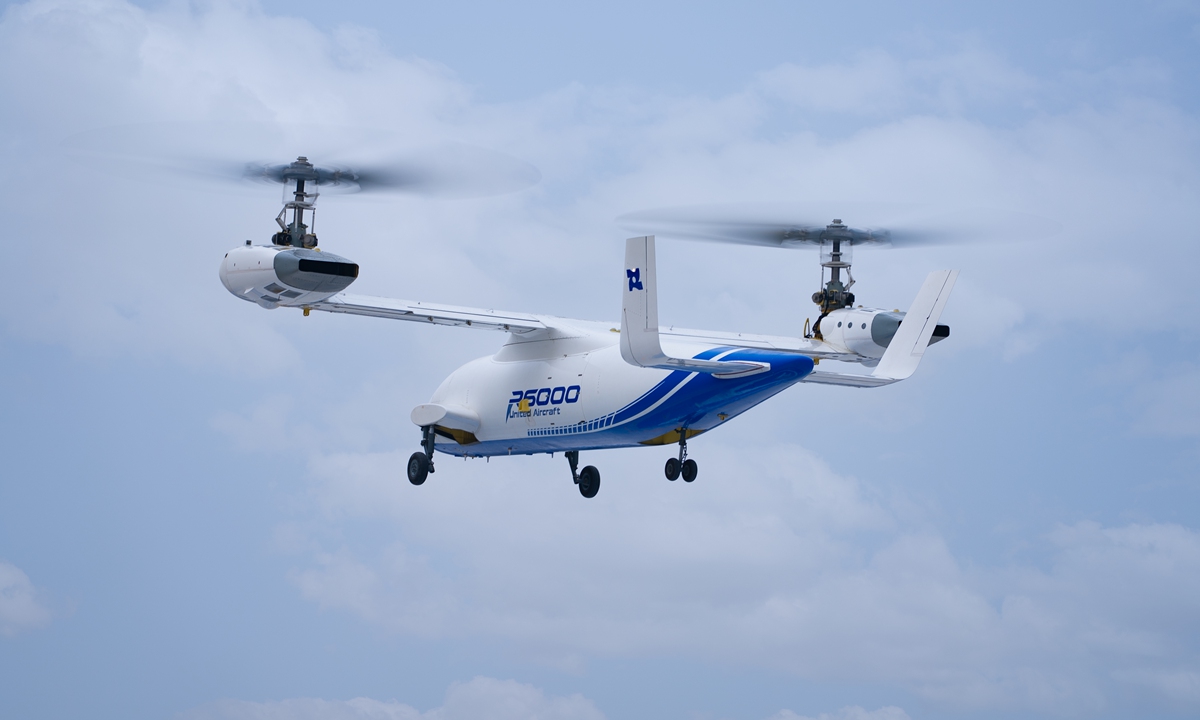
The Lanying R6000, independently developed by Chinese company United Aircraft successfully completes its maiden flight in Sichuan Province on December 28, 2025. Photo: Courtesy of United Aircraft

The Lanying R6000, independently developed by Chinese company United Aircraft successfully completes its maiden flight in Sichuan Province on December 28, 2025. Photo: Courtesy of United Aircraft

A 6-ton-class tiltrotor aircraft—the world's first of its kind—named the Lanying R6000 and independently developed by a Chinese company, successfully completed its maiden flight on Sunday in Southwest China's Sichuan Province, the Global Times learned from the company.

The tiltrotor aircraft is believed to serve point-to-point air commuting, in cities, across sea routes, and mountainous areas, reducing time and space distances and helping to build cross-regional "door-to-door transport networks, according to a release sent to the Global Times by United Aircraft.

The emergence of the R6000 indicates that China has reached the forefront of the world in the cutting-edge aviation field of tiltrotor, breaking the long-standing technological monopoly, Zhao Fengming, the project manager, told the Global Times.

The R6000 is equipped with the AES100 engine independently developed by AERO Engine Corporation of China, Zhao said.

The Lanying R6000 features unique tiltrotor design technology. It is able to transit smoothly between vertical takeoff and landing (VTOL) mode and high-speed horizontal flight mode. This design merges the vertical takeoff, landing, and precise hovering capabilities of traditional helicopters with the long range, high payload capacity, and high-speed cruise advantages of fixed-wing aircraft, creating a unique dual-mode flight performance platform, according to the company.

As the largest tiltrotor aircraft successfully completing its maiden flight in China to date, the LanYing R6000 adopts an advanced tilting rotor shaft design rather than a fully rotating engine nacelle configuration, achieving significant breakthroughs in flight control and power system design.

This configuration avoids the high-temperature airflow generated by engine exhaust during takeoff and landing phases, thereby preventing potential harm to personnel moving around the aircraft near its fuselage. Additionally, it eliminates the risk of high-temperature ablation damage to surfaces of maritime moving platforms lacking ablation-resistant coatings, which will facilitate the future landing and takeoff of this aircraft on ordinary maritime platforms, according to the company.

In fixed-wing flight mode, the Lanying R6000 achieves a cruising speed of 550 kilometers per hour—about twice that of traditional helicopters.

It also boasts a maximum commercial payload of 2,000 kilograms, far exceeding that of helicopters in the same weight class. With a maximum range of 4,000 kilometers—four times that of traditional helicopters—and a service ceiling of 7,620 meters, twice that of traditional helicopters.

Meanwhile, the aircraft features wing tandem-folding and blade retraction technologies, reducing its footprint during parking and overcoming the deployment and storage bottlenecks of traditional fixed-wing aircraft in confined spaces.

The company said the successful maiden flight of the Lanying R6000 marks a series of independent breakthroughs in core key technologies in the tiltrotor aircraft field in China. The aircraft is equipped with an intelligent tilt and flight control system that possesses fully independent intellectual property rights, ensuring ultimate safety and stability throughout the entire flight process. In terms of power and rotor systems, the use of high-performance turboshaft engines and advanced composite rotor blades achieves balance between power, efficiency, and quietness.

The entire transmission system meets the most stringent aviation safety standards, laying a solid foundation for the large-scale application of the aircraft.

The low-altitude economy is steadily integrating into people's daily lives. The Xinhua News Agency reported that drones now are able to transform into food delivery couriers, taking off effortlessly as a freshly brewed cup of coffee travels between buildings, accurately reaching the customer's hands just minutes later. For those seeking more than conventional tourism, taking a helicopter to soak in panoramic views of mountains and rivers unlocks a fresh aerial perspective.

Apart from serving air commuting, the Lanying R6000 is also expected to play a role in medical emergencies, fire rescue, police patrols, and large-scale disaster relief operations, enabling rapid and precise deployment of personnel and suppliesIt also opens up new possibilities for high-end private travel and aerial sightseeing tourism, according to the company.

According to forecasts by the Civil Aviation Administration of China, the market size of China's low-altitude economy is expected to reach 1.5 trillion yuan by 2025, with the potential to exceed 3.5 trillion yuan by 2035. Below the 1,000-meter altitude, opportunities are boundless, Xinhua reported.


Our Best Look at China’s Manned Tiltrotor in Flight

Published on: June 5, 2026 at 3:34 PM

China-Tilt-Rotor-1-860x484.jpg.webp

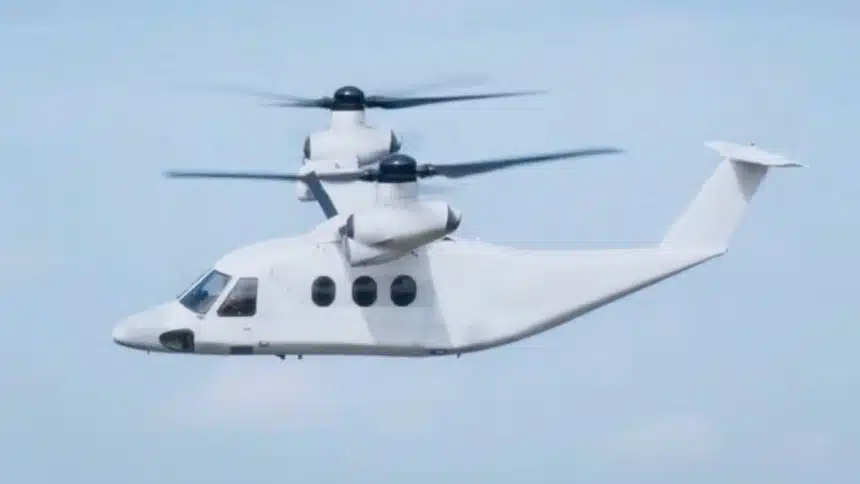
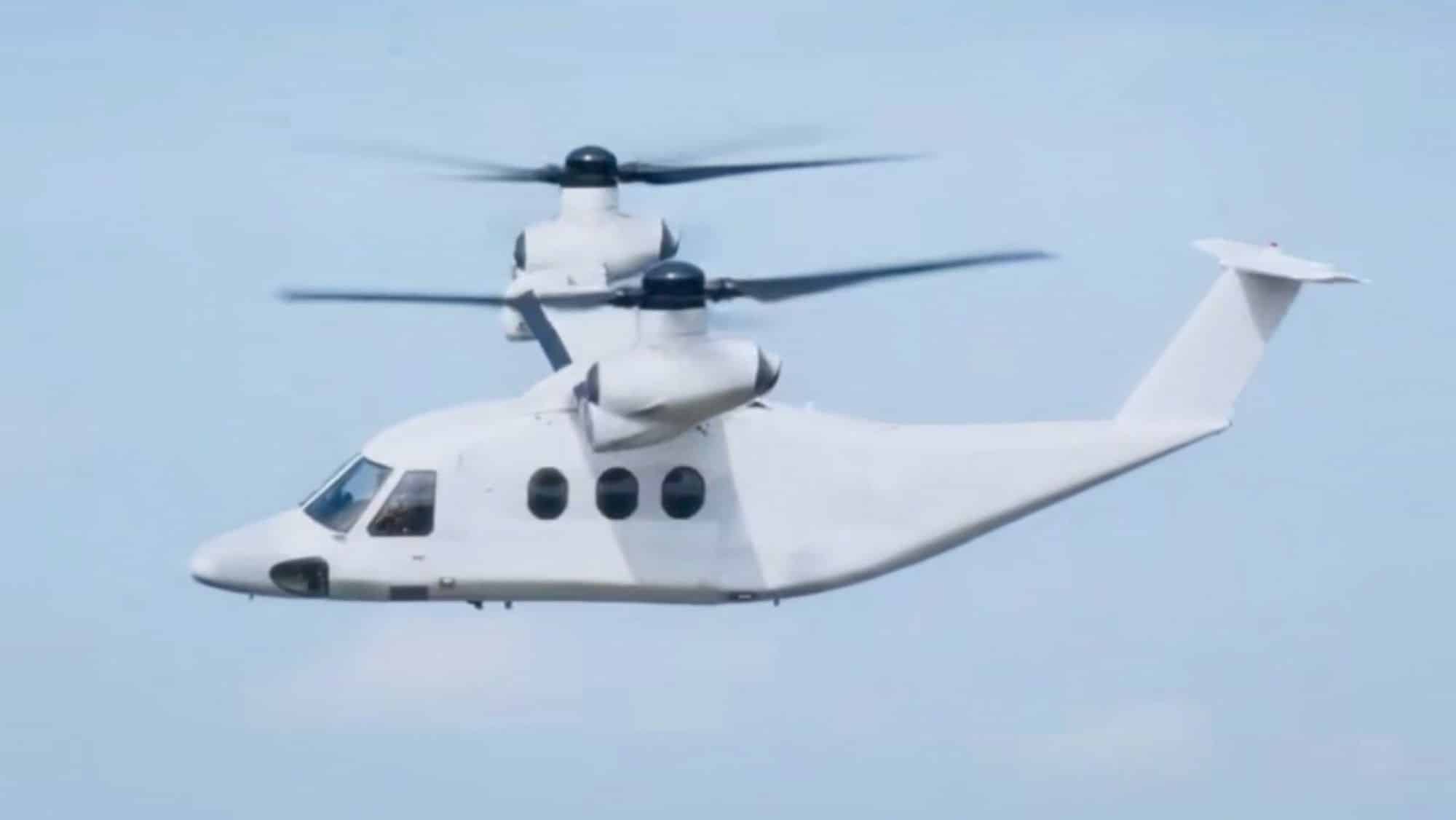
The picture that appeared on Jun. 1, 2026 showing the unidentified tiltrotor technology demonstrator while in flight. (Image credit: @数性体 on Weibo via Andreas Rupprecht on X)

The Chinese tiltrotor that broke cover last year was recently captured in images during what appears to be more expansive test flights.

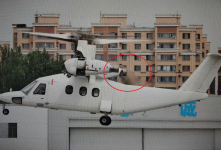
China’s first manned tiltrotor aircraft has now appeared in clearer images while in flight, nearly a year after it was captured off a screen while hovering at the beginning of testing. Visuals from Chinese social media shared by leading Chinese military aviation researcher Andreas Rupprecht and other users on X showed the helicopter in various angles from its port (left) side.

China’s first manned tiltrotor aircraft has now appeared in clearer images while in flight, nearly a year after it was captured off a screen while hovering at the beginning of testing. Visuals from Chinese social media shared by leading Chinese military aviation researcher Andreas Rupprecht and other users on X showed the helicopter in various angles from its port (left) side.

We noted in our previous report in August 2025 that the first picture appeared to show the tiltrotor in what appeared to be an engine start-up, lift off and hover test. No visuals existed at the time showing it in full flight.

What the new image shows

Both the panel and the rotor hub, previously missing, can now be seen in the latest images, in what could be a test flight in more expansive envelopes. It is not clear when the latest flight captured in the new images took place, and it may have happened anytime after the first images emerged in August 2025 – or possibly even recently – before leaking on the internet.

A notable feature we observed back then was the tiltrotor’s moving prop-rotor configuration, similar to that of the MV-75 Cheyenne II, marking a full departure from the V-22 Osprey and Leonardo AW609 in which the entire engine nacelle pivots. The system is notably simpler in operation with less complex engineering and consequently simpler maintenance and improved safety.

Both the images also did not show a flight data probe (pitot) tube on the nose, or registration markings anywhere on the fuselage or the tail. This leaves open the question on how many prototypes have been produced by Hafei Aviation Industry, a subsidiary of Harbin Aircraft Industry Group (HAIG).

There is no official information on the aircraft on any of the state media like Global Times, Xinhua or China Daily. The only tilt-rotor reported in the Chinese press was by GT in July 2025, featuring a smaller tiltrotor, an eVTOL (electric Vertical Take-Off Landing) called AE200 by Chinese company Aerofugia, on the sidelines of the inaugural International Advanced Air Mobility Expo at Shanghai.

Janes also reported in February 2024 about the unmanned UR/R6000 tiltrotor, which appeared in a clearer image inside its developer United Aircraft’s factory a few months later in October. Both the AE200 and the R6000 also have pivoting prop-rotor hubs, suggesting how China has closely watched and incorporated the American experience with the type.

We are far from knowing whether the three aircraft have a military future, until images emerge of the aircraft in PLA military colors, markings or at one its bases.

The tilt-rotor in question particularly has two access doors and, with the six windows, suggests a seating capacity of anywhere between six to 12 persons. It is also admittedly small in size for military use, necessitating larger engines and a bigger airframe.

If adopted by the PLA, like the Ekranoplan, it can rapidly move men and material to China’s outposts in the South China Sea (SCS). However, the need for such a capability is not acute, given China’s current naval aviation, surface fleet and merchant marine fleet.

Other helicopters and future

From a commercial standpoint, the developers wouldn’t have invested in the tiltrotors until they had a market within China, to feed its growing urban mobility, air taxi, emergency services and connecting remote mountainous regions. As we noted in our previous report, the tilt-rotor could be marketed internationally for civilian use by corporations, as a cheaper alternative to Western systems, with a target being the offshore oil and gas sector.

Politically, fielding such an aircraft also displays China’s technological prowess in developing the full range of fighter aircraft, space technology, warships, missiles and aircraft carriers to rival the West.

Lastly, China’s heavy-class attack helicopter, the Z-21, has also made some appearance since late last year, with the latest image shared by Rupprecht on Mar. 20 showing it in sharpest and clearest detail yet. The aircraft is bearing a PLA roundel marking on its tail boom, and also appears to be carrying quad-launchers for air-to-surface missiles.

One such image emerged in November 2025 with a dome-like sensor on the main rotor hub and a black paint scheme. A December 2025 picture shows it with the tail number 6232, the dome missing and the aircraft bearing a white paint scheme, suggesting that more than one example is flying.


Users who are viewing this thread

Pakistan Defence Latest

Latest Posts

Back
Top