Bangladesh Socio-Political Crisis 2024 and onwards

View attachment 82690
That same year, he earned a first-class MA in Economics from Dhaka University and briefly worked at American Express International Bank before joining the Foreign Service.

He furthered his education at the Fletcher School of Law and Diplomacy, Tufts University, and the Kennedy School of Government, Harvard University, earning an MA in Law and Diplomacy and a PhD in Economics.

His diplomatic tenure includes roles in Bangladesh’s Ministry of Foreign Affairs, the Permanent Mission to the UN, and as private secretary to the foreign minister.

He was a spokesperson for Least Developed Countries (LDCs) at the UN Economic and Financial Committee.

In 1991, Dr Rahman joined the UN Secretariat as a special adviser at UNCTAD in Geneva.

Over 25 years, he held senior positions in New York and Geneva, including head of Economic, Social, and Development Affairs at the Executive Office of the UN secretary-general, chief of the LDCs Programme, and chair of the UN Interagency Group on Non-Tariff Barriers to Trade.

He contributed significantly to flagship UN reports and played a key role in drafting the Programme of Action for the 2001 Brussels LDCs Conference, introducing duty- and quota-free access for LDC exports.

In 2001, he briefly served as private secretary to Justice Latifur Rahman, chief adviser of the caretaker government.

A founding member of East West University in Dhaka, Dr Rahman continues to serve on its Board of Trustees.


Pinaki Bhattacharya was full of praise regarding this appointment - apparently he is sort of mentor to Pinaki.

His profile suggests he is a very competent individual and probably in place to deal with Trump admin.
 
View attachment 82690
That same year, he earned a first-class MA in Economics from Dhaka University and briefly worked at American Express International Bank before joining the Foreign Service.

He furthered his education at the Fletcher School of Law and Diplomacy, Tufts University, and the Kennedy School of Government, Harvard University, earning an MA in Law and Diplomacy and a PhD in Economics.

His diplomatic tenure includes roles in Bangladesh’s Ministry of Foreign Affairs, the Permanent Mission to the UN, and as private secretary to the foreign minister.

He was a spokesperson for Least Developed Countries (LDCs) at the UN Economic and Financial Committee.

In 1991, Dr Rahman joined the UN Secretariat as a special adviser at UNCTAD in Geneva.

Over 25 years, he held senior positions in New York and Geneva, including head of Economic, Social, and Development Affairs at the Executive Office of the UN secretary-general, chief of the LDCs Programme, and chair of the UN Interagency Group on Non-Tariff Barriers to Trade.

He contributed significantly to flagship UN reports and played a key role in drafting the Programme of Action for the 2001 Brussels LDCs Conference, introducing duty- and quota-free access for LDC exports.

In 2001, he briefly served as private secretary to Justice Latifur Rahman, chief adviser of the caretaker government.

A founding member of East West University in Dhaka, Dr Rahman continues to serve on its Board of Trustees.


Good appointment.
 
1000027624.jpg

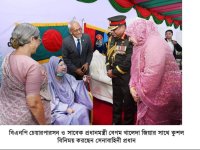
Former prime Minister Khaleda Zia makes an appearance in the Armed Forces day event held yesterday.

This was unthinkable just a few months back.
 

Bangladesh ex-PM Khaleda Zia makes first public appearance in 6 years

AFP
November 21, 2024

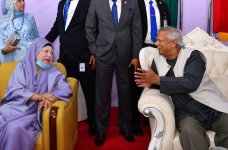
Chief adviser of Bangladesh’s interim government Muhammad Yunus (R) with former premier and Bangladesh Nationalist Party chairperson Khaleda Zia (2L) at a reception in Dhaka, Bangladesh on November 21. — AFP


Chief adviser of Bangladesh’s interim government Muhammad Yunus (R) with former premier and Bangladesh Nationalist Party chairperson Khaleda Zia (2L) at a reception in Dhaka, Bangladesh on November 21. — AFP
Bangladesh’s illness-stricken opposition leader Khaleda Zia made her first public appearance in six years on Thursday, months after her release from house arrest following the ouster of longtime foe Sheikh Hasina.

The ferocious rivalry between the two former premiers — born in blood and cemented in prison — has defined politics in the nation for decades.

Zia was jailed in 2018 for graft but was released in August, hours after Hasina fled to neighbouring India when a student-led national uprising brought an end to her 15 years of iron-fisted rule.

Her presence on Thursday at a reception to mark the country’s Armed Forces Day marked her first public appearance since her conviction.

She was welcomed by Muhummad Yunus, a Nobel laureate helming an interim government charged with restoring the country’s democracy, with the pair photographed sitting together and chatting amiably.

“We are particularly lucky and honoured today that Begum Khaleda Zia … has graced us with her presence,” Yunus said. “We are all delighted that she joined us today.”

Zia, 79, has been in declining health for years, is confined to a wheelchair with rheumatoid arthritis and also suffers from diabetes and cirrhosis of the liver.

Until Thursday, she had kept out of the spotlight despite her release, apart from briefly addressing a political rally in a video message from a hospital bed.

Zia’s Bangladesh Nationalist Party (BNP) said that more than two dozen of its leaders were also in attendance.

Party secretary general Mirza Fakhrul Islam Alamgir lost his composure and broke into tears when he saw Zia at the event, newspaper Prothom Alo reported.

Zia spent most of her sentence under house arrest after she was relocated from prison during the coronavirus pandemic, but she was denied repeated requests to travel abroad for medical treatment.

Alamgir told a Wednesday rally in the city of Feni that Zia was “very ill, having been kept in jail on false charges in a small, damp cell”.

Bangladeshi media outlets reported in October that Zia was expected to travel abroad for medical care in the near future, without giving a precise date.
 
ডিজিএফআই - নাম প্রকাশে অনিচ্ছুক ডিজিএফআই কর্মকর্তা

(প্রদত্ত মতামত সম্পূর্ণ লেখকের, তার লিখায় কোন পরিবর্তন না করে হুবুহু প্রকাশ করা হলো)

গতকাল বরখাস্ত সেনাকর্মকর্তা মেজর জেনারেল জিয়াউল আহসানকে আন্তর্জাতিক অপরাধ ট্রাইবুনালে হাজির করার পরে তিনি বলার চেষ্টা করেন উনি কখনো আয়নাঘরের দায়িত্বে ছিলেন না তাই গুমের সাথে তার কোন সম্পর্ক নাই।

তার মানে দাঁড়ালো এমন যে, আয়নাঘর ও ডিজিএফআই সমার্থক এবং বাংলাদেশে গত ১৬ বছরে যত লোক গুম হয়েছে তা সবই ডিজিএফআই করেছে। জিয়াউল আহসানের কথা থেকে এটা সুস্পষ্ট যে ডিজিএফআইকে আয়নাঘরের সমার্থক হিসাবে প্রমাণের জন্য বিশেষ একটি শক্তি বেশ তৎপর। সম্প্রতি স্বরাষ্ট্র মন্ত্রনালয় থেকে ডিজিএফআইয়ের সকল সাবেক (২০০৯ পরবর্তী) মহাপরিচালকদের (ডিজি) পাসপোর্ট বাতিলের আদেশ ইঙ্গিত করে যে, সব গুম কেবলমাত্র ডিজিএফআই এর ডিজিদের নির্দেশে হয়েছে।

এটা খুবই স্বাভাবিক, কারণ ডিজিএফআই এর কোন বন্ধু নাই। ডিজিএফআই বাংলাদেশের একমাত্র প্রতিষ্ঠান যা বস্তুনিষ্ঠ গোয়েন্দা প্রতিবেদন দেয়ার মাধ্যমে সরকারকে সহায়তা করে, সেটা যেই সরকারে থাকুক এবং যত ইতিবাচক বা নেতিবাচকই হোক না কেন। তাহলে সবাই শত্রু কেন? কারণ ডিজিএফআই — সকল বাহিনীর সদস্যদের, সকল আমলার, সকল রাজনৈতিক নেতার নিরাপত্তা ছাড়পত্র সরকারকে দিয়ে থাকে। এবং সকল সংস্থার মধ্যে ডিজিএফআই এর রিপোর্টগুলো সরকার সব সময় গ্রহণযোগ্য মনে করে। আমরা কেউই আমাদের খারাপ দিকটা প্রকাশ পাক সেটা চাই না- তাহলে আপনি যে ঘুস খেলেন, দুর্নীতি করলেন, অবৈধ কার্যকলাপে লিপ্ত হলেন, বহিঃশত্রুর সাথে আঁতাত করলেন এ ধরনের প্রতিবেদন, কেন পছন্দ করবেন?

এই যে ব্যাংক খাতে দূর্নীতি, বাজার সিন্ডিকেট, ক্যাসিনো, অর্থ পাচার, সরকার দলীয় ক্ষমতাবান ব্যক্তিদের সকল প্রকারের অনাচার, বদমায়েশি — এসব বিষয়ে ডিজিএফআই যথাসময়ে বিগত সরকারকে প্রতিবেদন দিয়েছে, ব্যবস্থা গ্রহণের পরামর্শও দিয়েছে। এখন সরকার যদি কার্যকরী ব্যবস্থা না নেয় তাহলে কার কি করার আছে! সীমান্তের ওপারে কি হচ্ছে তার খবর ডিজিএফআই এর বেশী আর কে দিতে পারে? পাহাড়ে সন্ত্রাসী কর্মকান্ডে জেএসএস নেতাদের সম্পৃক্তার প্রমান স্তূপ আকারে আছে ডিজিএফআই অফিসে। সব কিছু বলা হয়েছে — উল্লেখ করা হয়েছে। কিন্তু কেন কাজ হয়নি তা নিয়ে ব্যাপক অনুসন্ধান করা যেতে পারে।

ডিজিএফআই'কে অন্য বাহিনীও তেমন পছন্দ করেনা। কারণ ডিজিএফআই অন্য বাহিনীর কর্মকান্ডের বিষয়েও প্রতিবেদন দেয়। পুলিশের Counter Terrorism নাটক , আর সে নাটকে আগে থেকে ধরে রাখা মানুষ মেরে সাফল্যের গল্প বানানোর ছক - সরকারকে সব সময় ডিজিএফআই জানিয়ে এসেছে। আইজিপি শহীদুল হকের 'পান্থ পথ' জংগী নাটকও এগুলোর মধ্যে একটি।

ডিজিএফআই স্বেচ্ছায় গুম ও খুনের সাথে সরাসরি জড়িত কি না তা নিয়ে তর্ক হতে পারে। কিন্তু, সরকারের সরাসরি নির্দেশে অনেককে তাদের গোপন জিজ্ঞাসাবাদ সেলে রাখা হয়েছে, জিজ্ঞাসাবাদ করা হয়েছে এবং হয় ছেড়ে দেয়া হয়েছে অথবা যে সংস্থা ধরেছিল তাদের কাছে হস্তান্তর করা হয়েছে। এবং এসবের সাথে বিভিন্ন বিদেশী গোয়েন্দা সংস্থাও জড়িত। অন্যদিকে পুলিশ পদোন্নতী ও পদকের জন্য যা করেছে তা অত্যন্ত দু:খজনক। মানুষ জমাও- জংগী নাটক বানাও-মানুষ মারো এই নাটকের তীব্র বিরোধিতা ডিজিএফআই সবসময় করেছে। গোপন জিজ্ঞাসাবাদ এবং আইনে দেয়া সময়ের চেয়ে বেশীসময় অন্তরীণ রাখার জন্য পশ্চিমা গোয়েন্দা সংস্থার আদলে ডিজিএফআই একটি খসড়া গোয়েন্দা আইনও তৈরী করেছে - কিন্তু আওয়ামী সরকার সেটাকে কোন গুরুত্ব দেয় নাই।

গোয়েন্দা কাজ পরিচালনার সুস্পষ্ট আইন না থাকায় এবং সেনা কর্মকর্তাদের জন্য আইনে ভিন্নতর সুবিধা না থাকায় ডিজিএফআই সরকারের আদেশ পালন না করে ভিন্ন কিছু করতে পারেনা, পারেনি এবং পারবেও না।

অন্তর্বর্তী সরকারের উচিত- ডিজিএফআইকে নিষিদ্ধ ঘোষনা করা। স্কুল অব মিলিটারী ইন্টেলিজেন্স সহ যেখানে যেখানে জিজ্ঞাসাবাদের তালিম দেয়া হয় সেগুলোকে গুঁড়িয়ে দেয়া। আশা করি গোয়েন্দা সংস্থা ছাড়াই দেশ খুব ভালোভাবে সামনে এগিয়ে যাবে। আর RAB Force এর সব ডিজি, পুলিশের কাউন্টার টেরোরিজম ইউনিট , ডিবি এবং জিয়াউল আহসানের মত অফিসারদের - যারা সেনাবাহিনীতে চাকরী না করেই মেজর থেকে মেজর জেনারেল হয়েছে তাদের সাথে চলুন সবাই বলি- ডিজিএফআইতে চাকরী না করলে কেউ গুম করতে পারে না। নারায়নগন্জ এর সাত খুনও ডিজিএফআই ই করেছে। শেখ হাসিনা এবং তারিক সিদ্দিকীর সাইকোপ্যাথিজম ও ব্যক্তিগত জিঘাংসার জন্যও ডিজিএফআই ই দায়ী।

ভবিষ্যত বাংলাদেশ নির্মিত হোক এমনভাবে, যাদের কোন দক্ষ গোয়েন্দা সংস্থা নাই, আপনারাও কখনো কারো কাছে জানতে চাইবেন না ডিজিএফআই আসলে কি কি করে, আর কি কি ছিলো তাদের সীমাবদ্ধতা।


@Afif can you please post a translated version? Forum rules. Google translate is fine.
 

Begum Zia stood by her party and did not leave Bd despite all the pressure from Hasina and Awami league. She could have leave if she was selfish and sold out like Hasina.

History will be kind with her just like president Zia, marhoom.
 
View attachment 82713

I mean, BNP sucks. But this image is kind of awesome. Where is afsos league.
I started to dislike BNP for their politics after the revolution. But, I must show respect towards Begum Zia for her loyalty to her party. Unlike bloodhound killer hasina...
 
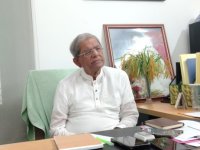
Mirza Fakhrul Islam Alamgir on the BNP’s Vision for Bangladesh

The BNP’s secretary general says the party sees the mass uprising of July-August 2024 as “the emergence of a new opportunity to transform Bangladesh into a democratic state.”

By Shahadat Hossain

The Diplomat - November 23, 2024

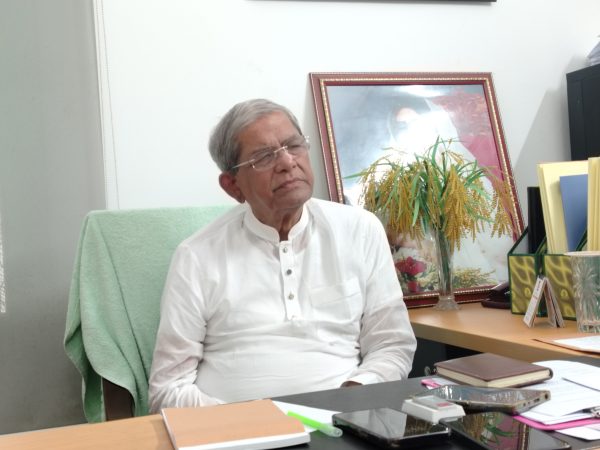
thediplomat_2024-11-22-173141.jpg

Following the fall of Prime Minister Sheikh Hasina and her Awami League party, often described as “fascist,” the Bangladesh Nationalist Party (BNP) has emerged as the most popular and the single largest political party in Bangladesh. It is widely anticipated that the BNP will secure a majority of seats in the next parliamentary election.

Mirza Fakhrul Islam Alamgir is the senior-most leader of the BNP. He has been serving as the general secretary of the party since 2016, although he was the acting general secretary from 2011. Alamgir was also a cabinet member during the BNP’s last tenure in government, from 2001 to 2006. He is one of the rare figures in Bangladeshi politics whose career began outside Dhaka but who eventually rose to a top position within the party.

Since 2011, Alamgir has been leading the party during what is considered the BNP’s most challenging period. With the BNP’s acting chair, Tarique Rahman, currently residing in London, Alamgir is the top BNP leader actively steering the party in Bangladesh.

In an interview with The Diplomat, he shared key insights about his party’s position and addressed several pressing issues that are currently topics of public debate in Bangladesh.

The interview was conducted by Shahadat Hossain, a research scholar in the Department of International Relations, South Asian University, New Delhi.

Do you consider the July Revolution a revolution or a mass uprising?

Undoubtedly, it was a mass uprising. For 15 to 16 years, political parties, under the leadership of the BNP, had been fighting to end the oppression and torture inflicted by the fascist government. The movement began with the students’ quota reform protests, where a significant number of students took to the streets. Tragically, many students lost their lives during this period.

Initially, this movement did not take the form of a mass revolution or uprising. However, the turning point came with the tragic death of Abu Sayeed [one of the early martyrs of the July Revolution]. His death shocked and united all opposition political parties, leading them to work together to overthrow the government, culminating in a united effort that resulted in a mass uprising.

We view this as the fall of a brutal fascist regime and the emergence of a new opportunity to transform Bangladesh into a democratic state. The students’ demands primarily focused on ending systemic discrimination, which has been a long-term issue. Addressing this requires national unity and an organized political structure. Therefore, we have emphasized the need for national unity and have worked to foster it.

With the interim government now in power, they have begun implementing reform measures, marking the first steps toward necessary change.

You emphasize national unity. However, an adviser recently claimed that after Sheikh Hasina fled, the student leadership of the movement proposed forming a national government, but the BNP refused the proposal. Why did your party not support the idea of a national government?

I am unaware of any proposal from the student leadership regarding the formation of a national government. However, after the fall of the fascist regime, representatives approached us to seek suggestions for forming an interim government. They presented several names and sought our opinions, which we provided accordingly.

Six reform commissions have been established in the country, including one on constitutional reform. How is your party represented and involved in these processes?

No representatives from the BNP were included in the reform committees. These committees were formed without involving political party affiliations, which is normal [and] consistent with the interim government. However, they did seek our opinions, and we will send our opinion to these commissions.

The BNP is demanding elections and is currently regarded as the most popular party. However, critics argue that the BNP could become another “Awami League” if it comes to power, especially since reports suggest that many grassroots BNP leaders and activists were involved in occupation and looting after August 5.

This is nothing more than negative propaganda spread by anti-BNP media and opposing political parties. Such incidents are not uncommon following mass uprisings. We do not deny the incidents that have taken place in different parts of the country.

However, the BNP has taken significant steps to address these issues. To date, we have expelled approximately 700 leaders and activists who were found to be involved in such activities. We are committed to maintaining discipline and accountability within the party to ensure we uphold democratic values and public trust.

The Awami League always claims that minority Hindus are not safe under other parties. After August 5, attacks on minorities occurred. You cannot dismiss all of them as political attacks. Doesn’t this reinforce the Awami League’s claim?

Yes, certain incidents must have occurred. Numerous Awami League members who committed injustices, engaged in torture, and looted were targeted by ordinary people across the country — not by the BNP or students. These attacks were driven by 18 years of humiliation, deprivation, and anger.

However, the narrative has been deliberately twisted to portray these incidents as acts of minority oppression. Some individuals are spreading propaganda claiming that “communalism has intensified in Bangladesh,” which undermines the nation’s interests. This is entirely politically motivated and an attempt to harm Bangladesh’s image.

This propaganda is being orchestrated by the Awami League to present a narrative to the international community that communalism is on the rise in the country. Their apparent goal is to secure support from India and other allies by portraying themselves as the only party capable of effectively addressing this issue.

Ironically, incidents of minority oppression significantly increased during the Awami League’s tenure.

You aim to come to power, and public opinion seems to be leaning in your favor. What will the BNP’s foreign policy look like? The last time your party was in power, Bangladesh pursued a Look East policy. Can we expect any surprises this time?

Our foreign policy is simple: we want friends, not masters. We will treat all countries as friends, not as superiors. However, we will not allow ourselves to become overly dependent on any state. In today’s interconnected world, connectivity, business, and friendships are essential, but we will ensure our self-reliance.

India is a major neighboring country. Your party’s relations with India have always experienced ups and downs. Despite efforts over the past decade, you failed to open new avenues in this relationship. How do you evaluate BNP relations with India going forward?

We have always believed in fostering good relations with our neighboring countries. This is a core part of our declared policy. Since the time of Ziaur Rahman, when we were in power, we had consistently worked to maintain positive relations with India. However, our national interests must be prioritized.

Issues like water distribution must be resolved. Killings at the border must be stopped. Equality in connectivity must be ensured. Benefits taken from us must be reciprocated.

Furthermore, India’s unnecessary interference in Bangladesh’s politics is never acceptable. We hope that such interference will cease. Decisions regarding Bangladesh will be made solely by the people of Bangladesh.

There is currently a lot of disinformation and false narratives about the current government and Bangladesh being spread from India. This isn’t new – your party’s acting chairman has also been vilified in the Indian media. India seems to have a largely negative view of parties other than the Awami League. How can Bangladesh overcome this issue?

The only way to counter these false narratives is by establishing a strong, people-powered government. First and foremost, Bangladesh needs a democratically elected leadership. All political parties should keep in mind that we are a distinct political entity, an independent country capable of making our own decisions.

Additionally, Bangladesh must develop a compelling counter-narrative. Accurate events and facts should be effectively communicated through international media to combat disinformation.

Young people are discussing the idea of a new political settlement. Your party doesn’t seem very enthusiastic about it. What are your thoughts?

What do they mean by a new political settlement? They need to clarify what they mean by this idea. I want to know: what exactly is their new political settlement? I have not seen anything written or documented. I have no concrete understanding of what they propose.

The kind of politics we envision is already documented in our constitution. They should propose something like that if they have a clear vision.

Not only your party, but many others have fought against fascism. Ordinary people and students have sacrificed their lives. Why do you think people will vote for your party in the upcoming elections?

The BNP is a party of the people. It practices the kind of politics that aligns with the people’s desires. People want freedom; they want to live in a democratic state system. They aspire to vote, elect their leaders through fair elections, and have the opportunity to work and prosper. The BNP creates those opportunities.

The BNP has governed three times, always coming to power through elections. During its tenure, the BNP undertook fundamental political reforms. Ziaur Rahman (founder of the BNP) introduced a multi-party system, replacing the previous single-party system. Later, under the leadership of Begum Khaleda Zia, the caretaker government system was incorporated into the constitution – another milestone in political innovation.

Economically, the BNP moved away from a flawed socialist model towards a mixed and diverse economy, which we now refer to as a free-market economy. Following this, private-sector financing began, leading to significant transformations. The garment sector, which now drives our economy, was initiated under the leadership of Ziaur Rahman. Even remittances started flowing into the country as a result of his initiatives.

Later, during Begum Khaleda Zia’s tenure, reforms were implemented in various sectors, including banking. The BNP is a party with a proven track record of addressing the people’s problems and fostering development. It ensured the independence of the judiciary and the press – foundational pillars of a democratic country.

You have observed Bangladesh’s politics for the 50 years since its independence. The younger generation, many of whom have actively participated in the recent mass uprising, could shape the country’s politics for the next 50 years. Where do you see the politics of the new generation heading?

The young generation is already active in politics, both on the streets and in government. Representatives of the young generation are present in governance and decision-making. Their primary demand appears to be for an anti-discrimination social system. However, we have yet to see any formal, documented proposal outlining the changes they seek.

They frequently refer to recent events as a revolution. Personally, I do not consider this a revolution but rather a student-led mass uprising and a democratic change. As a liberal democrat, I believe in inclusive politics where all parties have the opportunity to participate – not exclusive politics.

The people’s preference for a political party will be determined through elections. That is why we strongly advocate for elections to be held as soon as possible. Elections will resolve many challenges and debates that persist today. Until then, arguments and debates will continue.

We initiated reforms two years ago and remain ahead in our efforts, although negative narratives such as “BNP opposes reforms” or “BNP engages in corruption” are being spread to undermine us. We are nationalists who firmly believe in democracy, which creates problems for those who prefer subjugation over freedom.

Ultimately, we envision Bangladesh as a democratic country where the practice of democracy resolves all issues. We want to ensure the principle: “I may not agree with you, but I will defend your right to freedom of speech.”

Another pressing issue is the widespread poverty affecting a large portion of the population, which requires urgent attention to their economic development.

You often emphasize that your party is liberal and democratic. The chairperson of your party is a woman who has led the party for a long time. However, women’s representation within your party remains low, and you have not met the declared target of fielding 30 percent women candidates. What are your thoughts on this?

We will make every effort to increase women’s participation in our party. This is a priority, and we are committed to achieving this goal.


It is not possible to amend the constitution without parliament: Mirza Fakhrul​

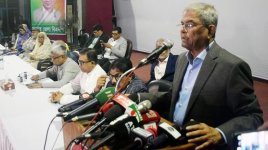
fokhrul-2024.jpg

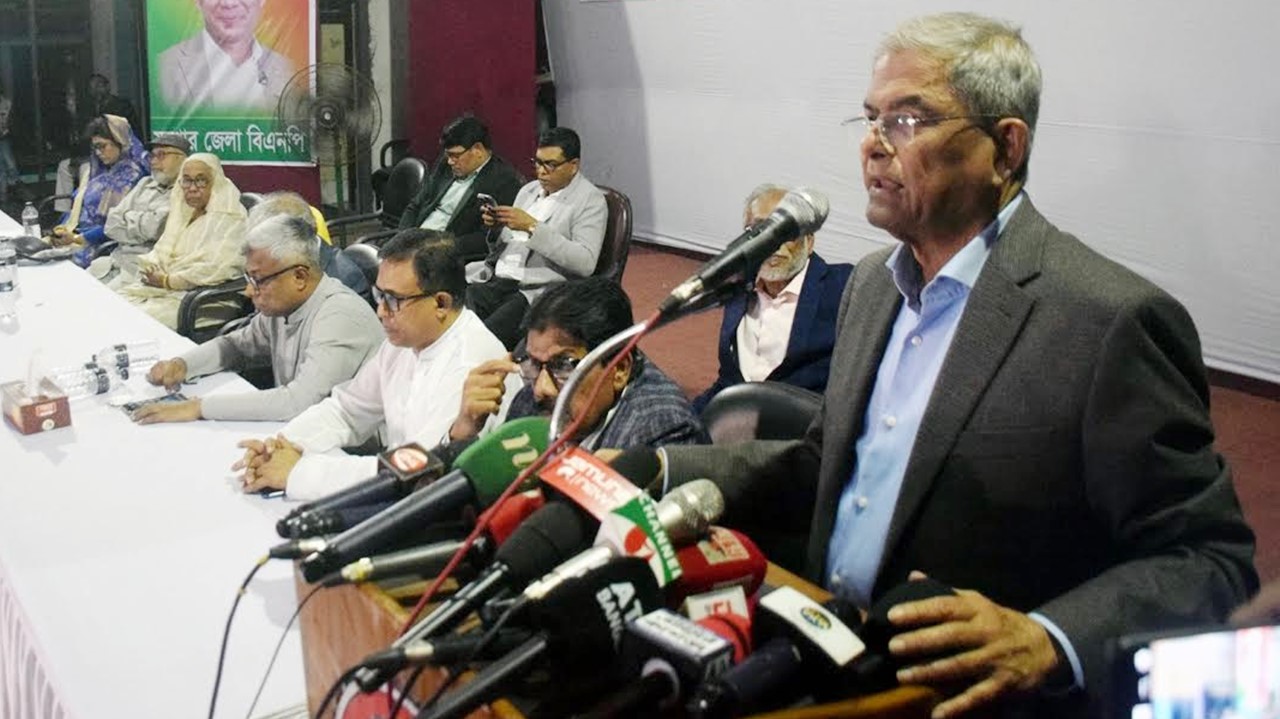
BNP Secretary General Mirza Fakhrul Islam Alamgir said that it is not possible to amend the constitution without Parliament. Changes in the country's state structure and elections were the lifeblood of the long movement. The sooner the election, the better it will be for the country.

He said these things in the speech of the chief guest at the seminar on 'Long Movement Against Fascism and Today's Perspective' at the Jessore Zilla Parishad Auditorium on Friday (November 22) evening.

He said that if the reform is done through the elected representatives, it will get 100% legitimacy. The countrymen will accept it wholeheartedly. No one will have any objection. The great national parliament can only give legitimacy to the reform of the state. After the abolition of the caretaker government system, a terrible environment has been created. BNP has demanded 31-point reforms to save the country from that terrible environment. These 31 points will be implemented when BNP comes to power. All phases of state reform are included in it.

Mirza Fakhrul said, excluding the year 1971, it is not possible to implement any kind of thought. 1971 was the war of independence of Bengali. Three million people lost their lives in that war. Many mothers and sisters have lost their dignity. Independence of Bengal has been achieved in exchange of the blood of lakhs of martyrs. Currently, a fatigue period is going on in the country. Keeping in mind the unity of the revolution, everyone should be united to establish democratic values and public welfare state.

Mirza Fakhrul also said that since 1972, Awami League had a desire for fascism. That fascist ideology was fulfilled by the illegal election of January 5, 2014, which was established until August 5, 2024. Awami League was never a democratic party. They never believed in common people's values, democracy.

BNP Vice Chairman Nitai Roy Chowdhury, Organizing Secretary Anindya Islam Amit, Jessore District BNP Member Secretary Saberul Haque Sabu, Jessore Press Club President Zahid Hasan Tukun spoke in the seminar under the chairmanship of Jessore District BNP convener Professor Nargis Begum and conducted by Delwar Hossain Khokon.

 
BNP thinks they can rule for next 20 years. They will never do any changes.
Dr Yunus need to do the structural changes then go for referendum to seal the deal.

Unfortunately Asif Nazrul and the Attorney General Md. Asaduzzman seems to agree with the BNP.
 
দায় নেবে না বিএনপি

দায়-নেবে-না-বিএনপি-বাংলাদেশ-প্রতিদিন-11-23-2024_08_35_AM.png

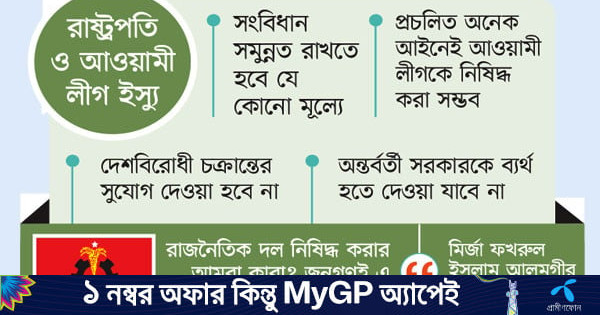
The BNP leadership fears that a constitutional crisis could arise if the president is removed. The current interim government is exempt from responsibility if BNP demands to ban the Awami League or any political party. The party leaders believe that the government can remove the president at any time if it wants due to the recent controversy over the president. At the same time, it is possible to ban the fascist Awami League under many existing laws in the country. Therefore, BNP will not take any responsibility on these two issues. They do not want the government to fulfill its wishes by placing the responsibility on the shoulders of BNP. BNP leaders believe that a deep conspiracy is going on on these two issues. BNP does not want this government to fail under any circumstances. If the interim government fails, the goal of the July Revolution will not be achieved. The path to democracy will be blocked. That is why BNP will not take any responsibility on these two important issues. This information was learned after talking to BNP policymakers. Several members of the party's standing committee said that BNP will not take responsibility for the removal of the president and the banning of the Awami League. They see both issues as part of a conspiracy against the country and the government. The party is against any conspiracy against the country. BNP does not want the constitution to be void. BNP does not want any constitutional crisis to be created in the country by removing the president, and for any party to fish in muddy waters over it. On the other hand, this largest political party in the country does not want any political party, including the Awami League, to be banned. According to senior party leaders, even though Sheikh Hasina, the head of the fascist government, fled the country after the fall, their accomplices from home and abroad have continued their conspiracy. Many are still occupying important positions within the country. They want to create extreme chaos and instability in the country by bringing such issues to the fore and obstruct the path to establishing democracy and the people's right to vote, the main goal of the July Revolution. BNP will never allow this to happen. The conspirators will not be given a chance to conspire against the country, democracy and the interim government.

Regarding the demand to ban the Awami League, BNP Secretary General Mirza Fakhrul Islam Alamgir said, "BNP does not want a political party to be banned. He commented that the issue of banning political parties is another conspiracy. The Secretary General said, who are we to ban political parties? The people will decide on this issue." He further said, this is another conspiracy. These things are being said to create an uncertainty and instability in the country. What is not an issue is being made an issue. Calling on the interim government not to take any rash decisions on this issue, he said, everyone should be vigilant about these conspiracies. The interim government's chief advisor on the issue of banning the Awami League, Professor Dr. Muhammad Yunus, recently said in an interview with the influential Indian daily 'The Hindu' that he has no objection to the Awami League contesting as a party in the upcoming national elections. BNP also wants all political parties to participate in the elections. Through this, BNP as a major political party has given its verdict. Dr. Yunus said, ‘We cannot ignore the opinion of a big party.’

BNP standing committee member and former minister Dr. Khandaker Mosharraf Hossain told Bangladesh Pratidin on the issue of removing the President and banning the Awami League, ‘We still consider the interim government to be a non-partisan and impartial government. Their responsibility is to fulfill all the demands that come while upholding the constitution. But a vacuum in the constitution cannot be created. No steps can be taken that create a constitutional crisis in the country.’ Regarding these issues, BNP standing committee member and former ambassador Nazrul Islam Khan told Bangladesh Pratidin that everyone should be careful not to create a new constitutional and political crisis in the country. It is not desirable that a constitutional vacuum or unstable situation be created in the country through the removal of the President. Another member of the party’s standing committee, Salahuddin Ahmed, said, BNP does not want the removal of President Md. Sahabuddin at this moment. It will delay the national elections. Therefore, BNP does not want the removal of the President at this moment. This will hinder the path to democracy in the country.

According to several policymakers of the party, who did not want to be named, BNP is seeing a conspiracy behind the removal of the President. Although it openly talks about creating a constitutional vacuum, the party is smelling a political conspiracy inside. This fear is the main reason for the party's strict stance in favor of the President. In this situation, BNP has decided to be extremely cautious and take a firm stand to counter any conspiracy. The leaders' question is, by which process of the constitution will the President be removed? For what purpose will he be removed? Is someone else playing another game behind the scenes with the initiative to remove the President? After reviewing these issues, BNP leaders have taken a negative stance on the issue.

BNP Joint Secretary General and Narsingdi District Convener Khairul Kabir Khokon said, "There is a demand to ban the Awami League, but we do not want a ban. We do not believe in the politics of ban. BNP wants all opponents to come to the elections. The people are on our side, we are not afraid. "We don't want to score goals in an empty field."


Users who are viewing this thread

Country Watch Latest

Back
Top