
MNZGamerX
Trusted Member

In addition to Awami League activists protesting the government’s refusal to issue Sheikh Hasina a passport, garment factory workers are on strike.
By Saqlain Rizve
November 25, 2026
On November 18, Bangladeshi Prime Minister Tarique Rahman asked his rivals in parliament to stand together as they had in 2024, when a student uprising ousted Sheikh Hasina from power. He also invited the opposition leader, Shafiqur Rahman of the Jamaat-e-Islami (JI), Bangladesh’s largest Islamist party, to his parliamentary office for tea. The two spoke alone.
Five days later, Rahman met a delegation from the National Citizen Party (NCP), founded by student leaders of the uprising. His government also planned formal talks with JI.
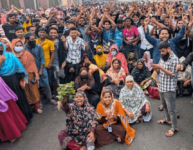
Elsewhere in Dhaka, garment workers gathered outside their factories and demanded a rise in wages.
In February, Rahman’s Bangladesh Nationalist Party (BNP) won more than a two-thirds majority in parliament. He is in a position to get legislation passed in parliament without the support of the opposition.
So why is he seeking his rivals’ help now?
On November 17, the day before his speech, a crowd stormed and set fire to a police station in Gopalganj, Hasina’s home district. Wage protests across the country halted production at nearly 450 garment factories that day. Rahman accused Hasina’s Awami League (AL) of encouraging violence in the factories.
Hasina’s possible return from India to Bangladesh came up even during a prayer in parliament. On November 9, after parliamentarians stood in silence to mourn former lawmakers, prominent figures, and accident victims, State Minister for Religious Affairs Mohammad Shamim Kaiser prayed to God for strength to resist any attempts to bring back “fascism.”
He meant Hasina and her party. That day, her lawyers applied for a passport at Bangladesh’s mission in New Delhi. She had fled to India on August 5, 2024.
However, Dhaka refused Hasina’s passport request. The AL, whose political activities remain banned, called a nationwide shutdown for November 19. The disruption was greatest in the party’s southern strongholds. In Gopalganj, a crowd stormed Tungipara Police Station on November 17. Witnesses said the attackers freed detained members of the AL’s student wing, and set part of the building on fire. The home of one BNP lawmaker was torched later that evening. Two days later attackers set fire to Muksudpur Police Station and the home of another BNP lawmaker.
In the southern district of Pirojpur, a 25-year-old bus assistant named Mohammad Siam died when someone set fire to the parked bus where he was sleeping. Police said they did not know who torched the bus. Nationwide, police have recorded 83 arson attacks on vehicles and crude bomb blasts at 87 sites over the past two weeks.
Grameen Bank reported attacks, including attempted arson, at 72 of its offices across 40 districts this month. Its founder, Muhammad Yunus, led the interim government after Hasina’s government fell. Rahman’s government accused AL leaders abroad of encouraging the violence.
On November 24, Hasina again asked Dhaka to fly her home from Delhi on Biman Bangladesh Airlines on December 16, which Bangladesh marks as Victory Day — the day Bangladesh’s war of independence from Pakistan ended in 1971. Hasina says she wants to surrender.
A Bangladeshi tribunal sentenced her to death in absentia last year for ordering the crackdown on protesters in July-August 2024. She denies the charges. Rahman’s government has refused the flight request, saying India would have to extradite her.
The country has also tightened security along its border with India ahead of December. Border Guards Bangladesh had stepped up patrols and installed floodlights. A commander said his force was on alert for AL supporters, who might try to enter illegally. The police chief also asked officers in border districts to watch for attempts to bring weapons or explosives into Bangladesh.
The JI and NCP share Rahman’s opposition to an AL comeback. They also want him to honor constitutional reforms voters backed in a referendum in February.
After meeting Rahman, NCP leader Nahid Islam said the current situation is not an overnight development. It was the outcome of the government’s failure to act on the deteriorating law and order situation in the country over several months.
Moreover, along with the garment sector unrest and AL-related unrest, some of the violence came from the ruling party. A Bangladeshi rights group recorded nine deaths in 35 clashes between BNP factions in October.
The Home Ministry reported fewer murder cases nationwide in the first nine months of this year than in the same period last year. In Khulna, a southern division, however, six people were killed in just over three weeks. One was a brick and sand merchant, who was shot in his shop. Local BNP leaders, including lawmakers and the city administrator, have expressed concern over the killings and extortion and called for stronger police action.
Bangladesh has deployed 101 platoons of border guards across eight districts. The Ansar paramilitary force said it had deployed 57 platoons in nine districts.
Meanwhile, garment industry workers are on strike. A sewing machine operator earning 13,500 taka a month told Human Rights Watch that rent took 6,000 and cooking gas another 2,300. The family could no longer afford the children’s schooling. “Tell me, what’s left for food?” the worker asked.
In August, a federation of garment unions asked the labor minister for a wage review. The monthly minimum wage of 12,500 taka (about $100) dates back to an agreement in 2023. The BNP had campaigned on a promise to link wages to inflation.
Workers began returning to factories after the government promised a raise from December. When a wage board meeting was postponed, they walked out again. At the end of the talks on November 23, owners were offering 15,800 taka a month. Workers’ representatives had lowered their demand from 32,000 to 22,000. The Center for Policy Dialogue, a Dhaka-based research institute, estimates it would take 16,351 taka just to buy what the minimum wage bought in 2023.
Meeting workers’ demands is not easy as factory owners have to bargain with overseas buyers, too.
The garment industry employs about 4 million people and accounts for more than 80 percent of Bangladesh’s export earnings. Only China exports more clothing than Bangladesh.
The ongoing labor strikes are hitting the industry hard. According to The Bangladesh Garment Manufacturers and Exporters Association, 317 factories reported that buyers had moved $254 million in confirmed orders to other countries in the first 18 days of November. Bangladesh’s apparel exports to the European Union dropped 12 percent in January-September this year.
Since assuming office in February, the BNP government has faced multiple challenges. The Iran-U.S. war led to disrupted energy supplies and rising fuel prices. By November, violence over Hasina’s proposed return and garment wage protests have put additional pressure on the government.
As violence spreads over Hasina’s proposed return, the AL has come out in support of wage hikes for garment industry workers. Interestingly, JI is on the same side as the AL on this issue.
By Saqlain Rizve
November 25, 2026
On November 18, Bangladeshi Prime Minister Tarique Rahman asked his rivals in parliament to stand together as they had in 2024, when a student uprising ousted Sheikh Hasina from power. He also invited the opposition leader, Shafiqur Rahman of the Jamaat-e-Islami (JI), Bangladesh’s largest Islamist party, to his parliamentary office for tea. The two spoke alone.
Five days later, Rahman met a delegation from the National Citizen Party (NCP), founded by student leaders of the uprising. His government also planned formal talks with JI.
Elsewhere in Dhaka, garment workers gathered outside their factories and demanded a rise in wages.
In February, Rahman’s Bangladesh Nationalist Party (BNP) won more than a two-thirds majority in parliament. He is in a position to get legislation passed in parliament without the support of the opposition.
So why is he seeking his rivals’ help now?
On November 17, the day before his speech, a crowd stormed and set fire to a police station in Gopalganj, Hasina’s home district. Wage protests across the country halted production at nearly 450 garment factories that day. Rahman accused Hasina’s Awami League (AL) of encouraging violence in the factories.
Hasina’s possible return from India to Bangladesh came up even during a prayer in parliament. On November 9, after parliamentarians stood in silence to mourn former lawmakers, prominent figures, and accident victims, State Minister for Religious Affairs Mohammad Shamim Kaiser prayed to God for strength to resist any attempts to bring back “fascism.”
He meant Hasina and her party. That day, her lawyers applied for a passport at Bangladesh’s mission in New Delhi. She had fled to India on August 5, 2024.
However, Dhaka refused Hasina’s passport request. The AL, whose political activities remain banned, called a nationwide shutdown for November 19. The disruption was greatest in the party’s southern strongholds. In Gopalganj, a crowd stormed Tungipara Police Station on November 17. Witnesses said the attackers freed detained members of the AL’s student wing, and set part of the building on fire. The home of one BNP lawmaker was torched later that evening. Two days later attackers set fire to Muksudpur Police Station and the home of another BNP lawmaker.
In the southern district of Pirojpur, a 25-year-old bus assistant named Mohammad Siam died when someone set fire to the parked bus where he was sleeping. Police said they did not know who torched the bus. Nationwide, police have recorded 83 arson attacks on vehicles and crude bomb blasts at 87 sites over the past two weeks.
Grameen Bank reported attacks, including attempted arson, at 72 of its offices across 40 districts this month. Its founder, Muhammad Yunus, led the interim government after Hasina’s government fell. Rahman’s government accused AL leaders abroad of encouraging the violence.
On November 24, Hasina again asked Dhaka to fly her home from Delhi on Biman Bangladesh Airlines on December 16, which Bangladesh marks as Victory Day — the day Bangladesh’s war of independence from Pakistan ended in 1971. Hasina says she wants to surrender.
A Bangladeshi tribunal sentenced her to death in absentia last year for ordering the crackdown on protesters in July-August 2024. She denies the charges. Rahman’s government has refused the flight request, saying India would have to extradite her.
The country has also tightened security along its border with India ahead of December. Border Guards Bangladesh had stepped up patrols and installed floodlights. A commander said his force was on alert for AL supporters, who might try to enter illegally. The police chief also asked officers in border districts to watch for attempts to bring weapons or explosives into Bangladesh.
The JI and NCP share Rahman’s opposition to an AL comeback. They also want him to honor constitutional reforms voters backed in a referendum in February.
After meeting Rahman, NCP leader Nahid Islam said the current situation is not an overnight development. It was the outcome of the government’s failure to act on the deteriorating law and order situation in the country over several months.
Moreover, along with the garment sector unrest and AL-related unrest, some of the violence came from the ruling party. A Bangladeshi rights group recorded nine deaths in 35 clashes between BNP factions in October.
The Home Ministry reported fewer murder cases nationwide in the first nine months of this year than in the same period last year. In Khulna, a southern division, however, six people were killed in just over three weeks. One was a brick and sand merchant, who was shot in his shop. Local BNP leaders, including lawmakers and the city administrator, have expressed concern over the killings and extortion and called for stronger police action.
Bangladesh has deployed 101 platoons of border guards across eight districts. The Ansar paramilitary force said it had deployed 57 platoons in nine districts.
Meanwhile, garment industry workers are on strike. A sewing machine operator earning 13,500 taka a month told Human Rights Watch that rent took 6,000 and cooking gas another 2,300. The family could no longer afford the children’s schooling. “Tell me, what’s left for food?” the worker asked.
In August, a federation of garment unions asked the labor minister for a wage review. The monthly minimum wage of 12,500 taka (about $100) dates back to an agreement in 2023. The BNP had campaigned on a promise to link wages to inflation.
Workers began returning to factories after the government promised a raise from December. When a wage board meeting was postponed, they walked out again. At the end of the talks on November 23, owners were offering 15,800 taka a month. Workers’ representatives had lowered their demand from 32,000 to 22,000. The Center for Policy Dialogue, a Dhaka-based research institute, estimates it would take 16,351 taka just to buy what the minimum wage bought in 2023.
Meeting workers’ demands is not easy as factory owners have to bargain with overseas buyers, too.
The garment industry employs about 4 million people and accounts for more than 80 percent of Bangladesh’s export earnings. Only China exports more clothing than Bangladesh.
The ongoing labor strikes are hitting the industry hard. According to The Bangladesh Garment Manufacturers and Exporters Association, 317 factories reported that buyers had moved $254 million in confirmed orders to other countries in the first 18 days of November. Bangladesh’s apparel exports to the European Union dropped 12 percent in January-September this year.
Since assuming office in February, the BNP government has faced multiple challenges. The Iran-U.S. war led to disrupted energy supplies and rising fuel prices. By November, violence over Hasina’s proposed return and garment wage protests have put additional pressure on the government.
As violence spreads over Hasina’s proposed return, the AL has come out in support of wage hikes for garment industry workers. Interestingly, JI is on the same side as the AL on this issue.


