Battle of Kunu-ri 1950: The 5,000 Turks Sent Into the Hole Where a Corps Vanished

The Battles of Kunuri and Wawon in 3 days


Turkish Brigade : 767 loses (218 martyrs, 455 wounded, 94 missing)

Chinese Forces : over 3.000 loses


Because the Chinese Army was so numerous, the Turkish Brigade withdrew after successfully completing its mission.


----------------------------------------------------------------------

The Battle of Kumyangjang-ni, which took place in January 1951 , a few months after Kunuri was where the Turkish Brigade dealt its most significant blow to the Chinese forces. In that battle, Turkish soldiers suffered only 12 fatalities while neutralizing 474 Chinese troops through bayonet charges.

 
Last edited:
My Uncle was a veteran who fought in the Korean War, when they ran out of ammunition, Turkish soldiers fixed bayonets and launched an attack against the numerically superior Chinese Army


My Uncle was a very short-tempered, crazy and fearless man, and he spoke very little

May ALLAH have mercy on him
 
5,455 Turkish Soldiers ( Turkish Brigade ) saved the US Army 2nd Infatry Division ( 17.000 Soldiers ) from 100.000+ Chinese Forces during the Battles of Kunuri and Wawon in 1950


This is a historic turning point, as the extraordinary resistance displayed by the Turkish Brigade enabled the American 2nd Infantry Division and the U.S. 8th Army to break out of a Chinese encirclement and avoid total destruction.

The Turkish Brigade, codenamed North Star
1794246445745.png
 
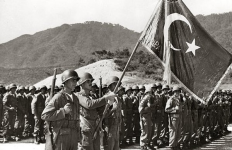
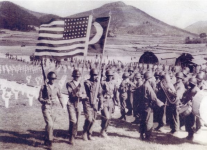
American-Turkish Forces fought against the Chinese Forces


Turkish American who served as a United States Marine combat veteran in the Korean War of 1950-53. His Marine division fought alongside Turkish soldiers.
1794247408131.png

General Douglas MacArthur called the Turks “the bravest of the brave.”

------------------------------------------------------------------

In the Korean War, 22 countries participated in the United Nations coalition that defended South Korea from communism

Although the Turks were 4th in number of casualties.

Total of 14,936 Turkish troops served in the Korean War
 
K1: The Genetic Basis of East Asians and the Chinese

K2b: The Genetic Basis of Central Asians, Turks, and Western Eurasians


The Turks and Han Chinese are relatives

Approximately 45,000 years ago, the K1 branch descending from a common paternal ancestor migrated toward East Asia, forming the primary genetic backbone (haplogroup O) of modern Chinese and East Asian populations. Meanwhile, the K2b branch moved toward the steppes of Central Asia and Siberia, giving rise to the ancestral lineages (haplogroups Q and R) of Turkic peoples, Central Asian populations, and Europeans.

In other words, on the genetic tree, the distant ancestors of the Turks and the Chinese are like two full siblings who followed parallel paths.
 
The primary mission assigned to the Turkish Brigade ( 5,455 soldiers ) was not to hold the area permanently against 100,000+ Chinese troops, but rather to slow down the advancing Chinese army and buy time for UN-American forces.

The Turkish brigade accomplished its tasks more than successfully.
100,000 in your dreams only. stop talking nonsense as you always do.
 
The only blow you delivered to was S.Korea troops, very laughable, how pathetic, the first battle "victory" was against your own allies.
 
搜狗截图20261110025159.png

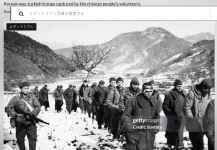
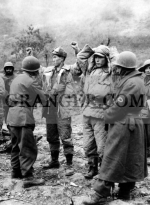
This photo depicts soldiers from the Turkish Brigade captured by the Chinese People’s Volunteer Army during the Korean War.
In the early stages of combat, the brigade—hampered by inexperience and severe language barriers—mistakenly opened fire on retreating South Korean troops, misidentifying them as Chinese forces and causing a tragic friendly fire incident.
896983293_4469418029976685_8803301707554591445_n.avif
 
The only blow you delivered to was S.Korea troops, very laughable, how pathetic, the first battle "victory" was against your own allies.


Keep living in your fantasy world

Although the Chinese outnumbered them, Chinese suffered far greater losses, and this is a proven fact.


The Battles of Kunuri and Wawon in 3 days

Turkish Brigade : 767 loses (218 martyrs, 455 wounded, 94 missing)

Chinese Forces : over 3.000 loses


The Battle of Kumyangjang-ni, which took place in January 1951 , a few months after Kunuri was where the Turkish Brigade dealt its most significant blow to the Chinese forces. In that battle, Turkish soldiers suffered only 12 fatalities while neutralizing 474 Chinese troops through bayonet charges

Turkish Forces : 12 loses
Chinese Forces : 474 loses


------------------------------------------------------------------


Turkish Forces
1794251165903.png
 
Last edited:
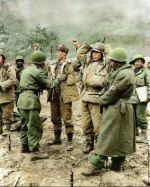
“North Star” codenamed Turkish Brigade soldiers are searching the persons of Chinese soldiers they captured in the Korean War

1794252093234.png

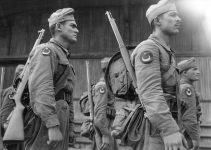
In the Korean War, Turkish Brigade crushed the Chinese in bayonet combat.

The Turkish Brigade's reputation for hand-to-hand combat was forged across two critical engagements

-- Battle of Kunu-ri (November 1950)
-- Battle of Kumyangjang-ni (January 1951)
 
In December 1950, Turkish soldiers from the Korean War are seen searching Chinese prisoners after a military engagement. The image captures the intensity and tension of the war as the soldiers carefully inspect the prisoners. The scene is a snapshot of the brutal realities of conflict during this historical period.
1794252839845.png
 
US and its ally lapdogs like Turkey got kicked out of NK by the CHinese. No amount of posting random pics is going to change history. Have you learned about heavenly Khagan yet?

The Khan of Heaven (Old Turkic: Tengri Qaghan, Chinese: Tian Kehan [天可汗]) was a dual title bestowed upon Emperor Taizong of Tang (Li Shimin) by Turkic and Central Asian nomadic tribes. [1, 2, 3]

Historical Context and Meaning
    • First Adoption: The title was first used around 630 CE (and again in 646 CE) after the Tang Dynasty defeated the Eastern Turkic Khaganate and the Xueyantuo. [1]
    • Dual Legitimacy: By accepting the title of "Heavenly Khagan" alongside his Chinese title of Emperor (Huangdi), Taizong bridged traditional Chinese imperial authority with steppe nomadic traditions. [1, 2]
    • Tengri Connection: The title combined the Turkic concept of Tengri (Heaven/Sky) with Khagan (supreme ruler), framing the Tang emperor as a legitimate ruler of both agricultural Chinese populations and nomadic pastoralists. [1]
    • Continuation: The title was adopted by subsequent Tang emperors and rulers (including Wu Zetian) until roughly 779 CE. [1]
 
100,000 in your dreams only. stop talking nonsense as you always do.


Minimum 60.000
And the main striking force in the region was the 38th Chinese Army (Corps)

• Turkish Brigade Strength: Approximately 5,455 soldiers.
• Chinese Army Strength: Approximately 60,000 soldiers.


The Turkish Brigade put up a fierce resistance for 3 days against this massive army, which was nearly 10–12 times larger than itself.
 
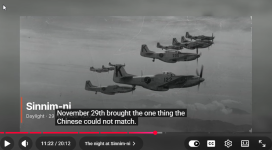
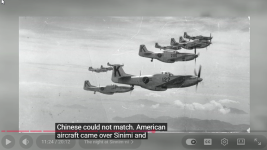
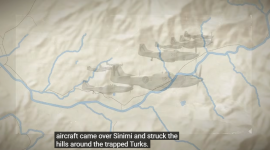
Without US air strike rescue, no Turkish soldier couldn't have got out alive. China back then China had zero air cover.

搜狗截图20261110034016.png搜狗截图20261110034113.png搜狗截图20261110034138.png
 
The Koreans are our blood brothers

And We Turks kicked little communist Ching Chongs who wanted to turn South Korea communist
 

Users who are viewing this thread

Back
Top