Ili crisis
Ili crisis, (1879–81),
dispute between
Russia and
China over the Chinese region centred on the
Ili (Yili) River, an area in the northern part of Chinese Xinjiang, near Russian Turkistan.
Ili was the scene of increasing Russian penetration throughout the 19th century; after the signing of the
Treaty of Kuldja (1851), the Russians were granted permission to establish two consulates in the area. In 1864, while the Chinese government was absorbed with the great
Taiping Rebellion in South
China, several independent revolts broke out among the Muslims of southern Chinese Xinjiang and the northwestern Chinese provinces of
Shaanxi and
Gansu. Taking advantage of this confusion, an invader from
Kokand,
Yakub Beg, established his own kingdom in northern Xinjiang. The Russians used these disorders as an excuse to occupy the territory in July 1871, claiming that they were attempting to protect their citizens from Muslim raids and would
withdraw as soon as the Chinese reestablished order.
In 1866 the Chinese, having quelled the Taipings, dispatched
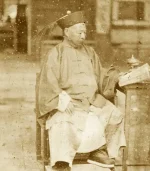
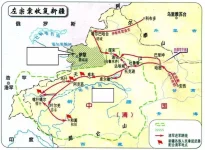
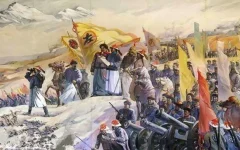
Zuo Zongtang to be the governor-general of northwestern China in order to end the Muslim uprisings. By 1873 Zuo had crushed the rebellion in Shaanxi and Gansu and began to move against Yakub Beg. Four years later the area was secured, and Yakub Beg committed suicide.
In 1879 China sent a delegation to
St. Petersburg to ask the Russians to evacuate the territory. The mission head,
Chonghou, had no knowledge of the geography of the region, and he was duped into signing the
Treaty of Livadia (October 1879), which returned Ili in name but actually allowed almost three-quarters of it to remain in Russian hands. In addition, the Russians were given the right to establish consulates in seven key places and were promised an indemnity of 5,000,000 rubles.
Upon learning of the treaty, the astonished Chinese government immediately imprisoned Chonghou and sentenced him to decapitation. Zuo poised his troops for attack while the Russian fleet demonstrated off the Chinese coast, and the situation became very tense. Neither country really wanted war. Chonghou’s life was spared after the intervention of a group of Western diplomats, and a second mission was sent to St. Petersburg to negotiate. Under the
Treaty of St. Petersburg (February 1881), almost all of Ili was returned to China, and the Russian consulates in the area were reduced to two, but China was made to pay an indemnity of 9,000,000 rubles.