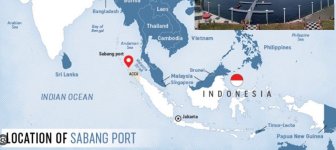
BREAKING: India, Indonesia to jointly develop Sabang Port near the Strait of Malacca, sources say

ENC has already started sending its new warships to the South China Sea. We also sent a Kilo-class submarine to Jakarta in 2023. Step by step, India's presence in the region is growing.
To view this content we will need your consent to set third party cookies.
For more detailed information, see our cookies page.

To view this content we will need your consent to set third party cookies.
For more detailed information, see our cookies page.
 
Great Nicobar up north. Sabang down south. That's both sides of the western mouth of the Strait of Malacca. @Nimble
1000045693.jpg
 
This is overwhelmingly aimed at China.

While both India and Indonesia publicly frame the project in terms of regional connectivity, economic growth, and maritime safety, geopolitical analysts universally agree that the primary objective is to counter Beijing's expanding military and economic footprint in the Indo-Pacific.

Here is why China is the central focus of this dual-port strategy:

Exploiting the "Malacca Dilemma"

The term "Malacca Dilemma" was coined by former Chinese President Hu Jintao to describe Beijing’s extreme vulnerability regarding the Strait of Malacca.

The Vulnerability: Approximately 80% of China’s oil imports and a massive share of its container trade pass through this narrow chokepoint.

The Countermove: By positioning deep-water infrastructure at Sabang (Indonesia) and the Great Nicobar port (India), the two nations sit precisely at the western throat of the strait. In a geopolitical crisis or conflict, this gives India and its partners a significant strategic advantage—the capability to monitor, track, or even establish a naval blockade on Chinese energy supplies.

Pushing Back Against the "String of Pearls"

For years, China has been constructing a network of military and commercial facilities around India’s maritime perimeter—often referred to as the "String of Pearls." This includes significant investments in ports like Gwadar in Pakistan, Hambantota in Sri Lanka, and facilities in Myanmar and Djibouti.

The joint development of Sabang, coupled with India's own massive military-logistical hub at Galathea Bay (Great Nicobar), acts as a direct counter-encirclement. It signals that India and key ASEAN nations can project power right at the gateway where the Chinese People's Liberation Army Navy (PLAN) enters the Indian Ocean.
 
Last edited:
China has anticipated this vulnerability for decades. To counter a potential blockade or intense surveillance at the western entrance of the Strait of Malacca by India and Indonesia, Beijing is actively deploying a multi-layered strategy.

Rather than confronting the Sabang-Nicobar pincer head-on, China’s approach focuses on bypassing the chokepoint entirely, applying economic leverage, and expanding its naval presence elsewhere.

Bypassing the Chokepoint (Land Corridors & Pipelines)

Beijing’s primary defense against the "Malacca Dilemma" is building alternative overland trade and energy routes that stop short of the strait.

The Myanmar-Yunnan Pipeline: This is the most direct counter. China developed the deep-water port of Kyaukphyu in Myanmar and linked it directly to China's Yunnan province via oil and natural gas pipelines. Tankers from the Middle East can unload in Myanmar, allowing the energy to flow overland into China, completely bypassing the Malacca Strait and avoiding the Nicobar-Sabang surveillance zone.

The China-Pakistan Economic Corridor (CPEC): China has poured over $60 billion into CPEC, anchoring it at the deep-water port of Gwadar on the Arabian Sea. The goal is to pipe and transport oil and cargo from the Arabian Sea directly into western China (Xinjiang).

The "Polar Silk Road": China is investing heavily in Arctic shipping lanes. As ice melts, the Northern Sea Route offers a seasonal alternative to ship goods to Europe without ever entering the Indian Ocean.

Investing in Southeast Asian Alternative Waterways

If maritime transport must be used, China looks for paths where India and Indonesia have less direct control.

The Thai Land Bridge / Kra Canal: For years, China has eyed the Isthmus of Kra in Thailand to build either a canal or a massive rail/pipeline "land bridge" connecting the Gulf of Thailand to the Andaman Sea. Bypassing Malacca via Thailand would significantly degrade the strategic value of the Sabang and Great Nicobar ports.

Alternative Indonesian Straits: If forced south, Chinese vessels can utilize the Lombok or Makassar straits. While these routes add days and millions in fuel costs to a journey, they pull shipping further away from India’s heavy naval concentrations in the Andaman Sea.

Diplomatic and Economic Counter-Leverage

China frequently uses its immense economic clout to try and dilute bilateral security alignments against it.

Economic Ties with Indonesia: Indonesia relies heavily on China as its largest trading partner and a massive investor in its domestic infrastructure (like nickel processing and high-speed rail). Beijing routinely leverages these vital economic ties to ensure Jakarta maintains a strictly non-aligned foreign policy, putting pressure on Indonesia not to allow the Sabang port to ever become an active military base for anti-China coalitions.

Flanking via the "String of Pearls"

To counter India's geographical advantage at the mouth of the strait, China has established its own logistical and naval presence right in India's backyard.

By securing operational access or long-term leases at ports like Hambantota (Sri Lanka), Gwadar (Pakistan), and naval facilities in Djibouti and Myanmar, the Chinese People's Liberation Army Navy (PLAN) ensures it can deploy surface warships and intelligence-gathering vessels to monitor Indian naval movements symmetrically.
 
This is overwhelmingly aimed at China.

While both India and Indonesia publicly frame the project in terms of regional connectivity, economic growth, and maritime safety, geopolitical analysts universally agree that the primary objective is to counter Beijing's expanding military and economic footprint in the Indo-Pacific.

Here is why China is the central focus of this dual-port strategy:

Exploiting the "Malacca Dilemma"

The term "Malacca Dilemma" was coined by former Chinese President Hu Jintao to describe Beijing’s extreme vulnerability regarding the Strait of Malacca.

The Vulnerability: Approximately 80% of China’s oil imports and a massive share of its container trade pass through this narrow chokepoint.

The Countermove: By positioning deep-water infrastructure at Sabang (Indonesia) and the Great Nicobar port (India), the two nations sit precisely at the western throat of the strait. In a geopolitical crisis or conflict, this gives India and its partners a significant strategic advantage—the capability to monitor, track, or even establish a naval blockade on Chinese energy supplies.

Pushing Back Against the "String of Pearls"

For years, China has been constructing a network of military and commercial facilities around India’s maritime perimeter—often referred to as the "String of Pearls." This includes significant investments in ports like Gwadar in Pakistan, Hambantota in Sri Lanka, and facilities in Myanmar and Djibouti.

The joint development of Sabang, coupled with India's own massive military-logistical hub at Galathea Bay (Great Nicobar), acts as a direct counter-encirclement. It signals that India and key ASEAN nations can project power right at the gateway where the Chinese People's Liberation Army Navy (PLAN) enters the Indian Ocean.
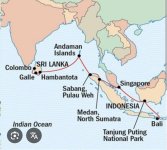
There is no such thing as "String of Pearls" strategy around India's neck., but dreamed up by Indians, at least in the military sense. All those ports China is developing around the Indian ocean perimeter are for commercial purposes, there are no Chinese military bases there. It's unwise for Indonesia to get in bed with India esp militarily to block China's access to the strait of Malacca. But, one never know someone else's thinking, Indonesia has been very unfriendly with China on nickel processing and supplying chain lately, Chinese companies are withdrawing from the country. If India has other Idea of trying to block or choke China's energy and trade lines along the sea and ocean routes, China might strike India somewhere unexpected, not just confining to the routes.
 

Users who are viewing this thread

Back
Top