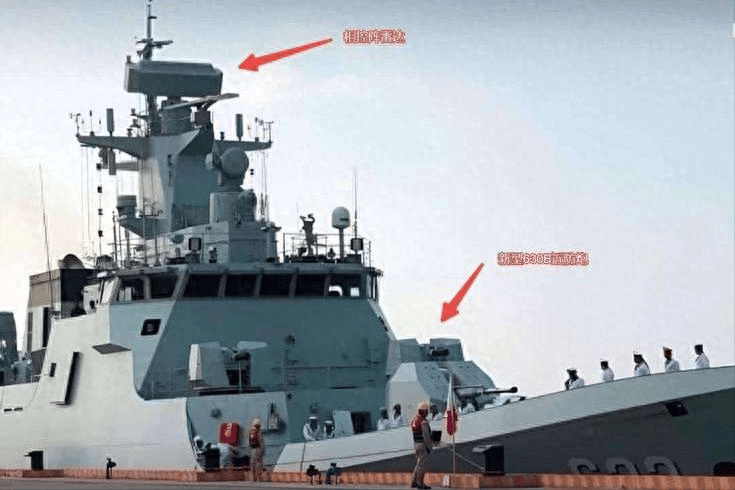
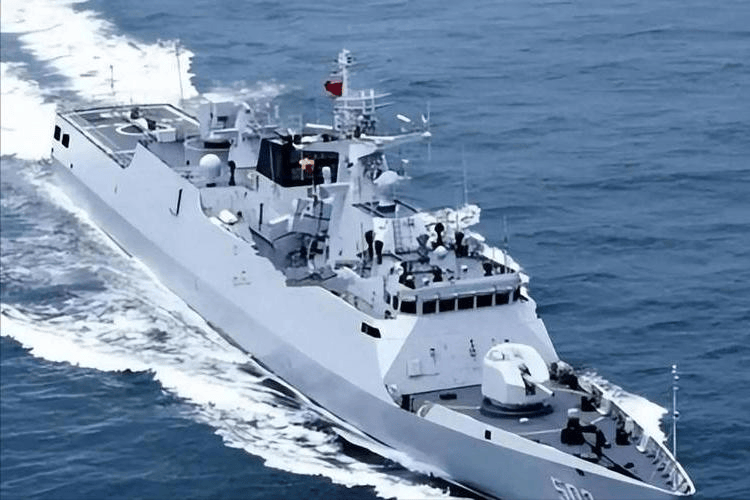
Cambodia has received its first Chinese-built Type 056C missile corvette at Ream Naval Base, marking a significant upgrade in the Royal Cambodian Navy

Zarvan

Elite Member
Joined
Apr 28, 2011
Messages
56,767
Reaction score
68,585
Reputation
3,599.6
Country of Origin
Country of Residence

Cambodia receives its first Type 056C missile corvette from China at Ream Naval Base​


Cambodia has received its first Chinese-built Type 056C missile corvette at Ream Naval Base, marking a significant upgrade in the Royal Cambodian Navy’s maritime combat capability.


Delivered by China and formally transferred on April 8, 2026, the vessel introduces missile-capable surface warfare potential, shifting Cambodia from a patrol-focused fleet toward integrated naval combat operations in coastal waters. The corvette, hull number 622, arrived on April 4, 2026, fully crewed, completing the first phase of a two-ship grant announced in 2024, with a second unit due in June. This delivery, following the reopening of Ream Naval Base after a Chinese-funded expansion, enhances Cambodia’s operational readiness and strengthens its ability to conduct deterrence, maritime security, and coordinated naval operations in the Gulf of Thailand.
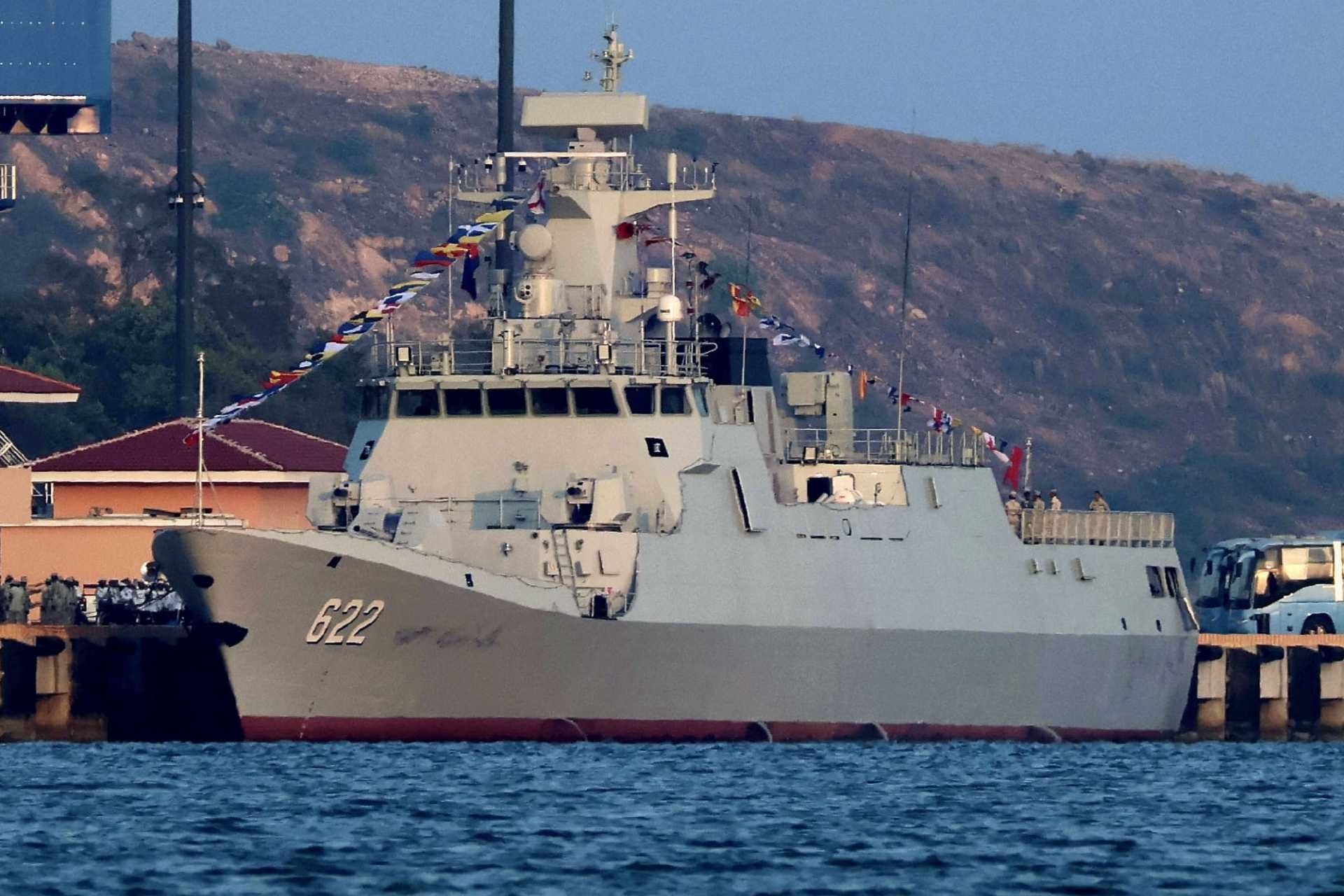


The arrival of the Type 056C corvette represents a structural break in the Royal Cambodian Navy’s capabilities, as it introduces the country’s first modern surface combatant able to carry missiles and multi-domain sensors. (Picture source: Weibo/@洋务先驱张之洞)

The arrival of the Type 056C corvette represents a structural break in the Royal Cambodian Navy’s capabilities, as it introduces the country’s first modern surface combatant able to carry missiles and multi-domain sensors. (Picture source: Weibo/@洋务先驱张之洞)

On April 4, 2026, Cambodia received its first Chinese-built Type 056C corvette at Ream Naval Base, with the vessel arriving fully crewed and formally transferred to the Royal Cambodian Navy on April 8, completing the first phase of a two-ship grant announced by Beijing in 2024. The second corvette is scheduled for delivery in June 2026 and was assessed at roughly 70% completion at the time of the first unit’s arrival, following an acceptance inspection conducted in October 2025 that included Cambodian defense officials. The transfer follows the reopening of Ream Naval Base in April 2025 after Chinese-funded expansion works that increased berth capacity and support infrastructure.

Before this delivery, Cambodia’s navy operated primarily small patrol crafts, limiting its ability to conduct layered maritime defense. The arrival of hull number 622 introduces the first class of modern vessels equipped with missiles into the Cambodian Navy fleet, two years after the announcement. China's delivery consists of two Type 056C corvettes transferred as grant aid, not as a commercial purchase, and forms part of a broader China–Cambodia defense cooperation arrangement that includes infrastructure development and operational integration. Each vessel is designed for a crew complement of about 60 personnel, requiring Cambodia to expand its training, maintenance, and command systems to support a ship class not previously operated.

The Type 056 corvettes, sometimes classified as frigates, were produced between 2012 and 2016 across multiple Chinese shipyards, including Hudong-Zhonghua, Huangpu Wenchong, and Wuchang facilities, with at least 22 units entering Chinese naval service before later transfers to the China Coast Guard. Export derivatives include the C13B variant supplied to Bangladesh in four units and the P18N variant supplied to Nigeria in two units. The delivery also represents a transition from a patrol-based fleet to one incorporating combatant ships with integrated sensors and weapons. This shift will introduce new operational requirements in logistics, spare parts supply, and technical personnel.


The Type 056C has a full load displacement between 1,300 and 1,500 tons, a length of 88.9 meters, a beam of 11.1 meters, and a draft close to 4 meters, positioning it between offshore patrol vessels and frigates in size. The propulsion system consists of two SEMT Pielstick 16 PA6-STC diesel engines producing about 6,900 horsepower each, for a combined output nearing 13,800 horsepower and driving two shafts. This provides a maximum speed of 25 knots and a cruising endurance of about 3,500 nautical miles at 16 knots, which is sufficient for operations within the Gulf of Thailand and adjacent waters but limits extended deployments. The ship includes a flight deck capable of supporting one medium helicopter, such as the Harbin Z-9, but the absence of a hangar restricts maintenance and long-duration aviation operations.

Sensor systems include a Type 364 air and surface search radar, a Type 347G fire control radar for the main gun, and a bow-mounted sonar for basic anti-submarine detection. These systems are linked through a ZKJ-5 combat data system that provides target tracking and fire control integration for near-shore operations. The armament observed on the Cambodian unit includes one H/PJ-26 76mm dual-purpose gun mounted on the bow and two H/PJ-17 30mm remote-controlled weapon systems for close-in defense, providing engagement capability against small surface targets and low-flying threats at short range. Standard Type 056 loadouts include four YJ-83 anti-ship missiles arranged in two twin launchers, each missile having a range between 150 and 180 km and designed for sea-skimming attack profiles, as well as one HHQ-10 short-range air defense system with eight missiles for point defense against incoming threats.

Additionally, two triple 324mm torpedo tubes are typically fitted for launching Yu-7 lightweight torpedoes, providing a limited anti-submarine warfare capability. These missile and torpedo systems were not visible on hull 622 at the time of delivery, indicating either that they were removed before transfer, are pending installation, or were excluded from the export configuration. For now, the absence of YJ-83 missiles eliminates the vessel’s ability to conduct long-range anti-ship strikes, while the absence of HHQ-10 reduces its defensive coverage against aerial threats beyond gun range, unless additional systems are installed later. The Type 056C's operational requirements prioritize littoral missions such as patrol, escort, maritime security enforcement, and limited anti-surface warfare within coastal zones.


With a range of 3,500 nautical miles and no onboard hangar, the Type 056C corvette is not configured for sustained blue-water operations or extended deployments without external support. Its sensor suite provides basic detection and tracking but lacks the depth and redundancy of larger combatants equipped with area air defense systems or advanced sonar arrays. The ship is therefore suited to operations within Cambodia’s exclusive economic zone, including fisheries protection, convoy escort, and presence missions. However, the limited weapon configuration observed reduces the Cambodian Type 056C's deterrence value against higher-end naval threats.

The vessel’s effectiveness is therefore tied to the threat environment, as well as the availability of supporting assets and naval bases such as Ream. Ream Naval Base serves as the primary support facility for these vessels and underwent significant upgrades before reopening in April 2025, including the construction of expanded piers, maintenance areas, and logistics infrastructure capable of supporting ships in the corvette and frigate size range. The base is located on Cambodia’s southern coast along the Gulf of Thailand, providing direct access to regional sea lanes and proximity to the South China Sea.

The upgraded facilities enable refueling, maintenance, and resupply operations that were previously limited in Cambodia’s naval infrastructure. The base is designed to support sustained naval operations rather than short-duration patrols, introducing the potential for access by Chinese naval units, although operational arrangements are not publicly defined. The integration of ship delivery and base expansion indicates a coordinated approach to capability development, as the base effectively functions as the operational hub for Cambodia’s emerging surface combatant force.


Written by Jérôme Brahy

Jérôme Brahy is a defense analyst and documentalist at Army Recognition. He specializes in naval modernization, aviation, drones, armored vehicles, and artillery, with a focus on strategic developments in the United States, China, Ukraine, Russia, Türkiye, and Belgium. His analyses go beyond the facts, providing context, identifying key actors, and explaining why defense news matters on a global scale.
 
This is pretty much a missile boat on the same class as our Molniya but the Molinya class can pack 16 antiship missiles with just 50% displacement as this corvette.
 

Cambodia receives its first Type 056C missile corvette from China at Ream Naval Base​


Cambodia has received its first Chinese-built Type 056C missile corvette at Ream Naval Base, marking a significant upgrade in the Royal Cambodian Navy’s maritime combat capability.


Delivered by China and formally transferred on April 8, 2026, the vessel introduces missile-capable surface warfare potential, shifting Cambodia from a patrol-focused fleet toward integrated naval combat operations in coastal waters. The corvette, hull number 622, arrived on April 4, 2026, fully crewed, completing the first phase of a two-ship grant announced in 2024, with a second unit due in June. This delivery, following the reopening of Ream Naval Base after a Chinese-funded expansion, enhances Cambodia’s operational readiness and strengthens its ability to conduct deterrence, maritime security, and coordinated naval operations in the Gulf of Thailand.


The arrival of the Type 056C corvette represents a structural break in the Royal Cambodian Navy’s capabilities, as it introduces the country’s first modern surface combatant able to carry missiles and multi-domain sensors. (Picture source: Weibo/@洋务先驱张之洞)

The arrival of the Type 056C corvette represents a structural break in the Royal Cambodian Navy’s capabilities, as it introduces the country’s first modern surface combatant able to carry missiles and multi-domain sensors. (Picture source: Weibo/@洋务先驱张之洞)

On April 4, 2026, Cambodia received its first Chinese-built Type 056C corvette at Ream Naval Base, with the vessel arriving fully crewed and formally transferred to the Royal Cambodian Navy on April 8, completing the first phase of a two-ship grant announced by Beijing in 2024. The second corvette is scheduled for delivery in June 2026 and was assessed at roughly 70% completion at the time of the first unit’s arrival, following an acceptance inspection conducted in October 2025 that included Cambodian defense officials. The transfer follows the reopening of Ream Naval Base in April 2025 after Chinese-funded expansion works that increased berth capacity and support infrastructure.

Before this delivery, Cambodia’s navy operated primarily small patrol crafts, limiting its ability to conduct layered maritime defense. The arrival of hull number 622 introduces the first class of modern vessels equipped with missiles into the Cambodian Navy fleet, two years after the announcement. China's delivery consists of two Type 056C corvettes transferred as grant aid, not as a commercial purchase, and forms part of a broader China–Cambodia defense cooperation arrangement that includes infrastructure development and operational integration. Each vessel is designed for a crew complement of about 60 personnel, requiring Cambodia to expand its training, maintenance, and command systems to support a ship class not previously operated.

The Type 056 corvettes, sometimes classified as frigates, were produced between 2012 and 2016 across multiple Chinese shipyards, including Hudong-Zhonghua, Huangpu Wenchong, and Wuchang facilities, with at least 22 units entering Chinese naval service before later transfers to the China Coast Guard. Export derivatives include the C13B variant supplied to Bangladesh in four units and the P18N variant supplied to Nigeria in two units. The delivery also represents a transition from a patrol-based fleet to one incorporating combatant ships with integrated sensors and weapons. This shift will introduce new operational requirements in logistics, spare parts supply, and technical personnel.


The Type 056C has a full load displacement between 1,300 and 1,500 tons, a length of 88.9 meters, a beam of 11.1 meters, and a draft close to 4 meters, positioning it between offshore patrol vessels and frigates in size. The propulsion system consists of two SEMT Pielstick 16 PA6-STC diesel engines producing about 6,900 horsepower each, for a combined output nearing 13,800 horsepower and driving two shafts. This provides a maximum speed of 25 knots and a cruising endurance of about 3,500 nautical miles at 16 knots, which is sufficient for operations within the Gulf of Thailand and adjacent waters but limits extended deployments. The ship includes a flight deck capable of supporting one medium helicopter, such as the Harbin Z-9, but the absence of a hangar restricts maintenance and long-duration aviation operations.

Sensor systems include a Type 364 air and surface search radar, a Type 347G fire control radar for the main gun, and a bow-mounted sonar for basic anti-submarine detection. These systems are linked through a ZKJ-5 combat data system that provides target tracking and fire control integration for near-shore operations. The armament observed on the Cambodian unit includes one H/PJ-26 76mm dual-purpose gun mounted on the bow and two H/PJ-17 30mm remote-controlled weapon systems for close-in defense, providing engagement capability against small surface targets and low-flying threats at short range. Standard Type 056 loadouts include four YJ-83 anti-ship missiles arranged in two twin launchers, each missile having a range between 150 and 180 km and designed for sea-skimming attack profiles, as well as one HHQ-10 short-range air defense system with eight missiles for point defense against incoming threats.

Additionally, two triple 324mm torpedo tubes are typically fitted for launching Yu-7 lightweight torpedoes, providing a limited anti-submarine warfare capability. These missile and torpedo systems were not visible on hull 622 at the time of delivery, indicating either that they were removed before transfer, are pending installation, or were excluded from the export configuration. For now, the absence of YJ-83 missiles eliminates the vessel’s ability to conduct long-range anti-ship strikes, while the absence of HHQ-10 reduces its defensive coverage against aerial threats beyond gun range, unless additional systems are installed later. The Type 056C's operational requirements prioritize littoral missions such as patrol, escort, maritime security enforcement, and limited anti-surface warfare within coastal zones.


With a range of 3,500 nautical miles and no onboard hangar, the Type 056C corvette is not configured for sustained blue-water operations or extended deployments without external support. Its sensor suite provides basic detection and tracking but lacks the depth and redundancy of larger combatants equipped with area air defense systems or advanced sonar arrays. The ship is therefore suited to operations within Cambodia’s exclusive economic zone, including fisheries protection, convoy escort, and presence missions. However, the limited weapon configuration observed reduces the Cambodian Type 056C's deterrence value against higher-end naval threats.

The vessel’s effectiveness is therefore tied to the threat environment, as well as the availability of supporting assets and naval bases such as Ream. Ream Naval Base serves as the primary support facility for these vessels and underwent significant upgrades before reopening in April 2025, including the construction of expanded piers, maintenance areas, and logistics infrastructure capable of supporting ships in the corvette and frigate size range. The base is located on Cambodia’s southern coast along the Gulf of Thailand, providing direct access to regional sea lanes and proximity to the South China Sea.

The upgraded facilities enable refueling, maintenance, and resupply operations that were previously limited in Cambodia’s naval infrastructure. The base is designed to support sustained naval operations rather than short-duration patrols, introducing the potential for access by Chinese naval units, although operational arrangements are not publicly defined. The integration of ship delivery and base expansion indicates a coordinated approach to capability development, as the base effectively functions as the operational hub for Cambodia’s emerging surface combatant force.


Written by Jérôme Brahy

Jérôme Brahy is a defense analyst and documentalist at Army Recognition. He specializes in naval modernization, aviation, drones, armored vehicles, and artillery, with a focus on strategic developments in the United States, China, Ukraine, Russia, Türkiye, and Belgium. His analyses go beyond the facts, providing context, identifying key actors, and explaining why defense news matters on a global scale.
This is new with 2 CIWS in front and those are deadly.
 
This is pretty much a missile boat on the same class as our Molniya but the Molinya class can pack 16 antiship missiles with just 50% displacement as this corvette.
No, type 056C are not missile boats. They displace around 1600 tons, much more than missile boats do. They are light frigates or corvettes, based on Chinese own 056A. They carry full range of weapons from SAM to anti-ship missiles, anti-sub torpedo tubes and guns. Each 056C has a helipad for 1 medium-lift helicopter. They carry adequate sensors and anti-submarine warfare. They are all around purpose corvettes.
 
Last edited:

Cambodia is delighted to receive two Type 056C light frigates as a gift, with performance superior to the version used by the Chinese Navy


2026-08-20 10:41 Source: Inertial World
Published in: Shanxi Province

In recent years, geopolitical shifts in Southeast Asia have drawn global attention. Cambodia, in this diverse region, undoubtedly plays a significant role. Especially after the Cambodia-Thailand conflict in 2025, the rise of the Cambodian navy has become a focal point of international discussion. In August, Cambodia's newly commissioned Type 056C corvette completed its first independent sea training exercise, symbolizing a significant improvement in the country's naval strength. This change not only has important military significance but also profoundly impacts regional security and stability.


The Cambodian Navy was long considered a "coastal small-boat navy," primarily composed of light patrol boats and lacking strong maritime defense capabilities. However, the arrival of the Type 056C corvette has undoubtedly changed this situation. This vessel not only possesses a certain missile offensive and defensive capability but also represents a qualitative leap in technology.


The Type 056C corvette has a full-load displacement of 1,600 tons and is equipped with more advanced phased array radar and fire control systems. Its design is clearly aimed at independent combat and maritime patrol, with the goal of enhancing Cambodia's ability to safeguard its maritime rights.


Article Image-1


This shift occurred against the backdrop of escalating tensions in the surrounding waters. Based on an analysis of the 2025 Cambodia-Thailand conflict, Cambodia, facing significant pressure from the Thai Navy, urgently needed to enhance its maritime defense capabilities. The Thai Navy's tonnage and numerical superiority in warships exerted immense strategic pressure on Cambodia, and the commissioning of the Type 056C corvette was timely, helping Cambodia alleviate this situation.


It's not just Cambodia; the entire Southeast Asian region is experiencing a clear arms race. The Thai Navy, in its modernization efforts in recent years, has continuously expanded its fleet, even planning to acquire submarines and new frigates. Moreover, Vietnam already possesses several advanced submarines and frigates, and its naval development adds further uncertainty to the region. This leaves Cambodia, already struggling with insufficient military spending, even more helpless under the pressure. The naval expansion of its neighbors casts a dark cloud over Cambodia, raising concerns about its future security situation.


China's support for the Cambodian Navy is based on this complex regional situation. The deployment of the Type 056C corvette not only fills a gap in the Cambodian Navy but also gives it stronger bargaining power in safeguarding its economic interests and sovereignty. In today's increasingly fierce competition for maritime resources, countries with naval support undoubtedly have more say.


Article Image-2


Cambodia and China share a long history of relations, dating back to the era of King Father Norodom Sihanouk, when the two countries established a profound friendship. This historical connection and strong political trust form a crucial foundation for China's military assistance to Cambodia. When China provides naval equipment to Cambodia, it is not merely a simple arms deal, but rather a strategic cooperation and a demonstration of brotherly friendship. The delivery of the Type 056C corvette not only strengthens the Cambodian navy but also reflects respect for its sovereignty and development path.


Meanwhile, this move to strengthen Cambodia's navy also plays a crucial role in the geopolitical balance of Southeast Asia. As external powers increase their penetration and influence in the region, supporting Cambodia's naval self-defense will help maintain stability throughout the Indochina Peninsula. It is no exaggeration to say that Cambodia's military buildup is not aimed at confronting neighboring countries, but rather at strengthening its own security baseline and responding peacefully to a complex external environment.


The strengthening of the Cambodian navy is not an isolated event, but is closely related to China's economic cooperation in the region. Deep cooperation in areas such as infrastructure construction and trade has facilitated the smooth implementation of defense assistance. This synergy is not only reflected in investment, but also in ensuring the security of maritime routes and the smooth progress of Chinese projects in Cambodia. This can be seen as a vivid example of China's "tailor-made" foreign trade solutions for its military industry.


Article illustrations - 3


Through this cooperative model, China has not only gained a strategic foothold in Cambodia but also fostered positive interactions with the rest of Southeast Asia. This mutually beneficial policy not only serves national interests but also injects new momentum into regional peace and stability. With the Cambodian navy's continued growth, its role in future maritime affairs is expected to become increasingly prominent.


Southeast Asia has become a hotspot for global geopolitical and economic competition. Cambodia's rise is a microcosm of this trend. In the future, the complexities of international relations may further escalate the situation, and how Cambodia utilizes its newly acquired naval capabilities to protect its interests will be a crucial issue to watch.


Undoubtedly, the Type 056C corvette is more than just a warship; it carries Cambodia's future and hope, and is crucial to the stability and development of Southeast Asia. Despite facing challenges, Cambodia, with strategic assistance and its own efforts, may well enjoy a brighter future on the complex international stage.


Users who are viewing this thread

Pakistan Defence Latest

Back
Top