Can the US win a war with China? Shocking new simulation reveals what could happen if Taiwan is attacked

please no. dont twist the truth. was soviet union directly involved in korean war? did china possess tech and and a military like it does now?

and iraq was coming out of a 10 year war with iran, and cannot, in any way be compared to the US. it was neither competent or impressive. just US propaganda.
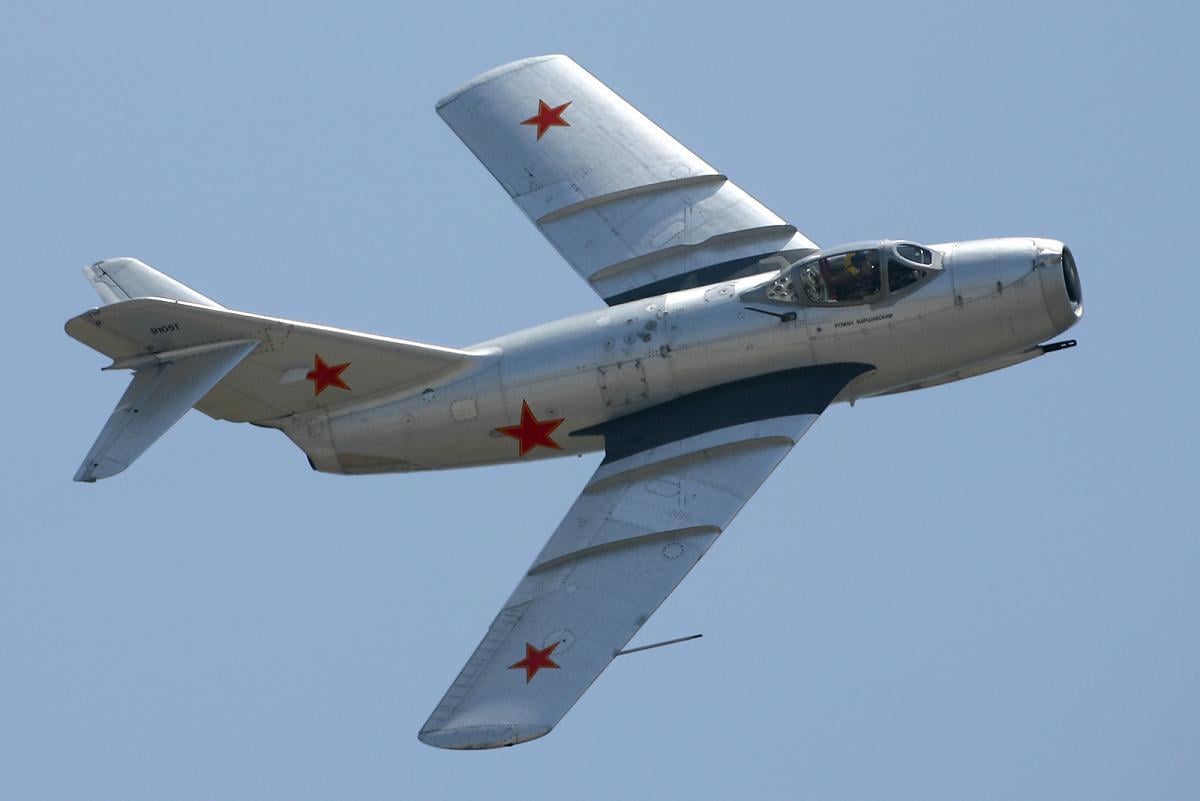
It is obvious that you have not studied these wars and did not bother to check the links I shared. Soviet Union was indirectly as well as directly involved in the Korean War. Soviet Union was heavily involved in development of the North Korean and Chinese military capability in the 1940s. Soviet elements were also of the view that they were producing better equipment than the US such as T-34-85 tanks and MiG-15 jets and provided these advanced weapons to both China and North Korea before and during war. North Korean forces also had contingents of Chinese and Soviet veterans. North Korean forces had both qualitative and quantitative advantage over South Korean forces before and during the war and North Korea had nearly annexed South Korea in 1950 when the US intervened to restore South Korea. The US wasn't expecting a large-scale war in this region and was caught offguard in this conflict situation. The US had significantly reduced the size of its army and did not mass produce M26 tanks when the Korean War broke out. The US intervened in the Korean War on an emergency basis and General MacArthur provided breakthrough in Inchon and this achievement set the stage for liberation of South Korea and the US-led forces saw an opening to invade North Korea in a stunning shift from the earlier situation. North Korean forces had suffered heavy losses but China intervened at this stage and dispatched a large force with the intent to prevent collapse of North Korea and create a new communist force to counter the US-led forces in the region. In the Battle of Chosin Reservoir, the US-led forces were up against a much larger communist force and had no choice but to retreat from this region. Keep in mind that Korean weather conditions are harsh and various lands have features that troops are in a better position to exploit than tanks. China-led forces managed to advance up to Seoul in 1951 but the US-led forces regrouped to liberate South Korean lands once again. Air Power came into play for both sides in 1951 and beyond as American Air Power sought to prevent development of new airfields in North Korea by China and Soviet Union.


To view this content we will need your consent to set third party cookies.
For more detailed information, see our cookies page.


North Korea wasn't alone in this war but received all manner of support from China and Soviet Union. Chinese forces had shortcomings but China wasn't acting alone or was it? Communist powers such as China, North Korea and Soviet Union were collectively involved in the war wherein China provided manpower and Soviet Union provided equipment as well as Air Support to countercheck American Air Power. These communist forces were quiet formidable as a collective. Nevertheless, the Korean War was concluded with restoration and global acceptance of South Korea in 1953. The US was caught offguard in this conflict situation but accomplished its primary objective and basis for intervention in this war. The US showed yet again that it could stand up to other great powers in a conflict situation if necessary.

----

When Iraq invaded Iran in 1980, the former had a modest military force. Iraqi forces managed to occupy some Iranian lands but Iranian forces regrouped and liberated Iranian lands in 1982. However, Iranian forces were now on the offensive and attempted to overrun Iraqi lands as Khomeini called for overthrow of Saddam regime. Iranian forces managed to occupy al-Faw Peninsula in 1986 but failed to occupy Basra and advance further. Iraq was able to check Iranian advances with mass mobilization and received equipment from other countries to create a much larger army that demonstrated its capability in successful defense of Basra in 1986 and Operation Tawakalna ala Allah in 1988. Iraqi military was much better developed in 1990 in comparison to what it used to be in 1980 therefore.

When Iraq invaded Kuwait in 1990, no Islamic country had the capacity to do anything about it. The GCC bloc consulted various countries including Pakistan and Egypt and came to the conclusion that only the US can do something about it.

----

Unlike some, I don't underrate or overrate any camp in war. I do my homework and give credit where due. War is not a joke and no side should be underestimated in it.
 
Last edited:
It is obvious that you have not studied these wars and did not bother to check the links I shared. Soviet Union was indirectly as well as directly involved in the Korean War. Soviet Union was heavily involved in development of the North Korean and Chinese military capability in the 1940s. Soviet elements were also of the view that they were producing better equipment than the US such as T-34-85 tanks and MiG-15 jets and provided these advanced weapons to both China and North Korea before and during war. North Korean forces also had contingents of Chinese and Soviet veterans. North Korean forces had both qualitative and quantitative advantage over South Korean forces before and during the war and North Korea had nearly annexed South Korea in 1950 when the US intervened to restore South Korea. The US wasn't expecting a large-scale war in this region and was caught offguard in this conflict situation. The US had significantly reduced the size of its army and did not mass produce M26 tanks when the Korean War broke out. The US intervened in the Korean War on an emergency basis and General MacArthur provided breakthrough in Inchon and this achievement set the stage for liberation of South Korea and the US-led forces saw an opening to invade North Korea in a stunning shift from the earlier situation. North Korean forces had suffered heavy losses but China intervened at this stage and dispatched a large force with the intent to prevent collapse of North Korea and create a new communist force to counter the US-led forces in the region. In the Battle of Chosin Reservoir, the US-led forces were up against a much larger communist force and had no choice but to retreat from this region. Keep in mind that Korean weather conditions are harsh and various lands have features that troops are in a better position to exploit than tanks. China-led forces managed to advance up to Seoul in 1951 but the US-led forces regrouped to liberate South Korean lands once again. Air Power came into play for both sides in 1951 and beyond as American Air Power sought to prevent development of new airfields in North Korea by China and Soviet Union.


To view this content we will need your consent to set third party cookies.
For more detailed information, see our cookies page.


North Korea wasn't alone in this war but received all manner of support from China and Soviet Union. Chinese forces had shortcomings but China wasn't acting alone or was it? Communist powers such as China, North Korea and Soviet Union were collectively involved in the war wherein China provided manpower and Soviet Union provided equipment as well as Air Support to countercheck American Air Power. These communist forces were quiet formidable as a collective. Nevertheless, the Korean War was concluded with restoration and global acceptance of South Korea in 1953. The US was caught offguard in this conflict situation but accomplished its primary objective and basis for intervention in this war. The US showed yet again that it could stand up to other great powers in a conflict situation if necessary.

----

When Iraq invaded Iran in 1980, the former had a modest military force. Iraqi forces managed to occupy some Iranian lands but Iranian forces regrouped and liberated Iranian lands in 1982. However, Iranian forces were now on the offensive and attempted to overrun Iraqi lands as Khomeini called for overthrow of Saddam regime. Iranian forces managed to occupy al-Faw Peninsula in 1986 but failed to occupy Basra and advance further. Iraq was able to check Iranian advances with mass mobilization and received equipment from other countries to create a much larger army that demonstrated its capability in successful defense of Basra in 1986 and Operation Tawakalna ala Allah in 1988. Iraqi military was much better developed in 1990 in comparison to what it used to be in 1980 therefore.

When Iraq invaded Kuwait in 1990, no Islamic country had the capacity to do anything about it. The GCC bloc consulted various countries including Pakistan and Egypt and came to the conclusion that only the US can do something about it.

----

Unlike some, I don't underrate or overrate any camp in war. I do my homework and give credit where due. War is not a joke and no side should be underestimated in it.

yeah, all that and still failed to prove that US was up against near peers. sorry this doesnt cut it.

small contingents of soviet troops doesnt mean anything. also, while the US may have been outnumbered, their airpower, tech, training and experience was still better than the chinese.

the iraqis were still a joke.
 
yeah, all that and still failed to prove that US was up against near peers. sorry this doesnt cut it.

small contingents of soviet troops doesnt mean anything. also, while the US may have been outnumbered, their airpower, tech, training and experience was still better than the chinese.

the iraqis were still a joke.
The imperial Japanese Empire was a "peer" adversary to the US in the Pacific and still lost the war. The Americans can mobilize and respond to a threat on its level if necessary.

Was China fighting alone? China, North Korea, and Soviet Union were collectively involved in the war effort and each plugged weaknesses of the other. Soviet Union was heavily involved in development of North Korean forces and also provided Air Support to communist forces in the war effort. Soviet Union was also providing arms and training to Chinese forces and China added many boots on the ground in the region. This was a massive force to contend with. The US still managed to restore South Korea in the region.

The Iraqis were better armed than any Islamic country in 1990 and nobody assumed them to be a joke. The Iraqis have Mesoptamian DNA and have better fighting spirit than many supposedly martial races.
 
Last edited:
Soviet Union was also providing arms and training to Chinese forces and China added many boots on the ground in the region. This was a massive force to contend with.
massive in numbers only. chinese and soviet tech and tactics were still crap back then. other than flooding the field with men, they had no other plan.

The Iraqis have Mesoptamian DNA and have better fighting spirit than many supposedly martial races.
this is your argument?

repeating the same thing again and again wont make it true. they were not peers of US, simple.
 
massive in numbers only. chinese and soviet tech and tactics were still crap back then. other than flooding the field with men, they had no other plan.


this is your argument?

repeating the same thing again and again wont make it true. they were not peers of US, simple.
Soviet and American equipment varied in quality in the 1950s. Soviet T-34-85 tank could defeat any American tank in potential clashes but M26 which was not mass produced. Soviet MiG-15 could be used to challenge American F-86 Sabre in aerial clashes. Both Soviet Union and the US produced a variety of artillery guns for use in war.

China and Soviet Union also had extensive exposure to combat on a national level in times of World War. Both states understood how to plan and fight a war. Soviet Union transformed North Korea into a regional power with a well-equipped force and North Korean invasion of South Korea in 1950 (Operation Pokpung) was well planned and executed with input from Soviet advisors.

The North Koreans repeated a technique that had remarkable results every time: they engaged enemy fortified positions with frontal attacks or continuous fire, then sent forces around the flanks, if possible, to encircle the enemy so that it would either destroy it or force it to surrender or, failing that, prevent withdrawal or reinforcements.” - Bevin Alexander

The US intervened and prevented North Korean breakthrough in the Battle of P'ohang-dong to preserve the Pusan Perimeter followed by tactical breakthrough in Inchon that paved way for recapture of Seoul and disruption of North Korean supply lines across South Korea. These advances compelled many North Korean troops to surrender and others to withdraw from South Korea. But General MacArthur cautioned that North Korean threat was not over and forces under his command invaded North Korea and captured Pyongyang (related information in here and here) but a part of this force approached Yalu River and found itself up against a massive Chinese force.

The first job of Chinese Communist forces when they invaded North Korea [in autumn 1950] was to stop the United Nations advance, which was nearing the Yalu River.

Although extremely limiting in some respects, the Chinese dependence upon the backs of animals and soldiers liberated them from roads and permitted troops to fight anywhere they could walk, whether in front, on the side, or behind the enemy lines. UN forces, on the other hand, were tied to the roads because their supplies arrived by truck. The roads, therefore, were vulnerable to being cut by roadblocks.

During the Chinese civil war, Mao Zedong and his commanders had developed a highly effective method of dealing with more heavily armed Nationalist troops. Peng Dehuai now adapted these tactics to the Americans and their allies.

The Chinese tried whenever possible to infiltrate through enemy positions in order to plant a roadblock on the supply line, in hopes of inducing the enemy to retreat to regain contact with the rear. If UN forces stayed in position, the roadblocks still were useful in cutting off escape routes and supply.

In infiltration and assaults against front-line positions, the Chinese moved largely at night to avoid air strikes and reduce aerial observation. In attacks they tried to isolate individual outposts, usually platoons, by striking at the fronts, while at the same time attempting to outflank them. The purpose was to defeat forces in detail by gaining local superiority. If they could not destroy enemy positions, they hoped to induce the opponent to withdraw. When this failed, they got as close as possible to the enemy so that, when daylight came, U.S. aircraft would be unable to bomb them for fear of hitting friendly troops.

Advancing Chinese units generally followed the easiest, most accessible terrain in making their approaches: valleys, draws, or streambeds. As soon as they met resistance, they deployed, peeling off selected small units to engage the opposition. However, if they met no resistance, the whole column often moved in the darkness right past defensive emplacements deep into the rear of enemy positions. There were many examples of this in Korea. In some cases entire Chinese regiments marched in column formation into the UN rear.

Once fully committed, the Chinese seldom halted their attack, even when suffering heavy casualties. Other Chinese came forward to take the place of those killed or wounded. The buildup continued, often on several sides of the position, until they made a penetration ---either by destroying the position or forcing the defenders to withdraw. After consolidating the new conquest, the Chinese then crept forward against the open flank of the next platoon position. This combination of stealth and boldness, usually executed in darkness against small units, could result in several penetrations of a battalion front and could be devastating.

Since the Chinese tried to cut the defending force into small fractions and attack these fractions with local superiority in numbers, they favored the ambush over all other tactical methods. As a rule attacking Chinese forces ranged in size from a platoon to a company (50 to 200 men) and were built up continually as casualties occurred.

The best defense was for the UN force somehow to hold its position until daybreak. With visibility restored, aircraft could attack the Chinese and usually restore the situation. However, Chinese night attacks were so effective that the counsel often went unheeded and defending forces were overrun or destroyed.


Chinese military buildup near North Korea was also well planned before intervention in North Korea:

To obscure visual detection of force buildup, Chinese forces employed dispersal and deception tactics. Local materials such as dirt and foliage were utilized to conceal structures and defensive positions. Transport vehicles were disguised with natural foliage and strategically positioned adjacent to hedgerows to mask their presence from photo reconnaissance.[18] Complementing visual deception, the Chinese endeavored to minimize their electronic signal footprint. Their forces predominantly relied on landlines rather than the mobile radios typical of fully mechanized armies, owing to their reliance on Soviet provisions or acquisition from battling Nationalist forces in previous years. While this limited their ability to swiftly coordinate with frontline units, it mitigated the risk of detectable signatures that could alert US forces to their presence. Furthermore, encoded messages were transmitted at predetermined times and frequencies, with explicit instructions for recipients not to acknowledge receipt, thereby minimizing evidence of their operational activities.[19]
Chinese intervention in North Korea compelled the US to withdraw its forces from North Korea and China restructured communist forces in the region for another push towards Seoul in a move that is identified as the 1951 Spring Offensive. However, American decision to preserve the Pusan Perimeter earlier was a good one as it allowed reinforcements and another attempt to liberate South Korea from a much larger communist force could be made:

From late April to early June 1951, Chinese and North Korean People’s Army (NKPA) forces totaling more than 700,000 fought against 340,000 UNF soldiers in a battle that some predicted would determine the outcome of the war. Chinese leaders outlined three major goals for the campaign: to prevent the enemy from making an amphibious landing to the north behind Chinese lines, to destroy at least three American divisions and three Republic of Korea (ROK) divisions, and to regain the initiative for a decisive victory and avoid a prolonged conflict. After suffering costly defeats on both the eastern and western fronts, Chinese commanders ordered a withdrawal of all of CPVF forces to the north of the thirty-eighth parallel in what Li calls the “disastrous withdrawal to the north” (181). This final phase of the fifth campaign saw a UNF counter-attack which inflicted 45,000 to 60,000 casualties on the CPVF, the heaviest totals since the start of the war. In the wake of this defeat, Chinese leaders switched to a strategy of positional warfare, defending frontal positions until the armistice agreement in 1953. This featured smaller-scale attacks designed to chip away at UNF strength, which Mao described as “eating sticky candy bit by bit” (216). Rather than deal a decisive blow to the enemy and end the conflict, the CPVF’s fifth campaign ushered in a prolonged period of low-intensity conflict.
Link

General MacArthur called for full-scale mobilization and expansion of war to China but Truman disagreed with him and General Ridgway assumed command. The US-led forces launched Operation Killer (related information in here) to defeat communist forces below the Arizona Line area followed by Operation Ripper to recapture Seoul for the second time followed by Operation Commando to secure the Jamestown Line area and Operation Tomahawk to secure Imjin River (related information in here). These advances led to creation of a defensive parameter across the 38th parallel that communist forces could not hope to breach without application of Air Power. Towards this end, China and Soviet Union attempted to create new airfields in North Korea but the US used its Air Power to prevent this possibility. This struggle still led to numerous clashes and losses in the air. Nevertheless, the US ensured restoration and global acceptance of South Korea by 1953.

No side in the Korean War was an amateur or lacking in prior combat experience. India also fought a war with China in 1962 and found out the hard way that the Chinese could come up with a good plan and impressive tactics to fight and gain ground in war - Chinese forces defeated a much larger Indian force in the Indo-China War 1962 in fact.
 
Last edited:

what could happen if Taiwan is attacked​

143 comments
92381427-0-image-a-11_1732293284840.jpg

+11
View gallery
17:00, 23 Nov 2024, updated 17:00, 23 Nov 2024By JAMES REINL, SOCIAL AFFAIRS CORRESPONDENT, FOR DAILYMAIL.COM

  • Casualties would quickly hit 10,000 on all sides in simulations of a war in 2026
House lawmakers this week weighed the prospects for a 2026 conflict between the US, Japan, and China over Taiwan in a war simulation that warned of devastating costs for all involved.

Exercises gamed out by the Center for Strategic and International Studies (CSIS) showed how the US and its allies could derail an amphibious Chinese assault - but not without taking heavy losses themselves.

Fighting would claim some 10,000 casualties on all sides, CSIS projected. The US would lose 10-20 warships, two aircraft carriers, 200-400 warplanes and some 3,000 troops in just the first three weeks of fighting.

But China comes off worse, failing to regain Taiwan and losing most of its amphibious fleet, 52 major warships and 160 warplanes - a military humiliation that would imperil the country's communist leaders.

The grim war simulations come at a time of political upheaval, with Taiwan's President Lai Ching-te taking a tougher line on China, which sees Taiwan as a renegade province to be unified with the mainland, by force if necessary.

China has ramped up its military activities around Taiwan in the past five years, and President Xi Jinping has reportedly asked his generals to prepare to retake the island of 24 million people as soon as 2027.

US President Joe Biden has vowed to defend the territory. But the US is not under any treaty obligations to do so, and president-elect Donald Trump has signaled he is less willing to bankroll a war in Asia in pursuit of his 'America First' policy.

Against this tense backdrop, the CSIS this week showcased 25 possible simulations of the conflict to the members of the House China Select Committee, which is led by Michigan Republican John Moolenaar.

Ready for action: A Taiwanese conscript launches rockets during an exercise at a military base in Tainan, Taiwan

+11
View gallery
Ready for action: A Taiwanese conscript launches rockets during an exercise at a military base in Tainan, Taiwan
+11
View gallery
The big unknown: Would Chinese President Xi Jinping (right) launch an attack on Taiwan, and would president-elect Donald Trump defend the island? Pictured: a meeting of the two leaders in 2017

article image
'We walked through one simulation of what might happen in a worst-case scenario conflict with China and learned ways we can work together, in a bipartisan manner, to ensure that America is prepared,' Moolenaar told Fox News.

'No matter where or when, the US and our allies must have the military means to defeat our adversaries,' he said, adding that America may have to be the world's 'arsenal of democracy once more if called upon.'

The Chinese defense industry is operating on a 'wartime footing,' and has ramped up its shipbuilding capacity 230 times greater than America's, reducing the military advantage the US has enjoyed for decades against the rising Asian power, the CSIS warns.

Analysts urged lawmakers to be ready to act fast against a Chinese assault on Taiwan - saying the 'Ukraine' strategy of gradually upping support to that country to repel Russian invaders would not work in the South China Sea.

Taiwan would have to hold the line against an assault, and the US would need to join the fight immediately, operating through its bases in Japan, says Matthew Cancian, a Naval War College professor and lead author of the project.

'If the US were not to join the fight for two weeks [after an invasion], it would be too late,' says Cancian, a Marine veteran.

'China would already have too strong a footing.'

Washington also needs to send more anti-ship missiles to Taiwan to defend itself against an attack, the report says.

CSIS said Japan's role in any such conflict was paramount and called for quickly bolstering US-Japan ties, as South Korea would likely not get involved in a war over Taiwan.

Cancian said it would be 'very helpful if South Korea stood shoulder-to-shoulder with us.'

Analysts also warned that North Korea may use a Taiwan crisis as an opportunity to invade the South, perhaps using the troops currently getting combat experience backing Russia's invasion of Ukraine.

Taiwan President Lai Ching-te (center) is taking a tougher line on independence from China than his predecessors

+11
View gallery
Taiwan President Lai Ching-te (center) is taking a tougher line on independence from China than his predecessors
+11
View gallery
A M60A3 tank fires live rounds in Penghu, Taiwan, in a simulation of a response to an attack from China's Coast Guard vessels and militia boats
War exercises gamed out by the Center for Strategic and International Studies (CSIS) showed how the US and its allies could derail an amphibious Chinese assault

+11
View gallery
War exercises gamed out by the Center for Strategic and International Studies (CSIS) showed how the US and its allies could derail an amphibious Chinese assault
Defence minister reports Chinese aircrafts near Taiwan in army drills

Cancian warned that US forces could not defend Taiwan from afar and would have to be deployed on the island to halt any Chinese attack.

That's because China's anti-tank and anti-air missiles would threaten US shipments of weapons to the island.

'US forces would have to be directly involved,' said Cancian.

'There is no way to achieve denying a takeover of Taiwan while also keeping US forces safe.'

Researchers warned that China is outproducing the US on airplanes, ships, and missiles.

Beijing's land attack missiles and anti-ship missiles would be particularly devastating to US and allied forces there.

The Pentagon must ramp up production of Harpoon anti-ship missiles, coastal defense cruise missiles and other munitions to defend Taiwan, it is claimed.

Washington's current stockpile of some 440 anti-ship missiles would run out in less than seven days in a war with China, researchers warned.

They urged Taiwan's admirals to stop ordering large ships that China can easily target and destroy, and focus on smaller vessels and stealthy submarines.

The US has long maintained a policy of 'strategic ambiguity' over whether it would step in to defend Taiwan from a Chinese assault.

The policy makes Taipei unwilling to provoke a war by formally declaring independence from China, while at the same time deterring Beijing from invading the island, for fear of ending up at war with a superpower.

In the war game scenario, Trump, who is set to be president in 2026, comes to the defense of Taiwan.

The US is Taiwan's most important international backer and arms supplier, despite the lack of formal diplomatic recognition.

It is not clear what Trump would do under such a scenario - he has in the past suggested Taiwan should pay Washington for giving it defensive aid.

The war-gaming took place against the backdrop of mounting tensions between Taiwan, China, and the US.

+11
View gallery
Taiwanese soldiers stand guard during the 'Chen-Chiang' nighttime military exercises, in Penghu, Taiwan
Taiwan President Lai Ching-te visits a military camp in Taoyuan, Taiwan, in May 2024, soon after taking office

+11
View gallery
Taiwan President Lai Ching-te visits a military camp in Taoyuan, Taiwan, in May 2024, soon after taking office
+11
View gallery
A member of the honour guards is seen during a ceremony commemorating the 75th anniversary of the Battle of Guningtou in Kinmen, Taiwan
Taiwan military on high alert as Chinese drills encircle the island
Taiwan's President Lai will visit Taipei's three remaining diplomatic allies in the Pacific on a trip starting at the end of the month, his office said on Friday.

But the government declined to give details on any transit stops by the president on US soil.

Taiwanese presidents usually use visits to allies to make what are officially stop-overs in the US, where they often meet with friendly politicians and give speeches, which anger Beijing.

On two occasions in the past two years, China staged military drills around Taiwan after presidential or vice-presidential stopovers in the US.

Taiwan's government rejects Beijing's sovereignty claims and says it has a right to engage with outer countries and for its leaders to make foreign trips.


In August of last year, China held a day of military drills around Taiwan after then-vice president Lai returned from the US, where he officially made only stopovers but gave speeches on his way to and from Paraguay.

In April of last year, China also held war games around Taiwan in anger at a US trip by then-president Tsai Ing-wen, who met then-US House of Representatives Speaker Kevin McCarthy in Los Angeles.

@Beijingwalker

USA's economy is broke. US-EU will eat grass if they go for war against China 🙂
 
If you read the Korean War, the NK did have an advantage early on, and then the US came in and turned the tide, but you are forgeting that the Chinese came in later and forced the US to retreat back to the 38th parallel. The US was on the verge of reaching the Chinese border. The same goes for Vietnam, we were the ones changing the tide against all odds. Remember Mc Arthur wanted to nuke China. Also remember how US lost China to CCP, they didn't send in a single boot.

We have news that the USA is showing false data about their economy.
It's foolish now to imagine their troops in Asia.
The NATO is finished, and the US top them in this regard 🕳️
 

Users who are viewing this thread

Back
Top