CCS clears AMCA for IAF

India does not plan to introduce an outdated LIFT which uses the JJ-7/FT-7's turbojet engines in an era of turbofans with mechanical linkages for controls.

The plan is simply to use the HF-24's aerodynamic layout (which was considered extremely good even in it's days) while using the GE F-404 or F-414 engines with FADEC and use FBW FCS controls, unlike the mechanical linkages on the JL-9.

The avionics will be as good as those on the Tejas Mk2 (HLFT-42 will naturally share commonality with it) whereas a radar and IRST will be offered and that will be up to the IAF to go with. The displays/synthetic training that the HLFT-42 will use will be similar to what was shown on the LCA SPORT (which has been dropped from development due to the cost associated with building a jet with such a lot of composites)

So it will be as modern as any new gen trainer in development today including the T-7A and Hurjet.

Which brings me to the point you chose not to answer- What is so special and revolutionary about the T-7A design ? Or the Hurjet? What makes them stand out over the proposed HLFT-42?

I would appreciate a nuanced answer to know what exactly it is that these in development trainers have that the proposed HLFT-42 design doesn't.

After all the T-7A is a reworked Hornet design with obvious similarities that arose out of Boeing's access to the Hornet design as it's OEM. And even with that the T-7A is not going to enter service till 2026 as per the latest reports on AviationWeek.

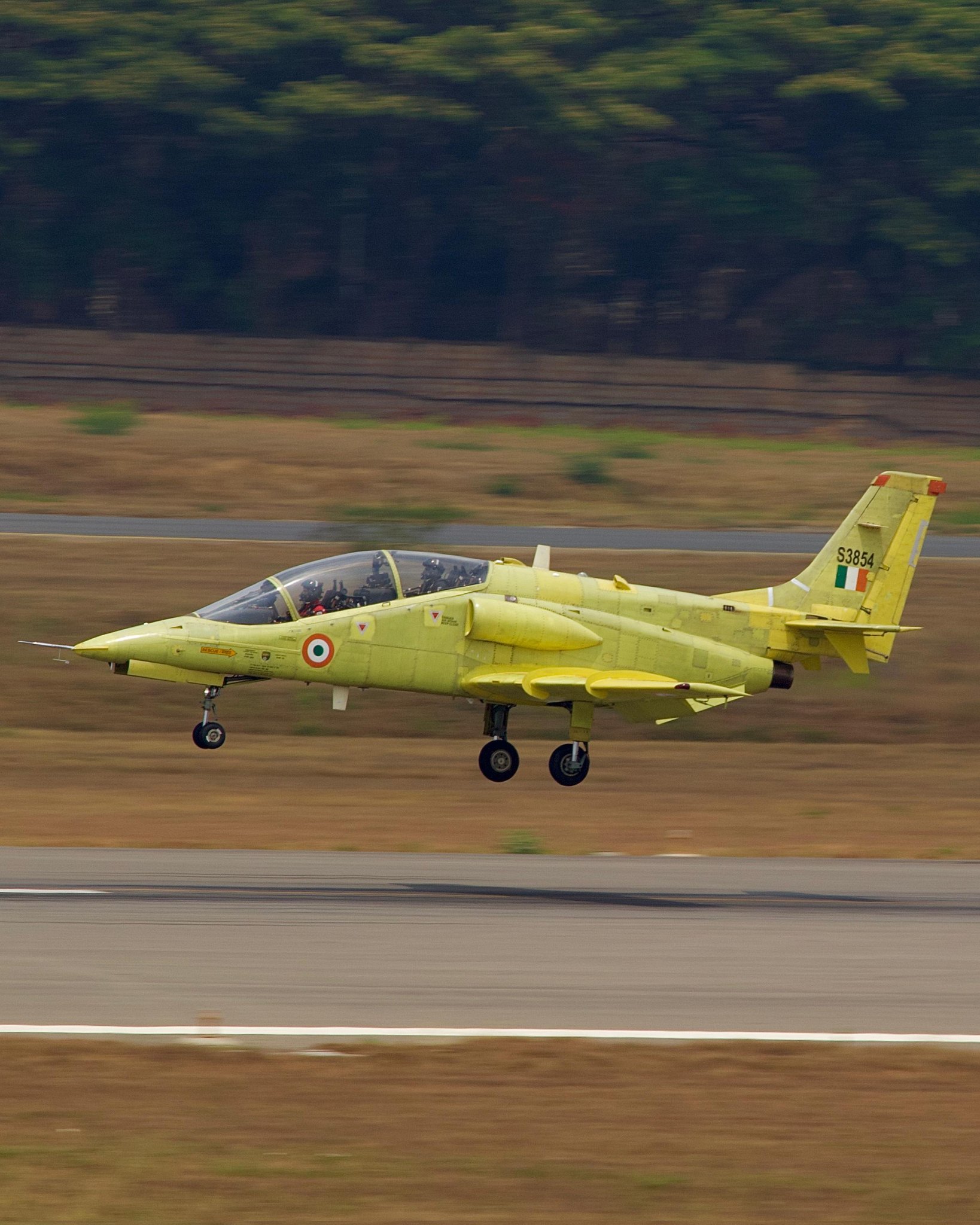
Regarding the HJT-36, it has already completed all mandated spin tests. You clearly aren't aware of that. The IAF however, now does not seem to be in a hurry to bring in an IJT (which is what the HJT-36 is) to slot in between PC-7 Mk2/HTT-40 and Hawk AJT for training, anymore. At least that's my take, though HAL's Chief Test Pilot tweeted this pic today of the Sitara.

GIs6-d9XwAAetQM


My guess is that in a few years from now, a new clean sheet AJT design will be offered by HAL to replace the hundred odd Hawks in IAF and IN service.
In my very humble opinion, future tense is never a good thing in these claims. Let the programs come to fruition and rest of the world will automatically see it.
 
This project shud be named stealth tejas from the out set
 
Again you are about 10 years behind… no, they are just developing a carrier capable JL-10J.

View attachment 26283

India has already demonstrated arrested landing and take-off from a STOBAR carrier with it's LCA Navy Mk1 trainer.

BTW, what is the status of this model that you've posted? Is it flying? Has it already flown and met all the requirements based on the most intensive "analysis" of a blurry image on the internet?
 
Are you just dumb or are you playing a fool in order to look even more stupid!

The report you posted in from 2015 and as I tried to explain, it mentioned that one certain unit - aka the PLAAF University - was getting them. NO WORRD from 2020! So either you should better check your facts or learn harder, maybe you have some reading comprehension issues too?

View attachment 26363


Oh, not only reading comprehension issues but also Discalcules? Again, check the facts: Maiden flight in 2003, fisrt flight of the improved one in 2006 and it entered service in 2007 for OPEVAL and finally in 2008 as a trainer.

View attachment 26371

So yes, it is dated and I admitted it but even a comparison to the much more dated T-38 is stupid, since India is trying to develop a dated trainer now in the mid-2020s!

You STILL can't tell us what are the 5th gen trainers out there.

Please do enumerate the 5th gen trainer requirements as well, which a "dated" design can't meet.

Also let us know what is so 5th gen about the T-7A and Hurjet.
 
The guy is deeply invested in China for his lively hood. He writes reports and books on it too. So what were you expecting?

And this is the source of his claims : https://chinese-military-aviation.blogspot.com/p/trainers.html ... Yup! A blogpost site!

Not only that, his "analysis", like that of a lot of other China watchers, is mostly based off blurry internet images, many of which turn out to be PS'ed fakes.

NO access to any hard data, just "ohh look at this picture taken by a civilian hiding in the grass or from behind chain link fences".

But talk about how one can be sure they're top notch and you'll see how touchy he is.

Deeply invested for sure.
 
IMG_2949.png
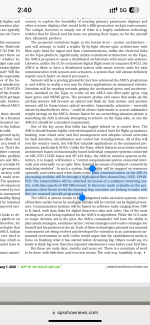
Looks like AMCA will have 1394 databus, rather than 1553.
 
View attachment 29733
Looks like AMCA will have 1394 databus, rather than 1553.
To view this content we will need your consent to set third party cookies.
For more detailed information, see our cookies page.


And as they going for DDFBW, 1394 is almost certain.
 
Last edited:
To view this content we will need your consent to set third party cookies.
For more detailed information, see our cookies page.


And as they going for DDFBW, 1394 is almost certain.

What does that mean? Is it advantageous or otherwise? Can you elaborate?
 
What does that mean? Is it advantageous or otherwise? Can you elaborate?
Providing higher data transfer than current gen. In simple terms, MC/sensors/LAD going to based on optical fiber rather than current copper.
 
Indian DAS/Tejas Mk2's IRST looks like going to be based on T2SL FPA.
They were already working on MWIR T2SL back in 2023.
Single element detectors based on the MBE grown
T2SL bariode hetero-structures have been fabricated.
Both dark and photo current characteristics of the
single element detectors are demonstrated. The
fabrication of T2SL-based MWIR is under process.
This achievement is a significant milestone in the
development of T2SL-based detectors.

We have already developed LWIR T2SL with the help from Isreal.

Three numbers of LWIR Type 2 Super Lattice (T2SL) Detectors have been realized through M/s IIMC, Israel, by joint funding between DRDO and MoD, Israel. Based upon this detector, IRDE has realized a Thermal Imager.

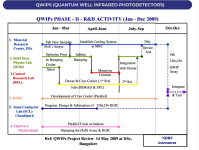
We are working on QWIP FPA since 2009, but I dont think these FPA are reliable enough for military usage.
1712414444068.png

In Context, for F-35 they are also shifting to T2SL for EO-DAS:
A breakthrough in the more widespread use of Type 2 Superlattice (T2SL) FPAs is about to occur. One of the largest infrared applications in the U.S. - the EO-DAS (Electro-optical-Distributed Aperture System) for the Lockheed Martin F-35 Joint Strike Fighter - is being upgraded to T2SL FPAs (from the existing large format InSb FPAs).
 

Users who are viewing this thread

Pakistan Defence Latest

Back
Top