Navigation
Install the app
How to install the app on iOS
Follow along with the video below to see how to install our site as a web app on your home screen.
Note: This feature may not be available in some browsers.
More options
Style variation
You are using an out of date browser. It may not display this or other websites correctly.
You should upgrade or use an alternative browser.
You should upgrade or use an alternative browser.
(CDF / COAS)'s Desk
- Thread starter ghazi52
- Start date
More options
Who Replied?



RescueRanger
Meme Lord


maxpane
Elite Member
no one can beat the legendary lyrics
Gen Asim Munir
meri jind meri jaan
RescueRanger
Meme Lord
People should just remember both izzat and besti come from Allah (SWT). Pakistan Zindabad.no one can beat the legendary lyrics
Gen Asim Munir
meri jind meri jaan

hasssanali8998
Elite Member
Trump’s favorite field marshal: Who is Pakistan’s powerful army chief Asim Munir with deep intel ties
Asim Munir built ties with Iran's IRGC and intelligence apparatus while serving as Pakistan's military intelligence chief
President Donald Trump publicly thanked what he called Pakistan’s "great prime minister and field marshal, two fantastic people!!!" in a Truth Social post Friday praising Prime Minister Shehbaz Sharif and Pakistan’s military chief, Asim Munir.Sharif quickly responded on X, "On behalf of the people of Pakistan, Field Marshal Syed Asim Munir, and on my behalf, I express my deep and profound appreciation for your kind and gracious words."
The public exchange capped a remarkable rise for Munir, who has become one of the few foreign officials trusted both by Trump and by Iran’s security establishment.
Munir recently became the first foreign military leader to visit Iran since the latest escalation between the United States and Iran, according to Pakistani and Iranian reports. Arriving in full military uniform, he was warmly greeted by Iranian Foreign Minister Abbas Araghchi and held meetings with senior Iranian military officials.
Retired Pakistani Gen. Ahmed Saeed told Fox News Digital that Munir has for months served as an informal back channel between Washington and Tehran, Iran, as the Trump administration tries to negotiate an end to the conflict, Iran’s nuclear program and the naval blockade in the Persian Gulf.
Few foreign figures appear to have closer ties both to Trump and to Iran’s military hierarchy.
That has raised a striking question: How did the same man become close both to Trump and to some of Iran’s most powerful commanders?
Saeed, who said he has known Munir personally for years, told Fox News Digital that Munir began building ties with Iran while serving as Pakistan’s director general of military intelligence in 2016 and 2017.
"He has been interacting with the leadership. He has been interacting with the intelligence community. He has been interacting with the IRGC," or the Islamic Revolutionary Guard Corps, Saeed said.
According to Saeed, Munir built ties not only with the Islamic Revolutionary Guard Corps but also with Iran’s regular army and intelligence apparatus. Saeed said Munir had longstanding contact with former Islamic Revolutionary Guard Corps Quds Force commander Qassem Soleimani, who was killed in a U.S. strike in 2020, commander Hossein Salami, who was killed in an Israeli strike in June 2025, and other Iranian military figures.
"He continues to be a figure internationally who has personal interactions, a personal equation in the intelligence community in Iran, in the military hierarchy in Iran, in the diplomatic corps of Iran and also on the side of the political leadership," Saeed said.
That longstanding relationship appears to explain why Iran welcomed him so warmly, even as he remains in direct contact with Trump and his team.
Foundation for Defense of Democracies' Bill Roggio told Fox News Digital, "Trump should not trust the Pakistanis. Pakistan was a perfidious ‘ally’ in Afghanistan, backing the Taliban while pretending to be our friends. Munir’s ties to the IRGC should be a massive red flag for the Trump admin."
Munir’s relationship with Trump dates back to the India–Pakistan crisis of May 2025. Munir played a key role in helping de-escalate the confrontation, and afterward Pakistan formally nominated Trump for the Nobel Peace Prize, a move widely viewed by Pakistani analysts as encouraged by Munir.
Since then, Trump has repeatedly praised him, calling Munir an "exceptional man," a "great fighter" and "my favorite field marshal."
Pakistani officials and media reports say the two men now speak directly.
Pakistani analyst Raza Rumi told Fox News Digital that Munir’s appeal to Trump is not surprising.
"Trump has long shown a preference for strong, decisive leaders," Rumi said. "Munir fits that mold as a centralized authority figure who can deliver outcomes."
Rumi described Munir as "a disciplined, institution-first leader with a strong emphasis on order, hierarchy and strategic clarity."
"Unlike more publicly charismatic military figures, his style is relatively understated, shaped by intelligence work and operational experience rather than overt political signaling," Rumi said.
Munir’s background helps explain both his style and his influence.
Munir studied at the Fuji School in Japan, the Command and Staff College in Quetta, the Malaysian Armed Forces College in Kuala Lumpur, and Pakistan’s National Defence University, where he earned a master of philosophy degree in public policy and strategic security management, according to Pakistan’s Geo News. Munir was the first army chief in Pakistan to receive the Sword of Honour, the military’s highest distinction for a cadet. The outlet also described him as an avid reader, traveler and sportsman.
Munir is also a Hafiz-e-Quran, meaning he has memorized the entire Quran by heart.
A former head of both Pakistan’s Military Intelligence and Inter-Services Intelligence agencies, Munir spent years overseeing Pakistan’s most sensitive regional relationships, including with Iran, Afghanistan and India.
In 2025, after the India-Pakistan crisis, he was elevated to field marshal, the first Pakistani officer to hold the rank since former military ruler Ayub Khan.
Pakistani officials say that later that year, he also was given the newly created title of chief of defense forces, further cementing his authority above the country’s military branches.
Munir rarely gives interviews, but his speeches offer clues to his worldview.
At the Margalla Dialogue in Islamabad in November 2024, he warned that "absence of proper regulations for freedom of expression is leading to the deterioration of moral values in societies worldwide."
The remark reflected a broader emphasis on order, discipline and centralized authority.
Rumi said Munir operates from "a transactional, state-centric worldview rather than an ideological one."
Yet critics argue that his rise has come at a cost to Pakistan’s democracy.
After becoming army chief in 2022, Munir focused heavily on domestic politics, including what critics described as a crackdown on political opposition and an unprecedented concentration of military power, according to The Guardian, which reported that key negotiations with the United States and Iran have been coordinated not from Islamabad, Pakistan’s civilian capital, but from Rawalpindi, the headquarters of the military.
Critics say that reflects a broader reality: Pakistan’s foreign policy is increasingly being run by the army rather than the elected government.
Rumi said Munir’s rise reflects "the military increasingly eclipsing civilian leadership in Pakistan."
As the current negotiations continue, much appears to rest on Munir. Saeed said that is because Munir has spent years building trust on both sides and is unlikely to stop now.
"Knowing our field marshal, and from my own personal knowledge of him, he is relentless. He would not give up," Saeed said.
source:fox
hasssanali8998
Elite Member
very interesting article from fox , someone wants to spoil this relation with trump i reckonTrump’s favorite field marshal: Who is Pakistan’s powerful army chief Asim Munir with deep intel ties
Asim Munir built ties with Iran's IRGC and intelligence apparatus while serving as Pakistan's military intelligence chief
President Donald Trump publicly thanked what he called Pakistan’s "great prime minister and field marshal, two fantastic people!!!" in a Truth Social post Friday praising Prime Minister Shehbaz Sharif and Pakistan’s military chief, Asim Munir.
Sharif quickly responded on X, "On behalf of the people of Pakistan, Field Marshal Syed Asim Munir, and on my behalf, I express my deep and profound appreciation for your kind and gracious words."
The public exchange capped a remarkable rise for Munir, who has become one of the few foreign officials trusted both by Trump and by Iran’s security establishment.
Munir recently became the first foreign military leader to visit Iran since the latest escalation between the United States and Iran, according to Pakistani and Iranian reports. Arriving in full military uniform, he was warmly greeted by Iranian Foreign Minister Abbas Araghchi and held meetings with senior Iranian military officials.
Retired Pakistani Gen. Ahmed Saeed told Fox News Digital that Munir has for months served as an informal back channel between Washington and Tehran, Iran, as the Trump administration tries to negotiate an end to the conflict, Iran’s nuclear program and the naval blockade in the Persian Gulf.
Few foreign figures appear to have closer ties both to Trump and to Iran’s military hierarchy.
That has raised a striking question: How did the same man become close both to Trump and to some of Iran’s most powerful commanders?
Saeed, who said he has known Munir personally for years, told Fox News Digital that Munir began building ties with Iran while serving as Pakistan’s director general of military intelligence in 2016 and 2017.
"He has been interacting with the leadership. He has been interacting with the intelligence community. He has been interacting with the IRGC," or the Islamic Revolutionary Guard Corps, Saeed said.
According to Saeed, Munir built ties not only with the Islamic Revolutionary Guard Corps but also with Iran’s regular army and intelligence apparatus. Saeed said Munir had longstanding contact with former Islamic Revolutionary Guard Corps Quds Force commander Qassem Soleimani, who was killed in a U.S. strike in 2020, commander Hossein Salami, who was killed in an Israeli strike in June 2025, and other Iranian military figures.
"He continues to be a figure internationally who has personal interactions, a personal equation in the intelligence community in Iran, in the military hierarchy in Iran, in the diplomatic corps of Iran and also on the side of the political leadership," Saeed said.
That longstanding relationship appears to explain why Iran welcomed him so warmly, even as he remains in direct contact with Trump and his team.
Foundation for Defense of Democracies' Bill Roggio told Fox News Digital, "Trump should not trust the Pakistanis. Pakistan was a perfidious ‘ally’ in Afghanistan, backing the Taliban while pretending to be our friends. Munir’s ties to the IRGC should be a massive red flag for the Trump admin."
Munir’s relationship with Trump dates back to the India–Pakistan crisis of May 2025. Munir played a key role in helping de-escalate the confrontation, and afterward Pakistan formally nominated Trump for the Nobel Peace Prize, a move widely viewed by Pakistani analysts as encouraged by Munir.
Since then, Trump has repeatedly praised him, calling Munir an "exceptional man," a "great fighter" and "my favorite field marshal."
Pakistani officials and media reports say the two men now speak directly.
Pakistani analyst Raza Rumi told Fox News Digital that Munir’s appeal to Trump is not surprising.
"Trump has long shown a preference for strong, decisive leaders," Rumi said. "Munir fits that mold as a centralized authority figure who can deliver outcomes."
Rumi described Munir as "a disciplined, institution-first leader with a strong emphasis on order, hierarchy and strategic clarity."
"Unlike more publicly charismatic military figures, his style is relatively understated, shaped by intelligence work and operational experience rather than overt political signaling," Rumi said.
Munir’s background helps explain both his style and his influence.
Munir studied at the Fuji School in Japan, the Command and Staff College in Quetta, the Malaysian Armed Forces College in Kuala Lumpur, and Pakistan’s National Defence University, where he earned a master of philosophy degree in public policy and strategic security management, according to Pakistan’s Geo News. Munir was the first army chief in Pakistan to receive the Sword of Honour, the military’s highest distinction for a cadet. The outlet also described him as an avid reader, traveler and sportsman.
Munir is also a Hafiz-e-Quran, meaning he has memorized the entire Quran by heart.
A former head of both Pakistan’s Military Intelligence and Inter-Services Intelligence agencies, Munir spent years overseeing Pakistan’s most sensitive regional relationships, including with Iran, Afghanistan and India.
In 2025, after the India-Pakistan crisis, he was elevated to field marshal, the first Pakistani officer to hold the rank since former military ruler Ayub Khan.
Pakistani officials say that later that year, he also was given the newly created title of chief of defense forces, further cementing his authority above the country’s military branches.
Munir rarely gives interviews, but his speeches offer clues to his worldview.
At the Margalla Dialogue in Islamabad in November 2024, he warned that "absence of proper regulations for freedom of expression is leading to the deterioration of moral values in societies worldwide."
The remark reflected a broader emphasis on order, discipline and centralized authority.
Rumi said Munir operates from "a transactional, state-centric worldview rather than an ideological one."
Yet critics argue that his rise has come at a cost to Pakistan’s democracy.
After becoming army chief in 2022, Munir focused heavily on domestic politics, including what critics described as a crackdown on political opposition and an unprecedented concentration of military power, according to The Guardian, which reported that key negotiations with the United States and Iran have been coordinated not from Islamabad, Pakistan’s civilian capital, but from Rawalpindi, the headquarters of the military.
Critics say that reflects a broader reality: Pakistan’s foreign policy is increasingly being run by the army rather than the elected government.
Rumi said Munir’s rise reflects "the military increasingly eclipsing civilian leadership in Pakistan."
As the current negotiations continue, much appears to rest on Munir. Saeed said that is because Munir has spent years building trust on both sides and is unlikely to stop now.
"Knowing our field marshal, and from my own personal knowledge of him, he is relentless. He would not give up," Saeed said.
source:fox
and given the author is israeli my bet is on israel

Blueishere
Registered Member
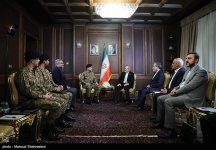
What is Mohsin Naqvi doing here?Pakistan’s Field Marshal Syed Asim Munir held a meeting with Iran’s President Masoud Pezeshkian, where both sides engaged in discussions on key matters.
View attachment 192785


hasssanali8998
Elite Member
most senior cvilian leader thta was in pakistan at that timeWhat is Mohsin Naqvi doing here?
they have to take a civi for the circus

Yasser76
Elite Member

What do the geopolitical successes of Asim Munir mean for Pakistan?
Despite some breathless optimism, the military strongman is unlikely to deliver deeper change
Share
Apr 23rd 2026|ISLAMABAD AND LAHORE|6 min read
Listen to this story
AI Narrated
On April 21st, hours before a ceasefire between America and Iran was due to expire, and with the threat of renewed strikes imminent, Donald Trump announced that the truce would be extended indefinitely, at Pakistan’s request, to let negotiations continue. Whatever happens next, Pakistanis have some reason for feeling proud. For decades the country has been known mainly for endless IMF bail-outs and terrorist insurgencies. Now it has shown itself to be a deft handler of global power politics.
At the centre of all this has been the man whom Mr Trump has feted as his “favourite field marshal”. Throughout the crisis Asim Munir, the country’s mustachioed army chief, has been on the phone regularly to Mr Trump and his vice-president, J.D. Vance. Diplomats say he is immersed in the details; during the first round of talks last week he was often the only one of the principals seen diligently taking notes. The former spy chief spent three days in Tehran last week—he was the first high-profile visitor since the bombing stopped—meeting senior political and military leaders there. Soon afterwards the Iranians said they would open the Strait of Hormuz (only to backtrack in protest at Mr Trump’s blockade).
Some observers have been surprised by the nimbleness of the military strongman. But those in Pakistan who have watched his rapid rise say that he is sharp, wily, ruthless and ambitious. Appointed army chief in 2022, he has quickly emerged as Pakistan’s most powerful leader for a generation, first by securing his grip on the armed forces, then by hobbling the opposition and extending his influence over government. Thanks to some constitutional chicanery, he is thought to have secured his position for a decade, perhaps longer. No one in Pakistan doubts that he is the one—not Shehbaz Sharif, the prime minister—calling the shots.
Field Marshal Munir’s dream is to elevate the world’s fifth-most-populous country and its only Muslim nuclear power to what he sees as its rightful place in the international order, no matter that many millions of Pakistanis still struggle to get by. Can he take advantage of his moment in the sun—or will the dominance of yet another military strongman merely serve to deepen Pakistan’s many problems?
It is not the first time that Pakistan has involved itself in high-wire diplomacy. The country’s military leaders have long had a “fetish for playing on the global chess board”, says a former senior official. Pakistan spent three years running a backchannel between America and China ahead of President Nixon’s visit to China in 1972. But often, the official adds, such delicate work has at best provided an ego boost or strengthened the regime against internal challengers, rather than yielding benefits to the population at large.

The case that this time will be different starts with Iran. Despite the recent goodwill, the two countries have long had a tricky relationship, aggravated by insurgencies on either side of the border. Pakistan worries about flows of refugees if the war goes on, and its own large Shia population growing restive. But if it succeeds as a peacemaker, diplomats hope it will be well-placed to play a leading role in reconstruction, creating jobs for its crowds of young people. Pakistan’s seat at the table could also be used to push for the removal of sanctions that have halted a long-planned Iran-Pakistan gas pipeline.
Field Marshal Munir also hopes to flex Pakistan’s military muscle. After the war, Gulf states will feel more threatened and less sure of American protection, says Mushahid Hussain, a former senator. Pakistan’s most—many would say only—functional institution is a big, well-drilled army. Defence spending increased by around a fifth this year.
A mutual-defence pact with Saudi Arabia signed last year is seen as a model. Pakistan already has around 13,000 soldiers and 18 jets stationed in the desert kingdom. The deal has not been made public, but insiders say Saudi Arabia has promised investment in return for security guarantees. There is also growing talk of creating some kind of “Islamic NATO”—involving Egypt, Pakistan, Saudi Arabia, Turkey and perhaps others—to boost co-operation on defence and security.
The past few weeks have also been a reality check for India, says Hina Rabbani Khar, a former foreign minister of Pakistan. It has long aimed to isolate Pakistan diplomatically, and made a renewed tilt to do so after the two fought a four-day war last year. Instead it is Pakistan that has strengthened its role in the Middle East, and its relationship with both America and China, while India has found itself watching from the sidelines.

Though the field marshal has played his cards well, geopolitical success may end up doing little to stave off pressing problems at home. The twin spectres of the IMF and terrorist insurgency remain. Living standards have barely risen in a decade. The field marshal’s plan for making the economy work better largely involves extending military control over it. An investment council he chairs has yielded little. Anger over soaring fuel prices since the war began has so far been muted, but only because the regime has warned opposition parties not to hold protests. Big cities are experiencing gas shortages and rolling blackouts, and in the coming months food prices are likely to rise.
The worry is that if he is unable to alleviate such problems, Field Marshal Munir will be more likely to turn to repression. Imran Khan, a former prime minister, sits in solitary confinement. Having governed as a populist, he was ousted by the political and military establishment in 2022, then put away on specious charges. Behind bars his popularity has soared; his position now is “liberty or death”, says his sister Aleema. Seasoned observers doubt he will be released as long as the field marshal rules. Hundreds more have been locked up, according to opposition parties. “When we plan a protest, our people get picked up and taken to unknown places,” says Ali Zafar, a senator from Mr Khan’s party, the PTI, which has been partially dismantled. Fazal-ur-Rehman, a veteran Islamist politician, complains that the 2024 election was rigged, before adding that the field marshal is a “good man and a brave soldier”.
The country still has a nominally democratic constitution; the PTI even runs one of its provinces. But the field marshal has tilted Pakistan’s hybrid system even further towards military control. One insider suggests that only a façade of civilian government remains. Increasingly, the army’s dominance is openly acknowledged.
In the past, Pakistan’s generals have often preferred to wield power from behind the stage, letting politicians face the wrath of voters. One consequence of Field Marshal Munir’s ascendancy is that he has put himself front and centre. ■

What do the geopolitical successes of Asim Munir mean for Pakistan?
Despite some breathless optimism, the military strongman is unlikely to deliver deeper change
Burhaan7487
Registered Member
Bilal from Quwa on FM Asim Munir.

Hopefully Pessimistic
Registered Member
Asim Munir's negatives and positive achievements so far:
Negatives:
— Derailed democracy and rigged in a puppet government engaging in human rights abuse against the opposition PTI and its leader Imran Khan.
Positives:
— Defeated India during the 2025 Operation Sindoor skirmish earning global attention, praise and headlines. PAF played major role.
— Switched from a "soft state" to a "hard state", dismantled extremist groups such as the TLP, BYC and PTM.
— Broke the ice with Afghanistan by striking Taliban targets aiding militancy in Pakistan and claiming its lands.
— Hosted negotiations for one of the most major global conflicts of the century, US-Iran. Ongoing, could achieve permanent deal.
— Defence pact with Saudi Arabia with (at the current time) unknown economic packages. Qatar is said to be joining.
*YET TO BE SEEN*:
— Tangible economic growth and control of debt.
— Elimination of feudal fiefdoms, especially in Sindh and South Punjab holding back development.
— Major institutional reforms in beuracracy and CSS. Modernise and overhaul the selection and examination process for subject-level expert skills.
— More provinces for effective local administration.
— Grassroots deradicalisation by controlling madrassa contents and focusing more on Pakistani civilisational nationalism & history to create a more coherent nationalism rather than exclusively relying on a flawed "Muslim" only nationalism that is exploited.
Negatives:
— Derailed democracy and rigged in a puppet government engaging in human rights abuse against the opposition PTI and its leader Imran Khan.
Positives:
— Defeated India during the 2025 Operation Sindoor skirmish earning global attention, praise and headlines. PAF played major role.
— Switched from a "soft state" to a "hard state", dismantled extremist groups such as the TLP, BYC and PTM.
— Broke the ice with Afghanistan by striking Taliban targets aiding militancy in Pakistan and claiming its lands.
— Hosted negotiations for one of the most major global conflicts of the century, US-Iran. Ongoing, could achieve permanent deal.
— Defence pact with Saudi Arabia with (at the current time) unknown economic packages. Qatar is said to be joining.
*YET TO BE SEEN*:
— Tangible economic growth and control of debt.
— Elimination of feudal fiefdoms, especially in Sindh and South Punjab holding back development.
— Major institutional reforms in beuracracy and CSS. Modernise and overhaul the selection and examination process for subject-level expert skills.
— More provinces for effective local administration.
— Grassroots deradicalisation by controlling madrassa contents and focusing more on Pakistani civilisational nationalism & history to create a more coherent nationalism rather than exclusively relying on a flawed "Muslim" only nationalism that is exploited.

ghazi52
THINK TANK: CONSULTANT
- Thread starter
- #825
Despite US–Iran deadlock, Trump again praises ‘great’ PM Shehbaz and ‘fantastic’ CDF Munir
'Pakistan is terrific, Trump said, adding PM Shehbaz and CDF Munir would like to see something happen
Web Desk/Anadolu Agency
April 26, 2026
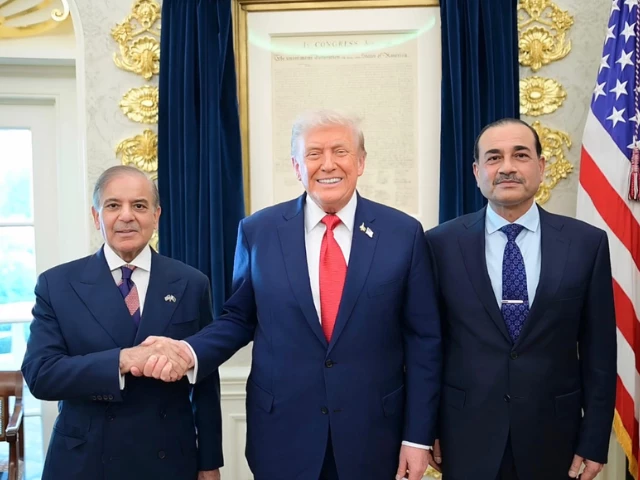
PM Shehbaz, Field Marshal Munir and US President Donald Trump at the White House Photo: PMO X account
United States President Donald Trump once again praised Prime Minister Shehbaz Sharif and Chief of Defence Forces (CDF) and Chief of the Army Staff, Field Marshal Asim Munir, on Saturday for their efforts to facilitate peace and negotiations with Iran, despite another pause in the diplomatic process.
His remarks came after he cancelled a planned visit by envoys Jared Kushner and Steve Witkoff to Pakistan for talks with Iranian officials. The Iranian foreign minister also left Pakistan following meetings with senior officials.
Users who are viewing this thread
Total: 3 (members: 0, guests: 3)
Pakistan Defence Latest


Country Watch Latest

Latest Posts
-
-

-
 India Emerges as key diesel supplier to Turkiye amid Russia Middle East disruptions (25 Viewers)
- Latest: K2RULEZ
-
