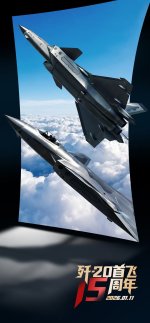
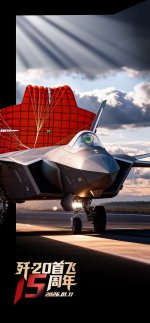
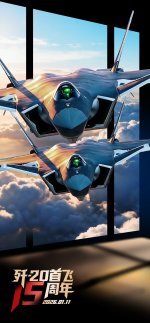
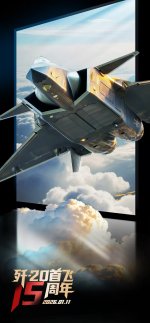
China set to supercharge fifth-gen J-20 stealth fighter with radar, engine and AI upgrades
Analyst tells state media Mighty Dragon’s airborne weapons are expected to have a longer range and stronger anti-interference capabilities
Published: 6:00pm, 11 Jan 2026
China is set to supercharge the advanced
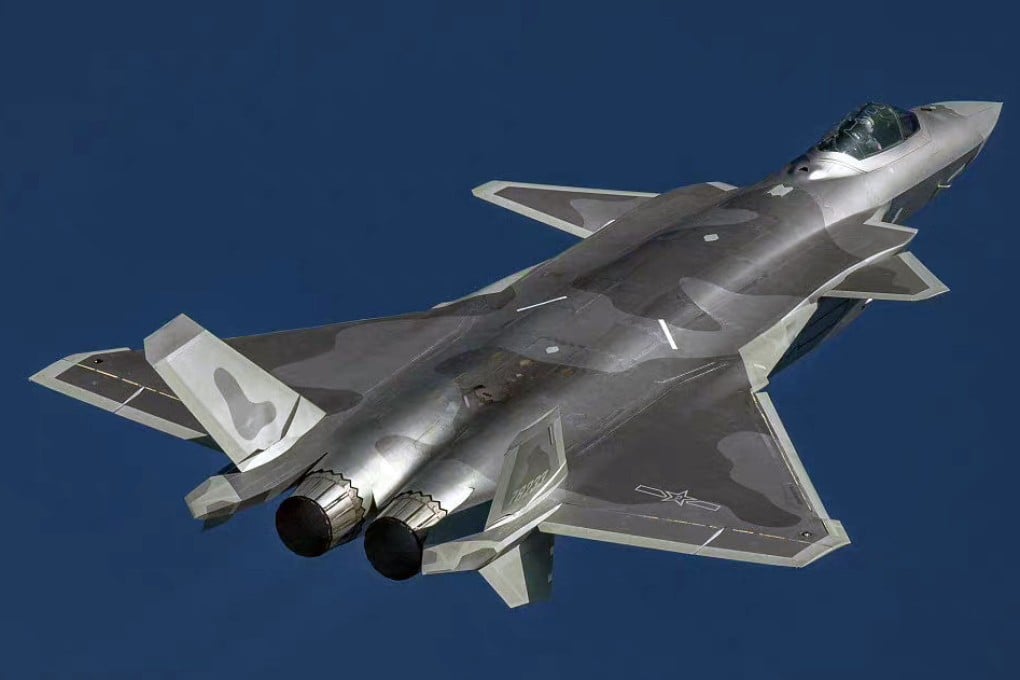
J-20 stealth fighter with avionics upgrades on its radar, engines and AI integration to cement the fifth-generation jet’s pivotal position in aerial warfare, a military analyst told state media.
The Mighty Dragon, China’s answer to the American F-22 “Raptor”, was also effectively operating alongside the country’s stealth attack drone and early warning aircraft, military commentator Zhang Xuefeng told state broadcaster CCTV in a programme released on Saturday.
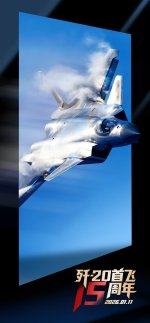
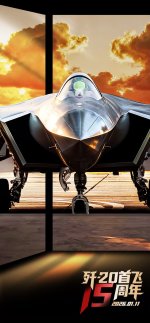
Sunday marks the 15th anniversary of the Chinese home-grown jet’s maiden flight in Chengdu on January 11, 2011. It officially entered active service in March 2017.
The twin-engined single-seater has since been seen as a symbol of the Chinese military’s modernisation and the best hope of the People’s Liberation Army (PLA) against the most advanced stealth fighters of the US Air Force.
Developer
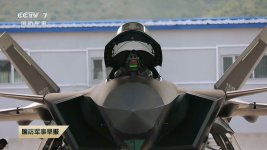
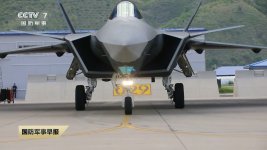
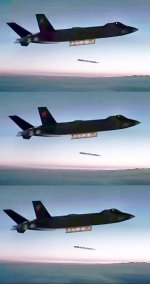
Chengdu Aircraft Corporation has given the J-20 a shape that reduces reflection, a radar-absorbent coating and an internal weapons bay. In addition to that stealth technology, the fifth-generation fighter jet has supersonic cruise capabilities, super manoeuvrability and super avionics.
Analysts said internal advancements would come next and existing technology was expected to be refined.
“It needs to improve the performance of its avionics system, such as its radar and infrared searching and tracking,” Zhang said.
“Its airborne weapons, or air-to-air missiles, will undoubtedly have increasingly longer ranges and stronger anti-interference capabilities. It is also crucial to continuously upgrade its engines.”
The J-20s initially used Russian Saturn AL-31 engines before switching in September 2021 to WS-10C engines made and designed in China, and now use the advanced WS-15 engine.
Zhang also said AI integration, a worldwide military trend, would be a highlight of future developments.
“If we equip our J-20s with an AI system in the future, it will be like having an extra assistant, which will enable the aircraft to leverage AI in air combat, particularly in medium-to-long-range and beyond-visual-range [BVR] battles to maximise the aircraft’s performance.”
China operates several variants of the J-20, including the upgraded J-20A and twin-seater J-20S, and produces about 120 of the aircraft a year.
The J-20S is the world’s first two-seater stealth jet. One pilot focuses on flying and weaponry, while the other is expected to command a swarm of drones. The prototype was first unveiled in 2021 and made its official debut in 2024.
In November, the Chinese air force released the first footage of the country’s
crewed and uncrewed aircraft working together.
The video showed the GJ-11 stealth attack drone flying in formation with the J-20, as well as the J-16D fighter, a variant of the J-16 with a focus on electronic warfare. The drone was flying in front of the other two aircraft, highlighting its role in getting closer to targets than manned fighters.
Zhang told CCTV that this trio formation enhanced the capabilities of the stealth fighters.
“While [the GJ-11] is mainly used to strike enemy ground and sea targets, the J-20 can leverage its capabilities to assume aerial supremacy to clear obstacles for the GJ-11’s operations, further boosting the GJ-11’s performance.”
The GJ-11 is a stealth attack drone that entered service by 2019 when it appeared in the military parade that October.
Last year, a drone believed to be a GJ-11 naval variant appeared in China’s Victory Day parade, where Beijing said all equipment displayed was in service.
China is also developing two
sixth-generation stealth fighter jets – unofficially dubbed the J-36 and J-50. They drew global attention when they made maiden flights in 2024 and have since been spotted on more test flights.
Analyst tells state media Mighty Dragon’s airborne weapons are expected to have a longer range and stronger anti-interference capabilities.

www.scmp.com