CCTV:
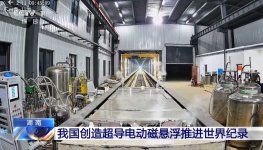
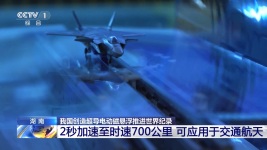
China Sets World Record for Superconducting Electrodynamic Magnetic Levitation Propulsion: Accelerating to 700 km/h in Two Seconds
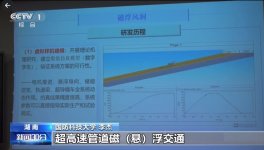
Recently, during magnetic levitation tests conducted by the magnetic levitation team at the National University of Defense Technology, a ton-class test vehicle was successfully accelerated to 700 km/h within two seconds. This test speed broke the global record for platforms of the same type, making it the world’s fastest superconducting electrodynamic magnetic levitation test speed.
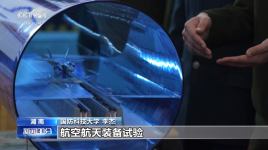
Over the course of ten years of research, the magnetic levitation team at the National University of Defense Technology achieved a maximum test speed of 700 km/h for a ton-class payload on a 400-meter magnetic levitation test line and safely brought it to a stop. This breakthrough overcame core technical challenges such as ultra-high-speed electromagnetic propulsion, electrodynamic suspension guidance, transient high-power energy storage inversion, and high-field superconducting magnets. It marks China’s entry into the internationally leading ranks in the field of ultra-high-speed magnetic levitation, providing new options for the future development of vacuum tube magnetic levitation transportation in China. It also offers new methods and means for aerospace-assisted launches and experimental testing. Subsequent technological iterations and industrial applications will bring new momentum to the development of China’s aerospace and rail transportation industries.
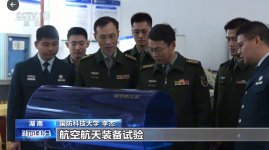
Li Jie from the National University of Defense Technology stated: "The success of our ultra-high-speed superconducting electrodynamic magnetic levitation system will accelerate the research and development process of ultra-high-speed magnetic levitation transportation in China. In the next step, the team will focus on cutting-edge fields such as ultra-high-speed tube magnetic levitation transportation, aerospace equipment testing, and electromagnetic-assisted launches, promoting deep integration of industry, academia, research, and application, and supporting independent innovation in defense technology." (CCTV)
video:
http://t.cn/AX45dxiS