Navigation
Install the app
How to install the app on iOS
Follow along with the video below to see how to install our site as a web app on your home screen.
Note: This feature may not be available in some browsers.
More options
Style variation
You are using an out of date browser. It may not display this or other websites correctly.
You should upgrade or use an alternative browser.
You should upgrade or use an alternative browser.
Chengdu J-20 5th Generation Aircraft News & Discussions
- Thread starter SiliconBit (silicon0000)
- Start date
More options
Who Replied?
Corax
Trusted Member

Justin Bronk, a senior research fellow at the Royal United Services Institute, analyzed Russian and Chinese aircraft through the lens of production numbers.
His analysis concluded that while Chinese stealth aircraft, including the J-20, tend to lag behind competing analogues in quality, China is building them at a breakneck pace.
That right there sums up so called "western analysis". I suppose he's closely examined the J20 to make such a conclusion.

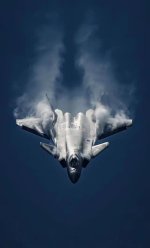
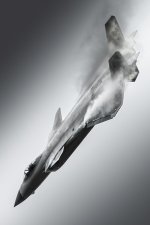
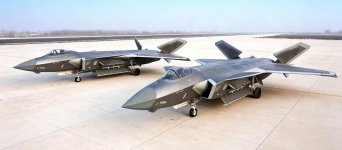
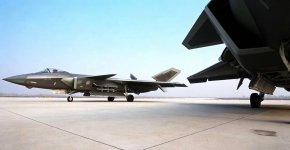
yusheng
Registered Member
Why doesn't anyone in the world dare to copy or imitate the aerodynamic configuration of the J-20? The reason is actually quite simple: it is "too advanced to be replicated." Even the United States would likely struggle to duplicate the J-20's "dual-shock vortex lift body canard-delta configuration," let alone other countries.
from : 庚白星君
Our research and deep understanding of the so-called "tandem layout" date back to the 1970s with the development of the J-9. Therefore, those who claim the J-10 is a copy of Israel's Lavi fighter are simply military illiterates unfamiliar with the history of Chinese fighter development.
The J-20 is the culmination of decades of our profound accumulation in aerodynamic design, combined with our rapid advancements in fly-by-wire control system technology. Such a complex aerodynamic configuration simply cannot be mastered without advanced hypersonic wind tunnels.
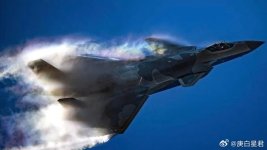
from : 庚白星君
Our research and deep understanding of the so-called "tandem layout" date back to the 1970s with the development of the J-9. Therefore, those who claim the J-10 is a copy of Israel's Lavi fighter are simply military illiterates unfamiliar with the history of Chinese fighter development.
The J-20 is the culmination of decades of our profound accumulation in aerodynamic design, combined with our rapid advancements in fly-by-wire control system technology. Such a complex aerodynamic configuration simply cannot be mastered without advanced hypersonic wind tunnels.


oh give it a break manWhy doesn't anyone in the world dare to copy or imitate the aerodynamic configuration of the J-20? The reason is actually quite simple: it is "too advanced to be replicated." Even the United States would likely struggle to duplicate the J-20's "dual-shock vortex lift body canard-delta configuration," let alone other countries.
from : 庚白星君
Our research and deep understanding of the so-called "tandem layout" date back to the 1970s with the development of the J-9. Therefore, those who claim the J-10 is a copy of Israel's Lavi fighter are simply military illiterates unfamiliar with the history of Chinese fighter development.
The J-20 is the culmination of decades of our profound accumulation in aerodynamic design, combined with our rapid advancements in fly-by-wire control system technology. Such a complex aerodynamic configuration simply cannot be mastered without advanced hypersonic wind tunnels.
View attachment 180102

Ali_Baba
VIP Member
Why doesn't anyone in the world dare to copy or imitate the aerodynamic configuration of the J-20? The reason is actually quite simple: it is "too advanced to be replicated." Even the United States would likely struggle to duplicate the J-20's "dual-shock vortex lift body canard-delta configuration," let alone other countries.
from : 庚白星君
Our research and deep understanding of the so-called "tandem layout" date back to the 1970s with the development of the J-9. Therefore, those who claim the J-10 is a copy of Israel's Lavi fighter are simply military illiterates unfamiliar with the history of Chinese fighter development.
The J-20 is the culmination of decades of our profound accumulation in aerodynamic design, combined with our rapid advancements in fly-by-wire control system technology. Such a complex aerodynamic configuration simply cannot be mastered without advanced hypersonic wind tunnels.
View attachment 180102
The aerodynamic configuration of the J20 is currently "very unique" with canards, and the tailfins also being moveable to the degree that it is, and on top when coupled with thrust vectoring, does suggest a high standard of FBW development, but I fundamentally disagree with the premise that no one else can "replicate it". USA, UK, France and other aerospace countries can achieve this, if they choose to do so.
yusheng
Registered Member
Let alone fifth- or sixth-generation fighter jets, even developing hypersonic missiles would take no less than 20 years and 20 billion euros. If you have the photos, why wouldn’t you just copy them? Even the Houthis now have hypersonic missiles.
Better wait until the LRHW and HS1 enter mass production before talking further—let's just hope they don't end up becoming a joke.
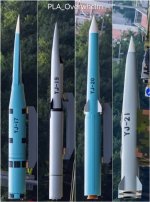
Better wait until the LRHW and HS1 enter mass production before talking further—let's just hope they don't end up becoming a joke.
zzw001
Registered Member
Justin Bronk's main research focus and expertise has always been on Russian & European armaments & military policies. He's been writing a lot more on China / PLA / competition with the US because his real area of expertise no longer sells. I wouldn't take any of his claims on Chinese or American armaments or military policies seriously.That right there sums up so called "western analysis". I suppose he's closely examined the J20 to make such a conclusion.
On a side note: he's probably lost most of his firsthand sources in Russia as well (western sympathizers in the Russian government, think tanks, and corporates have either been purged or left Russia since the start of the Ukraine war), even his recent research on Russia should be viewed more as European propaganda and not objective studies.
ZSBD
Registered Member
These are AI-generated images; Figures 2 and 4 show two front wheels.J-20 fighter jet, with its internal weapons bays open and visible.


Beijingwalker
VIP Member
China’s New J-20S Stealth Fighter Might Have A New Mission: Hunt And Sink U.S. Navy Nuclear Aircraft Carriers
Feb. 21 2026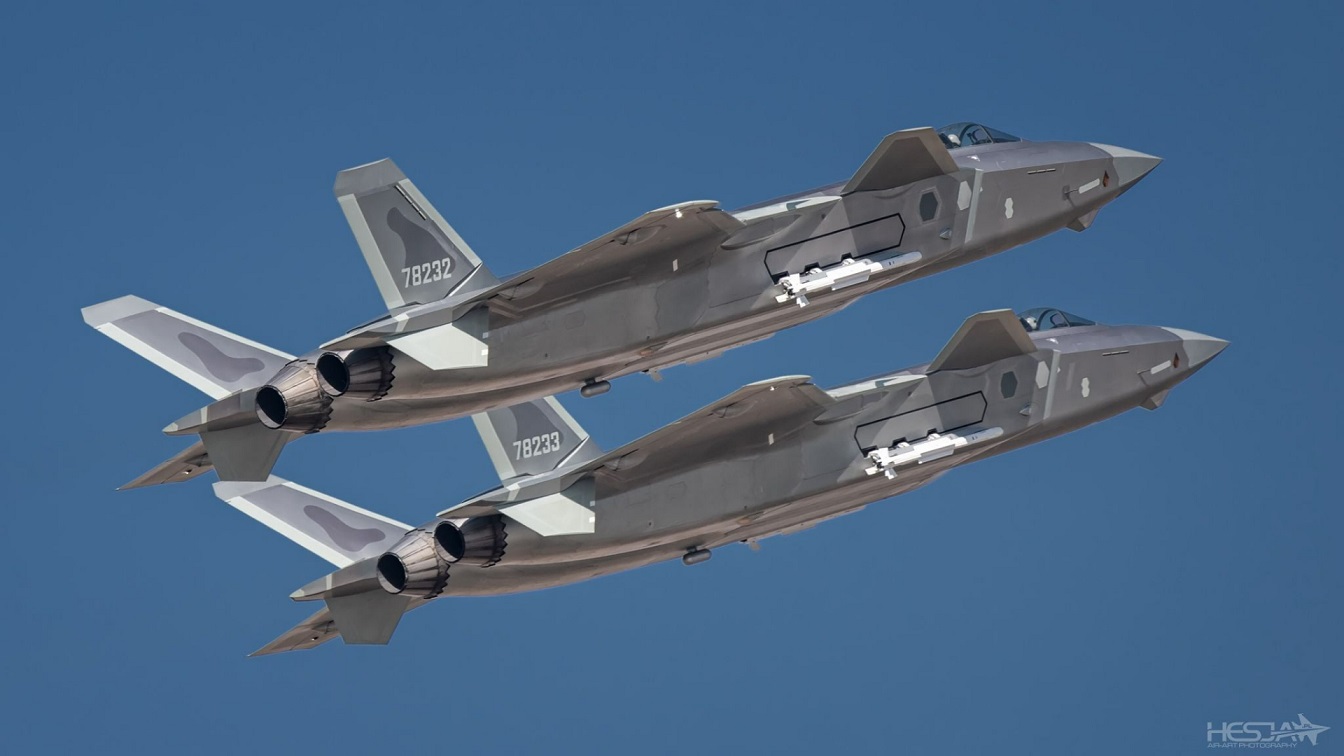
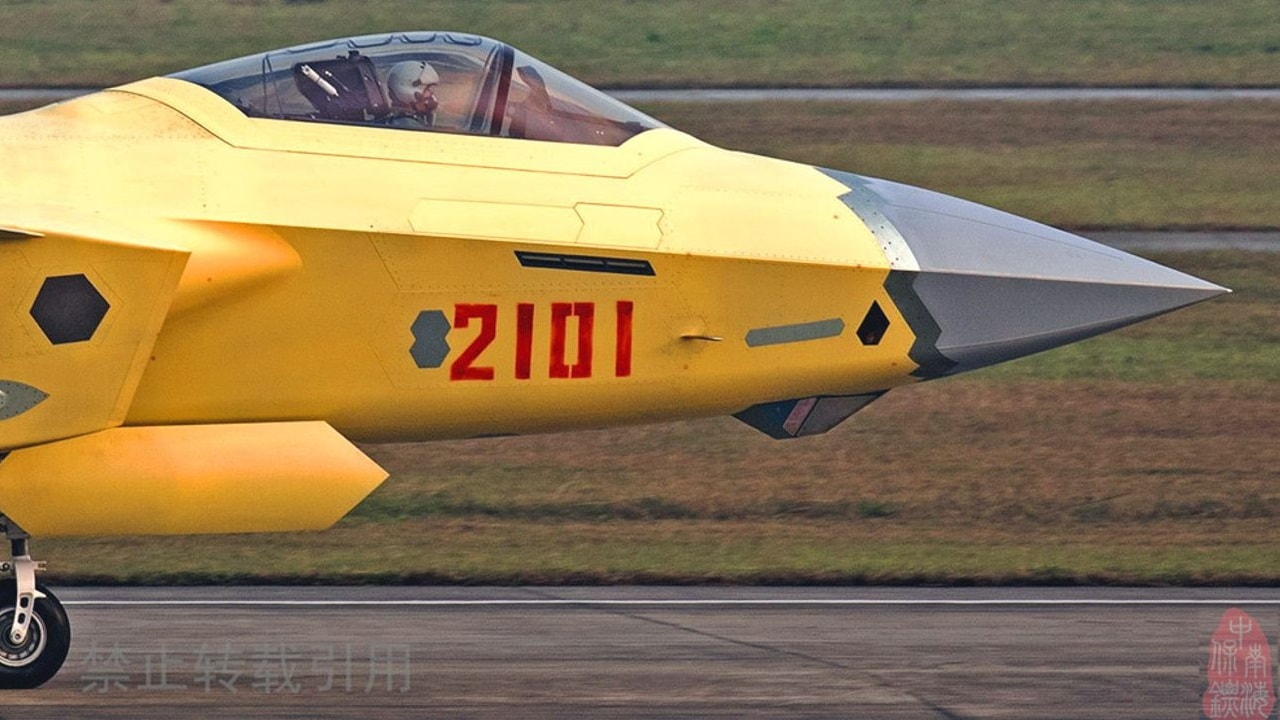
J-20 Stealth Fighter. Image Credit: Creative Commons.
The Chengdu J-20S “Mighty Dragon” has evolved into a sophisticated aerial command center, signaling a paradigm shift in the People’s Liberation Army Air Force (PLAAF) strategy. The arrival of this twin-seat stealth fighter suggests that China is no longer just focused on air-to-air dogfighting, but is actively positioning itself to neutralize U.S. Carrier Strike Groups through networked, “loyal wingman” drone swarms and high-fidelity standoff sensing.
Synopsis: The dual-seat J-20S represents a major leap in PLAAF operational capacity, functioning as a high-altitude command-and-control node.
-By adding a second “aviator” seat, China is mirroring the U.S. Collaborative Combat Aircraft (CCA) strategy, allowing one pilot to focus on flight while the other directs drone swarms and manages complex sensor data.
-Reports from the Pentagon’s National Defense University in 2025 suggest the J-20’s larger radome accommodates 50% more T/R modules than the F-22, potentially offering superior standoff detection.
-This “bomb-truck” capability, combined with hypersonic integration, makes the J-20S a premier “carrier hunter” in the Pacific theater.
Aircraft Carrier Killer in the Clouds: How China’s Twin-Seat J-20S Stealth Jet Targets U.S. Flattops
The arrival of a twin-seat J-20S “Mighty Dragon” seems to suggest that the People’s Liberation Army Air Force (PLAAF) is intensively pursuing manned-unmanned teaming and the “loyal wingman” strategies employed by the United States, as well as aerial command and control, targeting, and potential “carrier killer” missions from the sky.By adding an F-14-like “aviator” seat, the J-20S will likely operate as an aerial command-and-control node in the sky, able to direct drone attacks and network key data across multiple domains, in a manner similar to the F-47, F-22, and F-35.
U.S. Air Force Collaborative Combat Aircraft are already airborne, and the Pentagon has long maintained that its 6th-generation stealth fighter will be a “family of systems.”
The emerging F-47 is expected to operate many drones from the cockpit to test enemy air defenses, blanket areas with intelligence, surveillance, reconnaissance (ISR), and even fire weapons when directed by a human.
It seems entirely feasible that the PLA intends a similar operational capacity for its two-seat J-20S, as it could enable an “aviator” to focus on sensing, targeting, command and control, and air-to-surface attack.
Hunting U.S. Navy Carriers
The J-20 is longer than an F-22 and can operate in a “bomb-truck“-like capacity, so it could potentially fire hypersonic weapons and a range of air-to-surface weapons designed to attack warships such as U.S. Navy carriers.There is yet another dimension to the threat posed by the two-seat J-20S, and it relates to aerial missile attack, sensing technology, carrier “hunting,” and the possible integration of hypersonics. With an “S” variant that includes a pilot and an aviator working collaboratively, longer-range air-and-surface targets, such as U.S. Carrier Strike Groups, might be detected and attacked more easily.
J-20 AESA Radar Makes It All Possible
Detection range figures prominently in this equation, and the J-20 AESA radar appears to be equipped with long-range detection technology capable of “seeing” enemy aircraft and warships from greater standoff distances.This might be the case because the J-20 operates with a larger nose radome that can accommodate a large number of densely packed transit-receive (T&R) modules. Academic research establishes a clear, linear relationship between T/R modules and radar effectiveness.
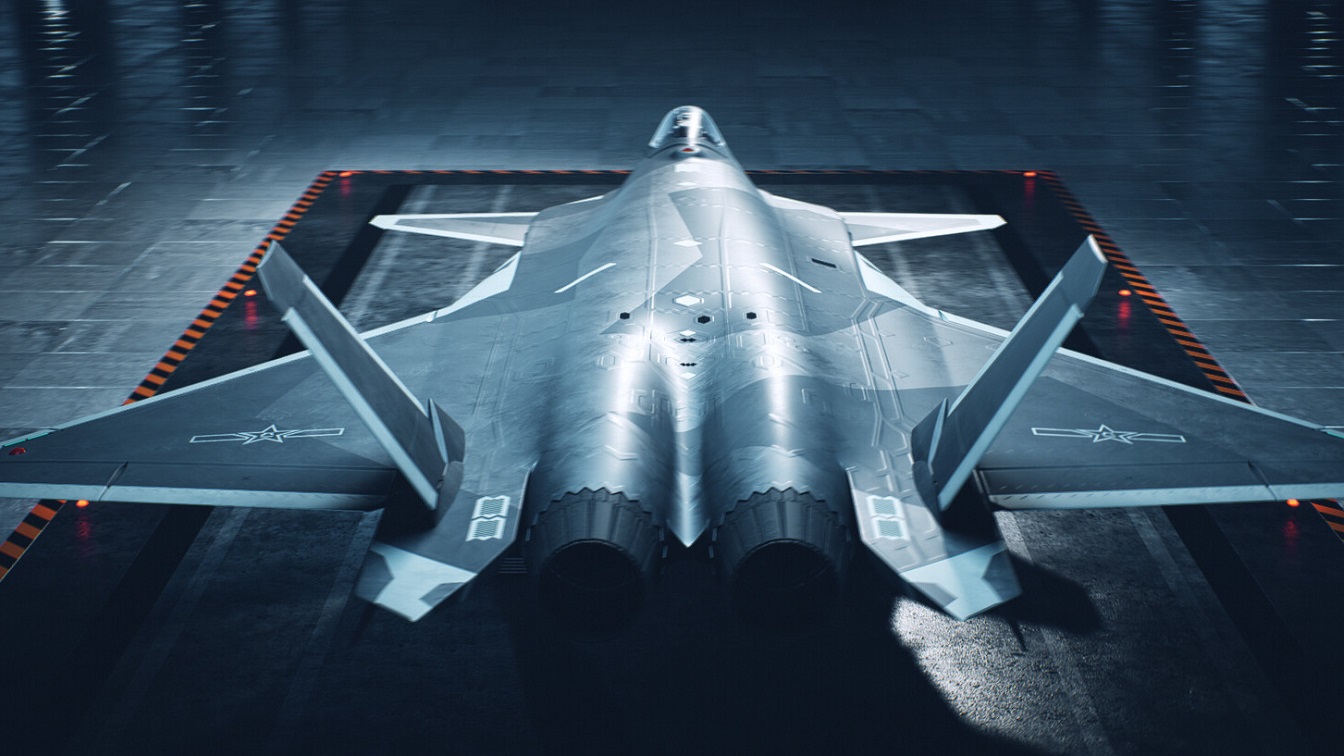
J-20. Image Credit: Chinese Internet.
A 2025 academic paper published by the Pentagon’s National Defense University’s Air University cites evidence that the J-20 AESA radar could be more powerful and longer range than its U.S. equivalents.
According to a 2016 essay in Sina Military News, the J-20 radar achieves 50-percent more power than the F-22 and reaches a comparatively longer detection range.
The essay further establishes a direct and clear connection between T/R modules and detection distance; ‘it can be seen that the number of T/R modules directly determines the size of the transmission power and the distance of the detection distance … the TR module is equivalent to a relay station and signal amplifier.'”
The presence of a longer-range or more powerful AESA radar does not mean a J-20 would prevail in an engagement with an F-22 or F-35, as there are many components to air superiority. Yet, it would suggest a “counter-interventionist” operational concept.
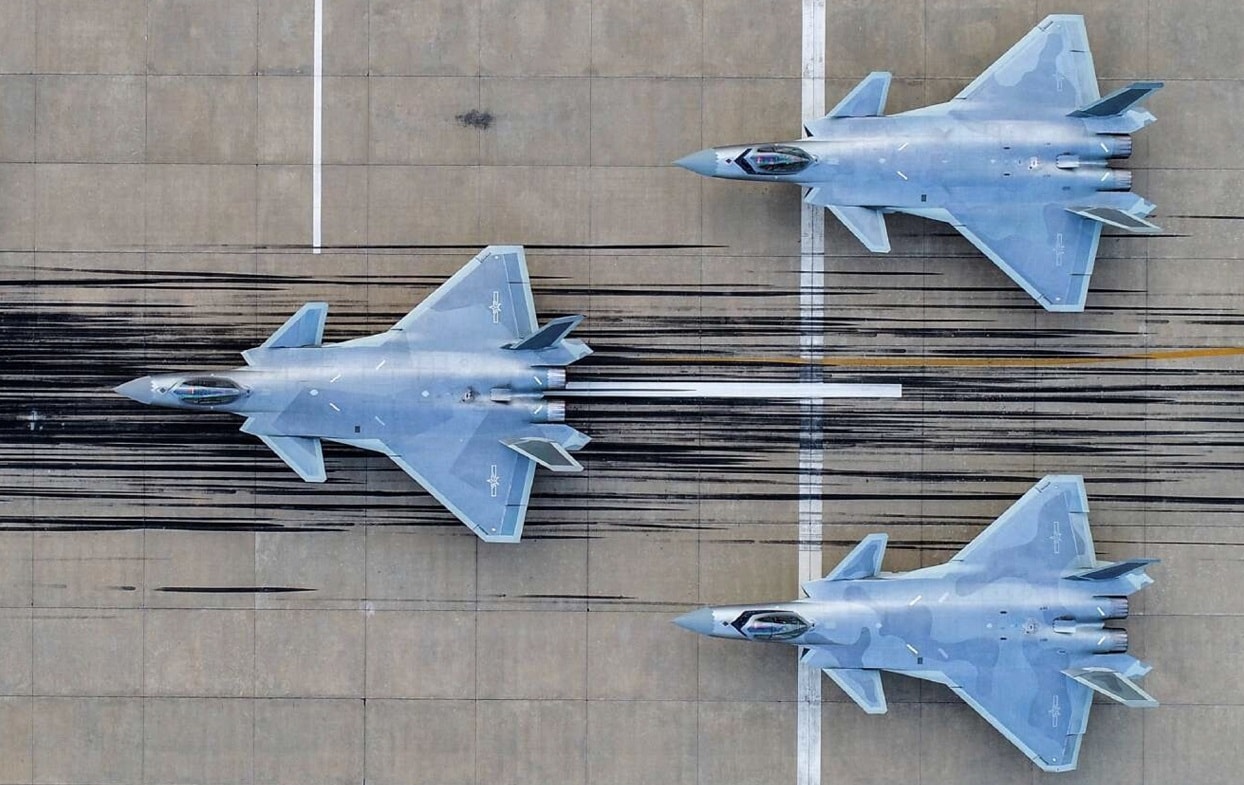
J-20. Image: Creative Commons.
This concept can also operate in a purely offensive capacity, enabling long-range air-to-surface attacks on U.S. carriers if the J-20 AESA radar generates high-fidelity images from standoff ranges.
J-20S Air-to-Surface Attack
Perhaps the PLA sees the J-20S as a key command-and-control, drone-controlling aerial node fighter able to defend the perimeter of mainland China and “see” and “attack” incoming threats from a longer standoff range.A key concept here would be for the PLA AF to attempt to attack from distances where it would be more difficult for ship-based Aegis radar to “see.”
China's New J-20S Stealth Fighter Might Have A New Mission: Hunt and Sink U.S. Navy Nuclear Aircraft Carriers
Is the J-20S the ultimate aircraft carrier killer? Discover how China’s twin-seat stealth jet uses 2026 drone-teaming and massive AESA radar to challenge U.S. Navy dominance.
 www.19fortyfive.com


royalharris
Registered Member

China's sixth-generation fighter jet's flight control system is derived from and upgraded based on that of the J-20.The aerodynamic configuration of the J20 is currently "very unique" with canards, and the tailfins also being moveable to the degree that it is, and on top when coupled with thrust vectoring, does suggest a high standard of FBW development, but I fundamentally disagree with the premise that no one else can "replicate it". USA, UK, France and other aerospace countries can achieve this, if they choose to do so.
From this perspective, he is correct: so far, no other country in the world can replicate the J-20's flight control system.
When it comes to aerospace technology, apart from the United States and China, other countries are simply not in the same league. The gap between them and these two nations is enormous.

Yasser76
Elite Member
That right there sums up so called "western analysis". I suppose he's closely examined the J20 to make such a conclusion.
Western "analysts" have a lot of mud in their faces after 7th May. J-10C was widley labeled as sub par compared too Rafale and Eurofighter.
Chinese make fools of them and will continue to do so....
cir
Registered Member
In other words, the still-no-where-to-be-seen APG85 is a piece of shit.Yankeesama said during his latest podcast the J-20A has some shocking radar performance.
Users who are viewing this thread
Total: 1 (members: 0, guests: 1)
Pakistan Defence Latest


Country Watch Latest


Latest Posts
-

-

-
FlyDubai Incident: Pilot was stabbed on flight to Israel - diverted to Saudi Arabia (16 Viewers)
- Latest: KingQamaR
-

-