Chengdu J-20 5th Generation Aircraft News & Discussions

China’s J-20 Air Superiority Fighter Seen in Rare ‘Beast Mode’ Configuration with 16 Air-to-Air Missiles​

Military Watch Magazine Editorial Staff
November-5th-2026

Footage released on November 4 has shown China’s most capable air superiority fighter the J-20 in a rare air-to-air combat configuration, with the aircraft integrating eight PL-15 air-to-air missiles on external underwing pylons.

Referred to informally as ‘beast most’ in the Western world, such configurations allow fifth generation fighters to significantly expand their firepower, with externally carried weaponry supplementing that already inside fighters’ internal weapons bays.

This seriously compromises the radar evading stealth profiles of the fighters, however, allowing them to be detected, tracked, and locked onto at much longer ranges.

Fifth generation fighters accordingly usually integrate their entire missile arsenals in internal weapons bays, with the J-20’s bays able to accommodate eight missiles including six radar guided missiles in a main bay, and one smaller infrared guided missile in each of its two side bays.
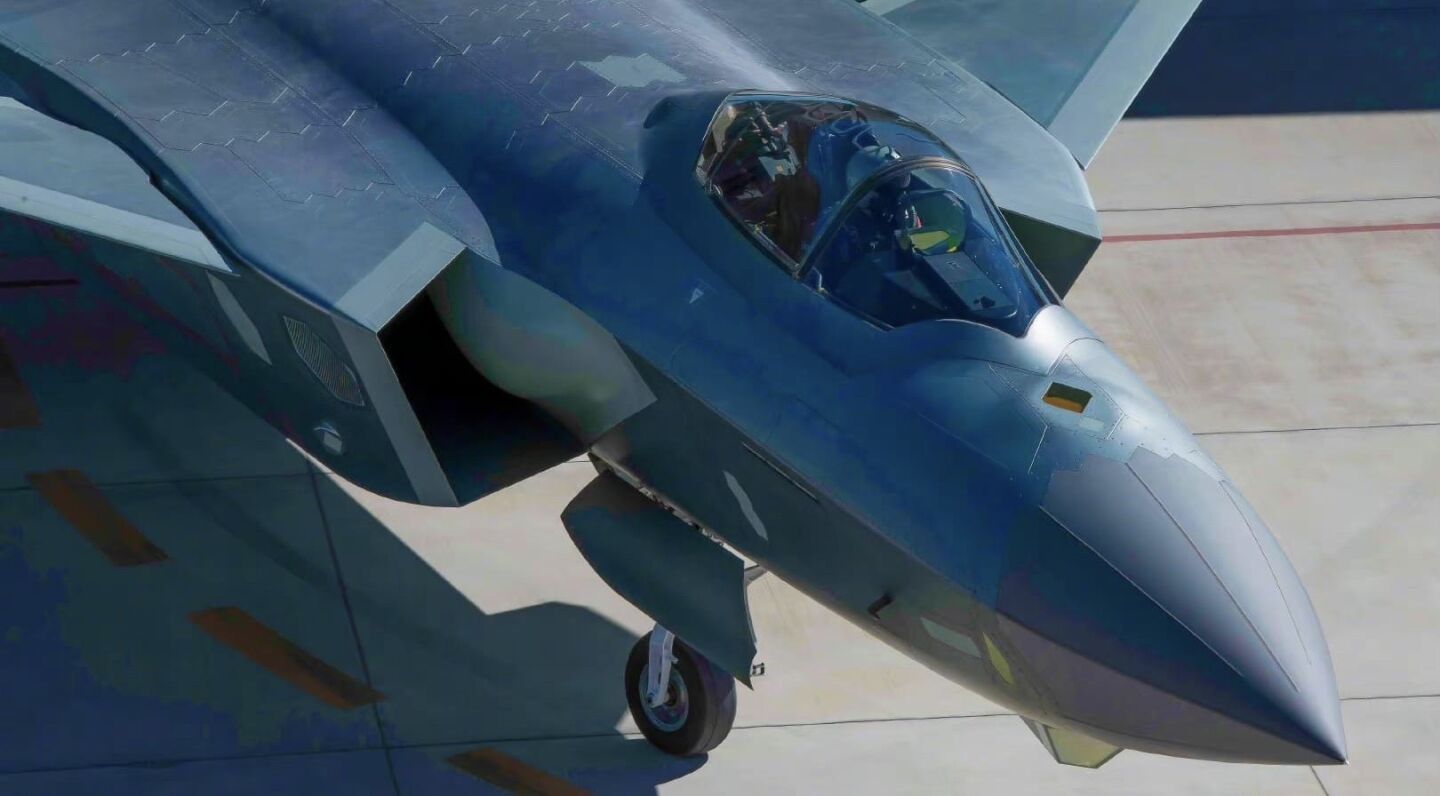
J-20 Fifth Generation Fighter
J-20 Fifth Generation Fighter - Weibo

Footage first circulated in February 2025 showing a J-20 carrying what appeared to be eight PL-15 beyond-visual-range air-to-air missiles, mounted in pairs on four underwing pylons.

A further video emerged in September 2025 showing another aircraft in a similar configuration, indicating that the arrangement was not necessarily limited to a single isolated test.

The aircraft in the earlier footage appeared to have a yellowish primer finish associated with manufacturer testing, raising the possibility that the configuration was being evaluated by Chengdu Aircraft Corporation rather than demonstrated by an operational combat unit.

This configuration could be particularly useful if engaging hostile targets with limited anti-aircraft capabilities of their own, such as hostile bombers or unmanned aircraft.
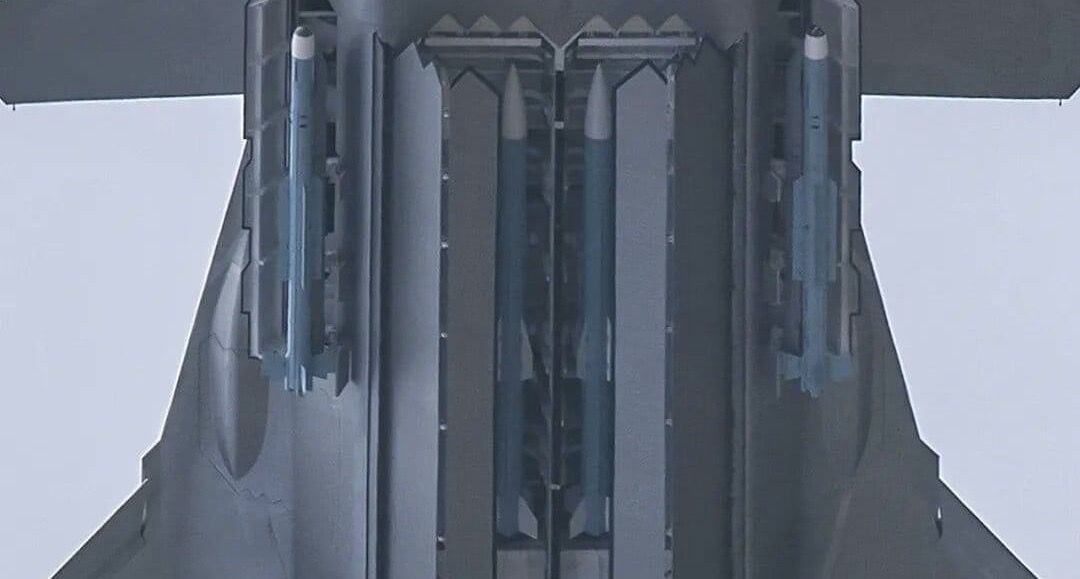
Chinese PL-15 (Centre) and PL-10 Air-to-Air Missiles in J-20 Stealth Fighter’s Weapons Bays
Chinese PL-15 (Centre) and PL-10 Air-to-Air Missiles in J-20 Stealth Fighter’s Weapons Bays - Weibo

J-20 fighters currently rely on support from J-16s, which are slightly larger non-stealth aircraft able to carry much larger missile loads. Stealth-configured J-20s can operate closer to hostile airspace, using their sensors and networking capabilities to identify targets and transmit engagement information to other aircraft operating farther behind them, such as J-16s carrying longer ranged missiles and in greater quantities.

J-20s in ‘beast mode’ configurations, however, can potentially obviate the need for J-16s in the fleet. The J-16 nevertheless has the advantage of a simpler lower maintenance design, and of integrating a significantly larger and more powerful radar, which is by many estimates the most powerful carried by any fighter type in the world.


Further developments in China's air-to-air missile inventory could make external carriage even more consequential. The PL-17, a substantially larger very-long-range missile, has been associated with efforts to threaten high-value support aircraft operating at considerable distances from the front line.

Its dimensions are generally assessed to prevent it from being carried in the J-20's internal weapons bays, making external mounting a potential requirement.

Although it is unclear whether the eight-missile configuration has been designed to accommodate the PL-17, the availability of external hardpoints gives the aircraft greater flexibility to employ weapons that cannot be integrated internally.

The PL-16, another missile associated with the J-20's future armament, has a more compact design intended to increase the number of long-range missiles carried internally. Its lighter weight could allow for an increase in the number of missiles carried externally.
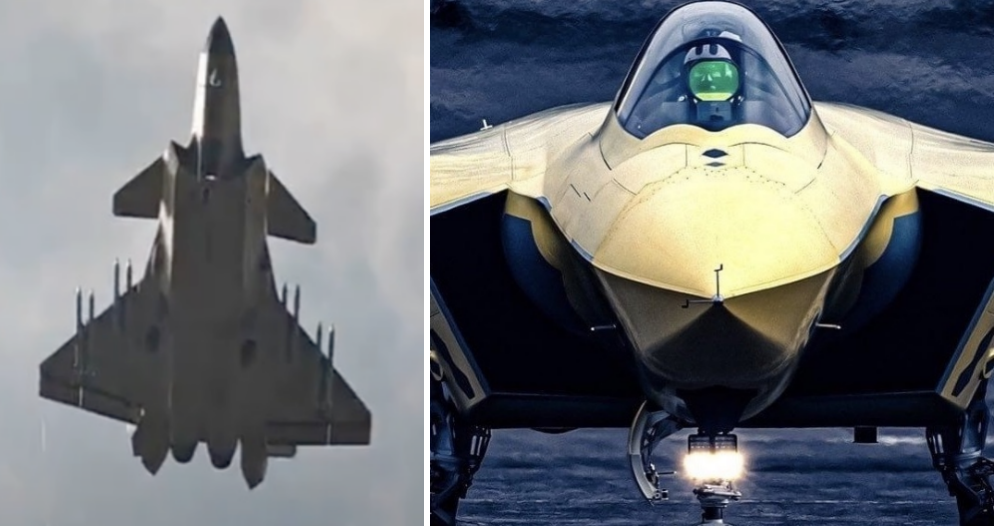
 

A classic technological transformation helps the J-20A fighter jet challenge all rivals.​

Equipped with the domestically produced WS-15 engine with a thrust of 19 tons, the completed version of China's J-20A stealth fighter has officially transformed, ready to challenge any opponent in the skies.

November 14 2026

After 15 years of painstakingly solving the jet engine problem, China has finally put the J-20A stealth fighter, equipped with the domestically produced WS-15 "heart," into mass production.

The leap from 14 tons to 19 tons of thrust not only eliminated the inherent weaknesses of its predecessors but also completely reshaped the landscape of fifth-generation air combat in the Asia-Pacific region.

For a decade since its public debut at the Zhuhai Airshow in 2016, China's J-20 stealth fighter has been the subject of much questioning by Western analysts regarding its real-world operational capabilities.

J-20A stealth fighter
J-20A stealth fighter jet. Image source: Chinese military

Despite possessing an advanced aerodynamic design with distinctive canards and modern avionics, the first production batches of the J-20 still relied on transitional engine lines such as Russia's AL-31F or the domestic WS-10C.

It was the lack of thrust that hampered its high-speed maneuverability and prevented the aircraft from reaching the true standards of a fifth-generation fighter.
As 2026 approached, the frequent appearance of J-20A airframes with their yellow primer coat at the Chengdu factory, along with the distinctive nozzles of the WS-15 engine , marked the end of that era of dependence, ushering in the final stage of refinement for this flagship fighter aircraft.

The leap from the WS-10C engine to the WS-15 "heart" of the J-20A fighter jet.​

In terms of technical specifications, the upgrade from the WS-10C engine to the WS-15 on the J-20A variant represents a significant leap in energy efficiency.

On previous J-20 production versions, the WS-10C1 engine only provided a maximum thrust of around 14 tons with afterburner, and even the improved WS-10C2 variant only reached 15 tons.

This level of thrust is sufficient for the J-20 to perform long-range patrol missions, but it shows signs of weakness when performing sharp turns at supersonic speeds or when carrying heavy weapon payloads.

The J-20A fighter jet was seen with a yellow undercoat.
The J-20A fighter jet is seen with a yellow primer coat, a finish typically associated with the production and acceptance testing phase before the official combat paint scheme. Image source: CAC/armyrecognition

With the introduction of the WS-15 on the J-20A , the maximum afterburner thrust of each engine has skyrocketed to approximately 180 to 185 kilonewtons, equivalent to about 19 tons.

The combined thrust of nearly 38 tons from the two engines significantly improves the J-20A 's thrust-to-weight ratio, surpassing the 156 kilonewtons of the F119 engine on the F-22 Raptor and approaching the 191 kilonewtons of the F135 engine on the F-35.

The immense power from the WS-15 engine provides two core tactical advantages that the older engine versions of the J-20 cannot match.

First is its supersonic cruising capability, which allows the J-20A to maintain supersonic speeds for extended periods without activating afterburners, saving fuel and preventing it from becoming an infrared signature.

The J-20A fighter prototype number 2052 is undergoing test flights with its WS-15 engine pair.
The J-20A fighter prototype number 2052 is undergoing test flights with its WS-15 engine pair. Photo: militarywatchmagazine

This not only significantly expands the operational radius but also allows aircraft to approach targets and escape enemy air defenses swiftly.

Secondly, the 19-ton thrust completely eliminates the payload limit for the J-20A airframe. Thanks to this ample thrust, the fighter can flexibly switch to a heavy combat configuration when needed, carrying up to 8 PL-15 long-range air-to-air missiles on external pylons while maintaining optimal maneuverability and combat ceiling.

Aerodynamic upgrades and practical operational challenges of the J-20A​

Besides the new WS-15 'heart', the final configuration of the J-20A, scheduled for delivery in 2026, also features profound refinements in aerodynamic design and airframe structure.

The hump at the rear of the J-20A 's cockpit has been raised and smoothed to reduce drag at supersonic speeds, while also creating more internal space for fuel and next-generation electronic warfare systems.

The active electronically scanned array (AESA) radar system and electro-optical targeting system (EOTS) have also been upgraded, transforming the J-20A into an airborne command center capable of sharing real-time data with accompanying stealth drones.

The J-20A fighter jet is equipped with WS-15 engines.
The J-20A fighter jet is equipped with WS-15 engines. Photo: militarywatchmagazine

The fact that the Chengdu plant directly installed the WS-15 engine on its new production line instead of converting it from old chassis demonstrates the remarkable maturity of China's metallurgical industry and its heat-resistant single-crystal turbine blade machining technology .

Nevertheless, defense observers remain cautious about the practical operational challenges of the J-20A during its initial mass deployment phase.

The biggest challenge for the WS-15 engine today is no longer maximum thrust, but rather mechanical durability, lifespan between overhauls, and the ability to maintain a stable supply chain for components.

However, the fact that the fully configured J-20A is ready to make its public appearance at major aviation events by the end of 2026 sends a clear message.

China has officially concluded its 15-year journey of overcoming the most fundamental weakness of its military aviation industry, bringing the J-20A into the ranks of the world's most formidable air superiority fighters today.


Users who are viewing this thread

Back
Top