Chengdu J-20 5th Generation Aircraft News & Discussions

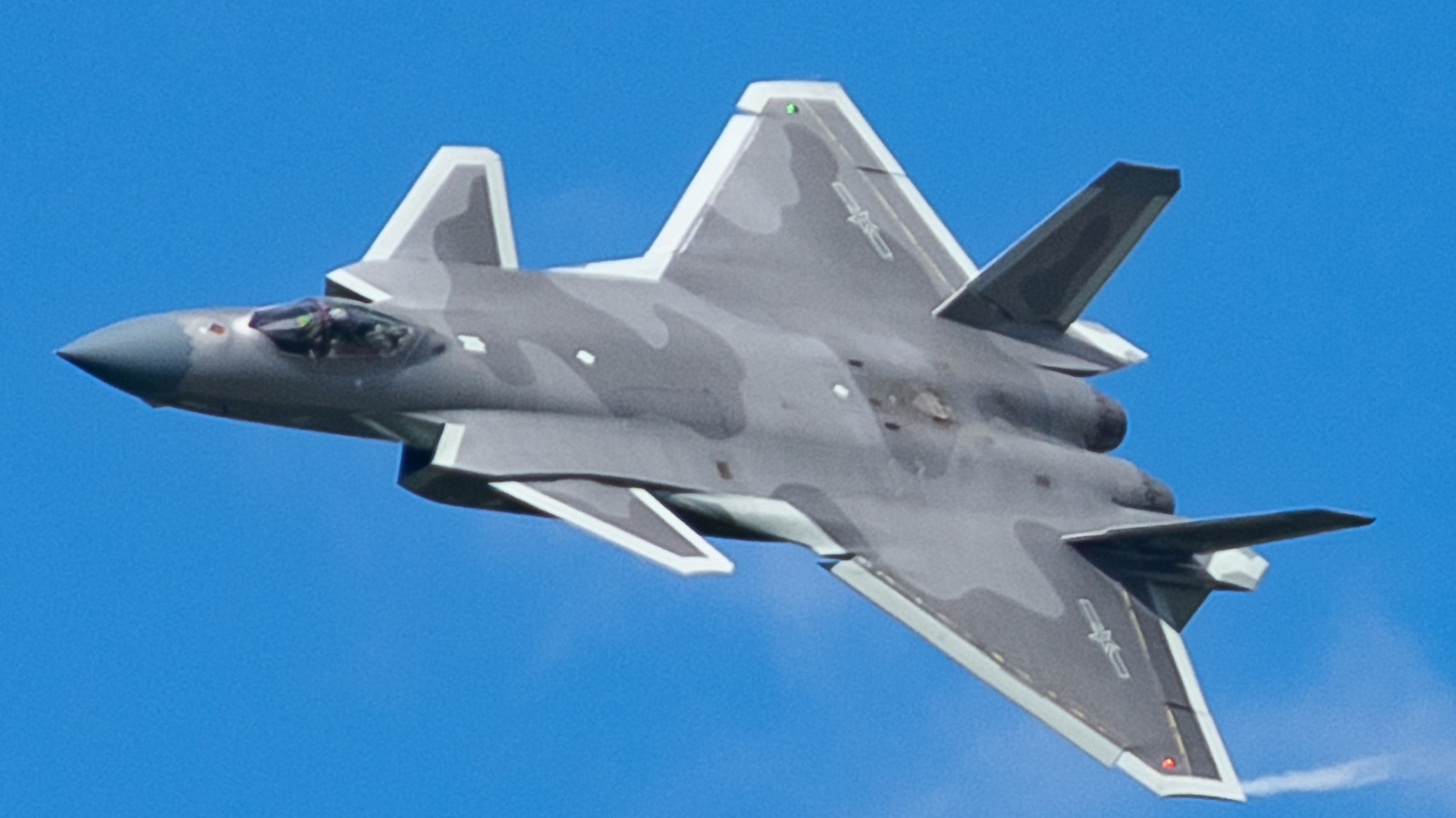
No matter how advanced the fighter, they can't forget tradition .........
008cluGjly1i276dq1oy1j31400u0q4q.jpg
 
I think this is a well-known old image and its fake!
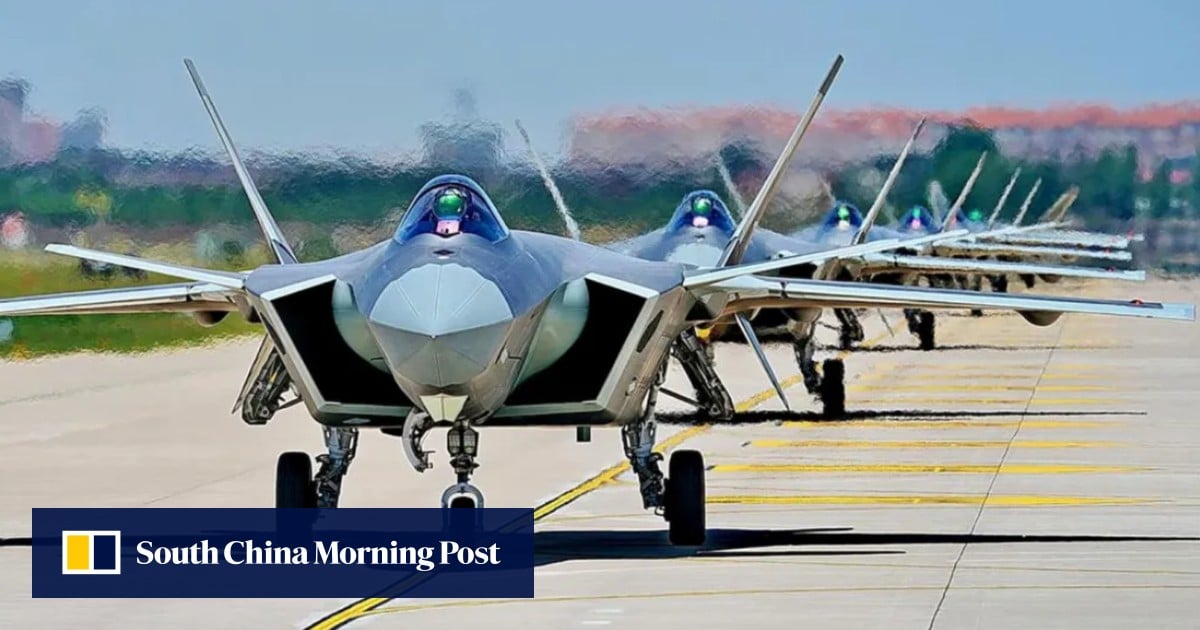
It seems that you don't quite understand the joys of Chinese military fans.LOL

In the past, the Chinese military was very poor. it was impossible for PLAAF to fire real missiles or training rounds during their daily training. For them, an occasional live firing of missiles was a great luxury. Most of the time, PLAAF used rocket nests for daily training. This has become a “traditional ritual”.

The J-20's “rocket nest” is actually a unique culture for Chinese military fans. It doesn't have any practical significance, but is simply a cultural tradition of ours. ......

Sometime in the future, if you see a picture of a J-36/J-50 hanging a rocket nest, don't be surprised and don't refute it. ------ We all know it's fake, but we'll still love “the tradition”.
 
The unsung hero of J-20's potent radar. SiC is typically used to regulate power and is widely used in EVs. China can now produce SiC chips, which is not surprising, given its origins in defense research and its subsequent percolation into the industry.

China’s J-20 stealth fighter’s radar leap credited to semiconductors expert Xu Xiangang


Shandong University says breakthroughs led by Professor Xu Xiangang have helped the Mighty Dragon triple its radar detection range​

Reading Time:3 minutes
14
Listen
[COLOR=rgba(0, 0, 0, 0)]
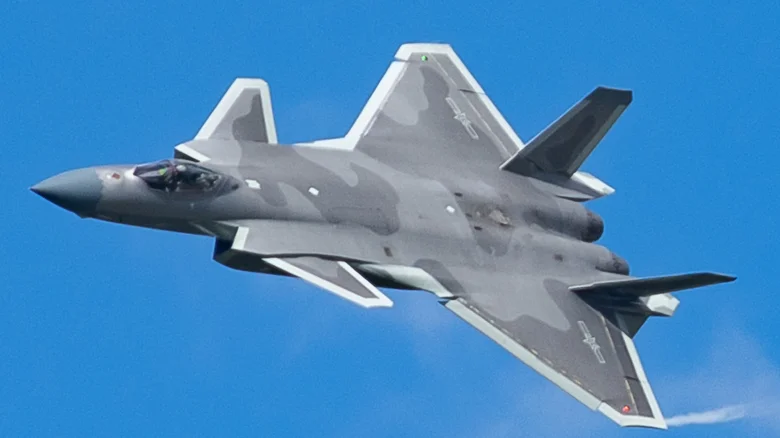
The J-20, also known as the Mighty Dragon, is a twin-engine stealth fighter viewed as China’s answer to America’s F-22 “Raptor”. Photo: Handout

Holly Chik
Published: 9:00am, 11 Jun 2025
China’s J-20 stealth fighter has tripled its radar detection range, thanks to semiconductor advancements over the past two decades led by Shandong University scientist Xu Xiangang, according to the university.

A silicon-carbide (SiC) semiconductor material developed by Xu’s team had powered a threefold increase in the detection range of phased array radar systems, allowing Chinese radars to swiftly detect enemies and gain the first-mover advantage, the university said on its social media page.
“From the J-20’s on-board systems to advanced weaponry, this ‘Chinese chip’ is crucial for national security,” the May 30 post said.

“It enhances the range of Chinese radars, improves missile accuracy and boosts the power of laser weapons, making it an indispensable ‘hardcore shield’ in defence technology.”

The J-20, also known as the Mighty Dragon, is a twin-engine stealth fighter viewed as China’s answer to America’s F-22 “Raptor”. It officially entered active service in March 2017.

Xu, who is dean of the university’s Institute of Novel Semiconductors, said it was important for researchers to address the country’s needs.

“The United States had already applied semi-insulating SiC on its F-35 stealth fighter jets and the Terminal High-Altitude Area Defence [THAAD anti-missile] system. Without [high-performing] radar, even the best-performing aircraft cannot be effective,” he noted in a video interview accompanying the post.

In 2016, China strongly protested against US plans to deploy its THAAD missile defence system in South Korea, citing risks to its strategic deterrence and security interests. China has since developed its own advanced anti-ballistic missile system, the HQ-19, which debuted last year.

Meanwhile, the United States and its allies have in recent years stepped up efforts to curb China’s access to advanced chips, including for use in weapons systems and the development of artificial intelligence.

“When our country needs such material but cannot source it [from foreign countries], our team dedicates our efforts to developing technologies to produce high-purity semi-insulating SiC crystals,” Xu said in the video.

He said the development of home-grown high-end equipment once faced challenges including “inability to grow, poor quality, and subsequent difficulties in the processing” of SiC semiconductors.

“We were not even able to produce a substrate that met basic standards 20 years ago,” said Xu, who is also director of the State Key Laboratory of Crystal Materials at the university. “Now we can adjust and control the material growth precisely.”

In addition to military advances, the semiconductor material can also improve battery longevity and increase the travel range of electric vehicles, Xu said, while pointing to possible applications in smart electric grids, quantum communications and space exploration.

Silicon carbide, a compound of silicon and carbon, is an extremely hard semiconductor material suitable for high-power devices at temperatures much higher than conventional semiconductors.

As a wide bandgap semiconductor material, it can withstand voltages at least 10 times that of conventional silicon-based semiconductors before breaking down, making it ideal for high-frequency devices.

After its discovery by an American inventor in 1891, SiC has been used in cutting tools, heating elements for industrial furnaces, and semiconducting substrates for light-emitting diodes.
Xu began researching SiC-based semiconductors in 2000, according to his bio on the university website.

He made significant advancements in growth mechanisms, developing high-purity semi-insulating properties, and focused on equipment development and industrialisation, the profile states.
Xu Xiangang is dean of Shandong University’s Institute of Novel Semiconductors, and director of its State Key Laboratory of Crystal Materials. Photo: Shandong University

Xu Xiangang is dean of Shandong University’s Institute of Novel Semiconductors, and director of its State Key Laboratory of Crystal Materials. Photo: Shandong University

His key breakthroughs include scaling SiC single crystal growth from around 5cm to 30cm in diameter (2 to 12 inches) in diameter and producing high-purity, semi-insulating SiC.

These advancements made it possible for SiC materials to be integrated into core parts of radar systems, which have been applied in advanced military aircraft, guided missiles and large warships.

His patented technologies have been transferred to noted SiC producers such as Shandong-based SICC and Guangzhou Summit Crystal Semiconductor.

“[Xu’s research] has fostered a group of industry leaders in this field, broken foreign blockages, achieved self-sufficiency and made significant contributions to the development of the country’s military weapons,” the university said.

Xu’s research in semiconductor materials and devices dates back to 1989 and his work has supported advancements in semiconductor lasers, light-emitting diodes and heterojunction transistors, according to his profile.

His research has also enabled the local production of materials related to semiconductor lasers and chips, serving key national projects like laser weapons.

LOR]​
 
Last edited:
Via ACuriousPLAFan/SDF: "Dashcam footage of a J-20A with a yellow primer landing at Chengdu Airfield."

So, if new yellow J-20As have indeed been spotted at Chengdu/Huangtianba, it could be an indication that production is indeed already underway, as some bloggers are reporting!

1749658872954.png
 
Via ACuriousPLAFan/SDF: "Dashcam footage of a J-20A with a yellow primer landing at Chengdu Airfield."

So, if new yellow J-20As have indeed been spotted at Chengdu/Huangtianba, it could be an indication that production is indeed already underway, as some bloggers are reporting!
I have been waiting for this day for many years, celebrating. The mass-produced J20A equipped with WS15 is a genuine fifth generation fighter jet, which has achieved all the predetermined specifications of the originally designed J20
 
Here is the video of the picture above
To view this content we will need your consent to set third party cookies.
For more detailed information, see our cookies page.
 
To view this content we will need your consent to set third party cookies.
For more detailed information, see our cookies page.
 

The Magnificent J-20 Mighty Dragon in Action​

To view this content we will need your consent to set third party cookies.
For more detailed information, see our cookies page.
 
HOW MANY J-20 JETS DOES CHINA HAVE?
BY BOB SHARP JUNE 27, 2025 8:00 PM EST
intro-1750830606.webp

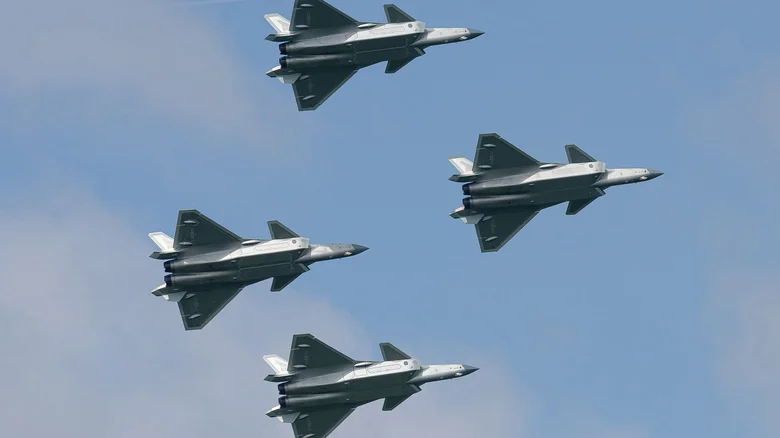
China's J-20 fighter is a stealthy, fifth-generation air-superiority fighter that frequently draws comparisons to other fifth-gen fighters the F-22 Raptor or the F-35A Lightning II. The J-20 — or the Chengdu J-20 Mighty Dragon — first flew in 2011 and entered service for the Chinese People's Liberation Army Air Force (PLAAF) in 2017. Since then, it has become one of the mainstays of the PLAAF. But just how many of these fighters does China have?

Pinning it down to precise numbers is always difficult, especially with a country as secretive as China. However, some data published by Janes gives us a good idea of the number of J-20s China has. According to the report, China was believed to have only about 40 J-20 jets in its arsenal as of 2022. Move forward a couple of years, though, and the picture was radically different. The PLAAF began introducing J-20s at a faster pace starting in September 2022. By 2024, it had an estimated 195 J-20s spread across 12 PLAAF air brigades, three of which use the jet exclusively.

There are also ongoing production numbers to consider. Satellite imagery revealed that more than 70 J-20s were added to the fleet between July 2023 and May 2024, indicating a production rate of roughly 6.5 aircraft per month. If that rate has remained steady, it's plausible that the total number of J-20s has continued to rise — potentially bringing China's fleet to over 270 aircraft by mid-2025.

the-j-20-is-chinas-stealthy-giant-1750830607.webp

The J-20 is China's stealthy giant

Designed and built by the Chengdu Aircraft Industry Group, the J-20 "Mighty Dragon" is a fifth-generation fighter that has the NATO designation of FAGIN. The J-20 is not a small jet, with a wingspan of 44 feet, a length of 67 feet, and a maximum take-off weight (MTOW) of 81,660 pounds. This makes it one of the biggest fighter jets in the world. For comparison, the F-35A has a 35-foot wingspan, is 51 feet long, and has an MTOW in the 70,000-pound class.

While early models of the J-20 used twin Russian AL-31FM2 engines — based on the engines that powered the Russian Sukhoi Su-27 — later models switched to Chinese WS-10B powerplants as part of a wider transition of China's fighter fleet to domestically produced engines. The J-20 has also been seen testing a new and more powerful WS-15 engine. With WS-10 engines, the JS-20 has a maximum speed of Mach 2.

The jet is capable of carrying a multitude of weapons systems, including the very long-range PL-15 missile, PL-21 long-range missile, and the LS-6 precision-guided bomb. There is also a two-seat variant of the plane under development. Unveiled in November 2024, the J-20S is a long-range, multi-role, stealthy fighter jet that can also team up with unmanned drones and aircraft. Only time will tell whether this variant will make the Mighty Dragon mightier, but the plane's performance and versatility mean it's set to be a mainstay of the PLAAF for years to come.

 
Their estimate is on the low side, possibly intentionally so, to make them sleep better at night. The new J20 brigade formation is observed.

https://militarywatchmagazine.com/article/j20-equip-elite-fighter-unit-guarding-beijing-2nd-brigade

The Chinese People’s Liberation Army Air Force 2nd Air Brigade has been confirmed to have begun to deploy J-20 fifth generation fighters, marking a major improvement for the unit’s capabilities which will transform how it operates in future.

Based at Yulong Airbase in Chifeng, Inner Mongolia under the Northern Theatre Command, the brigade is located approximately 400 kilometres from Beijing,
and bears responsibility for guarding the Chinese capital.

The J-20’s combat radius of approximately 2000 kilometres allows the fighters to loiter over and around Beijing for considerable periods to fulfil air defence duties in the event of conflict. The 2nd Air Brigade is the third fighter unit deployed near Beijing has been confirmed to have reequipped with the J-20, following the 172nd Air Brigade at the Cangzhou Flight Training Base in Hebei which operationalised the fighters in February 2018, and the 19th Air Brigade at Zhangjiakou Airbase, also in Hebei, which was confirmed to have operationalised the aircraft in February 2025.

The deployment of these three brigades has provided Beijing with some of the best fighter protection in the world.


J-20 Fifth Generation Fighters

J-20 Fifth Generation Fighters

Before receiving the J-20, the 2nd Air Brigade had from 2019 operated J-10C lightweight ‘4+ generation’ fighters. The J-10C is one of three advanced fighters that have been procured in parallel, alongside the J-16 and the J-20, with the former two being fourth generation aircraft that make extensive use of technologies develop for the J-20 ranging from their armaments and sensors to their heads up displays and airframe materials.

The J-10C has proven to be a highly capable fighter in air-to-air combat, holding its own against the much heavier J-16 in simulated engagements, and outperforming the Russian Su-35 and French Rafale in simulated and real world engagements.

It is nevertheless limited in its ability to defend Beijing in particular by its light weight and resulting limited range and small radar size. With a combat radius well under half that of the J-20, the transition from the J-10C to the new fifth generation fighter is thus particularly transformative for brigade.

There remains a significant possibility, however, that it will continue to operate a number of J-10Cs alongside the new fighters, possibly as part of a longer term plan to field a high-low combination.
 

Users who are viewing this thread

Pakistan Defence Latest

Latest Posts

Back
Top