Navigation
Install the app
How to install the app on iOS
Follow along with the video below to see how to install our site as a web app on your home screen.
Note: This feature may not be available in some browsers.
More options
Style variation
You are using an out of date browser. It may not display this or other websites correctly.
You should upgrade or use an alternative browser.
You should upgrade or use an alternative browser.
Chengdu J-20 5th Generation Aircraft News & Discussions
- Thread starter SiliconBit (silicon0000)
- Start date
More options
Who Replied?



That_Guy
THINK TANK: CONSULTANT


Ban is 100% deserved.Boys----
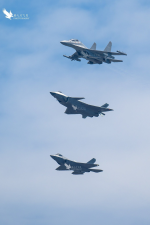
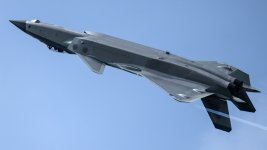
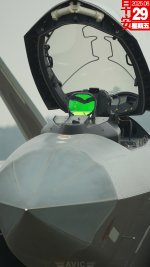
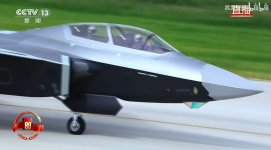
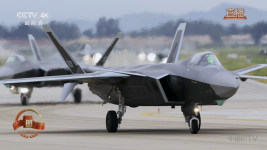
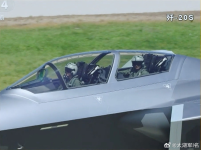
there is chatter that China is planning to offer J 20 to India as a competitor to F 35 and Su 57.
I have no comments ........but it's a 100 Billion deal...so...I wonder.....


Beijingwalker
VIP Member
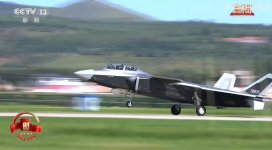
China’s J-20 Mighty Dragon Vs. ‘New’ YF-23 Fighter: We Wished We Never Asked
By Andrew LathamPublished September 6 2025
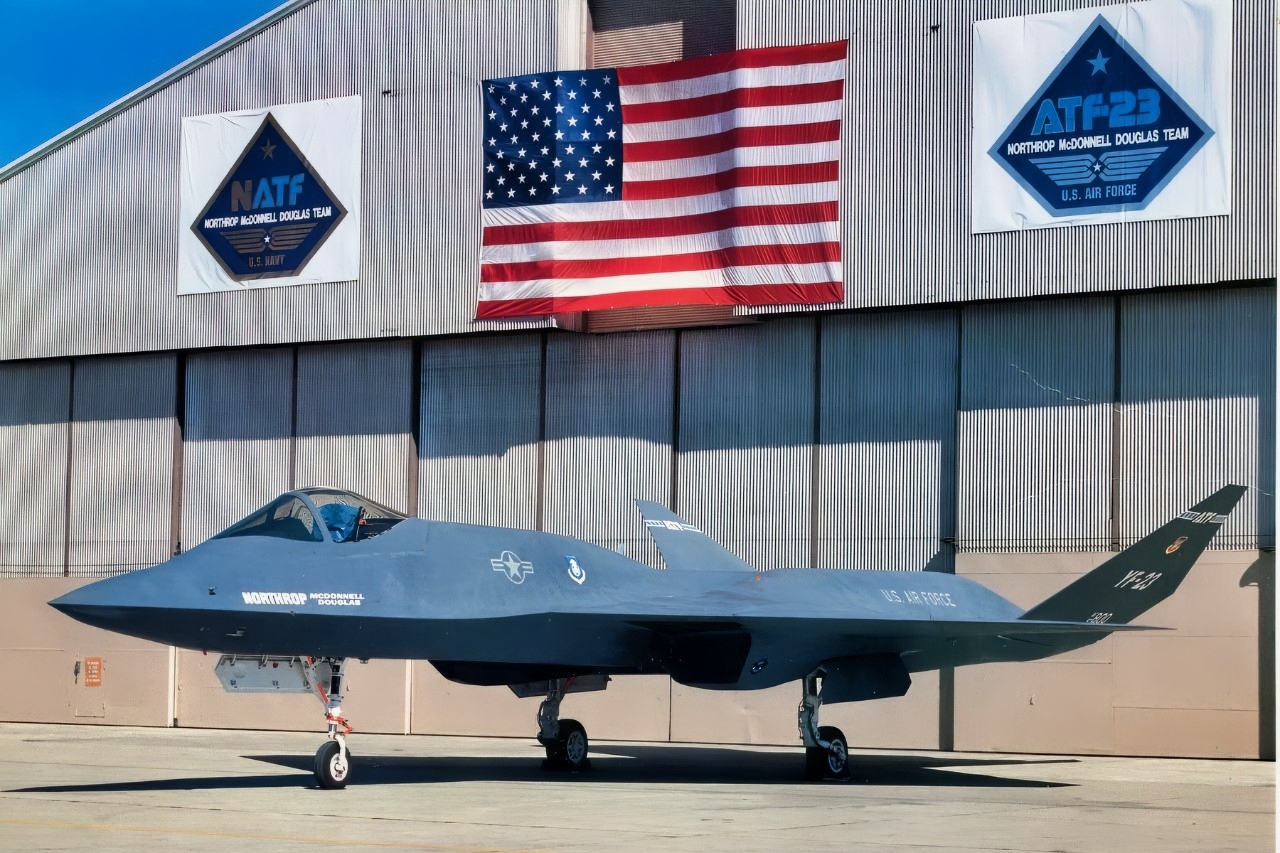
YF-23 Black II Widow Fighter Near Flag. Image Credit: U.S. Air Force.
Key Points and Summary – This analysis uses a thought experiment—pitting a modernized 1990s YF-23 prototype against China’s J-20—to explore the future of airpower.
-While the superior U.S. design would likely win a one-on-one duel, this is a dangerous distraction.
-The real challenge is China’s massive industrial scale.
-China is building the J-20 in huge numbers and integrating it into a networked system designed to overwhelm a smaller, qualitatively superior force.
-Without a robust fusion of technology, industry, and doctrine to generate mass, America’s design brilliance alone may not be enough.
-Bonus: National Security Journal recently visited the only two YF-23 fighters that were built, not resting in museums in outside of Los Angeles and Dayton, Ohio. All of the videos and many of the photos presented here are original and come from those trips to visit this historic plane.
The YF-23 Black Widow II vs. China’s J-20: Who Wins and Who Really Looses
If the Air Force’s YF-23 Black Widow II were dragged from the grave and rebuilt for the 21st century, how would it stack up against China’s Chengdu J-20?On the surface, this is a silly proposition, pitting a prototype that died in the 1990s against the crown jewel of the People’s Liberation Army Air Force (PLAAF). But the very absurdity makes it a useful exercise. As a thought experiment, the fight strips away the noise of politics, failed procurement, and the bad luck of history, forcing us to analyze the fundamentals.
Does America’s edge in stealth, design brilliance, and raw performance still matter? Or is it being drowned out by China’s growing mastery of scale, integration, and doctrine?
Air dominance is no longer about a single machine. The system behind the machine is what matters most.
REDESIGNING THE YF-23
The YF-23 was a demonstrator that developed and tested ideas that would not be introduced until many years later. The flying wing featured a diamond planform, V-tails, and a blended fuselage with inherent stealth qualities. Most independent estimates deemed it stealthier than its competitor, the YF-22 airframe, which was chosen as the winner of the Advanced Tactical Fighter program and became the F-22 Raptor.A Black Widow remixed today with reconfigured intakes, a next-generation radar, an electronic warfare suite, long-range missiles, and digital kill-web integration would result in a fifth-generation YF-23 derivative that packs 21st-century connectivity and situational awareness.
One-on-one, the reimagined YF-23 would win the day. Relative to the J-20, its stealth shaping, design maturity, and performance envelope would provide near-certain first-look, first-shot, and first-disengage advantages.
Some test pilots for the Advanced Tactical Fighter program who flew both prototypes long insisted that the YF-23 was faster and stealthier. Factor in 21st-century technology upgrades, and an asymmetry in detection, climb, and survivability probabilities remains baked in.
After all, in short-range fights, the average American F-22, F-35, or the F-47 Next Generation Air Dominance (NGAD) aircraft would outperform the J-20.
THE J-20 AND SCALE
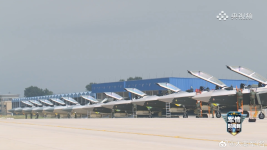
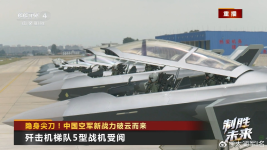
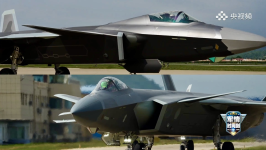
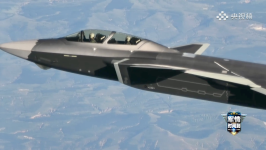
The J-20 is certainly not a boutique prototype. It is the tent pole of the PLAAF. China’s aerospace industry can produce advanced aircraft at high volume.By mid-2024, open-source reporting estimated that a dozen brigades had transitioned to the J-20. A steady stream of hundreds of new J-20 airframes are on order, with monthly production likely in the mid-to-high 20s. Large numbers can rotate patrol, guarantee relief, and withstand attrition. The United States will never match such numbers.
Numbers matter in other ways as well. The J-20 is not designed to be a one-on-one duelist; it is more one part of a multisensor system of systems. The long-range KJ-500 airborne early warning aircraft enables sensor reach.
Electronic warfare platforms, land-based radars, ground-control intercepts, and unmanned combat vehicles add redundancy and layers of detection and jamming. Long-range missiles extend the aircraft’s engagement envelope. The result is a networked battlespace in which scale and connectivity generate operational tempo – and that tempo can expose a boutique aircraft’s vulnerability to attrition.
A HISTORICAL PARALLEL
History may offer an imperfect cautionary parallel. Germany fielded the Me 262 jet fighter during World War II. It was a superior design compared to Allied piston-engine airframes.But it came too late, too few were built, and Germany lacked an industrial base to scale production. Allied numerical superiority, combined with a coherent operational doctrine and a robust industrial base, proved decisive.
The YF-23 thought experiment envisions the United States confronting a similar dynamic, where it loses its edge to an industrializing and numerically superior China.
CHINA IS NOT STOPPING
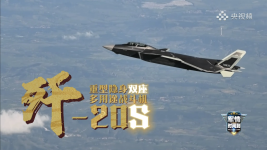
Signals from Beijing make this trajectory seem likely. The WS-15 engine has already flown in J-20A airframes. It should offer higher thrust and longer range. A two-seat J-20S variant is also maturing, while weapons and sensors continue to come online. Incremental upgrades layered on mass production mean that the J-20 will be the foundation for a long-term airpower strategy.Scale, modernization, and sustained state investment make it a potential pillar of national power.
INSIGHTS FROM THE THOUGHT EXPERIMENT
The first takeaway from the thought experiment is that U.S. design talent remains formidable. The U.S. Air Force can design fighters that retain advantages in stealth, speed, and survivability. They will, on average, outperform any Chinese fighter in a toe-to-toe fight.But those fighters will have to confront not just dueling individual planes, but numerous and networked Chinese aircraft. The second lesson is that China’s power is in industrial scale, systems integration, and sustainability. The airpower contest is transitioning from duels between individual machines and toward industrial and doctrinal capacity to generate and sustain mass.
That is not to say that the United States is necessarily out of the game. But it does mean that America’s most serious strategic challenge is to translate qualitative into enduring operational advantages.
That will require building fighters at greater scale, integrating them into resilient kill webs, and planning for high-attrition combat. A hypothetical updated YF-23, even if it is a design marvel, would be ineffective if procured in small numbers.
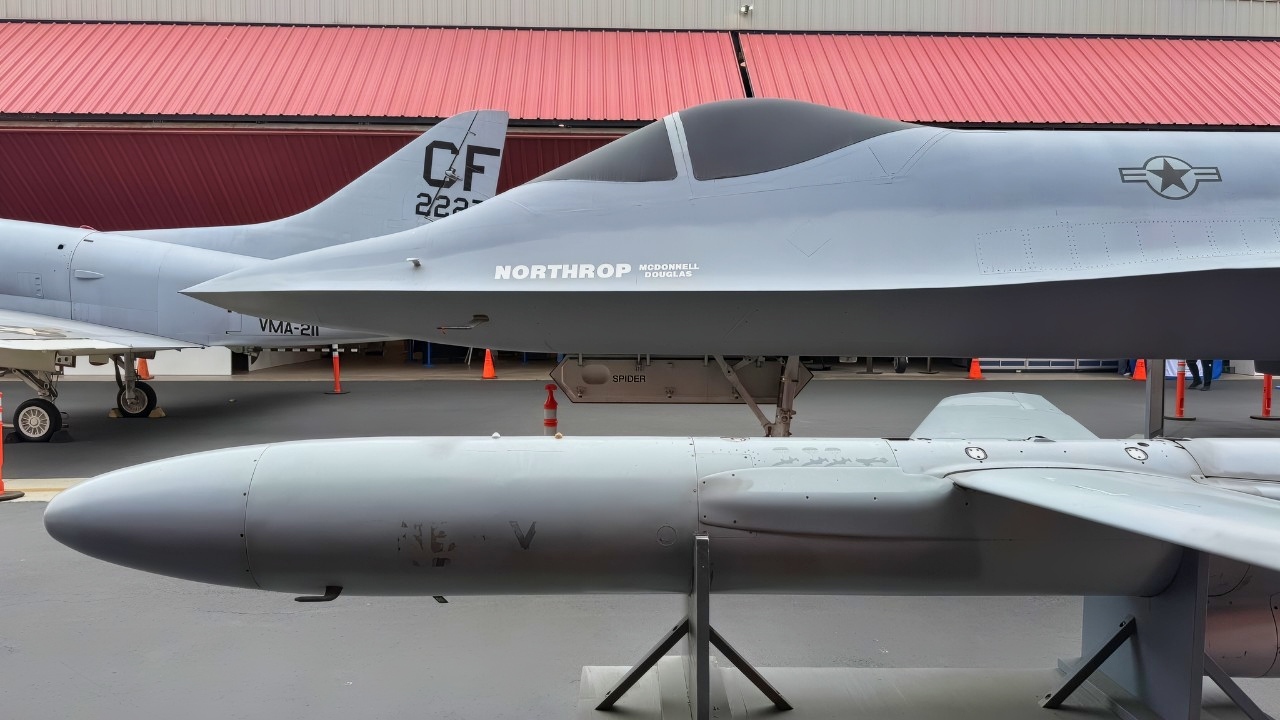
YF-23A Black Widow II Stealth Fighter in Torrance
The same is true for the figure F-47. Quality matters, but volume is essential.
DESIGN CONCEPTS
The focus on one-on-one duels also underscores a Western preoccupation with hardware obsession.In the worst formulations, “fighting with technology” is believed to reset the balance of power automatically and inevitably.
Yet, even as China develops the industrial capacity to build advanced aircraft in large numbers, it also possesses the doctrine needed to use them coherently and the political will to sustain them in conflict.
The YF-23 thought experiment highlights the distance between design excellence and these other, equally critical variables.
THE GREAT-POWER DILEMMA
The imagined one-on-one fight between a modernized YF-23 and the Chengdu J-20 reduces the central dilemma of great-power airpower to an elegant, if brutal, essence.Quality matters. Quantity matters more.
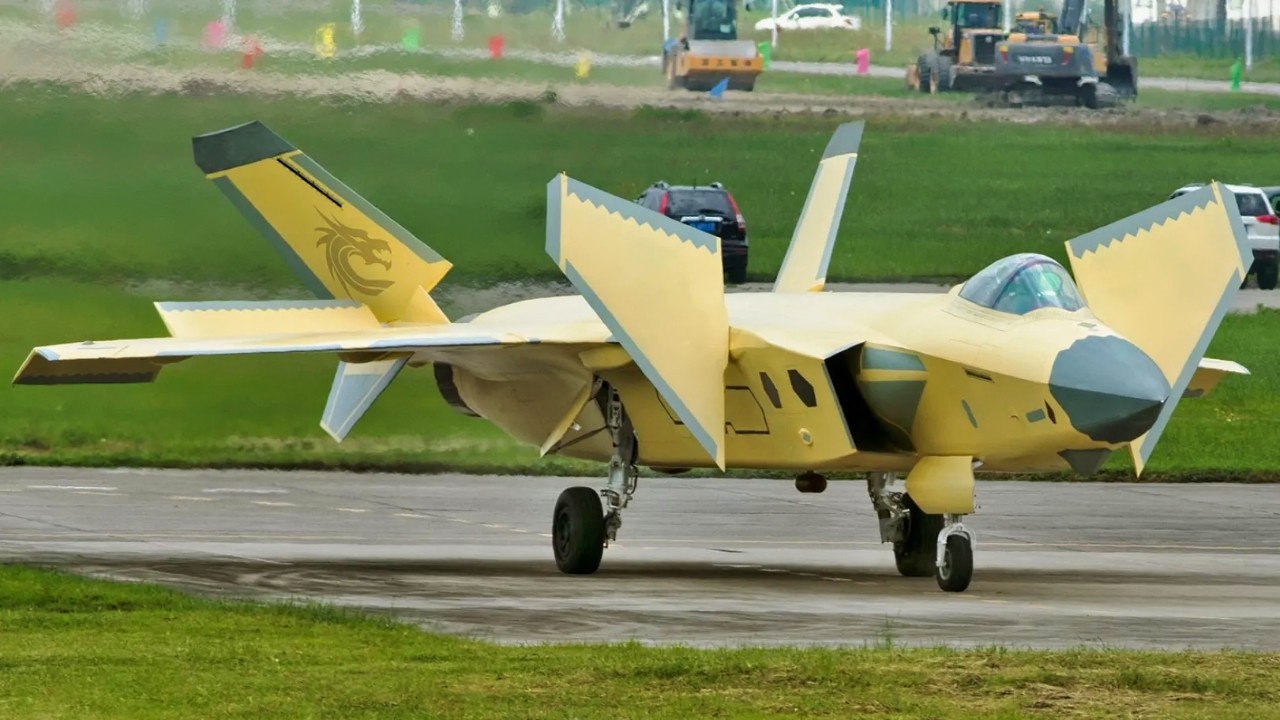
J-20 Fighter from China Mighty Dragon. Image Credit: Chinese Weibo.
But when joined to strategic imagination and backed by industrial capacity and doctrine, quality can still frustrate a numerically superior opponent.
The lesson is hard but inescapable. Tomorrow’s victor in the air will not be the side with the best fighter on paper but the side with the most robust fusion of technology, industry, and doctrine.


Beijingwalker
VIP Member
The J-20 is not designed to be a one-on-one duelist; it is more one part of a multisensor system of systems. The long-range KJ-500 airborne early warning aircraft enables sensor reach.
Electronic warfare platforms, land-based radars, ground-control intercepts, and unmanned combat vehicles add redundancy and layers of detection and jamming. Long-range missiles extend the aircraft’s engagement envelope. The result is a networked battlespace in which scale and connectivity generate operational tempo – and that tempo can expose a boutique aircraft’s vulnerability to attrition.
That's how J-10C shot down Rafales like flies

Ali_Baba
VIP Member

The YF-23 was soo far ahead of its time, it is crazy to think about it now. What flew was a prototype and the cost of taking that design and moving it to operational use is cost prohibitive given that all the manufacturing is gone, and the engine itself would pose problems.
The Tempest/GCAP is considered to be a derivative of the YF-23 design with adjustments for longer range that Japan requires. the Americans could always buy the design once it is complete, or buy off the shelf ( there would be no desire by the GCAP partners to add USA at this stage as it would completely derail the entire programme ).
The Tempest/GCAP is considered to be a derivative of the YF-23 design with adjustments for longer range that Japan requires. the Americans could always buy the design once it is complete, or buy off the shelf ( there would be no desire by the GCAP partners to add USA at this stage as it would completely derail the entire programme ).
Beijingwalker
VIP Member
I told this obvious fact so many times , Whoever has bigger overall industrial capacity always wins in the end.Quality matters. Quantity matters more.
But when joined to strategic imagination and backed by industrial capacity and doctrine, quality can still frustrate a numerically superior opponent.
The lesson is hard but inescapable. Tomorrow’s victor in the air will not be the side with the best fighter on paper but the side with the most robust fusion of technology, industry, and doctrine.
Users who are viewing this thread
Total: 2 (members: 0, guests: 2)
Pakistan Defence Latest
-

-
 After uneasy questions, Bangladesh Army chief broke into Nazrul geeti during Oct 1 darbar (1 Viewer)
- Latest: MNZGamerX
-

-


