Chinese electrolyser manufacturer Sungrow Hydrogen has confirmed alkaline and PEM system shipments to customers in Oman, Europe, and South America.

www.h2-view.com
China’s Sungrow Hydrogen racks up electrolyser sales across three continents
Mar 23, 2026
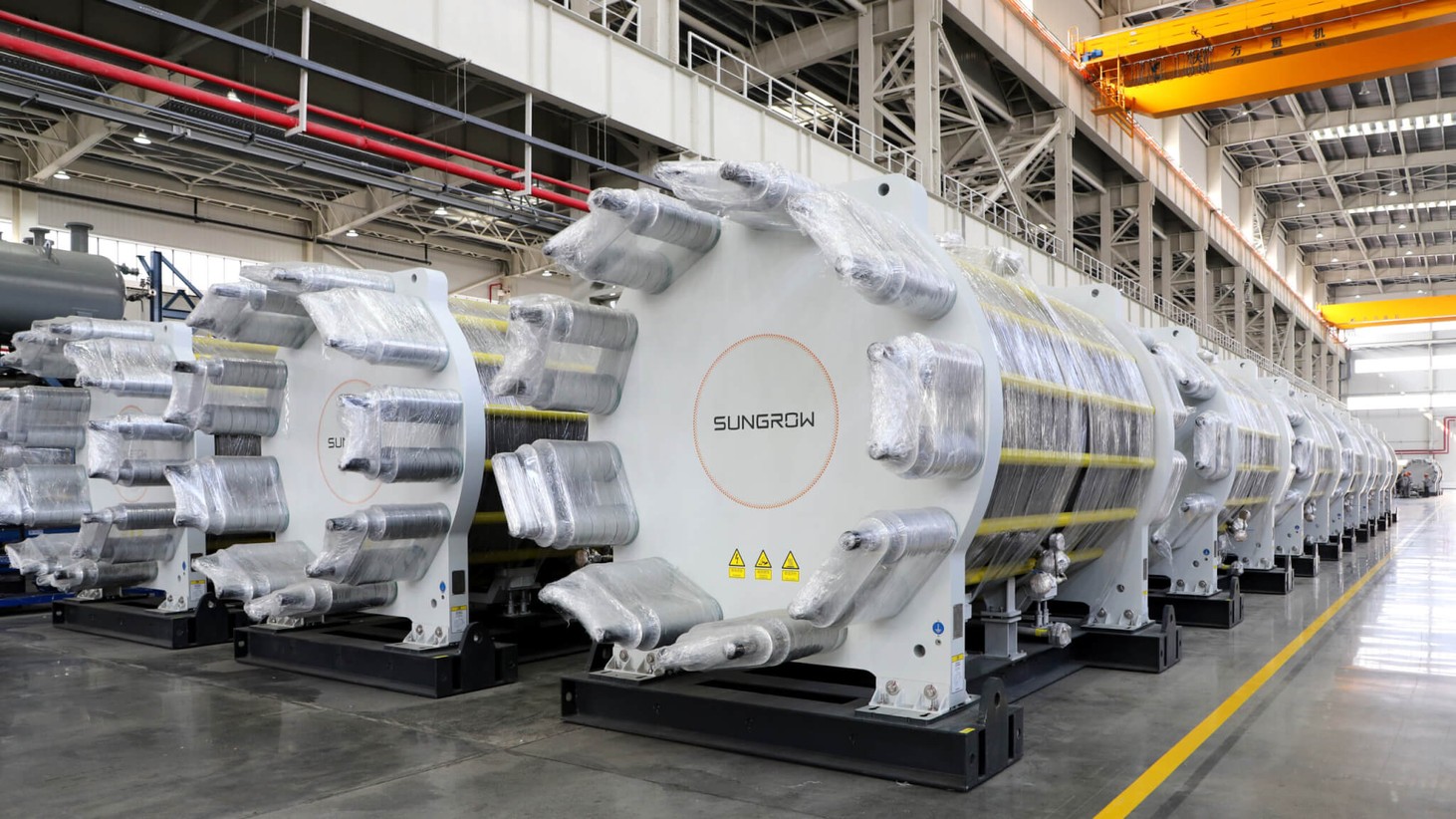
Chinese electrolyser manufacturer Sungrow Hydrogen has confirmed alkaline and PEM system shipments to customers in Oman, Europe, and South America.
The original equipment manufacturer said the “back-to-back shipments” will be installed at a large-scale green ammonia project, an off-grid solar-to-hydrogen facility, and a green hydrogen project.
The primary sale for 160MW of alkaline systems was shipped to ACME Group’s Oman
green ammonia project, which will install 320MW of green hydrogen production capacity. China’s Shuangliang International
recently provided 80MW worth of systems for the project’s first phase.
A further 3MW PEM system for integration with a solar project has been shipped to an unnamed customer in Italy, and a containerised system for a green hydrogen plant to Brazil for natural gas blending trials.
Sungrow said the new sales confirmed its global project delivery capabilities and that it will continue to scale up green hydrogen production in collaboration with global partners.
This comes as Chinese electrolyser manufacturers move into the global market, sparking concerns in other regions.
According to estimates from the World Bank’s Energy Management Assistance Program (ESMPA), China currently holds 86% of global alkaline electrolyser manufacturing capacity.
This is also combined with a major cost advantage over Western manufacturers. ESMPA said alkaline stack-plus-balance of plant prices in China fell to about one-fourth to one-sixth of comparable prices in Europe.
Despite these low costs, the International Energy Agency estimated that once transport, tariffs, and local installation costs are factored in, the installed cost of Chinese electrolysers abroad approaches parity with Western systems.
China’s first hydrogen fuel cell-powered inland container ship completes voyage trial
“Dong Fang Qing Gang” completed a sailing distance of 83.7 km with a total duration of approximately eight hours before berthing at Hangzhou Xiasha Port during the trial.
March 25, 2026
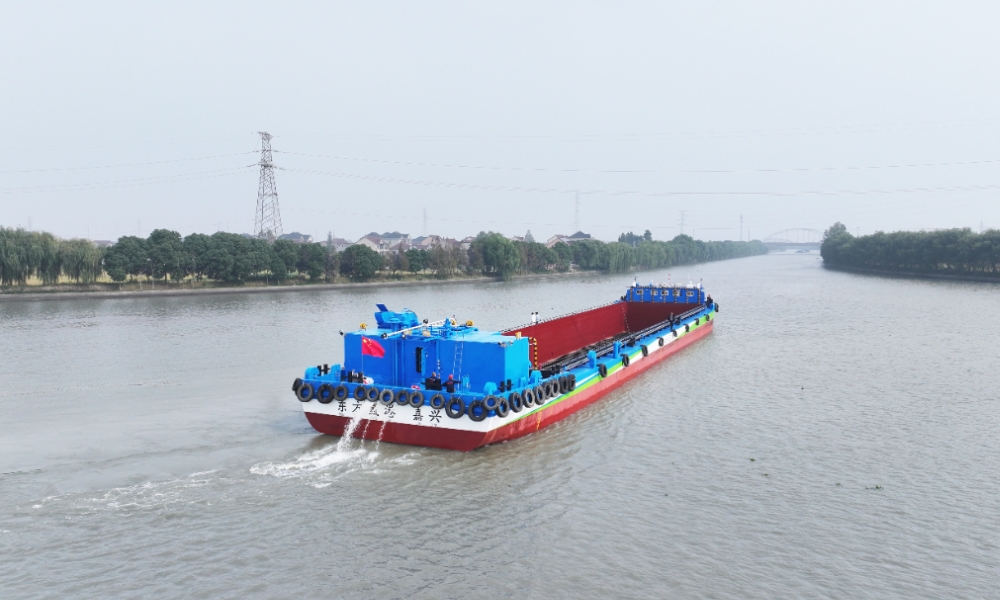
China’s first hydrogen fuel cell-powered inland container ship, built by Zhejiang Hedong Shipbuilding Technology Co for Zhejiang Hydrogen Energy Industry Development, has successfully completed its first long-distance trial voyage on 17 March, according to Zhejiang Economic and Information Centre on Friday (20 March).
The trial marked an important achievement for the Zhejiang Zhapu Economic Development Zone (Jiaxing Port Area) in implementing the national hydrogen energy strategy and exploring its comprehensive applications.
Dong Fang Qing Gang was completed on 1 December last year and was classed by China Classification Society.
During this long-distance trial, the ship completed a sailing distance of 83.7 km with a total duration of approximately eight hours before berthing at Xiasha Port, Hangzhou.
The vessel has a cargo capacity of up to 64 TEUs and is equipped with two Sino-Synergy Hydrogen Energy Technology’s (Jiaxing) SynWave C240 marine fuel cell systems, giving it a range of more than 380 km.
The ship’s main key equipment is a hydrogen fuel cell with a rated power of 240KW. It is the largest hydrogen fuel cell that has been newly developed and applied to a ship in China for the first time.
The hydrogen storage system can store 550 kg of hydrogen, which is the largest hydrogen storage system currently used on a ship.
As the first hydrogen-powered inland waterway container ship in China, the
Dong Fang Qing Gang will be dedicated to the 120-km Zhapu Port-Xiasha Port route, creating the nation’s first green hydrogen-powered inland waterway container transportation route.
Compared to traditional fuel-powered ships, it can reduce carbon dioxide emissions by approximately 700 tonnes annually, contributing to cleaner transportation in the Yangtze River Delta’s sea-river intermodal transport.
Norway-headquartered UMOE Advanced Composites has begun large-scale production at a new facility in China.

www.gasworld.com
Norwegian hydrogen cylinder maker begins production in China
Mar 23, 2026
Norway-headquartered UMOE Advanced Composites has begun large-scale production at a new facility in China.
The gas vessel manufacturer said its Jiaxing plant has now entered industrial production, with the first composite cylinders rolling off the line at what is set to become its largest global production base.
The site will produce multi-element gas containers for use in hydrogen and other compressed gas applications, with the first deliveries already allocated to the Hiringa Sundown joint venture in Australia.
Those units will support the Good Earth Green Hydrogen and Ammonia project in New South Wales – a solar-powered development designed to supply green hydrogen and ammonia for industrial and transport use.
The initial shipment includes five units, comprising two 20-foot and three 40-foot containers, intended to provide flexible storage and transport capacity within the project’s logistics network.
The 12,000 square metre Jiaxing facility is expected to play a central role in the company’s global expansion strategy, with potential annual output of up to 20,000 composite cylinders.
Combined with existing operations in Norway, UMOE said the new plant will significantly increase its overall production capacity.
“This facility will from the start triple our global production capacity and create the foundation for future growth with potential for up to 24,000 cylinders per year across our operations in China and Norway,” said CEO Lars Erik Lunøe.
“The Jiaxing facility enables us to deliver significantly higher capacity at a competitive cost level, strengthening our ability to serve customers globally as demand for hydrogen and other compressed gases accelerates.”
The company said local manufacturing in China will help lower production and logistics costs, improving the economics of hydrogen storage and transport at a time when projects are moving from pilot to deployment phase.
UMOE has previously supplied Type IV gas containers from Norway for Hiringa Energy’s hydrogen refuelling stations in New Zealand. That track record has supported further collaboration on the Australian project.
UAC has already supplied Type IV Multi-Element Gas Containers from Norway for Hiringa Energy’s first four hydrogen refuelling stations operating in New Zealand.
“That proven performance in our operating hydrogen refuelling network gives us confidence to source additional storage from UAC’s new state-of-the-art manufacturing facility in China for the Hiringa Sundown Joint Venture project in Australia,” said Alistair Tippett, Head of Projects and Engineering at Hiringa Energy.
“Access to the same high-quality, cost-competitive gas storage, produced closer to our markets, strengthens our ability to scale hydrogen infrastructure.”
Located around 100 km from Shanghai in the Yangtze River Delta, the facility sits within one of China’s most active hydrogen development regions. The area already hosts an expanding refuelling network, with around 30 stations deployed along key logistics corridors.
While initial output will focus on hydrogen storage, the company said that the same composite systems can also be used for compressed natural gas.