China announces national hydrogen pilot scheme across 11 priority areas

冖_冖

Registered Member
Joined
May 31, 2024
Messages
1,531
Reaction score
516
Reputation
344.4
Country of Origin
Country of Residence

China announces national hydrogen pilot scheme across 11 priority areas​

Jun 12, 2025


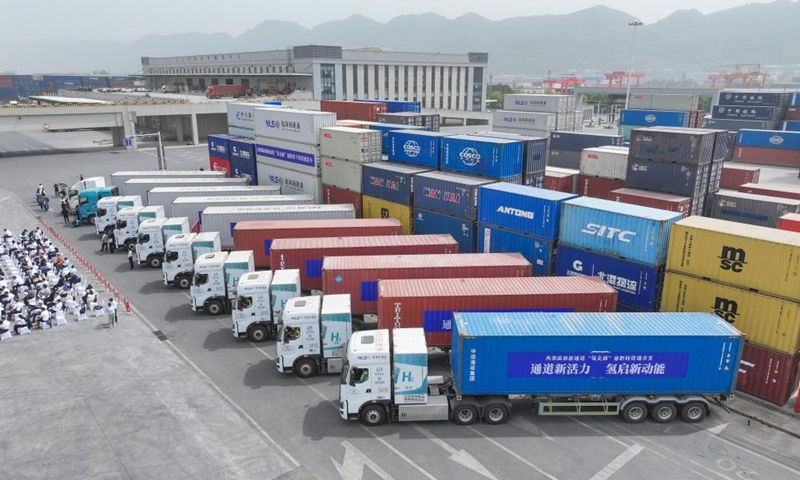
China’s National Energy Administration (NEA) has outlined plans to accelerate the commercial readiness and scale-up of hydrogen technologies, focusing on 11 priority directions across the hydrogen value chain.

The newly released directive will see both individual project pilots and regional-city-led pilots trial key hydrogen applications, business models, and cross-sector governance mechanisms.

All pilot projects and regions must be fully operational or have completed their trial objectives by June 2028, unless officially extended.

The NEA will assess pilots based on technology demonstration, commercial viability, carbon reduction impact and replicability.

“Projects should demonstrate technological advancement, innovative business models, and significant carbon reduction outcomes,” the government body stated.

In green hydrogen production, the pilots will trial electrolyser capacities of at least 100MW, powered primarily (>80%) by renewables. Nuclear-powered hydrogen production is also encouraged in regions with stable baseload generation.

Areas like deserts, deep-sea sites, or isolated plateaus will also host >10MW off-grid hydrogen production systems, which will integrate solar and wind power with storage to create self-sufficient, resilient microgrids.

Low-carbon hydrogen production will also be a priority. Pilots will focus on capturing hydrogen from coke ovens, chlor-alkali processes, and light hydrocarbon cracking, while encouraging retrofits of fossil hydrogen production with carbon capture and utilisation (CCUS).

Storage and transport will also be tested at scale. Pilots will demonstrate 100km pipelines, 5-tonne-per-day liquid hydrogen plants, and new liquid organic hydrogen carriers (LOHCs) and metal hydride tanks. Each storage project must support a minimum capacity of 20,000Nm³.

On the hydrogen usage side, the NEA targets refinery and coal-to-liquid substitution, hydrogen-ammonia power generation, and long-duration hydrogen storage for grid stability.

Projects must reach over 1,000 tonnes per year of renewable hydrogen consumption, pilot-scale turbines (>10MW) will co-fire with at least 15% hydrogen or ammonia, while coal-fired units (>300MW) must co-fire at least 10%.

For long-duration hydrogen energy storage, systems must be capable of delivering over 1MW for at least four hours, targeting seasonal grid balancing and peak shaving, while hydrogen fuel cells (>0.5MW) will be deployed in buildings, industrial zones, telecom sites, and remote areas.

Each province and central state-owned enterprise (SOE) can nominate up to five project pilots and two regional pilots, with priority given to proposals that already have permits in place, align with national R&D initiatives, or feature new technologies backed by solid technical and commercial foundations.
 
Source:
/

China announces national hydrogen pilot scheme across 11 priority areas​

Jun 12, 2025


China’s National Energy Administration (NEA) has outlined plans to accelerate the commercial readiness and scale-up of hydrogen technologies, focusing on 11 priority directions across the hydrogen value chain.

The newly released directive will see both individual project pilots and regional-city-led pilots trial key hydrogen applications, business models, and cross-sector governance mechanisms.

All pilot projects and regions must be fully operational or have completed their trial objectives by June 2028, unless officially extended.

The NEA will assess pilots based on technology demonstration, commercial viability, carbon reduction impact and replicability.

“Projects should demonstrate technological advancement, innovative business models, and significant carbon reduction outcomes,” the government body stated.

In green hydrogen production, the pilots will trial electrolyser capacities of at least 100MW, powered primarily (>80%) by renewables. Nuclear-powered hydrogen production is also encouraged in regions with stable baseload generation.

Areas like deserts, deep-sea sites, or isolated plateaus will also host >10MW off-grid hydrogen production systems, which will integrate solar and wind power with storage to create self-sufficient, resilient microgrids.

Low-carbon hydrogen production will also be a priority. Pilots will focus on capturing hydrogen from coke ovens, chlor-alkali processes, and light hydrocarbon cracking, while encouraging retrofits of fossil hydrogen production with carbon capture and utilisation (CCUS).

Storage and transport will also be tested at scale. Pilots will demonstrate 100km pipelines, 5-tonne-per-day liquid hydrogen plants, and new liquid organic hydrogen carriers (LOHCs) and metal hydride tanks. Each storage project must support a minimum capacity of 20,000Nm³.

On the hydrogen usage side, the NEA targets refinery and coal-to-liquid substitution, hydrogen-ammonia power generation, and long-duration hydrogen storage for grid stability.

Projects must reach over 1,000 tonnes per year of renewable hydrogen consumption, pilot-scale turbines (>10MW) will co-fire with at least 15% hydrogen or ammonia, while coal-fired units (>300MW) must co-fire at least 10%.

For long-duration hydrogen energy storage, systems must be capable of delivering over 1MW for at least four hours, targeting seasonal grid balancing and peak shaving, while hydrogen fuel cells (>0.5MW) will be deployed in buildings, industrial zones, telecom sites, and remote areas.

Each province and central state-owned enterprise (SOE) can nominate up to five project pilots and two regional pilots, with priority given to proposals that already have permits in place, align with national R&D initiatives, or feature new technologies backed by solid technical and commercial foundations.

China Expands State Hydrogen Pilot Program to Industrial Sectors​

Published: Mar. 18, 2026 1:09 a.m. GMT+8

China has launched a new round of applications for hydrogen demonstration city clusters, expanding a state program from clean transportation into broader industrial use.

The expansion is designed to unlock large-scale industrial demand and drive down end-user costs, marking a step toward the mass commercialization of hydrogen fuel.

On Monday, the Ministry of Industry and Information Technology, the Ministry of Finance, and the National Development and Reform Commission jointly unveiled the nationwide pilot program. The central government will select five city clusters, each eligible for as much as 1.6 billion yuan ($232 million) over four years under a performance-based subsidy model.

China launches comprehensive hydrogen pilot program to boost green transition
Published: Mar 16, 2026 09:17 PM

China's Ministry of Industry and Information Technology (MIIT), along with the Ministry of Finance and the National Development and Reform Commission, jointly issued a notice on Monday announcing the launch of a comprehensive hydrogen energy application pilot program, according to a statement posted on the website of the MIIT.

A Chinese analyst said that the new policy guidance is set to turbocharge the development of the sector, which is now facing the constraints of limited scale, and could effectively drive down the costs of using hydrogen by expanding the application scale of the industry.

The initiative aims to drive down costs through large-scale, multi-scenario applications, fostering high-quality development in the hydrogen sector and supporting a comprehensive green transformation of the economy and society.

The pilot program will select city clusters through a competitive "open competition" mechanism. It features six application categories: fuel cell vehicles, green ammonia and methanol, hydrogen-based chemical feedstock substitution, hydrogen metallurgy, hydrogen blending for combustion, and innovative application scenarios.

The pilot period is set for four years, with a maximum central government reward of 1.6 billion yuan ($230 million) per participating city cluster.

The program seeks to expand the application of hydrogen from just fuel cell vehicles to diverse areas such as industry and transportation. The goal is to create a comprehensive application ecosystem centered on fuel cell vehicles, complemented by industrial uses and innovative scenarios, per the MIIT statement.

Fuel cell vehicle applications will focus on large commercial vehicles and cold-chain logistics. Industrial applications include green ammonia and methanol, chemical feedstock substitution, hydrogen metallurgy, and hydrogen blending for combustion. Innovative uses will explore hydrogen in rail vehicles, ships and new-energy storage.

Specific targets for 2030 include large-scale hydrogen use across multiple sectors in pilot clusters, an average end-user hydrogen price below 25 yuan per kilogram or even around 15 yuan per kilogram at some advantageous regions, and a near-doubling of the national fuel cell vehicle fleet to about 100,000 units from 2025 levels. The initiative is also expected to drive technological upgrades in fuel cells and electrolyzers, per the statement.

Lin Boqiang, director of the Center for Energy Economics at Xiamen University, told the Global Times on Monday that the new policy guidance is set to help the nation move faster to develop a new type of energy system.

China's new hydrogen pilot program covering the vehicle and industrial sectors aims to boost the industry through policy support. The hydrogen sector remains small-scale despite years of promotion, with high costs and limited hydrogen supply as key bottlenecks, Lin said.

The current use of gray hydrogen and industrial by-product hydrogen is too small for large-scale development, Lin said, noting that the creation of low-cost green hydrogen on a large scale by harnessing wind and solar bases in the northwest will be critical.

Lin noted that China is positioned in a globally leading echelon in hydrogen energy development, with advantages in low-cost renewable energy. "The pilot program will help scale up applications and enhance China's competitiveness in the global hydrogen race."

A CCTV News report on Monday cited an MIIT official as saying that China's hydrogen industry has achieved ground-breaking breakthroughs.

As of end-2025, China's cumulative sales of hydrogen fuel cell vehicles reached around 40,000 units, according to the official.

China leads globally in both the number of hydrogen refueling stations built and total refueling capacity, with annual green hydrogen production capacity reaching around 250,000 tons, the official said.

The new pilot program aims to overcome challenges such as limited applications, high costs, and storage and transportation difficulties, ushering the industry into a new phase of large-scale development, the official said.
 

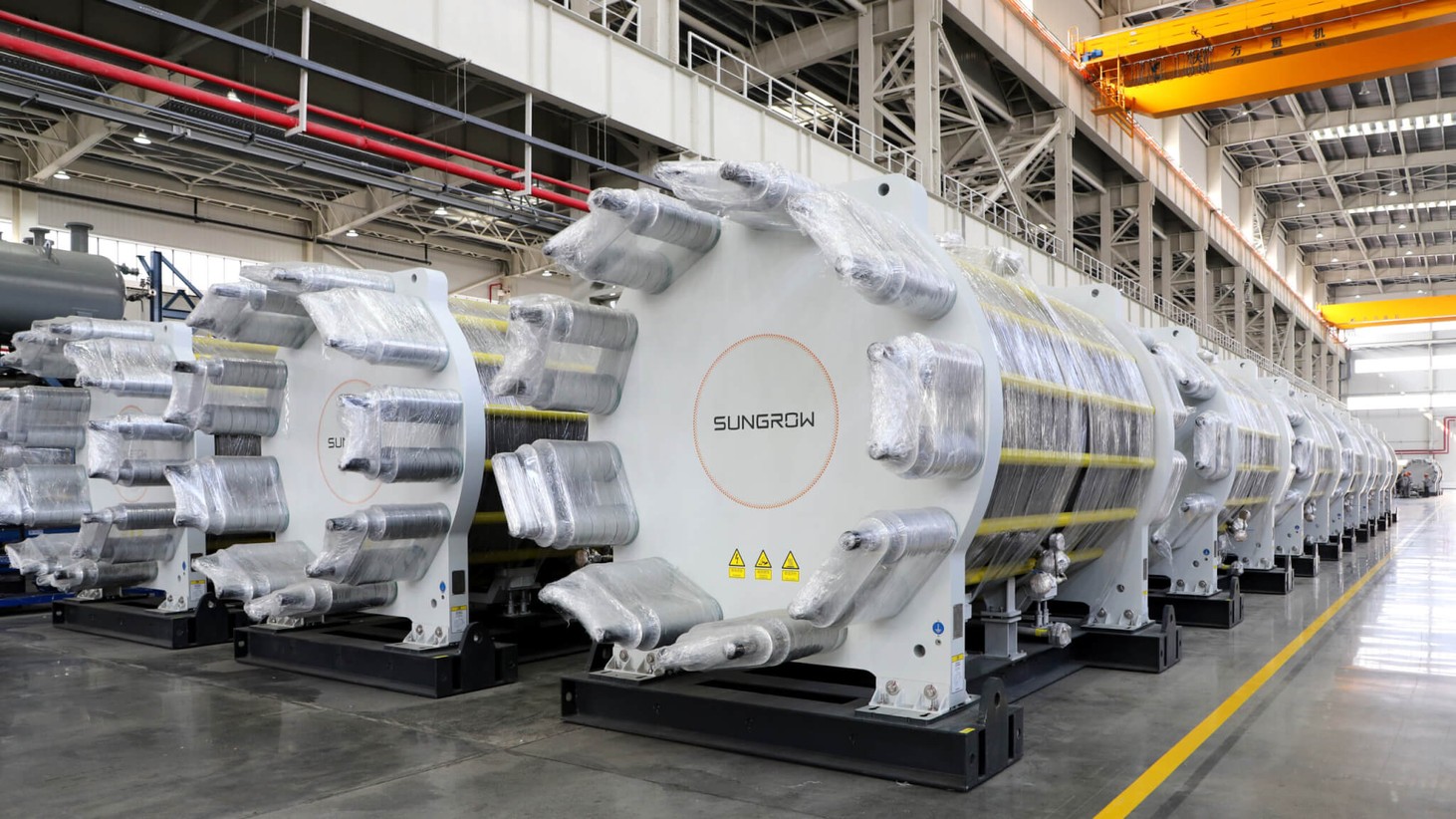
Sungrow-1-scaled.jpg

China’s Sungrow Hydrogen racks up electrolyser sales across three continents​

Mar 23, 2026

Chinese electrolyser manufacturer Sungrow Hydrogen has confirmed alkaline and PEM system shipments to customers in Oman, Europe, and South America.

The original equipment manufacturer said the “back-to-back shipments” will be installed at a large-scale green ammonia project, an off-grid solar-to-hydrogen facility, and a green hydrogen project.

The primary sale for 160MW of alkaline systems was shipped to ACME Group’s Oman green ammonia project, which will install 320MW of green hydrogen production capacity. China’s Shuangliang International recently provided 80MW worth of systems for the project’s first phase.

A further 3MW PEM system for integration with a solar project has been shipped to an unnamed customer in Italy, and a containerised system for a green hydrogen plant to Brazil for natural gas blending trials.

Sungrow said the new sales confirmed its global project delivery capabilities and that it will continue to scale up green hydrogen production in collaboration with global partners.

This comes as Chinese electrolyser manufacturers move into the global market, sparking concerns in other regions.

According to estimates from the World Bank’s Energy Management Assistance Program (ESMPA), China currently holds 86% of global alkaline electrolyser manufacturing capacity.

This is also combined with a major cost advantage over Western manufacturers. ESMPA said alkaline stack-plus-balance of plant prices in China fell to about one-fourth to one-sixth of comparable prices in Europe.

Despite these low costs, the International Energy Agency estimated that once transport, tariffs, and local installation costs are factored in, the installed cost of Chinese electrolysers abroad approaches parity with Western systems.


China’s first hydrogen fuel cell-powered inland container ship completes voyage trial​

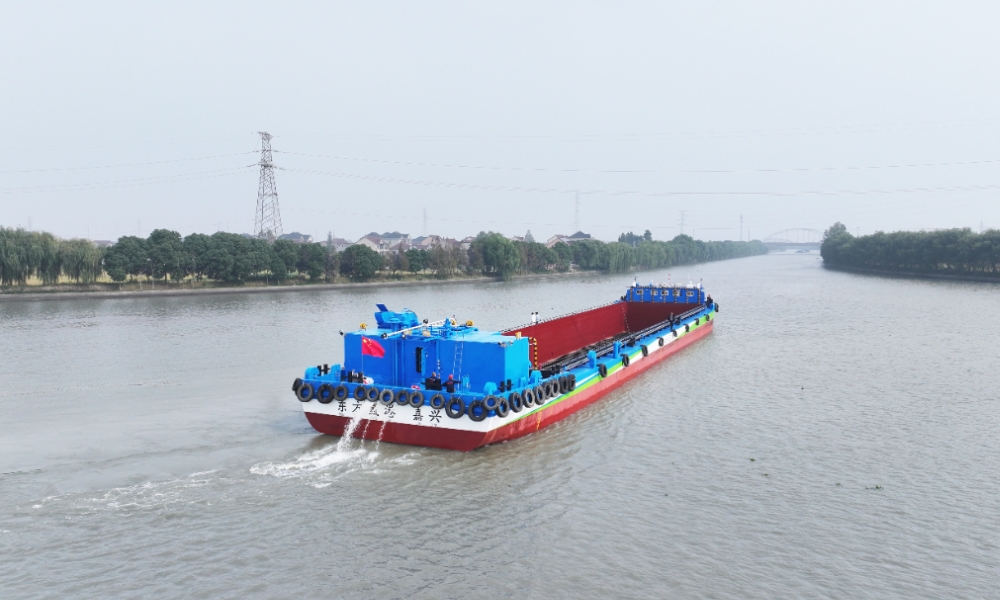
“Dong Fang Qing Gang” completed a sailing distance of 83.7 km with a total duration of approximately eight hours before berthing at Hangzhou Xiasha Port during the trial.

March 25, 2026

China’s first hydrogen fuel cell-powered inland container ship completes trial voyage


China’s first hydrogen fuel cell-powered inland container ship, built by Zhejiang Hedong Shipbuilding Technology Co for Zhejiang Hydrogen Energy Industry Development, has successfully completed its first long-distance trial voyage on 17 March, according to Zhejiang Economic and Information Centre on Friday (20 March).

The trial marked an important achievement for the Zhejiang Zhapu Economic Development Zone (Jiaxing Port Area) in implementing the national hydrogen energy strategy and exploring its comprehensive applications.

Dong Fang Qing Gang was completed on 1 December last year and was classed by China Classification Society.

During this long-distance trial, the ship completed a sailing distance of 83.7 km with a total duration of approximately eight hours before berthing at Xiasha Port, Hangzhou.

The vessel has a cargo capacity of up to 64 TEUs and is equipped with two Sino-Synergy Hydrogen Energy Technology’s (Jiaxing) SynWave C240 marine fuel cell systems, giving it a range of more than 380 km.

The ship’s main key equipment is a hydrogen fuel cell with a rated power of 240KW. It is the largest hydrogen fuel cell that has been newly developed and applied to a ship in China for the first time.

The hydrogen storage system can store 550 kg of hydrogen, which is the largest hydrogen storage system currently used on a ship.

As the first hydrogen-powered inland waterway container ship in China, the Dong Fang Qing Gang will be dedicated to the 120-km Zhapu Port-Xiasha Port route, creating the nation’s first green hydrogen-powered inland waterway container transportation route.

Compared to traditional fuel-powered ships, it can reduce carbon dioxide emissions by approximately 700 tonnes annually, contributing to cleaner transportation in the Yangtze River Delta’s sea-river intermodal transport.


Norwegian hydrogen cylinder maker begins production in China​

Mar 23, 2026

Norway-headquartered UMOE Advanced Composites has begun large-scale production at a new facility in China.

The gas vessel manufacturer said its Jiaxing plant has now entered industrial production, with the first composite cylinders rolling off the line at what is set to become its largest global production base.

The site will produce multi-element gas containers for use in hydrogen and other compressed gas applications, with the first deliveries already allocated to the Hiringa Sundown joint venture in Australia.

Those units will support the Good Earth Green Hydrogen and Ammonia project in New South Wales – a solar-powered development designed to supply green hydrogen and ammonia for industrial and transport use.

The initial shipment includes five units, comprising two 20-foot and three 40-foot containers, intended to provide flexible storage and transport capacity within the project’s logistics network.

The 12,000 square metre Jiaxing facility is expected to play a central role in the company’s global expansion strategy, with potential annual output of up to 20,000 composite cylinders.

Combined with existing operations in Norway, UMOE said the new plant will significantly increase its overall production capacity.

“This facility will from the start triple our global production capacity and create the foundation for future growth with potential for up to 24,000 cylinders per year across our operations in China and Norway,” said CEO Lars Erik Lunøe.

“The Jiaxing facility enables us to deliver significantly higher capacity at a competitive cost level, strengthening our ability to serve customers globally as demand for hydrogen and other compressed gases accelerates.”

The company said local manufacturing in China will help lower production and logistics costs, improving the economics of hydrogen storage and transport at a time when projects are moving from pilot to deployment phase.

UMOE has previously supplied Type IV gas containers from Norway for Hiringa Energy’s hydrogen refuelling stations in New Zealand. That track record has supported further collaboration on the Australian project.

UAC has already supplied Type IV Multi-Element Gas Containers from Norway for Hiringa Energy’s first four hydrogen refuelling stations operating in New Zealand.

“That proven performance in our operating hydrogen refuelling network gives us confidence to source additional storage from UAC’s new state-of-the-art manufacturing facility in China for the Hiringa Sundown Joint Venture project in Australia,” said Alistair Tippett, Head of Projects and Engineering at Hiringa Energy.

“Access to the same high-quality, cost-competitive gas storage, produced closer to our markets, strengthens our ability to scale hydrogen infrastructure.”

Located around 100 km from Shanghai in the Yangtze River Delta, the facility sits within one of China’s most active hydrogen development regions. The area already hosts an expanding refuelling network, with around 30 stations deployed along key logistics corridors.

While initial output will focus on hydrogen storage, the company said that the same composite systems can also be used for compressed natural gas.
 

China smashes world record for largest project to blend hydrogen into natural-gas grid​

The H₂/gas blend will now be received by 100,000 households in the city of Weifang

A screenshot from a CCTV news report, which shows part of the blending facility in Weifang, Shandong province.
A screenshot from a CCTV news report, which shows part of the blending facility in Weifang, Shandong province. Photo: CCTV

Published 20 April 2026, 20:50

The world’s largest project for blending hydrogen into the natural-gas grid has begun in China, with 100,000 households in the centre of the city of Weifang receiving the blend of up to 10% H2 through existing gas pipes.


China's first natural gas hydrogen blending application project at the 100,000-household level officially launches in E. China's Weifang

By Global TimesPublished: Apr 19, 2026 12:28 PM

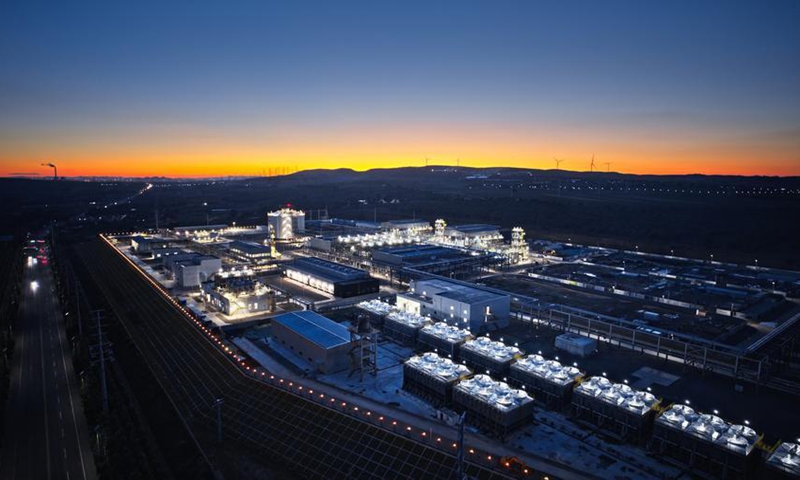
An aerial drone photo taken on July 6, 2025 shows a green hydrogen and ammonia project in Chifeng, north China's Inner Mongolia Autonomous Region. (Xinhua)

An aerial drone photo taken on July 6, 2025 shows a green hydrogen and ammonia project in Chifeng, north China's Inner Mongolia Autonomous Region. (Xinhua)

China's first large-scale natural gas hydrogen blending application project at the 100,000-household level was officially launched in Weifang, East China's Shandong Province, on Sunday. The hydrogen project covers 100,000 urban households in the city's central urban area, fully encompassing various civil gas usage scenarios such as daily household life and commercial catering, China Central Television (CCTV) reported on Sunday.

The demonstration project employs a 30,000 cubic meter natural gas hydrogen blending facility, capable of adjusting hydrogen blending ratios from 0 percent to 10 percent, the report said. The project leverages Weifang's existing urban natural gas pipeline infrastructure to enable stable hydrogen-blended natural gas transmission and distribution.

The project has built an electrolyzed water hydrogen production facility with a capacity of 5,000 cubic meters per hour. It has also developed China's first urban gas hydrogen transmission pipeline spanning a full length of 5.2 kilometers, and also a leading full-process hydrogen blending and transmission testing platform, which is capable of consuming up to 13 million cubic meters of hydrogen annually.

Pan Fengwen, deputy director of the National Fuel Cell Technology Innovation Center, was quoted as saying in the report that preliminary calculations show that if a 10 percent hydrogen blending ratio is applied nationwide in urban gas consumption, it could replace approximately 15 billion cubic meters of natural gas and reduce carbon dioxide emissions by about 30 million tons per year.

"Through the implementation of the demonstration project, the 'last mile' of hydrogen energy application in the urban gas sector has been linked up, marking the first time in the country that a large-scale, long-cycle, and continuous hydrogen blending demonstration application has been realized," he said. Pan stressed that the application of hydrogen blending in natural gas has significant demonstration effects in areas such as green electricity consumption, energy security assurance, energy conservation, emission reduction, and carbon reduction.

Lin Boqiang, director of the China Center for Energy Economics Research at Xiamen University, told the Global Times on Sunday that the launch of the project is a critical step in China's hydrogen energy industry, which is transitioning from demonstration projects to large-scale commercial application.

"The project will also gather valuable full-process testing data, safety evaluation expertise, and standardized technical specifications, which could lay a solid foundation for subsequent applications involving higher hydrogen blending ratios, dedicated pure hydrogen pipeline networks, and a nationwide rollout," Lin said. He added that the project also represents China's latest efforts in constructing a clean, low-carbon, safe, and highly efficient modern energy system, while serving as an important demonstration model with significant global reference value.

In 2024, China's annual hydrogen production and consumption scale exceeded 36.5 million tons, ranking first in the world, according to a report issued by the National Energy Administration on Sunday.
 
Great news. Hopefully with China taking it seriously it will finally get done and hydrogen will be mainstream.
 

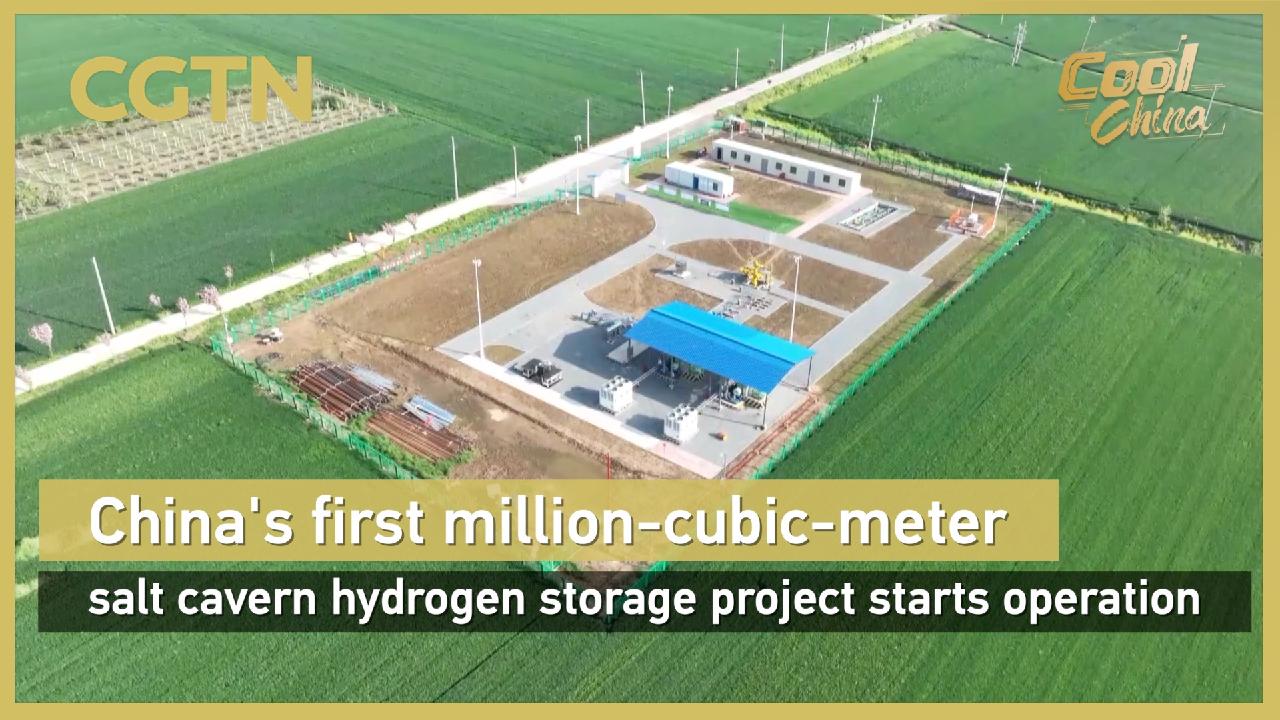
China's first million-cubic-meter salt-cavern hydrogen storage project starts operation​

Video12:00, 26-Apr-2026

To view this content we will need your consent to set third party cookies.
For more detailed information, see our cookies page.


China's first million-cubic-meter salt-cavern hydrogen storage demonstration project is now operational in Pingdingshan, central China's Henan Province. The project is seen as a key step in addressing the challenge of large-scale, low-cost hydrogen storage and marks a new stage in the industrial development of China's hydrogen chain—integrating production, storage, transport and utilization into a cohesive industrial ecosystem. The project is designed to store 1.5 million cubic meters of hydrogen.
 

China achieves breakthrough in hydrogen-coal co-combustion technology
Updated 2026.06.07 14:00 GMT+8

China has achieved a major breakthrough in low-carbon hydrogen–coal co-combustion technology, successfully developing a system that enables a 50% green hydrogen co-firing ratio and even 100% pure hydrogen combustion for the first time.

According to a report from China Energy Group, the technology uses a fully self-developed hydrogen–coal mixed low-nitrogen burner, along with a comprehensive safety protection system covering the entire process from hydrogen transport to furnace combustion.

This allows hydrogen and pulverized coal to be fully mixed and burned inside the boiler. On the test platform, a hydrogen blending ratio of 50% by heat value was achieved.

When green hydrogen is used, this translates into a 50% reduction in coal consumption and carbon emissions, while effectively controlling nitrogen oxide (NOx) emissions, China Media Group reported.

China operates the world's largest installed coal-fired power capacity. Industry analysts point out that the low-carbon transformation of the coal power sector is of great practical significance for meeting the country's "dual carbon" goals – peaking carbon emissions before 2030 and achieving carbon neutrality before 2060.

The breakthrough validates a promising technological pathway for significantly cutting carbon emissions from coal-fired power units in the future.

It is also highly important for advancing the green, low-carbon transformation of China's coal power industry and promoting the integrated development of coal power with new energy sources.

According to the China Hydrogen Energy Development Report released last year by the National Energy Administration, China's hydrogen energy industry is moving from a trial exploration stage into a new phase of orderly development and innovation-driven breakthroughs.
 

Users who are viewing this thread

Country Watch Latest

Back
Top