China Auto Thread


New Changan Nevo A05 sedan declared with an upgraded rear​


Reading Time: 3 minutes

Dong Yi Chen

July 14, 2024


0


News like this to your inbox or phone?​


Weekly summary to your inbox
I want this

Never miss and important news
Get Instant notification once the news is published.
Follow Us

This is Changan Nevo’s new A05 plug-in hybrid sedan. Nevo, also known as Qiyuan (启源) in China, is an entry-level new energy vehicle series. The A05 was first launched in October 2023.

In June, the Nevo A05 sold 5,041 units, accounting for 1.59% of China’s compact sedan market share. In the first half of 2024, Changan Nevo delivered 72,968 vehicles, of which 15,171 vehicles were delivered in June, a month-on-month increase of 12%.
Current Nevo A05 on sale
The new Nevo A05 adopts the same front design as that of the current model, with a closed grille, sharp headlights, and the brand logo in the middle.

On the contrary, the rear has been greatly changed, with a new through-type taillight group and the addition of the “NEVO” logo. Previously, the rear had the brand logo located at the center and traditional split taillights. The new car also runs on 215/55R17 and 225/45R18 tires.
The declaration information shows that the new car has a length, width, and height of 4785/1840/1460 mm and a wheelbase of 2765 mm, which is consistent with that of the current model on sale.
Optional configurations include three cameras (at the front, rear, and external mirror), five rim designs, a radar, a sunroof, door handles, and a rear wing for consumers to choose from.

Furthermore, the new Nevo A05 still uses a plug-in hybrid power system consisting of a 1.5L Blue Whale hybrid naturally aspirated engine (model JL469Q1) that outputs a maximum power of 72 kW (97 hp) and an electric motor (model TZ270XY551) that outputs a maximum power of 158 kW (212 hp), matched with a lithium iron phosphate battery pack from the CATL-Changan joint venture. The joint venture was established by Changan, CATL, and Deepal. The top speed is 185 km/h. At this time, the battery capacity and cruising range have not been announced yet.
For reference, the current model’s 1.5L engine has a maximum power of 81 kW (109 hp) and a peak torque of 143 Nm, while the electric motor offers two power options: 140 kW (188 hp)/330 Nm and 158 kW/330 Nm. The 9.07 kWh ternary lithium battery pack variant offers a 70 km CLTC pure electric range while the 18.99 kWh lithium iron phosphate battery pack variant offers a 145 km CLTC pure electric range. The comprehensive cruising ranges are as high as 1,225 km and 1,300 km, respectively.
Source: Chinese MIIT, XChuXing, Chinabgao, bcar
 

Xiaomi might’ve obtained independent vehicle manufacturing license from Chinese regulator​


Reading Time: 3 minutes

Dong Yi Chen

July 13, 2024


4


News like this to your inbox or phone?​


Weekly summary to your inbox
I want this

Never miss and important news
Get Instant notification once the news is published.
Follow Us

In the latest declaration catalog released by the Chinese MIIT on July 12, four Xiaomi SU7 versions appeared. The car’s overall parameters have not changed compared with the versions currently on sale, but its tail logo changed from ‘Beijing Xiaomi’ to just ‘Xiaomi‘ and the company name is now “Xiaomi Automobile Technology Co., Ltd.” This likely implies that Xiaomi has obtained the license to independently manufacture cars.

For reference, on the declaration catalog released on November 15 last year, the trademark listed was “Xiaomi” while the company name was BAIC Group Off-road Vehicle Co., Ltd.
Specifically, the four Xiaomi SU7 electric sedans (see spec here) declared this time are XMA7000MBEVR2, XMA7000MBEVR3, XMA7000MBEVR5, and XMA7000MBEVA1.

Previously, only 16 new companies/brands including BAIC New Energy, Changjiang Automobile, Chery New Energy, JAC Volkswagen, and Changhe Suzuki have been approved to manufacture new energy vehicles (NEVs). Now that Xiaomi might have obtained permission from Chinese regulators to manufacture NEVs, it will be interesting to see whether Huawei and Baidu will also be able to do so. For example, in August last year, because Baidu wasn’t able to obtain the manufacturing license, it established the Jiyue joint venture with Geely to leverage Geely’s qualifications and manufacturing capabilities.
Xiaomi delivered more than 10,000 vehicles in June, according to the brand’s official Weibo account, and it expects the delivery volume in July to continue to exceed 10,000 vehicles. For comparison, Xiaomi SU7 delivered 8,630 units in May and 7,058 units in April.
Xiaomi Auto store in Shanghai
The company also announced in May that it would start two production shifts in June, aiming to deliver at least 100,000 vehicles by the end of 2024, and striving for 120,000 vehicles. Starting from July 1, the company expects the delivery cycle to be shortened by up to 5 weeks after the order is locked. At the same time, the company officially announced that it had added 17 new Xiaomi Auto stores in June, spanning 30 cities across China, bringing its number of stores to 87. In July, the company also plans to add 17 new stores.

Source: Chinese MIIT, The Paper
 

Honda Ye S7 all-electric SUV for Chinese market is almost here​


Reading Time: 2 minutes

Dong Yi Chen

July 13, 2024


0


News like this to your inbox or phone?​


Weekly summary to your inbox
I want this

Never miss and important news
Get Instant notification once the news is published.
Follow Us

On July 12, Honda’s Ye S7 medium-sized pure electric SUV was declared by the Chinese MIIT. The car is built based on the brand’s W architecture for the Chinese market and the official launch is expected to be later this year.

Honda unveiled the Ye (烨) EV series for China on April 16 this year, aiming to achieve 100% electrification in the Chinese market by 2035. The series plans to launch six models by 2027, with the Ye S7 and Ye P7 being the series’ first models, which will be put into production by the Dongfeng Honda and GAC Honda joint ventures in China, respectively. The third car called the Ye GT Concept will be mass-produced in 2025.
In the front, the Honda Ye S7 uses a through-type LED daytime running light, with a forked design on both sides, in an elongated “H” shape. At the same time, the H logo of the Ye series appears at the center. The rear is equipped with a through-type taillight design, which also presents an elongated H shape. Additionally, the A, B, and C pillars on the side have been blackened, supplemented by black fenders, side skirts, and wheel eyebrows, making the car look sporty.

A dual-color exterior will also be available for consumers to choose from. The ‘S7’ tail label further indicates the identity of the vehicle. The Honda Ye S7 has a length, width, and height of 4750/1930/1625 mm, respectively; a wheelbase of 2930 mm, a curb weight of 2305 kg, an approach angle of 17°, and a departure angle of 24°. The car also runs on 265/45R21 104V tires.
Moreover, the powertrain consists of 150 kW front and 200 kW rear electric motors that output a combined power of 350 kW (469 hp), matched with a ternary lithium battery pack from CATL. The top speed is 180 km/h. The battery capacity and range information have not been revealed at this time. A reducer is also present.
From January to June 2024, the Dongfeng Honda joint venture had a cumulative sales volume of 237,900 vehicles, a year-on-year increase of 4.79%; of which 35,400 vehicles were sold in June, a year-on-year decrease of 16.41%.

Source: Chinese MIIT, Sohu
 

Chinese brands very much in attendance at Goodwood Festival of Speed, in the UK​


Reading Time: 5 minutes

Mark Andrews

July 13, 2024


3


News like this to your inbox or phone?​


Weekly summary to your inbox
I want this

Never miss and important news
Get Instant notification once the news is published.
Follow Us

International auto shows are becoming a dying breed, even pre-Covid their popularity was declining. Those that do remain such as IAA Munich are having to find new ways to make themselves relevant. Britain has not had such an event since 2008 when the biannual British International Motor Show ceased.

Goodwood Festival of Speed however has emerged as one of a new breed of events, which is not only popular with spectators but also with car companies. Held at the Lord of Richmond’s country pile in Goodwood, West Sussex the event forgoes the stuffy halls of the traditional auto show for a more up close and personal interaction with the cars and most importantly the event gives the cars a chance to actually perform and show off their prowess.
Long favored by luxury and premium producers, Goodwood this year has received some love from Chinese brands. While MG has grabbed most of the headlines thanks to the electrifying Cyber GTS along with the launch of the second generation MG HS in right-hand drive, the SAIC-owned brand was not the only face from China in attendance. Chery, Hongqi, and BYD all had a showing hoping to gain traction with their plans for the UK and European markets.

MG was not the only Chinese brand with a right-hand drive car in attendance, Chery brought the Jaecoo J7. It debuted at the Beijing Auto Show earlier this year and is a rebadged version of the Chery Tansuo 06. The car has already been put through its paces in the UK at the Millbrook Proving Ground but Goodwood allowed the first chance for the public to get up close and personal with Jaecoo J7 which is due to go on sale in the UK in September priced from around 35,000 pounds (45,400 USD). Petrol ICE and PHEV versions of the car are expected. It measures in at 4538, 1898, and 1680 mm and the wheelbase is 2672 mm. Chery claims to have ranked first for the export of Chinese brand passenger cars for 21 consecutive years. In 2023 Chery Group exported 937,148 cars, a year-on-year increase of 101.1%.
BYD entered the UK market last year and for Goodwood the Shenzhen-based company brought cars from not only the BYD brand but also Denza and Yangwang as well. The most mundane was the Seal U, and it is the only one that is so far confirmed for the UK market with sales expected to commence in the autumn. A PHEV the Seal U is the export name used in the European market for the Chinese market Song Plus DM-i.
The Seal U was shown at last year’s IAA Munich event as was another car BYD brought to Goodwood, the Denza D9. Although it is known that BYD is looking to bring the Denza brand to Europe it is currently unknown whether the D9 (see specs) will be one of the models offered.

Far more exciting for spectators were the offerings from Yangwang which brought both the U8 and the U9. The U8 (see specs) is a highly capable off-road SUV featuring four electric motors and a 2.0T engine as a range extender. Really ramping up the amps was the U9 (see specs), the brand’s electric hypercar, which went on sale earlier this year and is capable of a 0- 100 km/h time In 2.36 seconds. The Yangwang U9 was one of the cars seen burning up the circuit and being put through its paces at Goodwood.
Hongqi brought its two new electric cars the EHS7 SUV and the EH7 sedan. Both cars were seen being put through their paces on the track and the FAW-owned Hongqi brand was one of the official partners of the 2024 Goodwood Festival of Speed. Hongqi is looking to expand its overseas sales and likely using the event as a springboard into Europe. It should be noted that the EHS7 was unveiled at the 2024 Beijing Auto Show but has not yet been launched. Chinese media noted that the logo on the car at Goodwood is different to the one seen at the Beijing Auto Show. The EHS7 (see specs) measures in at 4925, 1950 and 1680 mm and the wheelbase is 3000 mm. It will be available with a choice of single and dual-motor powertrains.
Sources: BYD, Autohome
 

Jetour Shanhai T1 light off-road SUV declared by Chinese MIIT​


Reading Time: 3 minutes

Dong Yi Chen

July 13, 2024


0


News like this to your inbox or phone?​


Weekly summary to your inbox
I want this

Never miss and important news
Get Instant notification once the news is published.
Follow Us

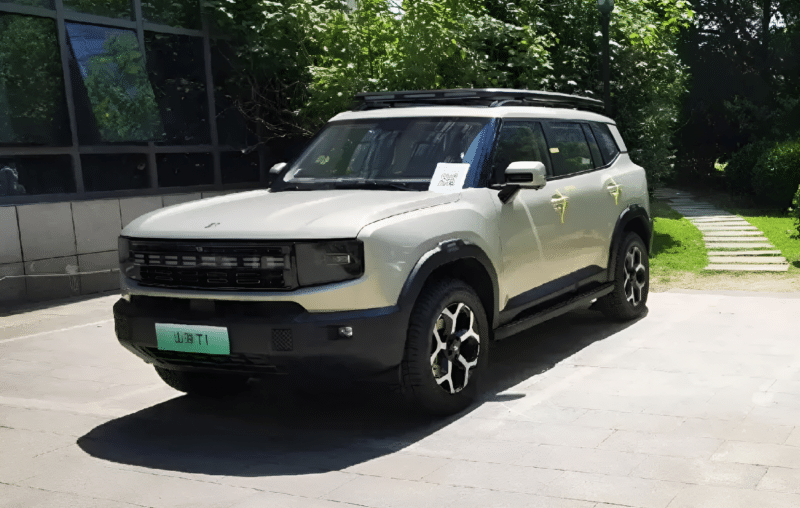
On July 12, Chery’s Jetour Shanhai T1 plug-in hybrid light off-road SUV was declared in the latest catalog published by the Chinese MIIT. The new car is positioned below the Shanhai T2. It had already made its debut at the 2024 Beijing Auto Show in April and is expected to officially launch in the fourth quarter of this year. For reference, the Shanhai T2 has a price range of 179,900 – 209,900 yuan (24,800 – 29,000 USD).

Jetour Shanhai T1 at the 2024 Beijing Auto Show
The Shanhai series product offering includes light off-road SUVs, hard-core off-road SUVs, and pickup trucks, according to the brand. At the same time, it is worth mentioning that the Shanhai T1 will also have a corresponding gasoline-powered version, internally codenamed TL, or named “Liberator”, and may use the same 1.5T/2.0T engine as the Jetour Traveller, mated to a 7-speed DCT or an 8AT. More information is yet to be announced by the official.
The dimensions of the Jetour Shanhai T1 are 4706/1967/1845 mm and the wheelbase is 2810 mm. The curb weight of the vehicle with a sunroof is 2000 kg and without a sunroof is 1963 kg. The standard approach angle is 27° and the departure angle is 25°. The car runs on 235/60 R19 tires.

The car will use Chery’s Kunpeng Super Performance Electric Hybrid C-DM system, similar to that of the Chery Fulwin series, consisting of a 1.5T engine (model SQRH4J15) with a maximum power of 115 kW (154 hp), electric motors, and a lithium iron phosphate battery pack supplied by CALB-Tech. The official claims that the system’s maximum combined power is 450 kW (603 hp). Furthermore, Its engine fuel consumption is 1.08 L per 100 km and the top speed is 180 km/h. An electronic four-wheel drive system will also be present. Additionally, the anti-lock braking system is manufactured by Bosch. At this time, the battery capacity and electric motor specifications have not been revealed.
Other configurations include optional front grille and rear designs, rims, a sunroof, rear quarters, a tow hook, and an electrical connector. The towing capacity is 1600 kg.
Source: Chinese MIIT, DongCheDi, Jetour
 

BYD Han DM-i revealed with DM 5.0 PHEV technology and Lidar​


Reading Time: 3 minutes

Mark Andrews

July 12, 2024


0


News like this to your inbox or phone?​


Weekly summary to your inbox
I want this

Never miss and important news
Get Instant notification once the news is published.
Follow Us

Last month we reported that a new version of the BYD Han had been spotted using both DM 5.0 PHEV technology and equipped with Lidar. At the time we thought the new car might be some way off, however, the new version has appeared in this month’s government regulatory listings. We now know that this is just a new version of the existing Han DM-i and not an altogether new car.

The biggest two changes are the powertrain and the new Lidar unit. BYD is rapidly introducing the new DM 5.0 technology throughout its range. As we speculated last month the BYD Han does use the more powerful version of the DM 5.0 technology. This means it has the same 1.5T BYD472ZQB engine as in the more powerful versions of the BYD Seal 07 DM-i. The engine has 115 kW power and in addition, the car has a 200 kW peak power TZ210XYD electric motor. So far little is known about the use of the more powerful engine in the DM 5.0 PHEV setup. The three key metrics of 46.06% thermal efficiency, 2.9 l/100 km fuel consumption, and 2,100 km range were based on the smaller naturally aspirated 74 kW engine in the also smaller Qin L and Seal 06 DM-i cars.
Dimensions of the Han (see specs) remain the same with 4975 1910, and 1495 mm (l/w/h) together with a wheelbase of 2920 mm. However, there is an additional length of 4995 mm listed, and it is not clear why. Curb weight for the new Han is slightly down at 1860 kg compared to a minimum of 1870 kg for the outgoing Han DM-i.

There is currently no news about battery capacity other than that the batteries will be supplied by BYD subsidiary FinDreams and be the lithium iron phosphate blade battery. The current version of the Han DM-i uses an 18.3 kWh battery and it is likely that the new car will use a similar sized pack.
We can see from the Ministry of Industry and Information Technology (MIIT) listing that the Lidar is an option and is most likely only available on higher-spec versions. It is mounted on the rooftop.
Other options include an opening panoramic roof and there are various differences with mirrors and light clusters according to the car’s specifications. It may also be fitted with a streaming rear-view mirror.

With the MIIT listing information now published we can expect a launch of the BYD Han equipped with DM 5.0 technology and the Lidar unit within the next few months. Prices for the current DM-i version of the BYD Han run from 169,800 yuan (23,370 USD) to 225,800 yen (31,080 USD). Prices for the new version are likely to be similar.
Source: MIIT
 

New BYD Song Pro is ready for China with 5-gen DM system​


Reading Time: 3 minutes

Denis Bobylev

July 12, 2024


1
byd song pro dm-i front side whiteNew BYD Song Pro

News like this to your inbox or phone?​


Weekly summary to your inbox
I want this

Never miss and important news
Get Instant notification once the news is published.
Follow Us

The all-new BYD Song Pro was revealed by the Chinese regulator (MIIT). This mid-size crossover adopts the brand’s signature Dragon Face design language and the fifth-generation DM plug-in hybrid powertrain.

The updated BYD Song Pro DM-i (image resolution enhanced by AI)
The first information about the Song Pro appeared online in February 2024. According to the leaked BYD product planning, the company scheduled the launch of this model for July 2024. Later, the new Song Pro was seen in China during road tests wearing heavy camouflage. And today, the BYD applied for the sales license of this SUV. As a result, its core specs were exposed.

BYD Song Pro exterior and dimensions​

The outline of the BYD Song Pro stays in line with the old model (see specs). For example, it has a distinctive line that crosses its body from head to tail. The Song Pro has the same plastic trim around the lower part of the body, and a slightly slanted roofline. From the side, it is hard to tell it is a really new model. However, it is all about the front end.

The new Song Pro adopts the Dragon Face design language with two thin headlights joined by a chrome-plated element with 宋 (Song) hieroglyph. Its front bumper has a sizable trapeze-shaped grille and sporty air intakes. The front ‘mask’ of the Song Pro forms an X-shaped design.
The BYD Song Pro didn’t change much from the back. It still has a single taillight unit. But the “Build Your Dreams” inscription under that taillight was replaced by a simple BYD badge. The Song Pro also has a more minimalistic rear bumper.
According to the regulator’s filling, the new Song Pro measures at 4735/1860/1710 mm with a wheelbase of 2712 mm. So, it is 3 mm shorter than the old model. Its front and rear tracks are 1565 mm. The new Song Pro has approach and departure angles of 18 and 22 degrees, respectively. Front and rear overhangs are 1008 mm and 1015 mm.

BYD Song Pro specs​

The BYD Song Pro adopts the BYD’s fifth-gen DM powertrain system. It has a 1.5-liter naturally-aspirated BYD472QC engine for 74 kW (99 hp) paired with a TZ210XYB 160 kW (215 hp) synchronous permanent magnet electric motor made by BYD.
The new Song Pro has an LFP Blade battery on board made by BYD subsidiary FinDreams. Its capacity reaches 18.3 kWh, suitable for 93 km of range. This pack is also quite heavy at 181 kg. As a result, the curb weight of the new BYD Song reaches 1765 kg. However, it is 15 kg lighter than the old Song Pro with an 18.3 kWh battery. It is worth mentioning the old model also has less range – 85 km (WLTC).
The old BYD Song Pro DM-i
According to a registration filling, BYD can assemble the new Song Pro at factories in Changsha, Hefei, Jinan, Zhengzhou, and Shenzhen. The old model is assembled in Jinan and Zhengzhou. The new Song Pro will make its official debut this month. Its price range will be 110,000 – 150,000 yuan (15,150 – 20,700 USD).
Source: MIIT
 

Revealed, the Geome Xingyuan a small car from Geely to take on the BYD Dolphin​


Reading Time: 3 minutes

Mark Andrews

July 12, 2024


0


News like this to your inbox or phone?​


Weekly summary to your inbox
I want this

Never miss and important news
Get Instant notification once the news is published.
Follow Us

First off, this is not yet another brand from Geely and nor is it the result of shoddy workmanship on the Geometry production line. The Geome name is apparently a different version of the Geometry sub-brand name, presumably for those who are scared by math. The Xingyuan, currently the car doesn’t seem to have an English name, is a new compact hatchback to take on cars such as the BYD Dolphin and Wuling Bingo. Thanks to a government regulator we now know more about it.

Perhaps due to the floating roof design the Geely Geome Xingyuan reminds us of the Smart #1. At the front, it has an enclosed face with inverted teardrop-like light clusters and on each side of the fender are double C-shaped deflectors. The whole effect reminds us of a mask.
The aerodynamic wheel fairings look like game console control pads and are really quite distinctive. These according to the option list are one of several different wheel designs available. There are semi-concealed door handles which are probably a good trade-off between cost and aerodynamics. What is not so apparent from the side profile unless you look closely is that the car actually has both a C and D-pillar with there being a small window between the two. At the rear, the Xingyuan features triangular-like light clusters, and strangely it seems to be devoid of a rare wiper.

Option lists for the Geely Geome Xingyuan
The Geely Geome Xingyuan measures in at 4135, 1805, and 1570 mm while the wheelbase is 2650 mm. Lower-spec cars come with a 58 kW TZ160XS001 electric motor. This gives the car a top speed of 125 km/h. The weight for this version is 1215 kg and buyers have a choice between 15 or 16-inch wheels. A second Ministry of Industry and Information Technology (MIIT) listing gives us information about the more powerful higher-spec version. This uses an 85KW TZ160XS002 electric motor and has a top speed of 135 km/h. It is also heavier at 1285 kg and is only available with 16-inch wheels.
Currently, battery capacities are unknown but it is likely that the higher-spec version has a larger battery. Both versions use lithium iron phosphate batteries from CATL.

Editor’s note:​

As with the MG S5 this Is another surprise car from the MIIT listing information this month. This new model has largely fallen under the radar and another surprise is that the Geometry name is being written as Geome.

One common criticism of EVs is their weight but this car is relatively light with the top-spec version coming in at 1285 kg. We, of course, will bring you more information on this car as we obtain it.
Source: MIIT
 

New all-electric MG S5 SUV in surprise listing, exports likely​


Reading Time: 2 minutes

Mark Andrews

July 12, 2024


2


News like this to your inbox or phone?​


Weekly summary to your inbox
I want this

Never miss and important news
Get Instant notification once the news is published.
Follow Us

Manufacturers need to get permission to sell each new car in China with a government regulator. Once a month a list of cars approved for sale is published and this comes with important information such as key specifications and pictures. Not surprisingly manufacturers are not very happy with this but usually considerable information has already reached the public by this time anyway. Sometimes, however, there is a complete surprise and this month that car is the MG S5.

A compact all-electric SUV the S5 seems to have taken people by surprise. At the front, the MG S5 has a classic X shape with slender headlights and lower air intake. There is a split grille design at the bottom similar to that of the MG Cyberster. A wave-like line starts on the front wing and makes its way along to the rear of the car. At the rear, there is a through-type tail light and a generally clean look. The car is available with both 17 and 18-inch wheels.
The MG S5 has dimensions of 4476, 1849, and 1621 mm (l/w/h) and the wheelbase is 2730 mm. There are two separate Ministry of Industry and Information Technology (MIIT) listings. Both show the same rear axle mounted 125 kW TZ180XS0951 electric motor powering the car, and sourced from United Automotive Electronics. Top speed is 170 km/h.

Different weights are given with presumably 1615 kg being the base spec version, and the other listing displaying weights of both 1685 and 1740 kg.
With the higher spec version, the difference between the two given weights may indicate two different-sized battery capacities. All cars use lithium iron phosphate batteries which are assembled by SAIC’s Venture with CATL.
Options include a panoramic roof along with various wheel and mirror options.

SAIC owned MG is this year celebrating its centenary. The MG S5 is likely produced on the same platform as the MG 4 (Mulan), previous reports indicated the platform would be used for a series of electric vehicles. Also, this is the first time MG have used a name beginning with S within China. Earlier this year MG applied the S9 name on a rebadged Rising R7 displayed in Geneva for the European market. It is highly likely that the MG S5 will be exported.
Source: MIIT
 

Haval H6 Hi4 plug-in hybrid SUV exposed by Chinese regulator​


Reading Time: 2 minutes

Dong Yi Chen

July 12, 2024


0


News like this to your inbox or phone?​


Weekly summary to your inbox
I want this

Never miss and important news
Get Instant notification once the news is published.
Follow Us

On July 12, the new 4th-generation Haval H6 Hi4 plug-in hybrid compact SUV appeared in the latest declaration catalog of the Chinese MIIT. It was just last month that the new Haval H6 gasoline-powered version entered the market with a price range of 117,900 – 143,900 yuan (16,200 – 19,800 USD). The Hi4 variant is expected to launch in September this year.

The new Haval H6 Hi4 has a body size of 4703/1886/1730 mm and a wheelbase of 2738 mm, the same as that of the gasoline-powered version. Additionally, its curb weight is 1950 kg, total weight is 2385 kg, approach angle is 19°, and departure angle is 26°.
As the name suggested, the power will come from Great Wall Motor’s (GWM) Hi4 plug-in hybrid system. Currently, the Chinese MIIT exposed a 1.5L naturally aspirated engine (model GW4B15H) with a maximum power of 85 kW (114 hp) and a lithium iron phosphate battery pack from SVOLT. The battery capacity, range, and electric motor specifications have not been revealed at this time. The top speed is 180 km/h.

In terms of appearance, the new Haval H6 Hi4 remains unchanged compared to the gasoline-powered version, adopting the “galaxy aesthetics” design language. The front face has an armor-style decorated grille filled with seven horizontal and 13 vertical dark chrome-plated matrix blocks and L-shaped headlights. At the same time, the Hi4 logo is added to the tail to show its identity and a hidden exhaust layout is used.
Furthermore, the new Haval H6 Hi4 runs on 235/55 R19 tires, with an optional blue Haval logo, three rim styles, panoramic roof available for consumers to choose from.
The Haval H6 was first launched on August 25, 2011, at GWM’s factory in Tianjin, China, positioned as an “urban smart SUV”. In June, only 5,686 units of the Haval H6 were sold, a decrease from May’s 14,006 units. From January to June 2024, the cumulative sales volume of the Haval H6 is 93,522 units.

Source: Chinese MIIT, Sohu, myhomeok
 

Second-hand Xiaomi SU7 cars can sell for more than the new price in China​


Reading Time: 3 minutes

Mark Andrews

July 23, 2024


0


News like this to your inbox or phone?​


Weekly summary to your inbox
I want this

Never miss and important news
Get Instant notification once the news is published.
Follow Us

In further evidence that China is not losing its love for the Xiaomi SU7 sedan, it is possible to sell one second-hand for more than the original cost new. To prove this, a blogger named Li Dazhui released a video on July 23 showing him selling his Xiaomi SU7 Max Founders Edition.

He chose to sell his Xiaomi SU7 Max Founders Edition because a friend had told him that the car was currently selling second-hand for more than the amount he had bought it for new. This is partly due to scarcity, as the Founders Edition is no longer available. Li decided to try to make some money by selling his car.
Early buyers receiver the Founders Edition of the Xiaomi SU7.
The blogger had been driving his car for about three months and, in that time, covered a little over 3600 km. During his ownership, he had been rear-ended once with the car sustaining some damage.

In the video, he shows a screenshot from an app showing the prices of various second-hand Xiaomi SU7s. These include 343,000 yuan (47,150 USD) for an SU7 Max with 600 kilometers on the clock and 335,000 yuan (46,050 USD) for one with 1900 km on the clock. These all appear to be the Founders Edition.
Second hand prices of the Xiaomi SU7 as shown in Li’s video.
The SU7 Max has a new price of 299,900 yuan (41,500 USD). Limited to the first 5000 orders for the Max and Standard versions of the SU7, the Founders Edition includes some cost-free upgrades, including Nappa leather, 25 speakers, and a car fridge.
In the end, due to the damage to his car, Li accepted 280,000 yuan (38,500 USD) from a second-hand car center in Beijing. In the video, Li says that the residual value of the Xiaomi SU7 is very high. He’s never seen a car with such a high residual value, being able to sell it for as much as it cost new after four months.

Li Dazhui talking about his sales experience with his Xiaomi SU7
Currently, three versions of the Xiaomi SU7 are available (see specs). Both the Standard and Pro versions have 400V architecture, with the major difference being that the Pro has a larger capacity battery giving a range of up to 830 km. The Max version Is a considerable upgrade, not only having an even larger battery but also introducing 800V architecture, dual motor, and a Lidar-based ADAS system. Prices range from 215,900 yuan (29,900 USD) to 299,900 yuan (41,500 USD). Days ago, the new SU7 Ultra prototype was displayed, and sales of this version will start in 2025.
Source: Fast Technology
 

Hypercar Xiaomi SU7 Ultra to start mass production in the first half of 2025​


Reading Time: 3 minutes

Jiri Opletal

July 23, 2024


0


News like this to your inbox or phone?​


Weekly summary to your inbox
I want this

Never miss and important news
Get Instant notification once the news is published.
Follow Us

Xiaomi founder and CEO Lei Jun announced today that the Xiaomi SU7 Ultra will be available for sale in the first half of next year. The company revealed the SU7 prototype last Friday, featuring three e-motors, providing 1548 horsepower and acceleration of 0-100 km/h in 1.97 seconds.

The SU7 production version will feature the same battery pack, tri-motors, and chassis as the SU7 Ultra prototype, Lei Jun confirmed. However, it will miss the all-carbon design in order to keep the cost reasonable.
Xiaomi SU7 Ultra production version will go on sale in H1 2025 and offer two trims: regular and track version.

The SU7 Ultra prototype revealed last week is a performance version of the Xiaomi SU7 all-electric sedan (see specs) launched on March 28, which is also Xiaomi’s first car.
The SU7 Ultra prototype has one V6s and two V8s of in-house-developed electric motors, which Xiaomi calls HyperEngines. The combined power is 1548 horsepower. The SU7 Ultra can sprint 0-100 km/h in 1.97 seconds and 0-200 km/h in 5.96 seconds. Its maximum speed is 350 km/h.
Electricity will be stored in CATL’s Qilin 2.0 battery, which has a maximum output of 1330 kW. Even at 20%, SoC can discharge 880 kW. SU7 will feature 89V charging and support a 5.2C charge rate, meaning the car can be recharged in less than 12 minutes.

The SU7 Ultra prototype is still a four-door sedan, notably longer and wider than the standard SU7, but keeping the same wheelbase.
  • SU7 Ultra: 5260/2064/1406 mm (L/W/H), with a wheelbase of 3000 mm
  • SU7: 4997/1963/1440 mm (L/W/H), with a wheelbase of 3000 mm
Xiaomi SU7 Ultra prototype will challenge the famous Nürburgring track in Germany in October to break the Porsche Taycan Turbo GT’s record, which is the fastest four-door production car on the ring.
The Xiaomi SU7 has three variants: Standard, Pro, and Max. Prices start at 215,900 yuan (29,500 USD). In June, it sold over 10,000 units in China, and the company aims to reach 120,000 sales by the end of the year.
Lei Jun concluded during the video stream that the Xiaomi SU7 Ultra will be “priced a bit higher, but still within reach.”
 

Official pictures of the Zeekr MIX electric MPV released ahead of launch​


Reading Time: 3 minutes

Mark Andrews

July 23, 2024


0


News like this to your inbox or phone?​


Weekly summary to your inbox
I want this

Never miss and important news
Get Instant notification once the news is published.
Follow Us

Zeekr has released official pictures of the forthcoming MIX car from a photo shoot, which looks like it was probably done in Chengdu. The car should be launched before the end of the year.

Notably, the official pictures show some differences to the version previously officially declared in the MIIT listing, and which was spied. Most noticeably, the door handles are no longer fully hidden but semi-hidden. Furthermore, the front light clusters seemed previously to be darker than they are now, with the actual lights now being clear. As yet, we do not know the reasons for these changes, but they might have something to do with practicality.
A compact MPV, the Zeekr MIX (see specs) has a very much wheel in each corner design with dimensions of 4688, 1995, and 1755 mm (l/w/h), while the wheelbase is 3008 mm. The car rides on the Haohan-M version of Geely Group’s SEA platform.

There is still confusion over how many the Zeekr MIX can actually seat. MIIT listing information lists both versions as 5-seaters; however, a six-seater version has previously been spied, and Chinese media is now talking about a luxurious 4-seat layout. The four-seater in the back is meant to have independent seats and a movable island console, which is most likely electric.
Power comes from a TZ235XYC01 electric motor with a peak power of 310 kW. This is most likely mounted on the rear axle, and the top speed is 180 km/h. Batteries are ternary lithium (NCM) and from CATL but assembled by Geely in Sichuan Province. The battery pack itself is 77 kWh, and depending on the car’s configuration, the pure electric range is either 550 or 556 km, presumably under the CLTC testing cycle. Weights for the two versions declared in MIIT listings are 2639kg and 2739kg, respectively. Buyers have a choice between 19 and 20-inch wheels
High-spec versions of the Zeekr MIX have Lidar. At the front, the car features the Zeekr Stargate through headlight cluster. This should be similar to the all-in-one 90-inch long smart light screen composed of 1,711 high-power LED lamp beads, with a maximum brightness of 10,000 nit, as featured on the Zeekr 007.

According to Zeekr, the name MIX is to do with fusion, and the car is aimed at families. The car is very unusual, and Chinese media report that it straddles the divide between an MPV and SUV, although to us, it seems far more like an MPV. Notably the car does not have a B-pillar and on the passenger side has double sliding doors, on the driver’s side there is just one sliding door along with a more conventional door for the driver. Notably, the front seats can swivel and so incorporate the actual seat belt into the seat itself rather than onto a pillar.

Editor’s note:​

A few months ago there were a lot of stories coming out about the Zeekr MIX, however, recently all seemed to have gone quiet about the car, until now. With Geely releasing the official shots the launch must be quite soon.
Source: Fast Technology
 

Avatr will launch EREV versions of the 11 SUV and 12 sedan later this year​


Reading Time: 3 minutes

Mark Andrews

July 23, 2024


0


News like this to your inbox or phone?​


Weekly summary to your inbox
I want this

Never miss and important news
Get Instant notification once the news is published.
Follow Us

Chinese media sources say that the extended-range version of the Avatr 12 will go on sale in the fourth quarter. Deliveries of the all-electric Avatr 12 sedan began in late 2023, and the EREV version should help lift sales. The car has already been listed with MIIT and uses the same 1.5T engine as in the Deepal G318 car. Listed at the same time with MIIT was an extended-range version of the Avatr 11 SUV, and this may well launch at a similar time to the Avatr 12 EREV.

Size-wise, the Avatr 12 extended range version is exactly the same as the all-electric version (see specs), with dimensions of 5020, 1999, and 1460 mm (l/w/h) and a wheelbase of 3020 mm. Buyers will have a choice of 20 or 21-inch wheels, and the weight is 2310 kg. A new mesh air intake under the closed grille acts as a differentiator from the fully electric version.
The car uses a JL469ZQ1 1.5T engine with a maximum power of 115 kW. This purely acts as a generator, with the actual power to the wheels coming from a 231 kW ATDM01 electric motor, which powers the rear wheels. Autohome claims a pure electric range of 201 km. There is no information as to the battery pack capacity.

Option list for the Avatr 12 EREV
Although the Ministry of Industry and Information Technology declared the Avatr 11 EREV at the same time, there is no news as to when the car will go on sale. However, it is likely that it will be at a similar time to the EREV version of the Avatr 12.
The extended range setup for the Avatr 11 is identical to the Avatr 12, using the same 1.5T engine and 231 kW electric motor. The two cars likely share the same battery pack. Both use lithium iron phosphate batteries sourced from CATL. The Avatr 11 (see specs) is 4895, 1970, and 1601 mm (l/w/h) and has a wheelbase of 2975 mm. It is slightly lighter than the Avatr 12, weighing in at 2300 Kg curb weight, and buyers will have a choice of 21 or 22-inch wheels. From the declaration pictures, it seems that the Avatr 11 also gets the same mesh on the air intake to differentiate it from the fully electric version.
The Avatr 12 EREV version has already been spied testing. Avatr is a brand controlled by Changan, which owns a 41% share. Significant shareholdings are also held by CATL, 14%, and Chongqing Chengan Foundation, 11%, with the remainder spread over various investment groups.

Avatr models are currently only available in China, but exports will begin later this year, with Thailand as the launch market. Entry into export markets will be in waves based on market difficulty. The first wave will enter low-difficulty regions, which the company believes to be Central Asia, North Africa, South America, the Middle East, and Southeast Asia. Next will come entry into EU markets and, finally, the most difficult, the North American market.
At present, the brand only sells the Avatr 11 SUV and Avatr 12 sedan, but the Avatr 07 SUV is set to join them in September, along with later in the year a new sedan believed to be called the Avatr 08.
Sources: MIIT, Autohome
 

New BYD Song Plus DM-i interior revealed days before July 25 launch​


Reading Time: 3 minutes

Mark Andrews

July 23, 2024


0


News like this to your inbox or phone?​


Weekly summary to your inbox
I want this

Never miss and important news
Get Instant notification once the news is published.
Follow Us

BYD’s Song Plus DM-i’s interior has been exposed days before the car’s official launch on July 25. This comes days after BYD announced that it had produced one million of the Song Plus in both EV and PHEV versions, making it the first new energy SUV in China to reach the milestone.

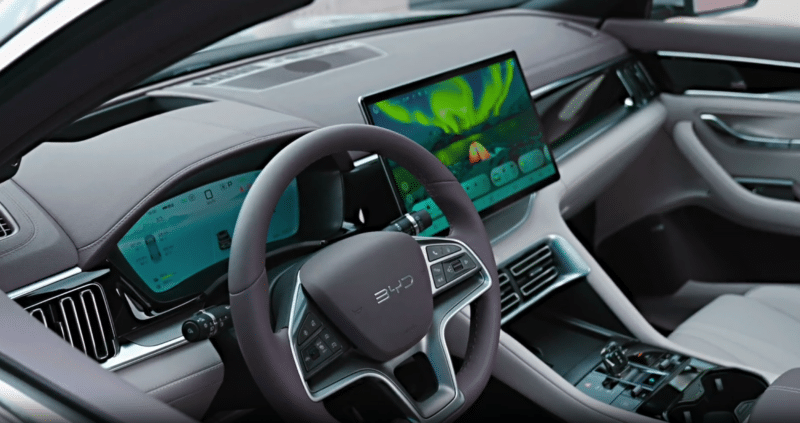
The overall aesthetics of the interior have not changed significantly. From the video, it can be seen that the Song Plus DM-i has a three-spoke multifunction steering wheel, a rotating central infotainment screen, and an LCD instrument panel. Drive selection is via a crystal gear lever, and the seats are wrapped in leather.
We can, however, see new details such as the head-up display, which may have an augmented reality capability judging from the pictures. In addition, there is a DiLink100 car machine system and there is also a 50W wireless mobile phone fast charging pad.

On the exterior, the most significant change is the dropping of the Build Your Dreams logo on the rear in favor of a simple BYD logo, which is also illuminated. Otherwise, the new car follows the old version almost identically.
The biggest change, of course, with the new Song Plus DM-i is the powertrain. This uses BYD’s DM 5.0 technology, which is the company’s latest PHEV system. It is built around a 1.5-liter engine, which has a maximum power of 74 kW. The power of this engine is slightly lower than in the existing car which has an 81 kW naturally aspirated engine. However, in the new car, the electric motor is 15 kW more powerful than in the current car and has a peak power of 160 kW.
With the new system, the comprehensive range performance of the BYD Song Plus DM-i should significantly improve. The car has three different-sized battery packs of 12.96 kWh, 18. 316 kWh, and 26.593 kWh. These give the car an all-electric range of 60, 91, and 128 km under WLTC working conditions.

Currently, the BYD Song Plus DM-i retails from 129,800 to 169,800 Yuan (17,850 – 23,250 USD). The new car’s prices will be revealed on July 25.
Source: Fast Technology
 

Users who are viewing this thread

Latest Posts

Back
Top