China Auto Thread

It can also make a U turn by itself. Usually, many autonomous driving systems fail on this one, especially Huawei ADS, because it doesn't have lidar sensor at the side of the car, it's kinda a blind spot. When a certain scenario requires a U-turn, the car asks the driver to take control of the car.

Lack of Lidar shouldn't make a difference.

To view this content we will need your consent to set third party cookies.
For more detailed information, see our cookies page.
 

Geely’s Zeekr 7X spotted in the wild before launch​


Reading Time: 3 minutes

Adrian Leung

July 28, 2024


0


News like this to your inbox or phone?​


Weekly summary to your inbox
I want this

Never miss and important news
Get Instant notification once the news is published.
Follow Us

Geely’s premium brand, Zeekr, has completed its Ministry of Industry and Information Technology filing in China for the 7X mid-size SUV and is anticipated to launch in August/ September. The company has filed three versions: a 310kW single-motor rear-wheel drive with an LFP battery, a 310kW single-motor rear-wheel drive with a ternary lithium battery, and a 165/310kW dual-motor all-wheel drive with a ternary lithium battery.


The 7X continues with the same three-electric system as the Zeekr 007 sedan (see specs). The LFP battery is the 75 kWh “Golden Brick” battery developed by Zeekr, while the ternary lithium battery is the 100 kWh Ningde Kirin battery. The vehicle measures 4825mm in length, 1930mm in width, and 1656mm in height, with a 2925mm wheelbase, and offers an optional single-chamber air suspension. Additional options include a roof rack, LiDAR, a two-tone roof, and a tow hook.

As the launch date nears, new interior images of the 7X have surfaced. The black interior shows significant changes in the central console and door panels. Unlike the 007’s streamlined central console, the 7X’s console includes dual 50W wireless fast charging at the front, a hidden cup holder at the rear, and a large, thick armrest box, likely housing a rear refrigerator. The genuine leather seats feature a different pattern from the 007, with fuller backrest padding for better support, suiting its family SUV positioning.


The door panels feature a new design with more extensive ambient lighting and dedicated storage areas. The 7X’s interior boasts numerous storage spaces, reflecting a practical and thoughtful design. The central control screen, although displaying “Zeekr 001,” is, in fact, a test system. The OLED horizontal screen has additional physical buttons for five functions and a gear selector.

While the rear cabin remains undisclosed, reports suggest it will surpass the comfort levels of the Zeekr 001. Expected features include ventilated and heated seats with massage functions, rear entertainment screens, leg rests, footrests, zero-gravity seat mode, and window sunshades.

The 7X’s exterior continues the new family design language introduced with the 007. It features a distinctive front face with a continuous light strip, clamshell hood, and frameless exterior mirrors. The 7X includes AGS active intake grilles, retractable door handles, and a continuous tail light design.


Chassis-wise, the 7X retains the 007’s materials and structure but offers optional air suspension for improved handling and comfort. Intelligent driving features include versions with advanced driver assistance systems, as well as LiDAR for urban NZP (Navigation on Pilot).

The Zeekr 7X is poised to rival the Model Y, Xiaomi MX11 SUV, Li Auto L6, and Onvo L60. The 7X will focus on innovation, comfort, and performance, with prices expected to range between 240,000 and 350,000 yuan ($33,000 – $48,200).
 

Neta announces Neta X to be produced in Thailand and sold in Thailand and Malaysia​


Reading Time: 3 minutes

Lawrence Ho

July 28, 2024


0


News like this to your inbox or phone?​


Weekly summary to your inbox
I want this

Never miss and important news
Get Instant notification once the news is published.
Follow Us

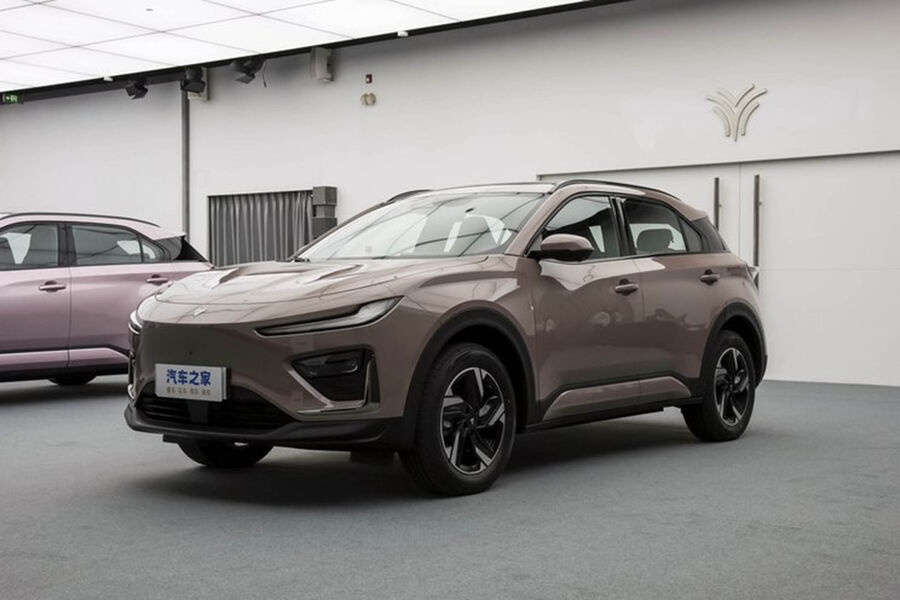
Neta officially launched the Neta X compact SUV in Thailand and Malaysia. This EV crossover has been adapted for right-hand drive and added additional localized adjustments for the local market


The Neta X is a updated version of the original Neta U that received a facelift in 2023 and was unveiled to be named the Neta X. The Neta X has a starting price of 99,800 yuan (13,750 USD) in China and measures 4619 mm in length, 1860 mm in width, and 1628 mm in height, with a wheelbase of 2770 mm.

Neta X in Thailand and Malaysia​

In Thailand, the Neta X is available in two models, priced between 739,000 baht and 799,000 baht (20,580 USD and 22,250 USD). In Malaysia, it comes in three models, priced between 119,888 ringgit and 135,888 ringgit (25,750 USD and 29,180 USD). For comparison, the official price of the Neta X in China is between 99,800 yuan and 124,800 yuan (13,750 USD and 17,200 USD).


The Neta X sold in Thailand and Malaysia features a right-hand drive layout, 15.6-inch floating central control screen, and a 8.9-inch floating instrument panel. It supports multi-language voice control, online music, built-in navigation, and vehicle control via the mobile app. Additionally, it offers an L2-level driving assistance system.

Both the Thai and Malaysian models are equipped with a permanent magnet synchronous motor with a maximum power of 120 kW and a peak torque of 210 Nm. They come with either a 51.8 kWh or a 62 kWh lithium iron phosphate battery pack, providing a WLTP range of 323 km and 410 km respectively.

Overseas Production​

At the end of last year, Hozon Auto’s Neta brand began production of its first model, the Neta V-II (known in China as the Neta Aya), in Thailand. Previously, production was expected to begin on January 2024, but together with the Thailand local partner, Bangchan General Assembly, production was able to start earlier.


The Neta X that was just launched is produced at this same factory. The Thailand factory is first supplying cars to Thailand and Malaysia, with the expectation that other ASEAN regions like Indonesia and Vietnam will follow.

Neta was the second best-selling electric brand in Thailand, after BYD, with 12,777 EVs sold. Those sales were achieved with the brand only selling one model, the Neta V, making it the second most sold electric car in Thailand last year. Neta has stated that in 2024, the brand plans to cover 50 countries with its global sales network and establish 500 overseas sales and service outlets.

Sources: Dongchedi, Yiche
 

BYD’s YangWang U9 dancing supercar will begin deliveries in August​


Reading Time: 3 minutes

Adrian Leung

July 28, 2024


0
Shenzhen Auto Show 2024

News like this to your inbox or phone?​


Weekly summary to your inbox
I want this

Never miss and important news
Get Instant notification once the news is published.
Follow Us

BYD has announced that its highly anticipated YangWang U9 supercar is now in production and will begin delivery in late August. Based on the order sequence, the YangWang U9 will be shipped to YangWang flagship stores across China in late August. Owners can check the estimated arrival time of their vehicles via YangWang’s official app or YangWang’s Wechat mini program.


Should the deliveries be late, BYD will compensate owners with 2,000 credit points per day (equivalent to 200 yuan) from the scheduled arrival date until the vehicle actually arrives. These points can be used for car servicing and will be credited within seven days after the car is picked up.

The YangWang U9, priced at 1.68 million yuan (232,000 USD), boasts a 0-100 km/h acceleration time of just 2.36 seconds. The vehicle measures 4,966 mm in length, 2,029 mm in width, and 1,295 mm in height, with a wheelbase of 2,900 mm, and curb weight of
2,475 kg. It comes standard with a carbon fiber roof and rear diffuser, with a racing spoiler as an option. The U9 is available in silver, purple, and red.


The interior features extensive carbon fiber trim and suede upholstery, creating a luxurious yet sporty environment. The cockpit includes screens on both the driver and passenger sides, a vertical control screen, an instrument screen, and a passenger entertainment screen. Additional features include ambient lighting, an intelligent Star River screen, a Dynaudio Platinum sound system, and multifunctional sports seats.

The YangWang U9 is equipped with BYD’s innovative e4 U-shaped motor system, offering exceptional precision and responsiveness. The four-motor setup delivers a peak torque of 1680 Nm, a top speed of 309.19 km/h, and a 0-400 meter sprint time of 9.78 seconds. The supercar’s 80 kWh battery provides a CLTC range of 450 km, with dual fast charging enabling a 30-80% charge in just 10 minutes, while slow charging achieves the same in 7 hours. The YangWang U9 also features the DiSus-X suspension and stabilization system, enabling it to drive on three wheels, jump, and dance.

BYD has updated the warranty for the U9’s “three-electric” (battery, electric motor, and electric control) system to cover the vehicle’s lifetime, irrespective of ownership transfer. Customers who placed deposits by July 31, 2024, will receive an additional TPU paint protection film (Longfilm series) as a complimentary gift.
 

More Wuling Starlight S configurations revealed ahead of August launch​


Reading Time: 3 minutes

Dong Yi Chen

July 28, 2024


0


News like this to your inbox or phone?​


Weekly summary to your inbox
I want this

Never miss and important news
Get Instant notification once the news is published.
Follow Us

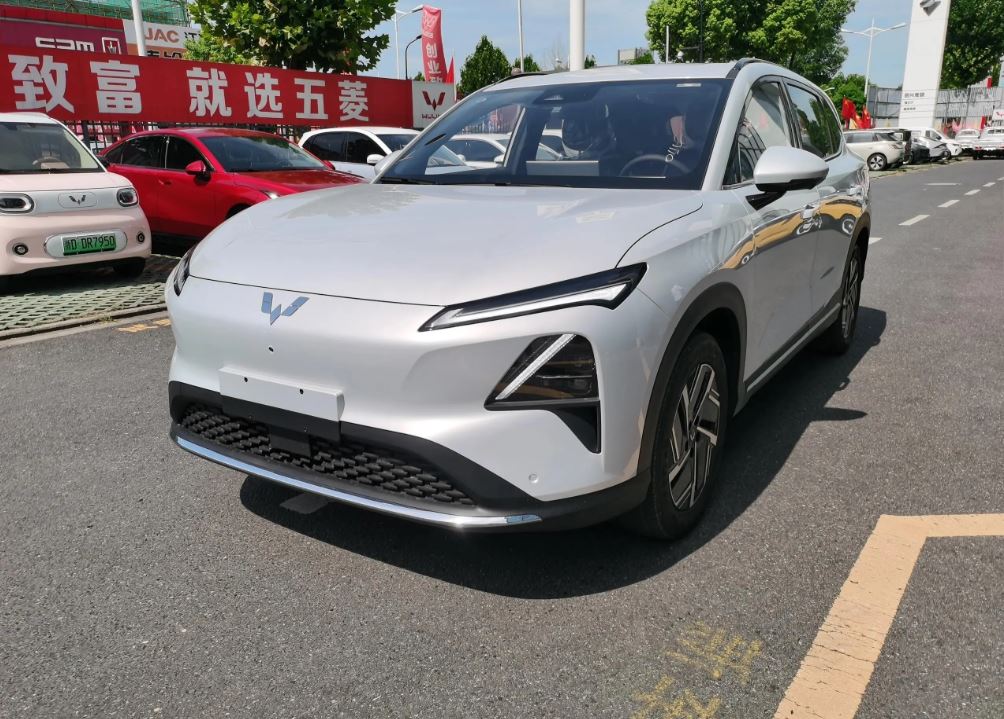
Recently, SAIC-GM-Wuling (“SGMW”) revealed more configuration information on its upcoming Wuling Starlight S SUV, which includes double-layer laminated glass and a level 2 advanced driving assistance system. The car will be available in plug-in hybrid and pure electric variants, and will officially launch in August.


Wuling Starlight S appeared on Chinese streets
The Wuling Starlight S is positioned as a medium-sized SUV, built on the Tianyu D architecture, and measures 4745/1890/1680 mm with a 2800 mm wheelbase. Its drag coefficient is 0.277Cd.

The car’s level 2 intelligent driving assistance system is realized via a 2-megapixel high-definition camera with a field of view of up to 100°, which can detect vehicles at a distance of 150 m and humans at a distance of 70 m. The functions include automatic emergency braking with a speed of 80 km/h, forward collision warning, lane departure warning, lane departure prevention, traffic sign recognition, adaptive cruise control, and traffic jam assist.


In terms of NVH (Noise, Vibration, and Harshness), Wuling claims that there are 45 sound packages. For example, the floorboard is made of a multi-layer combination of sound absorption and sound insulation materials, and the sound-absorbing cotton covers more than 90% of the door trim. The car also comes standard with low-noise tires and double-layer laminated soundproof glass for the front row.

In terms of seat configuration, the entire series is equipped with “wrap-around pressure-relieving seats” as standard. The front seats support 6-way electric adjustment for the driver and 4-way electric adjustment for the co-pilot, and have ventilation and heating functions. The rear seats can be adjusted to an angle of 127° and are also equipped with heating.

There are nine speakers throughout the vehicle.


A 1.18㎡ panoramic sunroof is also present.

Other interior configurations include an 8.8-inch full LCD instrument panel and a 15.6-inch floating central control screen, equipped with the Ling OS operating system.

Consumers will be able to choose from either the plug-in hybrid or pure electric variant. The plug-in hybrid variant is powered by a 78 kW (105 hp) 1.5L naturally aspirated engine and an electric motor, matched with a battery pack with a capacity of 9.5 kWh and 20.5 kWh. The CLTC pure electric ranges are 60 km and 130 km, respectively; the comprehensive range under a full fuel tank and full charge is 1,100 km. The fuel consumption is 4.98L/100km.

The pure electric variant is powered by a 150 kW (201 hp) electric motor, matched with SGMW’s 60 kWh Shenlian Battery pack, providing a CLTC pure electric range of 510 km. Additionally, both 2C fast charging and an external discharge function are supported. Under fast charging, it takes 15 minutes to replenish the battery with 200 km of range.

Source: Sohu, DongCheDi
 

Sunday China Drive | Geely Galaxy E5: BYD Atto 3’s game-changing rival​


Reading Time: 6 minutes

Adrian Leung

July 27, 2024


2


News like this to your inbox or phone?​


Weekly summary to your inbox
I want this

Never miss and important news
Get Instant notification once the news is published.
Follow Us

Car News China got a preview of the production model of the Geely Galaxy E5 ahead of its official launch on August 3rd. The Galaxy E5 is the brand’s first fully electric SUV and Geely’s first vehicle to feature the new Aegis short-blade lithium iron phosphate batteries. The all-electric Galaxy E5 aims to take on the BYD Atto 3 (Yuan Plus), generating buzz with its performance, innovative features, and competitive pricing. Priced between 123,000 and 157,000 yuan (approximately 17,000 – 22,000 USD), it seeks to strengthen Geely’s foothold in the electric vehicle market and heighten competition.


Geely Galaxy E5
Launched early last year, Geely’s Galaxy brand has swiftly carved out its own identity with dedicated marketing, a unique website, and exclusive dealerships. The lineup includes the Galaxy E8 fastback, Galaxy L6 sedan, Galaxy L7 SUV, and the newly introduced Galaxy E5 compact SUV. The brand plans to expand to seven models by 2025.

From our test of the Galaxy E8 (test report), we concluded that the Galaxy E-series may not be as luxurious as its Geely counterparts from Zeekr. Still, it offers value for money, and the designers pay attention to the details. Let’s head out with the brand-new Galaxy E5 SUV on this week’s Sunday China Drive!


Exterior Design

Our test car is the top-trimmed Galaxy E5, 530km Starship Edition, priced at 157,000 yuan (21,650 USD). Its design draws heavily from the Galaxy E8 fastback, maintaining a sleek and modern aesthetic. The front end showcases sharp LED headlights and a matrix-light closed grille, while the side profile features hidden door handles for a streamlined look.

The rear stands out with layered detailing and through-type LED taillights, enhancing its visual appeal. The trunk benefits from innovative CTB battery integration technology and the Galaxy 11-in-1 intelligent electric drive, providing ample storage space. Semi-closed aluminum alloy wheels add a touch of sophistication to the overall design. The doors closed with a reassuring solidity, with precisely aligned panels and a meticulously finished paint job.


The Interior

The interior of the Galaxy E5 is sleek and minimalist, which is also found in the Galaxy E8. A sizeable floating screen and a stylish white interior enhance its modern aesthetic. The build quality is notable, featuring sturdy, well-damped buttons and knobs.

The cabin includes a floating LCD instrument panel, a heads-up display (HUD), a flat-bottom steering wheel, and a floating central control screen. It runs on the highly customizable Meizu’s Flyme Auto OS powered by China’s Dragon Eagle One 7 nm CPU, contributing to a high-tech, driver-centric atmosphere.

One very noticeable difference between our test car and the pre-production model demonstrated at the Shenzhen Auto Show is the 16-speaker Flyme audio system. The production model’s audio system has been fine-tuned and emulated effects similar to Atmos while a movie or a song is being played. The audio quality has been enhanced significantly. Comfort is prioritized. It offers heating, ventilation, and massage functions for the front seats and adjustable backrests for added flexibility.

Storage

The exact trunk dimensions have not been disclosed. By inspection, it has a big boot. For extra storage, there is a draw underneath the rear air vents and another under the rear seats.

Driving Experience

The Galaxy E5 is designed to compete with BYD’s Atto 3. Measuring 4615/1901/1670 mm with a 2750 mm wheelbase and a curb weight of 1615 kg, it is slightly larger and lighter than the Atto 3. It features front-wheel drive and a single motor delivering 160 kW and 320 Nm, surpassing the Atto 3 by 10 kW and 10 Nm. The Galaxy E5’s drag coefficient is 0.269 Cd, compared to the Atto 3’s 0.29 Cd.

We previously tested the Zeekr 007 and the Galaxy E8 (both cars built on Geely’s SEA architecture). The Galaxy E5 is built on the new GEA architecture derived from the SEA. The chassis felt solid during our test drive on the familiar suburban roads in Zhuhai. Despite offering a sport driving mode, the Galaxy E5 is tuned for a comfortable and smooth ride.

The car’s suspension is calibrated to absorb road imperfections effectively, maintaining a smooth ride even over humps and bumps. It employs CTB (cell-to-body) battery integration technology, achieving a 50:50 front-to-rear axle load ratio, which reduces weight, lowers the center of gravity, and enhances the car’s rigidity. Overall, the E5 handles quite well. Yet, there is a noticeable body roll and a lack of traction when turning sharp corners.

On straight roads, it’s a different story. The front single motor delivers 160 kW of power and 320 Nm of torque, accelerating from 0-100 km/h in 6.8 seconds, providing rapid acceleration at the traffic lights. The Galaxy E5 uses Geely’s Galaxy 11-in-1 intelligent drive system, which integrates key components into a compact unit weighing 79.8 kg and measuring 72 liters.

The NVH is reasonable for a car at this price. At lower speeds, there is very little noise inside the cabin. Up to 100 km/h, there were no annoying noises inside the car. The steering is light yet precise. Throughout the test drive, I enjoyed the massage seats with ventilation.

Upon returning to the Galaxy dealership’s parking lot, I jokingly said, “We should not expect auto parking for a car at this price, right?” “This top trim model does have auto parking,” the Galaxy rep replied. I was shocked because we have not seen these features offered in a car at this price. I was instructed on how to operate the auto parking. In seconds, the E5 was parked in its original parking spot.

Battery Range

Our test car features the 60.22 kWh Aegis short-blade lithium iron phosphate battery, which offers a range of 530 km CLTC.

235/50 R19 tires
Safety Features

The Geely Galaxy E5 boasts a suite of advanced safety features, including Automatic Emergency Braking (AEB), Lane Departure Warning (LDW), Adaptive Cruise Control (ACC), Blind-Spot Monitoring (BSM), and Rear Cross-Traffic Alert (RCTA). Its high-strength steel frame and anti-collision cage for the battery provide enhanced structural integrity and occupant protection. These features and the vehicle’s robust design and cutting-edge technology ensure a secure and reliable driving experience.

Conclusion

The Galaxy E5 is designed to do everything a “little better” than the BYD Atto 3. This is the first time a 157,000 yuan (21,650 USD) vehicle from our Sunday China Drive series featured massage functions and auto parking. This is an indication of Geely’s determination to challenge BYD Atto 3 (BYD Yuan Plus)’s dominance in China’s compact electric SUV market and beyond. It has secured European and Australian N-Cap safety standards and is preparing for its launch overseas. The Geely-backed Proton will announce an E5-based EV in Malaysia by 2025 under the Proton eMas brand.

Shenzhen Auto Show 2024
In the first half of 2024, Geely Auto Group’s export sales soared to 197,428 units, a 67% year-on-year increase, doubling China’s overall auto export growth rate. This surge highlights Geely’s rising international competitiveness and the expanding global presence of Chinese automotive firms. The launch of the Galaxy E5 (on August 3) will offer its cutting-edge technology and innovations for the mass market.

Shenzhen Auto Show 2024
Stay tuned for next week’s Sunday China Drive at Car News China, where you can get more evaluations of Chinese cars from a first-person perspective.
 

New Geely Galaxy L6 entered market at 17,900 USD in China​


Reading Time: 3 minutes

Dong Yi Chen

July 27, 2024


0


News like this to your inbox or phone?​


Weekly summary to your inbox
I want this

Never miss and important news
Get Instant notification once the news is published.
Follow Us

This is the new Geely Galaxy L6 Creative Edition plug-in hybrid sedan, priced at 129,800 yuan (17,900 USD). As a new trim under the Geely Galaxy L6 line, the new car brings a new rose exterior and upgraded configuration.


In June, the Geely Galaxy series sold 15,975 vehicles, a year-on-year increase of 65.2% and a month-on-month increase of 12.6%. Specifically, the Geely Galaxy L6 sold 6,391 vehicles, a month-on-month increase of 4.3%. From January to June 2024, Geely Galaxy’s cumulative sales volume was 81,421 vehicles.

As a new trim of the Geely Galaxy L6 (see spec here), the design of the Creative Edition is consistent with the current trims. The new car adopts a new rose exterior and a black top. The size remains unchanged measuring 4782/1875/1489 mm with a 2752 mm wheelbase. The drag coefficient is 0.26Cd and the official 100 – 0 km/h braking distance is 36.5 meters.


In terms of configurations, the Geely Galaxy L6 Creative Edition has added seven new functions including the interactive LED headlights/taillights/3.3-meter through-type light strips that can form 100 different lighting scenarios paired with music, frameless external mirrors, 18-inch rims, electric tailgate, and a 1.76㎡ panoramic sunroof.

Power still comes from Geely’s NordThor Hybrid 8848 system, consisting of a 1.5T engine and an electric motor, mated to a 3-speed DHT. The 1.5T engine has a maximum power of 120 kW (161 hp) and a peak torque of 255 Nm while the electric motor outputs 107 kW (143 hp) and 338 Nm. The 0 – 100 km/h acceleration time is 6.3 seconds. The 18.74 kWh lithium iron phosphate battery provides a CLTC pure electric range of 125 km and the WLTC comprehensive range is 1,370 km.

The interior adopts a “deep space gray” scheme, with more suede materials added to the center console. The cockpit comes with a 13.2-inch central control screen, a 10.25-inch LCD instrument screen, and a D-shaped multi-function steering wheel, which are the same as the current trims.


The vehicle operating system is supported by the Galaxy N OS, powered by a Qualcomm Snapdragon 8155 chip. In addition, the vehicle is also equipped with a series of configurations including cruise control, a built-in driving recorder, voice interaction, WiFi hotspot, karaoke, remote control, and an air quality monitoring system. The “marshmallow seats” support massage, ventilation, heating, and electric adjustment. Furthermore, the in-vehicle 256-color ambient lights can change for the following five scenes: door opening, intelligent voice, music rhythm, air conditioning adjustment, and nap mode.

Source: Geely Galaxy, AutoHome, My Home Ok
 

Foxconn to establish trial EV production plant in Zhengzhou​


Reading Time: 2 minutes

Mark Andrews

July 26, 2024


1


News like this to your inbox or phone?​


Weekly summary to your inbox
I want this

Never miss and important news
Get Instant notification once the news is published.
Follow Us

Foxconn has taken yet another step closer to producing cars. On July 24, parent company Hon Hai Technology Group reported that its subsidiary Foxconn Technology Group had signed a strategic cooperation agreement with the Henan provincial government.


Under the agreement, Foxconn will create trial production plants for electric vehicles and solid-state batteries in the Zhangzhou Airport Economic Comprehensive Experimental Zone. The EV trial production center plans to build a world-class, high-end demonstration production line for new energy vehicles.

Foxconn is perhaps best known as the manufacturer of the iPhone, and it seems that the company is also looking to do contract manufacturing work for EVs. The demonstration plant aims to have a world class lighthouse factory to provide manufacturing services to well-known automobile brands from both China and overseas.


Foxconn is investing a total of around 1 billion yuan (138 million USD), and the construction area in Zhengdong New District will be about 700 acres and consist of seven centers including a business headquarters, R&D center, and engineering center, industrial research institute, marketing center, and supply chain management center.

In recent years it’s been no secret that Foxconn has been keen to enter the electric car manufacturing business. Involvement began as early as 2010 when Foxconn provided Tesla with components such as the central control screen. This launched the company’s path into the automotive supply chain industry.

Despite Foxconn displaying various vehicles over the last few years, the company has yet to put any into production. These include the Model T bus and the Model V pickup truck, and in terms of cars, the Model C SUV, Model E sedan, and Model B hatchback. The company has an open EV platform that includes technologies such as x-by-wire, which can control the steering, acceleration, and braking using electrical connections rather than mechanical connections.


Foxtron a joint venture between Foxconn and Taiwan’s Yulon Auto Group is reportedly eyeing the North American market for the Model C SUV in 2025. Yulon is the parent group of the Luxgen brand, which previously had a joint venture with Dongfeng in China.

Foxconn has also bought the Lordstown car factory in Ohio, USA, which originally belonged to General Motors.

In January 2024, Foxconn set up an NEV company in Henan province with a registered capital of 500 million yuan (69 million USD). The company is no stranger to Zhengzhou, where it already operates the world’s largest iPhone factory.

Editor’s note:​

Foxconn has achieved incredible success in the electronics business with its contract manufacturing business model. It seems that the company is looking to replicate this with electric vehicles. However, given the company’s lack of expertise in this area, it might be difficult to become a serious player. Contract manufacturing, however, does appear to be becoming more common in China than before, as evidenced by deals such as the former one between Nio and JAC and the current one between Xiaomi and BAIC.

Sources: Fast Technology, Global Times, Focus Taiwan, Foxconn
 

First Aion Y Plus cars ship to Indonesia as GAC expands in the region​


Reading Time: 2 minutes

Mark Andrews

July 26, 2024


0


News like this to your inbox or phone?​


Weekly summary to your inbox
I want this

Never miss and important news
Get Instant notification once the news is published.
Follow Us

On July 26, GAC Aion exported the first batch of 500 Aion Y Plus cars to Indonesia. The cars were loaded and departed from Xinsha Port in Guangdong province. This is the latest move in the Aion brand’s expansion into overseas markets. It follows the Thai plant’s completion and beginning of operations on July 17.


Last month, the Aion brand held a launch conference in Jakarta, Indonesia, outlining its Indonesia strategy. Two versions of the Aion Y Plus were launched at the event for the Indonesian market namely, the Exclusive (410 km range) and Premium (490 km range), with a price range of 415,000,000 – 475,000,000 IDR (25,200 – 28,900 USD). Plans call for the introduction of four models into the Indonesian market within the next year, with reports indicating the second model will be the Hyper HT. Also tipped for the market is the second-generation Aion V, which was designed as a world car.

Aion Y Plus seen at the brand’s launch in Jakata in June 2024
The event follows GAC Aion’s official entry into the Indonesian market in April this year and its signing of a strategic cooperation agreement with the local automobile group Indomobile. The agreement covers areas such as vehicle manufacturing, automobile sales and service, finance, etc.


Plans call for the Aion brand to establish a factory in Indonesia with a capacity of 100,000 cars a year. Although Autohome reports that the factory will be completed and put into operation around the end of this year, Car News China can find no report that construction of the plant has even begun.

The Aion Y Plus (see specs) uses the AEP 2.0 platform and it has dimensions of 4535, 1870, and 1650 mm (l/w/h) and a wheelbase of 2750 mm. Inside the car has a 14.6-inch infotainment screen and a 10.25-inch LCD instrument panel.

2024 models have smaller battery capacities and ranges than cars sold in previous years. Currently, in China, the car only comes with 37.9 or 49.8 kWh battery packs, which under CLTC are good for 310 km and 430 km of range, respectively. List prices in China range from 99,800 to 116,800 yuan (13,750 – 16,100 USD).


GAC Aion is rapidly expanding its presence across various markets. It has entered the ASEAN markets and should soon enter markets including Qatar and Mexico.

Sources: Autohome, Jakarta Globe, GlobalData
 

Meizu COO says mobile phone brand’s first car will unveil this year​


Reading Time: 2 minutes

Mark Andrews

July 26, 2024


4


News like this to your inbox or phone?​


Weekly summary to your inbox
I want this

Never miss and important news
Get Instant notification once the news is published.
Follow Us

Apple may have decided not to go the car route, but in China, a growing number of mobile phone producers are becoming more and more involved with making cars. Huawei was the first with its rapid integration of various services into cars, culminating in its HIMA model, creating joint brands with so far four producers. Meizu, after its acquisition by Geely, became increasingly involved in the human-machine interface of various Geely products. And then, of course, this year, Xiaomi started producing its own cars.


On July 26, at the ChinaJoy 2024 exhibition, Liao Qinghong, Meizu’s COO, said that Meizu Automobile would launch this year and that it would have a different functional performance from traditional car OEMs.

As we reported last year, Meizu wants to replicate Xiaomi in the production of cars. The Meizu DreamCar MX should be unveiled later this year. It will be produced by Geely and it’s believed that the design has already been finalized.


In January this year, Meizu created the DreamCar MX community, an interactive communications platform for Meizu fans. It allows them to exchange ideas and expectations and participate in the vehicle design and development process. This will help the company meet users’ needs and create more lifestyle scenarios.

In the community, members can co-create and discuss personalization details such as color coordination, Flyme Auto theme, and display their own creativity and ideas.

When the Meizu car production plan was first announced, purchasers of the Meizu 21 phone were given the right to deduct the purchase price from a subsequent purchase of a Meizu DreamCar MX.


As a mobile phone company, Meizu has a long history and a long-standing rivalry with Xiaomi. The move into producing its own branded cars is certainly interesting, and we will have to see how the cars do against Xiaomi.

Being a Geely Group product, the car will use the SEA (sustainable experience architecture) platform as its base. The pictures make the car look like a sedan of a similar size to a Lynk & Co Z10. We can expect the car to use some form of Flyme Auto to control its ecosystem.

Meizu was founded in 2003 as an electronics producer before moving into smartphone production in 2008. In 2015, it was the eleventh largest manufacturer of smartphones in the world. A Geely-controlled company bought a 79% controlling share of Meizu in July 2022.

Source: Fast Technology
 

BYD’s Denza Z9 sedan patent images leaked in China​


Reading Time: 2 minutes

Denis Bobylev

July 26, 2024


1
denza z9 sedan patent imagesDenza Z9 patent image

News like this to your inbox or phone?​


Weekly summary to your inbox
I want this

Never miss and important news
Get Instant notification once the news is published.
Follow Us

BYD’s high-end brand Denza applied for patent images of the Denza Z9 sedan. This car was previously spotted in China during road tests. It will enter the Chinese market after the launch of the station wagon variant.


Denza Z9 patent images​

Patent images of the Denza Z9 sedan were shared by the WeChat account Carblueprints, dedicated to monitoring the CNIPA patent base. These images show the PHEV variant of the sedan. It can be distinguished by a front bumper with a bigger air intake. The Denza Z9 GT (station wagon) is also available as a BEV.

The exterior styling of the Denza Z9 sedan stays in line with the station wagon variant. It has a sloped bonnet, large headlights, thin running lights, and cameras instead of mirrors. It also has blackened pillars, retractable door handles, and distinguishing ornamental features on doors. Since this Denza Z9 is a sedan, it has a sleek roofline and an independent trunk.


The rear end of the Denza Z9 has long headlights and a modest bumper. From the back, it’s also close to the station wagon ‘sibling’. Previously, spy shots of the Denza Z9 sedan leaked online. They indicate that Denza wants to launch the sales of this vehicle.

Denza Z9 specs​

Denza Z9 GT PHEV
There is no information about the specs of the Denza Z9 sedan. Most likely, it will stay close to the station wagon variant in terms of dimensions. We will remind you that the Denza Z9 GT boasts hefty dimensions of 5180/1990/1500 mm with a wheelbase of 3125 mm. Its EV variant is powered by three electric motors (1+2) for 710 kW (952 hp). The PHEV version offers three e-motors for 640 kW (858 hp) supplemented with a 2-liter ICE for 152 kW (203 hp).

Previously, CarNewsChina reported that Denza is heading for Europe, and the launch car will be the Z9 GT station wagon. It seems that the Denza Z9 sedan can also enter European markets. Later, the Fangchengbao brand will be rebranded as Denza for Europe, with the Bao 5 (see specs) being the launch car from that brand.


Source: Carblueprints, Weibo
 

Geely-backed LEVC L380 minivan started deliveries, to enter UK in 2026​


Reading Time: 3 minutes

Denis Bobylev

July 26, 2024


0
levc l380 minivan white side frontLEVC L380 started deliveries in China

News like this to your inbox or phone?​


Weekly summary to your inbox
I want this

Never miss and important news
Get Instant notification once the news is published.
Follow Us

The LEVC L380 minivan from Geely Group started deliveries in China with a starting price of 379,900 (52,400 USD). At the same time, LEVC held the delivery ceremony of the L380 minivan for the ASEAN-China Centre.


LEVC is a Geely-owned successor of the well-known British London Taxi Company founded in 1919. It has been owned by the Chinese automaker since 2013, with a manufacturing plant relocated to Zhejiang, China. Nowadays, the LEVC model line comprises two cars: a TX cab and an L380 minivan. The latter car has already started deliveries in China. LEVC representatives also mentioned the L380 will enter the UK market in 2026.

LEVC L380 started deliveries​

The LEVC L380 handed over to ASEAN-China Center
The LEVC L380 rolled off the assembly line in January this year. However, the blind pre-orders for this model opened in May. The official launch of the vehicle happened in June. And, seven months after the first vehicle was assembled, the LEVC L380 started reaching clients on July 25. LEVC CEO Nan Shengliang mentioned the company will make every effort to deliver cars to end users.


Shi Zhongjun, the Secretary-General of the ASEAN-China Center (left) and Nan Shengliang, LEVC CEO
At the same time, the LEVC L380 was delivered to the ASEAN-China Centre. Shi Zhongjun, the Secretary-General of the ASEAN-China Center, attended the delivery ceremony. LEVC CEO Nan Shengliang handed over the keys to Mr. Zhiongjun. It seems the L380 may become his working car.

More on LEVC L380​

LEVC L380 delivered to clients
The LEVC L380 is a full-size electric minivan designed by Brett Boydell, who previously worked at Bentley. It stands on Geely’s SOA architecture, which derives from the SEA platform. The dimensions of this MPV are 5316/1998/1940 mm with a 3185 mm wheelbase. For clarity, it’s 176 mm longer than the Mercedes-Benz V-Class.

Inside, the LEVC L380 has up to eight seats (2+2+2+2), a 15.4-inch main screen, a 10-25-inch instrument cluster, and a 19.8-inch AR-HUD. There are 11 airbags inside the interior, along with side airbags for each seat, dual 12.8-inch screens behind the front seats, and dual 5.98-inch rear armrest screens. The LEVC L380 also has three powertrain options:


  • 200-kW electric motor, 170 km/h top speed, 100 kWh ternary NMC battery, 570 km range
  • 200-kW electric motor, 170 km/h top speed, 116 kWh ternary NMC battery, 675 km range
  • 400-kW two electric motors, 180 km/h top speed, 140 kWh NMC battery, 785 km range
The LEVC L380 is available in four trim levels:

  • 100 kWh Air – 379,900 yuan (52,400 USD)
  • 116 kWh Pro – 439,900 yuan (60,700 USD)
  • 140 kWh 4WD Max (8 seats) – 479,900 yuan (66,250 USD)
  • 140 kWh 4WD Ultra (6 seats) – 479,900 yuan (66,250 USD)
Source: LEVC
 

Chery Fulwin T10 entered market, price starts at 26,300 USD​


Reading Time: 4 minutes

Dong Yi Chen

July 26, 2024


0


News like this to your inbox or phone?​


Weekly summary to your inbox
I want this

Never miss and important news
Get Instant notification once the news is published.
Follow Us

On July 25, Chery’s new flagship plug-in hybrid SUV called Fulwin T10 officially entered the market. Consumers can choose from a total of three trims:


  • 210 Premium Edition (front-wheel drive): 189,900 yuan (26,300 USD)
  • 210 Luxury Edition (front-wheel drive): 199,900 yuan (27,700 USD)
  • 200 4WD Flagship Edition: 229,900 yuan (32,000 USD)
Fulwin (known as Fengyun in China) is a new energy vehicle series under Chery established in 2023. Earlier this month, the Fulwin T10 set the Guinness World Record for the longest distance driven by a plug-in hybrid SUV under a full fuel tank and full battery without recharging, achieving 2169.641 km.

The exterior is available in five paints: white, silver, black, and two shades of green.


Positioned as a medium-to-large SUV, the Fulwin T10 has body dimensions of 4850/1930/1712 mm and a wheelbase of 2820 mm.

The Fulwin T10 is the fourth model launched by Chery after restarting the Fulwin series, featuring a panoramic sunroof, hiddle door handles, 20-inch “Wind Blade” rims, a close front grille, and through-type taillights. In addition, the Fulwin F10 is also equipped with an L2.5 intelligent driving assistance system realized via front and rear radars, which supports 24-hour driver fatigue monitoring, door opening warning, blind spot monitoring, rear collision warning, rear cross-traffic warning, and traffic jam assist, to just name a few.

Two interior colors are offered: Elegant Twilight Purple and Stylish Mountain Mist Green, covered in a large area of soft material and leather wrapping. There is a dual-screen consisting of a 12.3-inch LCD instrument panel and a 12.3-inch central control screen, powered by a Qualcomm Snapdragon 8155 chip. The number of physical bottoms has also been minimized.


Additionally, the cockpit comes with a 50-inch AR-HUD, a D-shaped steering wheel, rectangular air-conditioning outlets, two 50W wireless charging panels, 256-color ambient lights, remote vehicle control through mobile phone, Bluetooth key, WiFi hotspot, 4G network, AI voice assistant, and up to 14 Sony speakers. Both Huawei HiCar and Apple CarPlay are supported.

Both five-seater (2+3) and six-seater (2+2+2) layouts are offered. The curb weight of the five-seater trim is 2,028 kg while the six-seater weighs 2,199 kg. The driver and co-pilot seats are electrically adjustable. The front seats of the Premium Edition support heating. The front seats of the Luxury Edition have heating, ventilation, and massage functions, as well as heating for the second-row seats. The 4WD flagship version has additional speakers for the driver’s headrest and ventilation for the rear seats.

Power comes from Chery’s Kunpeng Super Hybrid C-DM plug-in hybrid system consisting of a 1.5T engine and electric motor(s). The engine has a thermal efficiency of 44.5% and outputs 115 kW (154 hp)/220 Nm. The single-motor version has a front motor that outputs 165 kW (221 hp)/390 Nm while the dual-motor version has an additional rear motor that outputs 175 kW (235 hp)/310 Nm. The single-motor version has a 0 – 100 km/h acceleration time of 8.8 seconds while the dual-motor version can achieve that in 4.9 seconds. The fuel tank capacity is 70 L.

Furthermore, the car’s 34.46 kWh “C-DM Super Hybrid Battery (M3P)” is supplied by CATL, providing 200 km and 210 km CLTC pure electric ranges. The official comprehensive range is more than 1,400 km, according to Chery.

Under fast charging, it takes 18 minutes to replenish the battery from 30% to 80%; while slow charging takes 5.5 hours.

In the first half of this year, Chery’s cumulative sales exceeded 1.1 million vehicles, a year-on-year increase of 48.4%. Among them, the cumulative exports exceeded 530,000 vehicles, a year-on-year increase of 29.4%.

Source: Fulwin, DongCheDi
 

BYD Song L and Song Plus launch with DM 5.0 PHEV powertrain – range up to 1,500 km​


Reading Time: 5 minutes

Mark Andrews

July 25, 2024


1


On the evening of July 25, BYD launched the new Song L DM-i and the Song Plus DM-i, an updated version of the Song Plus DM-i. Both cars use the same version of the fifth-generation PHEV system, and despite different positioning, the two ranges offer exactly the same price range. There are five versions of the Song L and five versions of the Song Plus, ranging in each case from 135,800 yuan to 175,800 yuan (18,800 – 24,300 USD).

For both cars, the DM 5.0 system is built around a 1.5-liter engine with a maximum power of 74 kW and 126 Nm of torque. This is coupled with an electric motor of 160 kW and 260 Nm torque. It is the same BYD472QC engine with 46.06% thermal efficiency that originally debuted with the system in the Qin L and Seal 06 DM-i cars. For the Song L and Song Plus DM-i cars, there are three battery pack options of 12.9 kWh, 18.3 kWh, and 26.6 kWh, corresponding to pure electric ranges of 75 km, 112 km, and 160 km, respectively, using the CLTC cycle. BYD likes to use NEDC calculations to show the fuel consumption, and these for the three powertrains are 3.88, 3.90, and 3.93 l/100 km, respectively – it should be noted that using the WLTC figures that MIIT usually quotes the consumption figures are actually 4.93, 4.95 and 4.98 l/100 km. Comprehensive range is up to 1500 km.

Song L DM-i​

Of the two cars, the Song L is the more interesting, being a completely new model. Positioned as a compact SUV it will be sold in the Dynasty range and plugs the product gap between I the Song Pro DM-i and the Tang DM-i. There are five versions available as follows:

VersionPrice
75 km Leading135,800 yuan (18,800 USD)
112 km Leading145,800 yuan (20,150 USD)
112 km Transcendent155,800 yuan (21,550 USD)
160 km Transcendent165,800 yuan (22,950 USD)
160 km Excellence175,800 yuan (24,300 USD)

Styling-wise, it follows the look of the Song L EV, which was previously listed. There is, though, a large grille to dissipate heat from the engine. The wheel arches are quite distinctive, having a rounded rectangular look about them, and the car uses 19-inch wheels shod with Kumho tires. There are hidden door handles, and the car has a quite distinctive double crease above the rear wheel, with the second of those creases being part of the window line. The pillars all gain chrome decoration, and at the rear, there is a silver skid plate. On the through tail light design, there are Chinese knot style decorations on the actual light clusters. At the top of the rear window is a two section rear spoiler. The car is available in four colors: Ice Blue, Emerald Blue, Citrine Grey and Jade White.

Dimensions of the Song L are 4780, 1898, and 1670 mm and the wheelbase is 2782 mm. Curb weight for the 112 km version is 2305 kg while the 160 km version has a weight of 2375 kg.

The interior layout is similar to that of the Qin L DM-i. The seats and trim come in a Jinsha pottery color. Equipment specifications vary according to trim, but on top-spec versions include a 15.6-inch centrally mounted infotainment screen, along with an LCD instrument panel and head-up display. The screen has a built-in DiLink 100 operating system and a 6nm processor chip. In addition, there is 50W wireless phone charging, a heated steering wheel, and a 10-speaker infinity sound system, along with DiPilot driver assistance.

The BYD Song L DM-i is a five-seater. In the trunk, there is 459 liters of storage space, and with the seats down, there is 1,550 liters.

Song Plus DM-i​

Launched at the same time as the Song L DM-i was the Song Plus DM-i. This, however, is just an upgrade of an existing BYD car putting in the latest DM 5.0 powertrain technology. It is also available in five versions as follows:


VersionPrice
75 km Deluxe135,800 yuan (18,800 USD)
112 km Prestige145,800 yuan (20,150 USD)
112 km Honor155,800 yuan (21,550 USD)
160 km Flagship165,800 yuan (22,950 USD)
160 km Flagship Plus175,800 yuan (24,300 USD)

Externally, there is little difference between the new version and the old version except for some small adjustments to the headlights. Probably the most noticeable difference in the exterior of the new version is the BYD logo at the rear, which illuminates – that the old car had a Build Your Dreams logo. Dimensions remain unchanged at 4775, 1890, and 1670 mm, with a wheelbase of 2765 mm.

Inside the Song Plus DM-i has a similar overall configuration to the Song L, however, the implementation of it is different. Not only is the general layout more traditional in looks, but it is also lighter thanks to the white and gray coloring. Equipment levels are also similar, with features such as a wide head-up display, a 50-watt wireless phone charging pad, and the DiLink 100 operating system. Top spec cars also get features such as a ten-speaker infinity surround sound system and DiPilot driving assistance.

Editor’s note:​

When BYD first introduced the DM 5.0 technology, it launched two cars simultaneously, the Qin L and the Seal 06 DM-i. Although both cars are fundamentally the same, they were purposely designed to appeal to different users and sold through separate Dynasty and Ocean series dealers. With the new Song L DM-i and the revised Song Plus DM-i there is very little difference between the two cars other than aesthetics. Both will be sold as part of the Dynasty range and have very similar sizes. The Song Plus has been one of the most successful BYD lines having in the all EV and PHEV versions sold a total of over a million cars. Whether the Song L can actually carve its own niche remains to be seen.

Sources: Autohome, Autohome
 
Last edited:

Neta X crossover to be offered to foreign markets 00:08​


Anika
By Anika
July 28, 2024

Chinese automaker Neta will sell its new product Neta X in foreign markets. reports Car NewsChina.

The car has officially entered the Thai and Malaysian markets. Also, production of this model will start in Thailand. The car is adapted for left-hand traffic: the steering wheel is on the right.

The interior features a 15.6-inch central display and an 8.9-inch instrument cluster. The Neta X media system supports multilingual voice control, is equipped with built-in navigation, and it is also possible to control the machine functions via a mobile application. The crossover is also equipped with a driver assistance system.

The Neta X is equipped with a permanent magnet electric motor with 120 kW (163 hp) of power and 210 Nm of torque; two traction battery options are available with a range of 323 km or 410 km.

Previously known in Russia exhibited Rare Lamborghini LM002 SUV for sale.


Source: Gazeta
 

Users who are viewing this thread

Latest Posts

Back
Top