China Auto Thread

Shenzhen Auto Show 2024

Cool car!!! $232,000


The four-motor setup delivers a peak torque of 1680 Nm, a top speed of 309.19 km/h,
There has to be something wrong with the numbers.

A 4 door Tesla Model S Plaid sedan ($83,000) with only 3 motors with the added $20,000 track package can do 328 km/h

To view this content we will need your consent to set third party cookies.
For more detailed information, see our cookies page.
 
Last edited:
Cool car!!! $232,000


There has to be something wrong with the numbers.

A 4 door Tesla Model S Plaid sedan ($83,000) with only 3 motors with the added $20,000 track package can do 328 km/h

To view this content we will need your consent to set third party cookies.
For more detailed information, see our cookies page.


Tesla S is sort of like a Mustang. It's not a very high performance car. It's a car for the masses.
 

Details about new JAECOO J5 crossover were revealed​


8d1a414d-670-0.jpg

JAECOO brand announced its new model - crossover J5. A distinctive feature of the novelty will be a conceptual design called "Inspiration of Nature", reports the press service of the company. The silhouette of the model is characterized by simple and natural lines, which are typical for natural landscapes.

The novelty will continue the development of the brand's philosophy, which is aimed at comfortable and technological conquest of off-road. Despite the fact that the car is declared as a crossover, it belongs to the A0 class. Wheelbase of JAECOO J5 is equal to 2620 mm. The novelty is positioned as an environmentally friendly model, so the lineup will include both pure "electric" and hybrid versions. Versions with internal combustion engine will also be available to buyers.

It is expected that JAECOO J5 will be equipped with various innovative options that are rarely found in representatives of this class. JAECOO J5 release date and its price have not been disclosed yet. Recall that now JAECOO brand lineup in the Russian market includes two models - J7 and J8.

According to the results of the first half of 2024, 10 832 new JAECOO cars were sold in our country (according to the data of JSC "PIC"*). This accounts for 1.9% of the total sales of new passenger cars.

* JSC "PIC" ("Passport Industrial Consulting") is a joint venture of JSC "E-Passport" and LLC "AUTOSTAT".
 
To view this content we will need your consent to set third party cookies.
For more detailed information, see our cookies page.


GT9tLHwb0AQ_mzP


Automobile

The best mid-size crossovers in China are called 17:37​


Anika
By Anika
August 2, 2024

In China, they called the highest quality mid-size crossovers with a price below 180 thousand yuan (2.1 million rubles at the exchange rate at the time of publication), reports portal “Chinese cars”. The ranking was compiled by the China Automotive Quality Network.

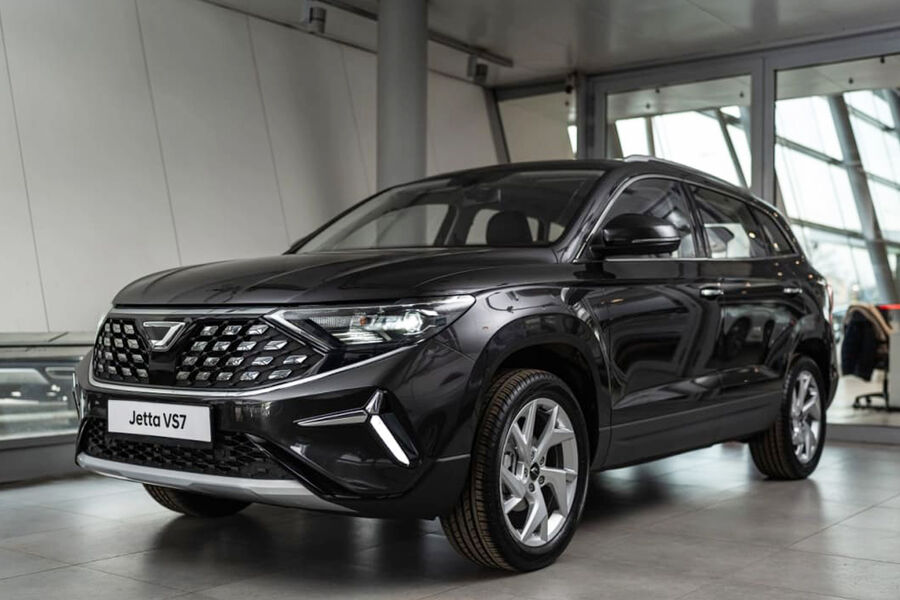
So, the Jetta VS7 crossover from FAW and Volkswagen took first place in the quality ranking among mid-size SUVs. It received 154 penalty points. In second place is the Dongfeng Paladin. This model may be familiar to Russian car enthusiasts of the Oting brand. It has 156 penalty points. In third place was another Dongfeng model, the ix5 fastback crossover. It “earned” 157 points.

It was noted that the rating was created based on drivers’ complaints about malfunctions, risks and defects in their vehicles. Complaints turn into penalty points.

Prior to this, it was known that the most common Chinese car in Russia was the Haval Jolion crossover: as of mid-year this year, there were 116.2 thousand units in the country, or 6.2% of the total number of “Chinese”.

The second most popular crossover was Geely Coolray (82.1 thousand cars, 4.4% share). In third place is Chery Tiggo 7 Pro Max with 67.3 thousand units sold and 3.6% share of total Chinese cars. It is followed by Chery Tiggo, Omoda C5, Haval F7, as well as Chery Tiggo 7 Pro and 4 Pro.

The ten most common “Chinese” cars are completed by the Lifan X60 crossover, which has left the Russian market, and the Great Wall Hover H3 SUV, which has also been discontinued.

Previously, human rights defender Pokhmelkin statedChinese cars fall apart after a year.


Source: Gazeta
 

2025 BYD Seal interior official images revealed​


Reading Time: 3 minutes

Dong Yi Chen

August 3, 2024


0


News like this to your inbox or phone?​


Weekly summary to your inbox
I want this

Never miss and important news
Get Instant notification once the news is published.
Follow Us
On August 3, Zhang Zhuo, general manager of the BYD Ocean Series Sales Division, shared the interior images of the 2025 BYD Seal. The new car is expected to officially launch on August 8.


Previously, the official images of the 2025 BYD Seal in “Sky Purple” have been released, which is not much different from the current model. For reference, the length, width, and height of the BYD Seal currently on sale are 4800/1875/1460 mm, respectively, and the wheelbase is 2920 mm; the price range is 179,800 – 249,800 yuan (25,100 – 35,000 USD). The CLTC ranges of the current BYD Seal Glory Edition rear-wheel drive is 550 km and 700 km, and the four-wheel drive is 650 km. At this time, the powertrain specifications have not been revealed officially.

The 2025 BYD Seal is built on the BYD e-Platform 3.0 Evo with an 800V high-voltage architecture. For the exterior, the logo above the taillights has been changed from “Build Your Dream” to the luminous “BYD”. The front still features a closed front face and slender headlights. There is also an optional roof lidar and rear camera.


The overall interior adopts the latest BYD Ocean series style and offers a standard five-seater layout. The seats are printed with a wave pattern, resembling the name of the Ocean series.

The new Coral Orange color scheme is highly recognizable with hidden air-conditioning outlets, a D-shaped steering wheel, a floating central control screen, an instrument panel, and a simple center console equipped with wireless charging panels, cup holders, and multiple physical buttons. The dimension parameters have not been revealed at this time.

BYD cumulative sales from January to July 2024
BYD sold a total of 342,383 vehicles in July, including 340,799 passenger vehicles, a year-on-year increase of 30.5%. For the first seven months of 2024, BYD’s cumulative sales of passenger cars were 1,947,944 vehicles. Additionally, BYD has sold more than 8.3 million new energy vehicles so far and is expected to roll off its 9-millionth new energy vehicle off the production line in early October this year.


In particular, the BYD Ocean series sold 152,767 vehicles in July, including 36,256 Seagull (see spec here), 33,595 Seal (see spec here), 12,399 Dolphin (see spec here), and 7,007 Sea Lion 07 EV.

Source: BYD Weibo, PCAuto
 

Geely Galaxy E5 launched – takes on BYD Atto 3 with superior features and pricing​


Reading Time: 3 minutes

Adrian Leung

August 3, 2024


0


News like this to your inbox or phone?​


Weekly summary to your inbox
I want this

Never miss and important news
Get Instant notification once the news is published.
Follow Us
Geely officially launched its much-anticipated Galaxy E5 electric SUV. This new model features cutting-edge technology, including the new Aegis short-blade lithium iron phosphate batteries and Meizu’s Flyme Auto infotainment system. The biggest surprise from the event is its official price. Price range from 112,800 to 148,800 yuan (15,760 to 20,800 USD). Before October 1st, buyers will benefit from a discount of 3,000 yuan (420 USD), reducing the starting price to just 109,800 yuan (15,300 USD). 13,200 yuan (1,850 USD) cheaper than the pre-sales price.


The Galaxy E5 boasts a floating central control screen, a digital instrument panel, and a head-up display (HUD). Premium models offer up to 16 speakers, including headrest speakers, and feature the Flyme Auto system, designed to be as intuitive as a smartphone. It is powered by China’s Dragon Eagle One 7 nm CPU. Geely has introduced innovative hidden door handle technology that promises reliable operation even in extreme conditions and plans to share this technology with the industry.

The new SUV measures 4615mm in length, 1901mm in width, and 1670mm in height, with a wheelbase of 2750mm. Its curb weight is only 1615 kg. It is powered by an electric motor with a maximum output of 160kW and 320 Nm of torque, achieving a 0-100 km/h acceleration time of 6.9 seconds. The vehicle offers two battery configurations: 49.52 kWh and 60.22 kWh, providing ranges of 440 km and 530 km, respectively.


The Galaxy E5 features a drag coefficient of 0.269 Cd and aerodynamic wheels with 235/50 R19 tires. Built on the new GEA architecture derived from the SEA platform, it uses CTB (cell-to-body) battery integration technology to achieve a 50:50 front-to-rear axle load ratio. This reduces weight, lowers the center of gravity, and enhances rigidity. The Galaxy E5 also incorporates Geely’s Galaxy 11-in-1 intelligent drive system, which integrates critical components into a compact unit weighing 79.8 kg and measuring 72 liters.

The Galaxy E5 offers an interior space of up to 4.03 square meters. It features 33 storage compartments, claimed to be the best in its class. This includes extra drawers underneath the rear air vents and another below the rear seats.

The Galaxy E5 will be available in eight colors: red, pink, gray, green, white, silver, black, and blue. In early 2025, other models from the Geely Galaxy range, L7, and L6, will receive an upgrade to Meizu’s Flyme Auto via an OTA update.


Editor’s Comment:

As we tested the Galaxy E5 on last week’s Sunday China Drive, we discussed how it is designed to rival popular BYD’s Atto 3 (Yuan Plus). E5’s dimensions and power output all outperform BYD Atto 3 by a slight margin. The top trim, now only costs 145,800 yuan (20,800 USD), offers massage seats and auto parking; together with Meizu’s Flyme Auto system, the Galaxy E5 offers an attractive package overall. The top trim of BYD’s Atto 3 (Yuan Plus) costs 147,800 yuan (20,600 USD) and has less to offer. As the RHD version is in parallel development, the Galaxy E5 will take on the Atto 3 both domestically and internationally. How BYD will react to the launch of the Galaxy E5 remains to be seen.


First Zeekr X RHD global delivery made in Thailand​


Reading Time: 3 minutes

Dong Yi Chen

August 3, 2024


0


News like this to your inbox or phone?​


Weekly summary to your inbox
I want this

Never miss and important news
Get Instant notification once the news is published.
Follow Us

On August 2, Zeekr announced that its first right-hand drive (RHD) Zeekr X global delivery was made in Thailand on August 1. Currently, the Zeekr X RHD in Thailand is available in two trims in five exterior colors: Athens Cloud White, Paris Brown Rice, Hangzhou Green, Su Mo Gray, and Berlin Silver Gray, priced at 1.199 million baht (244,000 yuan or 34,000 USD) and 1.349 million baht (275,000 yuan or 38,400 USD), respectively.


Currently, there are four pop-up Zeekr stores in Bangkok. It is expected that by the end of 2024, Zeekr will build 14 stores in Thailand.

Zeekr X RHD launch conference in Thailand
The Zeekr X RHD officially entered the Thailand market on July 11. According to Zeekr, the Zeekr X RHD is consistent with the facelifted model launched in July in China in terms of appearance and the interior configurations have been localized for the Thai market, including the entertainment streaming applications in the car system.


Zeekr X appeared in Australia
As of the end of June, Zeekr has entered more than 25 countries, including Sweden, the Netherlands, Germany, the United Arab Emirates, and Saudi Arabia; and has signed agreements with partners in Israel and Kazakhstan. Just recently, the Zeekr X (see spec here) was seen on the streets of Australia. The local media reported that the pre-order in the Australian market will open in August and delivery is scheduled to start at the end of November.

The first batch of Zeekr X RHD getting shipped to Singapore.Zeekr X RHD launch event in Singapore
Furthermore, the Zeekr X RHD also officially entered the Singaporean market today, priced at 199,999 SGD (1.083 million yuan or 150,700 USD) for the standard trim and 214,999 SGD (approximately 1.165 million yuan or 162,000 USD) for the flagship trim.

In July 2024, Zeekr delivered a total of 15,655 vehicles, achieving a year-on-year growth of 30%. For the first seven months of this year, Zeekr’s cumulative delivery volume was 103,525 vehicles, a year-on-year increase of 89%.


Source: Zeekr Weibo, DongCheDi
 

Mercedes-Benz obtained L4 self-driving car test permit in Beijing​


Reading Time: 2 minutes

Dong Yi Chen

August 3, 2024


0


News like this to your inbox or phone?​


Weekly summary to your inbox
I want this

Never miss and important news
Get Instant notification once the news is published.
Follow Us

On August 2, Mercedes-Benz announced that it had become the first foreign automaker to be approved to conduct Level 4 (L4) urban and highway autonomous driving tests on designated roads in Beijing, China. Previously, Mercedes-Benz was approved to conduct L3 autonomous driving tests in Beijing at the end of 2023.


L4 is considered fully autonomous driving with no human driver intervention required, although a driver can still request control.

Mercedes-Benz previously stated that since 2021, the company has been continuously conducting testing in a closed environment in China. The focus of the local R&D work includes adapting its autonomous vehicle system to China’s road infrastructures such as traffic signs and markings, construction areas, bus lanes, and variable lanes, as well as algorithm optimizations.


Two retrofitted Mercedes-Benz S-Class sedans will be used as L4 autonomous driving test vehicles, equipped with a variety of sensors, including lidar, millimeter-wave radar, and cameras.

In recent years, the popularity of autonomous driving vehicles has been rising. The city of Hangzhou in China has opened 3,474 km2 of eight urban districts as testing sites for self-driving vehicles, accounting for more than 20% of the city’s area; Shenzhen announced the addition of 43 new roads, bringing the city’s total open road mileage for autonomous driving to 944 km; Beijing has opened its first high-speed rail station for autonomous driving testing.

In Beijing’s high-level autonomous driving demonstration zone, there are L4 unmanned delivery vehicles, unmanned shuttle buses, street sweepers, patrol cars, and more than 800 other autonomous driving vehicles for various scenarios. This zone was officially established in September 2020 to focus on the five major systems of “vehicle-road-cloud-network-map” to promote the implementation of L4+ autonomous driving. Currently, there are more than 20 autonomous driving companies and automakers in this zone, including Baidu, Pony, BAIC, Didi, WeRide, Auto-X, Neolix, JD, Meituan Qingtian Truck, Trunk, QCraft, SenseTime, and Foton.


Source: Sina Finance, 36 kr
 

Nio reported to begin work on two new plants​


Reading Time: 3 minutes

Lawrence Ho

August 2, 2024


0


News like this to your inbox or phone?​


Weekly summary to your inbox
I want this

Never miss and important news
Get Instant notification once the news is published.
Follow Us

Nio supplier, Miracle Automation, announced that it has successfully won the bid for Nio’s F3-1 final assembly mainline conveyor project. This marks a further deepening of cooperation between the two parties following their collaboration on Nio’s fourth assembly plant.


The latest project focuses on design concepts of lean, intelligent, highly flexible, and high-precision assembly. It integrates AGV (Automated Guided Vehicles) automated workstations with island-style assembly lines, building on traditional final assembly conveyor line to further enhance automation.

Nio Production​

Miracle Automation also says a new conveyor equipment concept to accommodate automated part assembly was created. Although the fourth plant, F4, has not been confirmed by Nio, Miracle Automation says they have already partnered with Nio on the F4 assembly conveyor line project.


Miracle Automation is a Wuxi, Jiangsu Province based automobile manufacturing company that has worked with Stellantis, BMW, Li Auto, Aiways, Volkswagen and more. Founded in 1984, the company was one of the first to be medium to small businesses to be listed on the domestic A-share.

Nio currently has two assembly plants in Hefei, Anhui province. The assembly plants were originally owned and managed by Anhui Jianghuai Automobile (JAC Group). Nio bought the two factories, named F1 and F2, near the end of 2023 to manage manufacturing independently.

This was off a record revenue in Q3 2023 of 19.07 billion yuan (2.61 billion USD) and 55,432 vehicles delivered. The two plants were purchased for a total of 3.16 billion yuan (422 million USD). The F1 factory was jointly constructed with JAC Group. F2 factory was constructed in the industrial park established by Nio and the Hefei government named NeoPark.


Nio officially confirmed the construction of a third plant, F3, in June. The plant is expected be built in NeoPark and have a single-shift capacity of 100,000 units per year. The plant is expected for use for existing Nio models and the, yet to be launched, Onvo models.

The F4 plant has been rumored to also be under planning, but construction has not been officially announced. The fourth plant is expected to produce models for Nio’s other sub-brand, codenamed Firefly.

Nio Sub-Brands​

Onvo is Nio’s mass-market brand and positioned under Nio focusing on young families. Their first model, the Onvo L60, will start deliveries in September with a presale price of 219,000 yuan (30,500 USD).

Onvo L60 will launch into a crowded space of family SUVs competing with the Tesla Model Y, Xpeng G6, and BYD Sea Lion 07. All Onvo cars will support battery swapping with Nio’s the newer third and fourth generation swap stations.

Not as much is known about Nio’s second sub-brand, Firefly. The brand is being developed explicitly for Europe, though models will still be sold in China. Firefly is expected to be positioned under Onvo in the 100,000 – 200,000 yuan (13,900 – 27,800 USD) range. William Li, Nio’s Founder and CEO, has previously said that Firefly would be to Nio what Mini is to BMW.

Sources: Yiche
 

Arcfox Kaola S to launch August 7 – Kaola electric MPV grows an extra seat​


Reading Time: 4 minutes

Mark Andrews

August 2, 2024


0


News like this to your inbox or phone?​


Weekly summary to your inbox
I want this

Never miss and important news
Get Instant notification once the news is published.
Follow Us

The Arcfox Kaola is one of the quirkiest EVs currently available in China, however that quirkiness is about to get a whole lot less. When launched, the car came purely as a four-seater aimed at mothers with young children. And if you’re wondering about the name, in Chinese, it means koala, but for some reason, the English name is Kaola – a direct transliteration of the Chinese.


The Kaola S will launch on August 7, and while the original Kaola (see specs) is positioned as an MPV, the Kaola S is meant to be positioned as a compact SUV. It should be noted, though, that there is no real difference externally between the two cars. Dimensions remain at 4500, 1870, and 1655 mm with a wheelbase of 2820 mm. Externally the only significant difference between the two versions appears to be that the Kaola S is no longer black above the window line. Otherwise, the car retains the MPV-type lines and has a sliding door on the right-hand side to access the rear passenger area.

Perhaps the S in the Kaola S name stands for ‘seat’ because the car is now a five-seater rather than a 4-seater. In the original Kaola, there were just 2 seats in the second row with a strong fold-out table provided for baby changing. With the Kaola S, it has a far more traditional rear bench. However, some of the baby-friendly elements are still there, with the car boasting an extremely clean cockpit that uses almost zero aldehydes and zero benzene. It has a baby-level skin-friendly interior that uses organic antibacterial agents.


Upfront, the Kaola S seems exactly the same as the existing car, with a 14.6-inch centrally mounted infotainment screen and a 10.25-inch LCD instrument cluster. Other equipment includes features such as remote start, automatic air conditioning, keyless entry, and a panoramic roof. Inside, the car has a black-and-white color scheme, and the seats get diamond-shaped quilting.

As mentioned, the major difference between the Kaola S and the original car is the addition of a middle seat. This, however, doesn’t appear to have a headrest. The distance between the front and rear rows is as much as 1025 mm, and the interior height is 1245 mm. Perhaps the Kaola S can best be seen as a car for a mother with older children. It retains the electric sliding door on the right-hand side with a low platform of 340 mm, along with a grab handle for children just 0.7 meters above the ground and a handrail for adults above that to help them enter the car.

The powertrain is also completely unchanged with the car using a front-melted 120 kW electric motor which can provide a peak torque of 240 Nm. Range using CLTC measurements is 500 km with the juice coming from a CATL supplied lithium iron phosphate battery pack of 58.8 kWh. This can be charged from 30 to 80% in 26 minutes and the car also supports V2V and V2L charging.


Arcfox says that high-strength steel accounts for 62.1% of the Kaola S’s body and that its torsional rigidity is 37,400 Nm/degree.

Arcfox sold 8,017 cars in July, a 329% year-on-year increase. This marked the second consecutive month that the brand has managed to sell more than 8,000. The brand was created in 2017 by BAIC and solely sells EVs. Over the course of 2023, the brand sold 30,016 cars.

Sources: Autohome, Fast Technology
 

GWM opens pre-sales for the Wey Lanshan intelligent driving version​


Reading Time: 4 minutes

Mark Andrews

August 2, 2024


0


News like this to your inbox or phone?​


Weekly summary to your inbox
I want this

Never miss and important news
Get Instant notification once the news is published.
Follow Us

On August 2, Liu Yanzhao, general manager of the Wey brand, announced in a live broadcast as part of the Lanshan Smart Driving Tour in Shenzhen that the car was open for presales. Despite Great Wall Motor claiming that this is an all-new car, it is, in fact, just a new version of the existing Lanshan. That said, it brings a considerable increase in the capability of smart driving. Two car versions open for presales with the Max priced at 308,800 yuan (43,000 USD) and the Ultra at 335,800 yuan (46,750 USD). As always, in China those who place orders during the presales, from August 3, can enjoy various purchase rights notably for this car it includes urban NOA and high-speed NOA smart driving functions free for life.


The original Wey Lanshan (see specs) was launched as a PHEV, with deliveries beginning in April 2023. Externally the new version has little difference from the original car. Apart from the addition of a Lidar unit mounted above the windshield, the only other difference to the front is a new body-colored solid bar that runs through the air intake grille.

Wey, over the last few years, has named its cars after types of coffee, and Lanshan in English means Blue Mountain. Those who know their coffee will be aware that Blue Mountain is generally considered a high-end coffee, and it should be no surprise that in the Wey brand line up the Lanshan is the flagship SUV model.


Where the intelligent driving version differs significantly from the previous version is with smart driving capability and also in terms of the interior. The Ultra version of the car gets what’s known as Coffee Pilot Ultra ADAS, which gives full-scene NOA (navigation on autopilot). It does not rely on high-precision maps and can realize both high-speed NOA and urban NOA. Along with a 128-line Lidar unit, the car has several other sensors, including two 8-megapixel cameras, nine 3-megapixel cameras, and three millimeter wavelength radars. Processing the information is the Nvidia Orin X chip, although currently, it is not clear whether this is a single or a dual chip setup and what the computing power is.

Inside the intelligent driving version of the Lanshan is very different to that of the existing car and it has obviously been influenced by the styling of the Li Auto L series of SUVs. The dashboard is dominated by dual 15.6-inch 2.5k screens, with one operating as an infotainment screen, and the other as an entertainment screen for the front passenger. In addition, the car has a 29-inch SR head-up display and an LCD instrument display. Powering the car systems is a Qualcomm Snapdragon 8295 chip, and the car has six-zone voice recognition. It uses the Coffee OS 3 system and incorporates Coffee GPT large modal AI along with Coffee AI sound video and audio immersion effects. Occupants are treated to a 23-speaker sound system.

The car is a six-seater and in the first and second rows has individual seats. These gain heating, ventilation, and massage functions along with having zero gravity function meaning that they can recline to a near-flat position. There is a refrigerator which also has a heating function and can range in temperature between -6 and 50°C. Top spec cars have a 17.3-inch 3K screen which folds down from the ceiling for rear passenger entertainment.


A PHEV, the Wey Lanshan supports three power modes: pure electric, pure electric priority, and intelligent hybrid. There are in addition seven driving modes which also cover off road ability consisting of: eco, standard, sport, four-wheel drive, snow, mud, and sand. The car has CDC electronically controlled damping suspension.

Full details of the powertrain have not yet been disclosed; however, it is built around a 1.5T engine and two electric motors. The Ultra gains a 52.3 kWh capacity battery pack and has a WLTC all-electric range of 220 km and a comprehensive range of 1343 km. Meanwhile, the Max has a smaller 44.5 kWh Battery pack and a range of 185 and 1307 km respectively. The acceleration from 0-100 km/h is 4.9 seconds and fuel consumption is 6.7 l/100km.

Sources: Autohome, Fast Technology
 

BYD’s Fang Cheng Bao faces backlash after drastic price cut​


Reading Time: 3 minutes

Adrian Leung

August 2, 2024


3
Bander says: "Fang Cheng Bao, cuts 50,000 yuan in one day, should have bought Tank instead."

News like this to your inbox or phone?​


Weekly summary to your inbox
I want this

Never miss and important news
Get Instant notification once the news is published.
Follow Us

On July 29, Fang Cheng Bao, BYD’s off-road vehicle brand, caused waves in China’s automotive market with a dramatic 50,000 yuan price cut on its Bao 5 (Leopard 5), slashing the price to 239,800 to 302,800 yuan (33,000 to 41,700 USD). Launched last November, the Leopard 5 has been struggling to make a dent against Great Wall’s dominant Tank series. This bold price reduction, combined with a significant dealer network overhaul and the brand’s first external dealer recruitment in five years, marks a game-changing move for Fang Cheng Bao in the fiercely competitive off-road market.


Banner says: “Fang Cheng Bao, cuts 50,000 yuan in one day, should have bought Tank instead.”
Fang Cheng Bao’s price reduction has not been universally welcomed. Existing customers, some of whom have lodged complaints or protested at dealerships, are dissatisfied with the move. Many protested with banners, “Waited 3 months for car delivery, Fang Cheng Bao cuts 50,000 yuan in one day, should have bought a Tank instead.” Industry insiders are skeptical about the potential for a significant sales boost in the niche off-road vehicle market from this reduction alone.

Meanwhile, the new energy off-road segment is heating up. The Deepal G318 (see specs) recently entered the market, priced at 175,900 yuan (24,400 USD). It offers dual-motor all-wheel drive and a rear axle differential lock. Higher-end models, priced at 229,900 yuan (31,900 USD), include air suspension and CDC dampers, features previously seen in models above 260,000 yuan (36,070 USD).


Fang Cheng Bao’s price cut directly challenges Great Wall’s Tank series, particularly the popular Tank 300 (see specs). Despite declining sales in other brands, Great Wall’s Tank remains intense with a loyal customer base. The Bao 5’s lower fuel consumption and compatibility with 92-octane gasoline make it economical. Many believe its initial lack of popularity stemmed from its high price.

BYD is confident in its sub-brand, Fang Cheng Bao, which has aggressively lowered prices to attract mainstream buyers and recruited top dealers. As 2024 progresses, the rivalry between Fang Cheng Bao and Tank will benefit consumers with better deals and more options in the new energy off-road market. It remains to be seen if Fang Cheng Bao will compensate existing customers upset by the price cut.
 

Geely Geome Xingyuan small EV spied testing as new details emerge​


Reading Time: 3 minutes

Mark Andrews

August 2, 2024


0


News like this to your inbox or phone?​


Weekly summary to your inbox
I want this

Never miss and important news
Get Instant notification once the news is published.
Follow Us
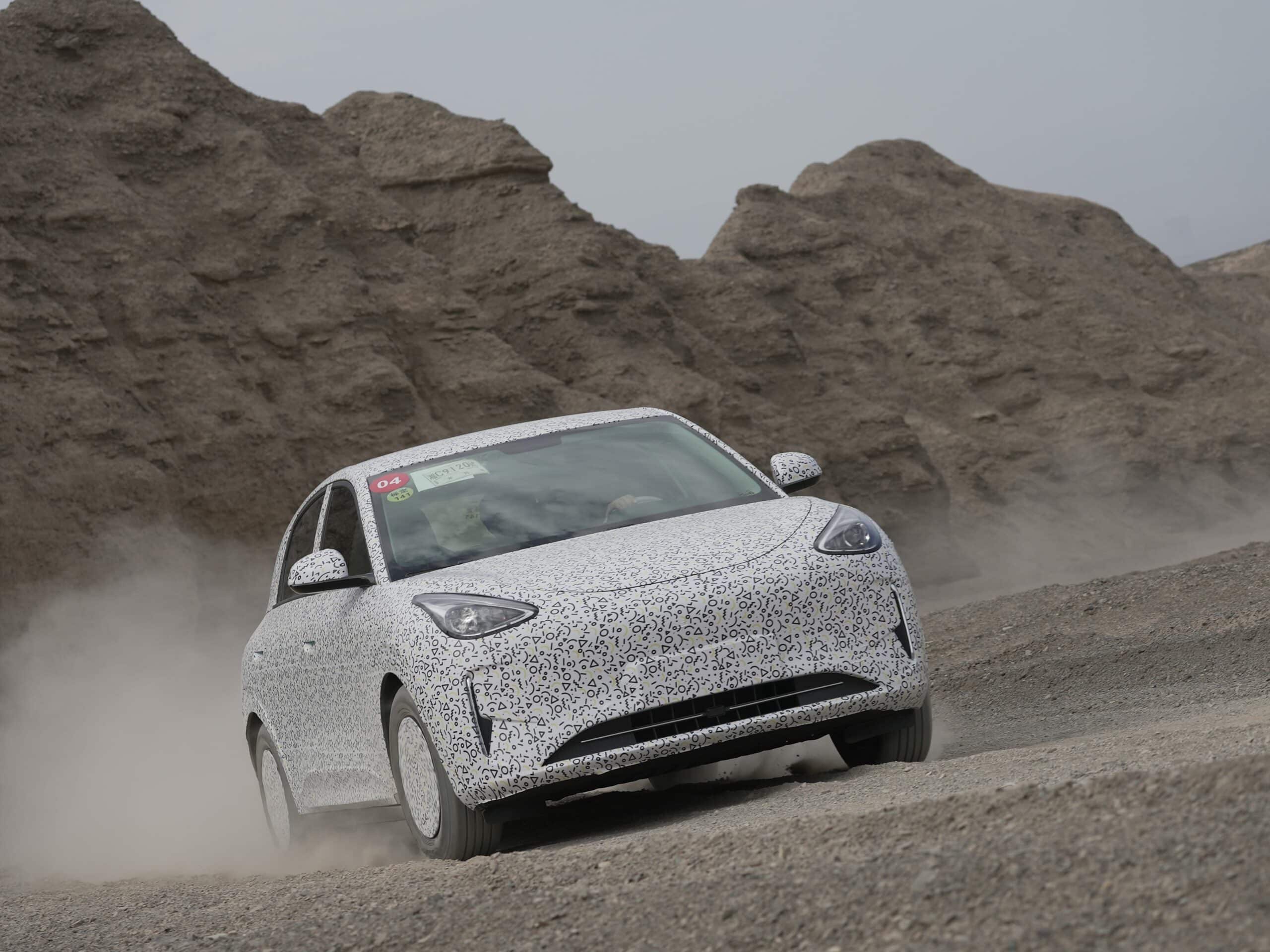
The Geely Geome Xingyuan, which translates to something like wishing star, has been spotted undergoing hot weather testing in Turpan ahead of its launch later this year. We’re also beginning to find out more details of the car which was one of the more surprising MIIT declarations in July.


The car is being benchmarked against the BYD Dolphin and Seagull and will likely compete with these cars along with others such as the Wuling Bingo and the JAC Yiwei 3.

Although camouflaged in the spy shots, the car is clearly the same as in the declaration pictures, and it appears there are no differences in overall look. Before releasing a car, manufacturers test them in extreme temperatures. For hot weather, this usually means Turpan, a city in Xinjiang province renowned as the hottest place in China.


Reports indicate that the Xingyuan will be built on a new platform and will have independent suspension as standard. Some sources claim that battery packs will be supplied by CATL, while others claim that the car will be equipped with the new Aegis short-blade battery developed by Geely themselves. Given that the Aegis is a lithium iron phosphate battery this probably makes more sense for a car of this price bracket.

From the MIIT listings, we know that buyers have a choice between two different electric motors of 58 kW and 85 kW, respectively. These reportedly will be part of an 11-in-1 intelligence electric drive unit. Top speed for the car equipped with the 58 kW TZ160XS001 electric motor is 125 km/h and for the larger TZ160XS002 motor, 135 km/h. Ranges are expected to be between 400 and 500 km, depending on the motor power and the battery pack size. Weight for the lowest spec version equipped with the 58 kW motor is 1215 kg, while for the larger motor, the weight of the car is 1285 kg. Buyers of the lower spec version can choose between 15 and 16-inch wheels, whereas the 85KW version only comes with 16-inch wheels.

Currently, the only information known about the interior is that the Geely Geome Xingyuan will use the Flyme Auto intelligent cockpit. The car measures in at 4135, 1805, and 1570 mm, and the wheelbase is 2650 mm. Presumably, the new platform is dedicated to EVs. Geome seems to be the new name, or an alternative name, for the Geely sub-brand that was previously known as Geometry. Current models in that range, while EVs are conversions from ICE cars, the new Xingyuan seems to be a departure in that it is a car designed from scratch as an EV.


From the previous MIIT declaration pictures we can see that the Xingyuan has a new design language with quite smooth looks. There is a largely enclosed front with just a few air inlets. Two-tone paintwork gives the car a youthful look, which is further enhanced by the wheel covers, which look somewhat like gaming pad controls. Both the front and rear light clusters have a tear drop-like shape although the angle of them is quite different. One potential issue with the car is its lack of a rear windshield wiper, an item presumably omitted to save costs.

Given that MIIT has already declared the car, we can expect sales to begin before the end of the year, and prices are expected to start at around 80,000 yuan (11,100 USD).

Sources: Autohome, Fast Technology
 

Users who are viewing this thread

Back
Top