China Auto Thread

China to top global auto sales in 2025, ending Japan's 20-plus year run

https%3A%2F%2Fcms-image-bucket-productionv3-ap-northeast-1-a7d2.s3.ap-northeast-1.amazonaws.com%2Fimages%2F3%2F0%2F2%2F0%2F11960203-1-eng-GB%2F90b7794dc606-29251229-BYD-Bangkok.jpg

Chinese vehicle sales are projected to surge 49% to about 500,000 units this year across Thailand and other ASEAN countries. (Photo by Ken Kobayashi)

SOTA TANAKA and ITSUKI MIYAKE
December 30, 2025 02:03 JST

TOKYO -- Chinese automakers are set to take the top spot in global new vehicle sales for the first time in 2025, knocking Japanese players, which held the position for more than 20 years, to second place.

View attachment 168316

The Japs couldn’t get past the “mass manufacturing” stage to the creative stage.

So much hype about Japanese takeover.

They couldn’t even get past the British.

Chinese have eaten into Japanese mass manufacturing.

Japan is going to be a blip in history. Next up is America - another likely blip in history.
 
微信图片_2025-12-30_114816_841.png

Don't know what Japan and Germany still have after losing their automobile crowns to China.


China carmakers poised to surpass Japan in global vehicle sales in 2025, Nikkei report says​

Dec 30, 2025 4:16 AM CET

image-picsart-aiimageenhancer-23-800x480.png

Chinese NEV sales and exports contribute to forecasted global leadership in 2025.

Chinese automakers are projected to sell more vehicles globally in 2025 than Japanese manufacturers, marking the first time China has surpassed Japan in annual automotive sales after over 20 years of Japanese dominance, according to a Nikkei China report based on industry data through November 2025.

The forecast, based on data from automaker disclosures and S&P Global Mobility, projects that Chinese automakers will sell approximately 27 million vehicles worldwide in 2025, compared with just under 25 million for Japanese automakers. The totals include both passenger and commercial vehicles and cover domestic sales and exports. Sales attribution is based on company ownership and brand nationality, with 50:50 joint ventures counted according to the brand sold.

China’s domestic market is projected to account for roughly 70 percent of total sales by Chinese automakers. New energy vehicles, including battery-electric vehicles (BEVs) and plug-in hybrid electric vehicles (PHEVs), account for nearly 60 percent of passenger-car sales in China.

Industry reports indicate that BYD and Geely have entered the global top ten automakers by sales in 2025, and that Chery has been one of China’s largest exporters, with substantial overseas sales growth.

Chinese vehicle exports continued to grow in 2025. Southeast Asian markets, long dominated by Japanese automakers, are projected to see substantial growth in Chinese sales, with approximately 500,000 vehicles expected to be sold. In Europe, Chinese automakers’ sales are expected to rise to around 2.3 million units, despite existing import tariffs, as export volumes include plug-in hybrid models that are not subject to additional duties.

Emerging market sales are also projected to increase. Africa is expected to see 230,000 vehicles sold, up 32 percent year-on-year, while Latin America is expected to reach 540,000 vehicles, up 33 percent.

Japanese automakers, whose global sales peaked at nearly 30 million vehicles in 2018, are projected to remain just below Chinese volumes in 2025. Reports indicate some Japanese brands experienced sales declines in key regions, including the United States, and that their market share in China has gradually declined relative to local automakers.

The 2025 forecast figures reflect changes in global vehicle sales rankings based on projected volumes and do not imply interpretation or causation beyond the data.

 
Last edited:

Chinese Cars Are Dominating in Asia, Africa, and South America

Cole Jackson|
fdeaeffdf3c5feac9f3d9a8ae15332173bd89e1e=w700

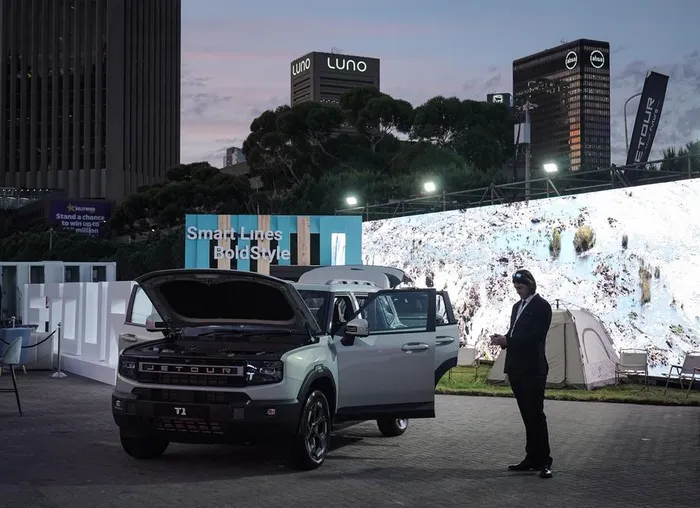
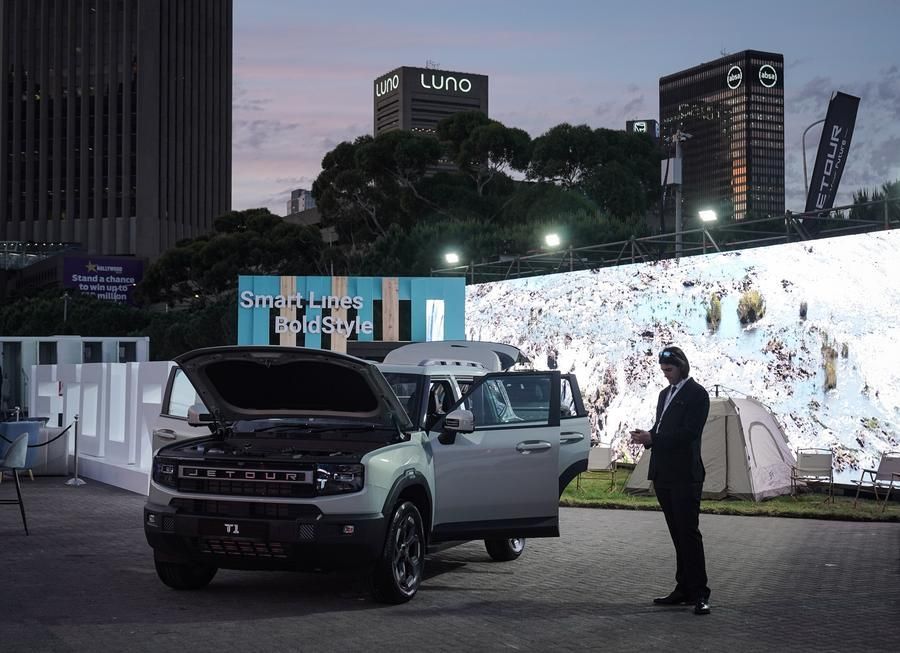
This photo taken on Oct. 24, 2025 shows Chinese automaker Jetour's new SUV during a launch event in Cape Town, South Africa.

The global automotive landscape is undergoing one of the most dramatic shifts in decades, and China is unmistakably at the centre of this transformation. While Western headlines often emphasise the challenge Chinese automakers pose in Europe or the United States, the real battleground is elsewhere. Across Asia, Africa, the Middle East, and Latin America, Chinese car brands; especially leaders like BYD, Changan, GWM, and Chery; are rapidly becoming the preferred choice for millions of new buyers. Their combination of affordability, modern technology, and strong electric-vehicle (EV) capability is reshaping consumer behaviour in regions long dominated by Japanese, European, and American manufacturers.

BYD Expansion

At the forefront of this expansion is BYD, China’s largest automaker and the world’s leading EV producer. In December 2025, BYD made headlines by launching its first plug-in hybrid vehicle (PHEV) in Japan, historically one of the world’s most protected and brand-loyal automotive markets. The new Sealion 6, equipped with BYD’s latest DM-i hybrid system, enters a country where Toyota and Lexus have long held overwhelming dominance in hybrid technology. Despite this, BYD’s arrival marks a significant shift: Japanese consumers are now willing to explore foreign electrified options, particularly those that offer lower prices and compelling technology. The Sealion 6, priced from around US$25,000, undercuts many domestic alternatives and demonstrates China’s strategy of offering technologically advanced vehicles at highly competitive prices.

This strategic entry highlights a broader trend: Chinese automakers are finding their strongest traction not in saturated Western markets, but in emerging economies where affordability is essential. Consumers in developing countries are typically more price-sensitive, and Chinese brands offer modern designs, generous features, and EV options at far lower costs than their European, Japanese, Korean, or American competitors. The pricing advantage has made Chinese EVs, previously perceived as niche or premium, accessible to the mass market. As a result, Chinese companies have moved from the periphery to the centre of the global automotive industry within a remarkably short timeframe.

Long-established brands losing ground

The data tells a compelling story. Across Asia, Africa, and Latin America, the rise of Chinese automakers has coincided with a noticeable decline in market share for long-established brands. Japanese manufacturers such as Toyota, Nissan, Honda, Mitsubishi, and Suzuki; Korean firms like Hyundai and Kia; and European brands such as Fiat, Renault, and Volkswagen are all experiencing the impact. Even major American producers, including Chevrolet and Ford, have faced erosion of their once-secure positions in emerging markets.

Brazil, the largest car market in Latin America, illustrates the shift clearly. Chinese brands increased their share from 6.8 per cent in 2024 to 9.1 per cent in 2025—enough to place them collectively among the top four manufacturers in the country. In Australia, another important market where Japanese and Korean brands have long dominated, Chinese automakers now command nearly 17 per cent of sales, an increase of more than five percentage points in just one year.

The pattern repeats across numerous countries. In Ukraine, Toyota and Renault have ceded ground as BYD surged from 3 per cent market share in early 2024 to 7.7 per cent in 2025. Across Latin America, similar dynamics are taking shape: in Chile, Chevrolet is losing ground to GWM and Changan; in Colombia, BYD has entered the top ten, pushing out Ford; while in Ecuador, Panama, and Uruguay, Chinese vehicles are becoming mainstream choices for middle-class households.

In Asia, the trend is even more pronounced. Thailand, the region’s most important automotive hub, now records a staggering 32.4 per cent Chinese market share. Israel, one of the most advanced EV adopters globally, shows a nearly identical 32 per cent market share. Indonesia, the largest economy in Southeast Asia, has seen Chinese cars rise to over 12 per cent of the total market, driven largely by affordable EVs and well-equipped SUVs.

Africa is experiencing a similar trajectory; with South Africa, traditionally dominated by Japanese and European brands, now reaching 15 per cent Chinese market share. As African countries increasingly shift towards greener mobility and more accessible pricing, Chinese automakers are well positioned to expand even further.

Market-share data confirms the accelerating shift. Outside Europe and the United States, Chinese brands enjoy remarkable levels of penetration:

Chinese Brand Market Share (Selected Countries)

  • Thailand: 32.4%
  • Israel: 32.0%
  • Chile: 30.9%
  • Ecuador: 29.9%
  • Uruguay: 26.4%
  • Panama: 26.0%
  • Australia: 16.7%
  • UAE: 16.0%
  • South Africa: 15.0%
  • Ukraine: 12.7%
  • Indonesia: 12.2%
  • New Zealand: 12.1%
  • Saudi Arabia: 11.8%
  • Colombia: 11.2%
  • Brazil: 9.1%
  • Mexico: 7.7%
  • Malaysia: 6.7%
Meanwhile, year-on-year growth figures underline both the momentum and the durability of this shift. Uruguay’s Chinese market share rose by 12.6 per cent in one year, Israel by 11.5 per cent, Indonesia by 6.5 per cent, and Australia by over 5 per cent. These gains reflect not only competitive pricing but also increased consumer confidence in Chinese engineering, battery technology, warranty coverage, and dealership support.

EV as a major cultivator of China's global success

Chinese brands also benefit from strong capabilities in electrification. BYD, for instance, has mastered the full EV supply chain—from mining and battery production to software engineering and manufacturing. This vertical integration enables them to produce EVs far more cheaply than Western competitors, giving them a decisive edge in emerging markets where EV adoption hinges on affordability. Their cars typically offer high-density batteries, long driving ranges, modern interiors, and advanced features previously available only in premium models.

As the automotive world shifts towards electrification, connectivity, and affordability, China’s global influence is set to grow even further. With robust investment, strong technological capacity, and an expanding international dealer network, Chinese automakers are reshaping markets that were long perceived as impenetrable. The rise of brands like BYD is not just a trend, it is a structural transformation with long-term implications for global mobility.

What becomes clear is that the future of the global automotive industry will not be decided in Europe or North America, but in the emerging markets of Asia, Africa, and Latin America. And in this new reality, Chinese carmakers are not only competitive, they are leading the way.

 
To view this content we will need your consent to set third party cookies.
For more detailed information, see our cookies page.
 
To view this content we will need your consent to set third party cookies.
For more detailed information, see our cookies page.
 

China to top global auto sales in 2025, ending Japan's 20-plus year run

https%3A%2F%2Fcms-image-bucket-productionv3-ap-northeast-1-a7d2.s3.ap-northeast-1.amazonaws.com%2Fimages%2F3%2F0%2F2%2F0%2F11960203-1-eng-GB%2F90b7794dc606-29251229-BYD-Bangkok.jpg

Chinese vehicle sales are projected to surge 49% to about 500,000 units this year across Thailand and other ASEAN countries. (Photo by Ken Kobayashi)

SOTA TANAKA and ITSUKI MIYAKE
December 30, 2025 02:03 JST

TOKYO -- Chinese automakers are set to take the top spot in global new vehicle sales for the first time in 2025, knocking Japanese players, which held the position for more than 20 years, to second place.

View attachment 168316
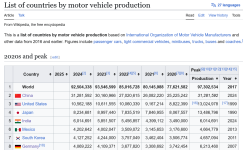
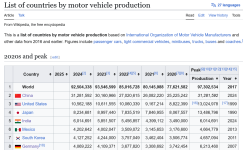
Is this chart shows the number of cars produced under the brands of different countries ? I see Japan producing over 20 millions vehicles in 2025. But according to wiki, Japan only produced just over 8 millions. There is a big gap.

1767254656116.png
 

Attachments

  • 1767254599040.png
    1767254599040.png
    126.8 KB · Views: 1
Last edited:


Solid-state EV batteries take another big step forward in China

Dec 31 2025 - 9:44 am PT

China introduced its first national standard for solid-state EV batteries as the “holy grail” of battery tech moves closer toward mass production.

China is the first to propose a national standard for solid-state EV batteries. The draft is the first of four installments as the promising new battery tech inches closer to commercialization.

China launches solid-state EV battery national standard

China has emerged as a true automotive powerhouse thanks to its lead in the shift to electrification. It’s now projected to overtake Japan in global vehicle sales for the first time in 2025.

To stay ahead, domestic leaders like BYD and CATL are advancing new batteries and other EV technology, including solid-state, LFP, sodium-ion, and ultra-fast charging in five minutes.

After introducing its first national standard for solid-state EV batteries on Tuesday, China is taking another big step toward bringing the promising new tech to market. China’s National Automotive Standardization Technical Committee released “Solid-State Battery for electric vehicle – Part 1: Terms and Classification,” which is now open for public discussion.

The draft is designed to categorize and clearly define solid-state batteries. Based on how ions move within the cell, batteries are classified as liquid, hybrid solid-liquid, or solid-state.

Since the draft doesn’t include “semi-solid-state” batteries, which several domestic brands have already mentioned, it appears this classification will no longer be used.

It then breaks solid-state batteries down by electrolyte type (sulfide, oxide, composite, polymer, or halide), conducting ion (lithium or sodium), and whether it’s high-energy or high-power.

The draft sets the allowable weight-loss rate to qualify as a solid-state battery at no more than 0.5%, stricter than the 1% rate set by the China Society of Automotive Engineers earlier this year.
 

China’s BYD overtakes Tesla as world’s top EV seller for the first time​

Published Fri, Jan 2 20263:32 AM ESTUpdated Fri, Jan 2 202611:31 AM EST
  • BYD, a company Elon Musk once dismissed by laughing at their products during a 2011 Bloomberg interview, has overtaken Tesla to be the world’s top EV seller.
  • BYD said on Thursday that sales of its battery-powered cars rose nearly 28% to 2.26 million units in 2025.
  • Vehicle deliveries at Tesla dropped 8% year on year to 1.64 million vehicles delivered in 2025.
In a statement published Thursday, BYD said sales of its battery-powered cars rose nearly 28% to 2.26 million units.

Musk openly laughed at the mention of BYD while being interviewed on Bloomberg TV in October 2011. He said he did not see the company as a competitor to Tesla, adding: “I don’t think they have a great product.”

Meanwhile, Tesla said Friday it delivered 1.64 million vehicles in 2025, in line with a company-compiled estimate of 1.6 million vehicle deliveries. The annual figure is roughly an 8% drop from 2024, the company’s second straight annual drop.

Deliveries for Q4 2025 were about 16% lower than the fourth quarter of 2024, when Musk’s EV company reported 495,570 deliveries.
 
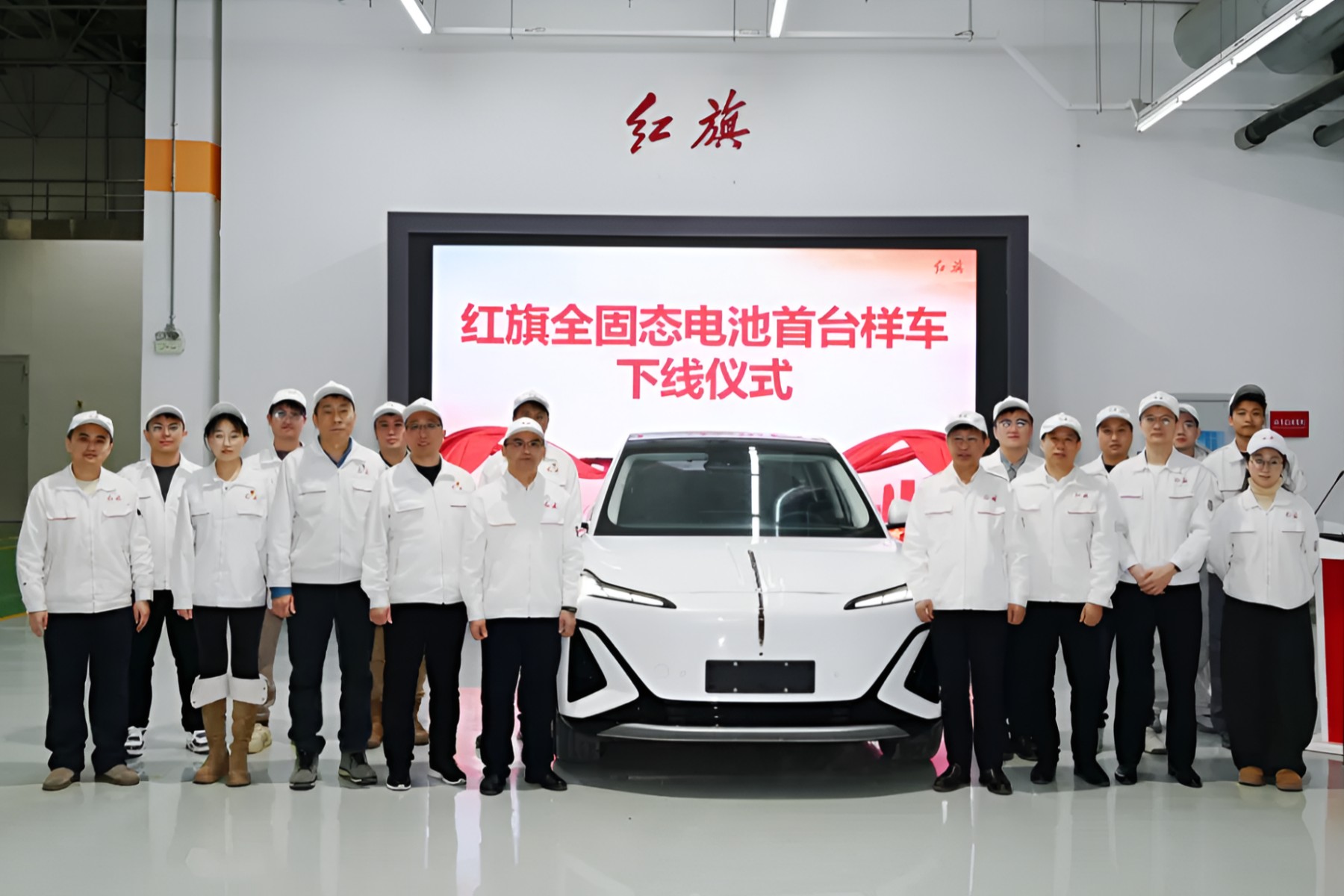
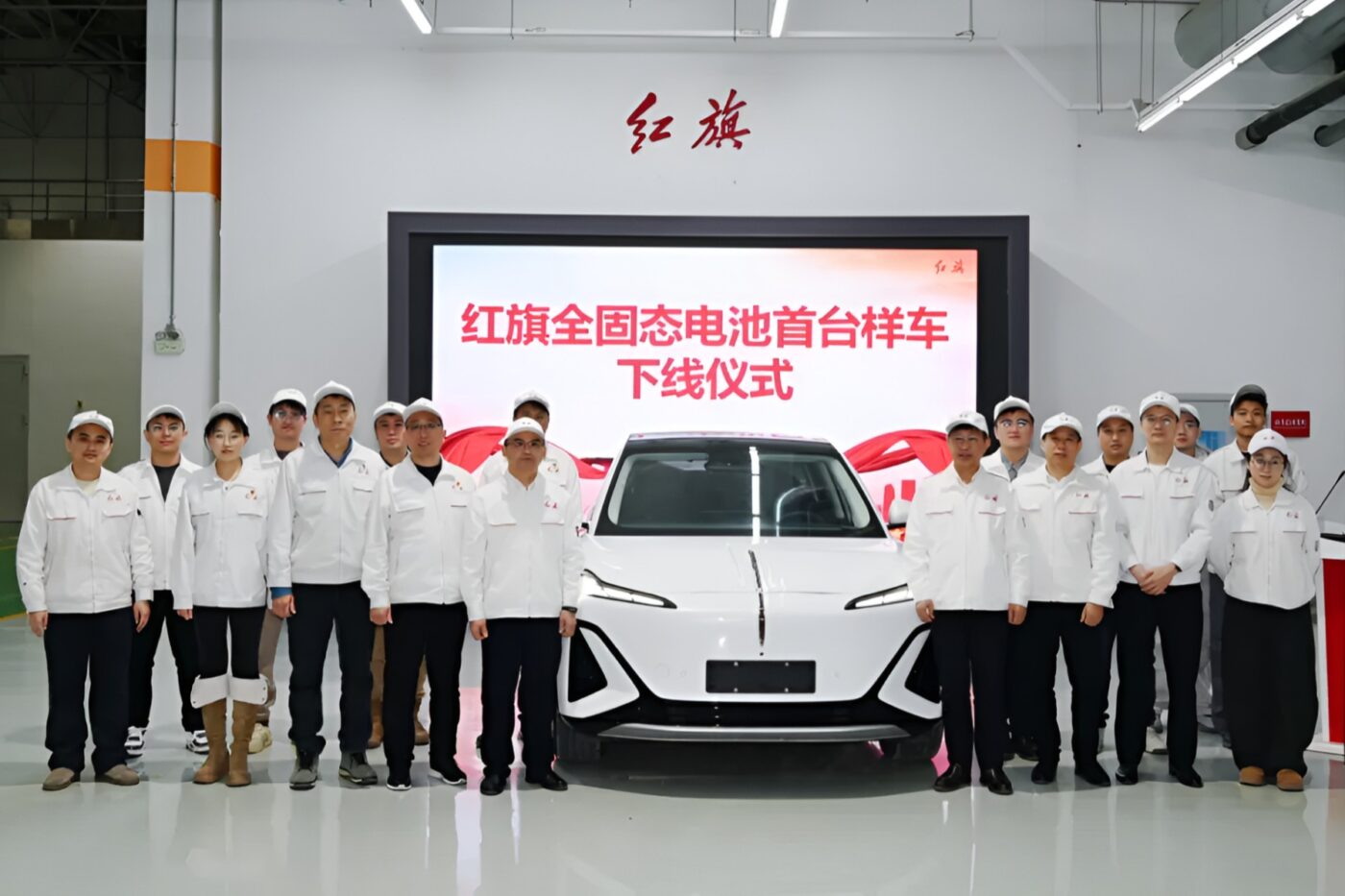
Hongqi unveils first prototype with solid-state battery
Chinese automaker FAW has unveiled the first prototype of its luxury brand Hongqi equipped with a built-in solid-state battery. According to Hongqi, the innovative battery was developed in-house and is the first fully solid-state technology system installed in a production vehicle by the brand.

Hongqi tiangong prototyp mit festkoerperbatterie

Image: Hongqi

07.01.2026 - 11:30

Just last month, it was announced that the brand, known for its state limousines, plans to introduce solid-state batteries into its production vehicles by the end of 2027, initially in a small series. In its research on solid-state batteries, Hongqi benefits, among other things, from the membership of its parent company FAW in a Chinese industrial consortium that aims to advance the development of solid-state batteries with state support and a budget of six billion yuan (approximately 730 million euros).

Hongqi has now installed a solid-state battery in a standard Tiangong 06 for the first time—a battery-electric SUV for the Chinese market that the brand has repeatedly used as a platform for testing advanced powertrains and battery technologies.

Solid-state batteries are considered the next-generation technology for electric vehicles, offering higher energy density, faster charging, greater ranges, and improved safety compared to conventional lithium-ion batteries. These benefits are achieved by replacing the liquid, often flammable electrolyte in traditional batteries with a solid, ion-conducting material.

Hongqi announced that its research team achieved a series of breakthroughs in critical areas after 470 days of intensive research. These included advancements in sulphide electrolytes, validation of 10-Ah cell performance, and the production of 60-Ah cells. However, the brand did not disclose which specific solid-state batteries were installed in the prototype.

Hongqi explained that its team conducted hundreds of tests to optimise design solutions and production processes, overcoming technical challenges such as high-pressure integration.


Inx supplies solid-state battery to EHang​

13h

y1.jpg


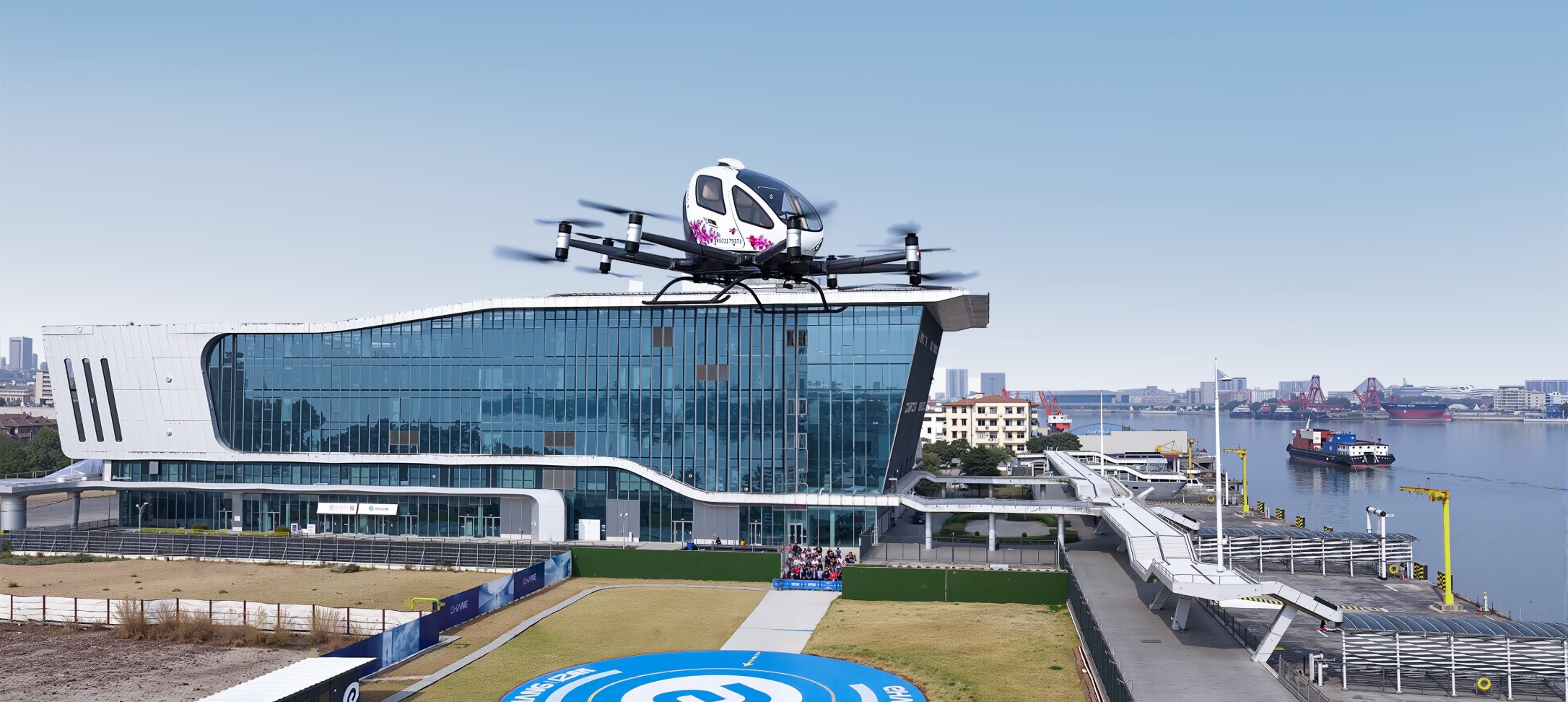
Inx Technology has supplied solid-state lithium metal batteries for EHang’s EH216 eVTOL aircraft, which completed China’s first cross-sea unmanned passenger flight. The battery delivers an energy density of 480 Wh/kg, up to twice that of mainstream aviation batteries.

Shenzhen Inx Technology Co., Ltd.,which was founded in 2020, is a national high - tech enterprise and a specialized and sophisticated enterprise in Shenzhen.Inx focus on the research and production of high-energy-density (450Wh/kg) and high-safety lithium metal solid-state batteries. Serving eVTOL,UAV,Embodies Robots,Consumer Electronics,and EV etc.As a trailblazer in the commercialization of solid-state batteries, Inx successfully completed the world's first flight test of its "Falcon" solid-state battery in a manned eVTOL on November 1, 2024. With a certified flight duration of 48 ‘10”, the achievement set a new industry record, surpassing previous benchmarks by more than double.Inx 's headquarters is located in Longhua, Shenzhen. We have established a pilot production base in South China (600 MWh), an R&D center in Silicon Valley, USA, and a mass production base in Hangzhou, whose 2 GWh Phase I is completed with an 8 GWh Phase II planned.Inx will continue to devote itself to promoting technological innovation and development in the industry, leading revolutionary changes in the energy field, and improving the quality of human life
 
If this car were sold at this price in other regions, I don't know how other car brands would survive...
1767850637279.png
 
"In the end, the cost-effectiveness is going to go down"... BYD, Geography Sneakly Dominate Electric Vehicle Market
2026-01-07 19:58:06
언어 변경하기

Global Electric Vehicle Sales Reach 20 Million Units
One in Five EVs BYD
Hyundai Motor, Kia, and North American Market Propaganda

BYD vehicle docked at Yantai port in eastern Shandong province, China. <BYD>사진 확대

It is estimated that the number of electric vehicles (including plug-in hybrids) sold worldwide exceeded 20 million last year. China's BYD and Geely Group ranked first and second in sales, and the Chinese-centered electric vehicle market continued to grow.

According to SNE Research, an energy market research firm, the total number of electric vehicles registered in countries around the world between January and November last year was 1,968,000, up 22.9% from the same period last year. On an annual basis, it is certain to surpass 20 million units.

BYD maintained its solid No. 1 position by selling 3.69 million units, up 0.5% from last year. The market share was 19.3 percent, with one in five electric vehicles sold worldwide last year being BYD. BYD continues to raise brand awareness with its own battery technology and price competitiveness.

The second-largest Geely Group sold 2,014,000 units, growing 60.9% from the same period last year. It is increasing its influence in the overall electric vehicle ecosystem with various portfolios such as premium brand Zicker and hybrid brand Galaxy.

Global EV Sales사진 확대
Global EV Sales
Tesla ranked third, selling 1.459 million units, down 8% from the same period last year. Sales of the flagship Model 3 and Model Y fell 6.3 percent to 1.41 million units, continuing the decline in all major electric vehicle markets such as North America, Europe, and China.

Hyundai Motor and Kia ranked eighth, selling 570,000 units, up 12.1% from the previous year. Pure electric vehicles Ioniq 5 and EV3 drove the performance. In particular, it sold about 157,000 units in the North American market alone, ranking third overall after local brands such as Tesla and GM.

By region, China continued to grow explosively as the largest electric vehicle market, selling 12,315,000 units, up 21% year-on-year. The market share amounts to 64.2 percent. Since then, the European electric vehicle market has sold 3.75 million units, up 32.8% over the same period, with a 19.5% share.


Elon Musk Says China Turns His Ideas Into Reality, Praises Rapid Progress in EVs and Clean Energy​

By INVC Desk
January 7, 2026
Elon Musk speaking about China’s rapid growth in electric vehicles, battery storage, and solar energyElon Musk on China’s EV, Battery, and Solar Energy Expansion
San Francisco | January 2026

Tesla CEO Elon Musk has sparked fresh debate across the global technology and automotive industries after making candid remarks about China during a recent appearance on the Moonshots podcast. Speaking in a lighthearted tone, Musk said it often feels like China “takes everything I say seriously and then actually goes and does it.”

His comments came in the context of rising energy demands from data centers, battery storage, electric vehicles, and clean energy infrastructure.

China’s Aggressive Lead in Batteries, EVs, and Solar

Musk openly acknowledged that China has surged ahead in the very sectors he has been advocating for over the past decade. According to him, China is not only manufacturing batteries at massive scale but has also achieved unprecedented expansion in electric vehicles and solar power generation.

Industry data supports his assessment. In 2024 alone, China produced approximately 13 million electric vehicles, recording nearly 70 percent annual growth since 2020. Chinese companies such as CATL and BYD now control about 69 percent of the global EV battery market, giving the country a dominant position in the clean mobility supply chain.

Warning on China’s Solar Power Expansion

Musk has repeatedly highlighted the importance of solar energy on social media platform X. In 2024, he warned that China’s rapid solar expansion could surpass the entire electricity generation capacity of the United States within four years, a shift he said could significantly reshape the global energy balance.

Batteries as the Solution for AI-Era Power Demand

Addressing concerns about rising electricity consumption in the age of artificial intelligence, Musk emphasized that battery storage is the fastest way to scale usable energy capacity. He explained that while the U.S. has a peak power capacity of about 1.1 terawatts, average consumption is roughly half of that.

By storing excess nighttime energy in batteries and using it during peak daytime hours, Musk said countries could nearly double effective energy usage without building new power plants.

Tesla’s Megapack and Megablock Strategy

When asked whether such large-scale batteries already exist, Musk pointed to Tesla’s Megapack, designed for grid-level energy storage to stabilize power supply. He revealed that his AI company xAI has deployed 168 Megapacks at its data center in South Memphis, Tennessee.

Tesla further expanded its energy portfolio in September 2025 with the launch of Megablock, a system combining four Megapack 3 units. The setup can store 20 megawatt-hours of energy, enough to power approximately 4,000 homes for four hours.

A Clear Signal in the Global Energy Race

Musk’s remarks underscore how China’s scale, speed, and execution in clean energy and electric mobility have captured the attention of even the world’s most influential tech leaders. As the global race for energy security and EV dominance accelerates, China’s approach is increasingly being viewed as both a benchmark and a challenge for the rest of the world.


Hesai Selected by NVIDIA as Lidar Partner for NVIDIA DRIVE Hyperion 10 to Enable Level 4 Fleet Deployment​

January 6, 2026

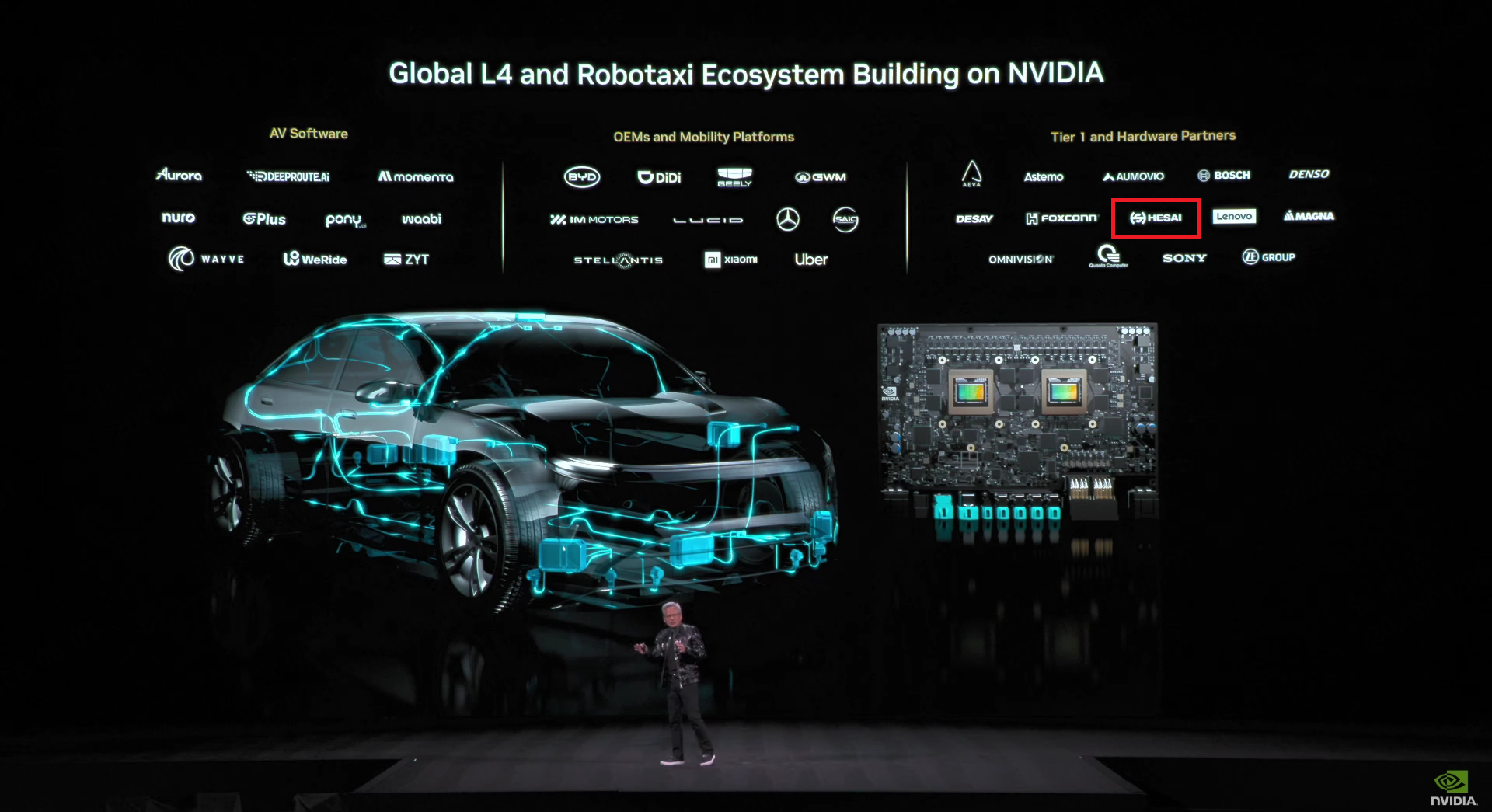
Palo Alto, Calif. – January 5, 2026 – Hesai Technology (NASDAQ: HSAI; HKEX: 2525), the global leader in lidar solutions, announced today that it has been selected by NVIDIA as lidar partner for NVIDIA DRIVE AGX Hyperion 10, a reference compute and sensor architecture that makes any vehicle level 4-ready, enabling automakers and developers to build safe, scalable, AI-defined fleets.

cdd9ca1e-68f2-4b68-9ae4-6c79c267a608.png

Hesai is among the latest partners to qualify its sensor suites on the open, production‑ready DRIVE Hyperion architecture. This growing sensor ecosystem spans cameras, radar, lidar and ultrasonic technologies that enable automakers and developers to build and validate perception systems optimized for level 4 autonomy.

18d93908-e30a-4758-8303-b96072931294.png

Featuring two NVIDIA DRIVE AGX Thor systems-on-a-chip built on the NVIDIA Blackwell architecture, DRIVE Hyperion delivers more than 2,000 FP4 teraflops — or roughly 1,000 INT8 trillion operations per second — of real‑time compute to fuse a full 360‑degree sensor view.

“Everything that moves will eventually become autonomous, and DRIVE Hyperion is the backbone that makes that transition possible,” said Ali Kani, vice president of automotive at NVIDIA. “By unifying compute, sensors and safety into one open platform, we’re enabling our entire ecosystem, from automakers to AV SW ecosystem, to bring full autonomy to market faster, with the reliability and trust that mobility-at-scale demands.”

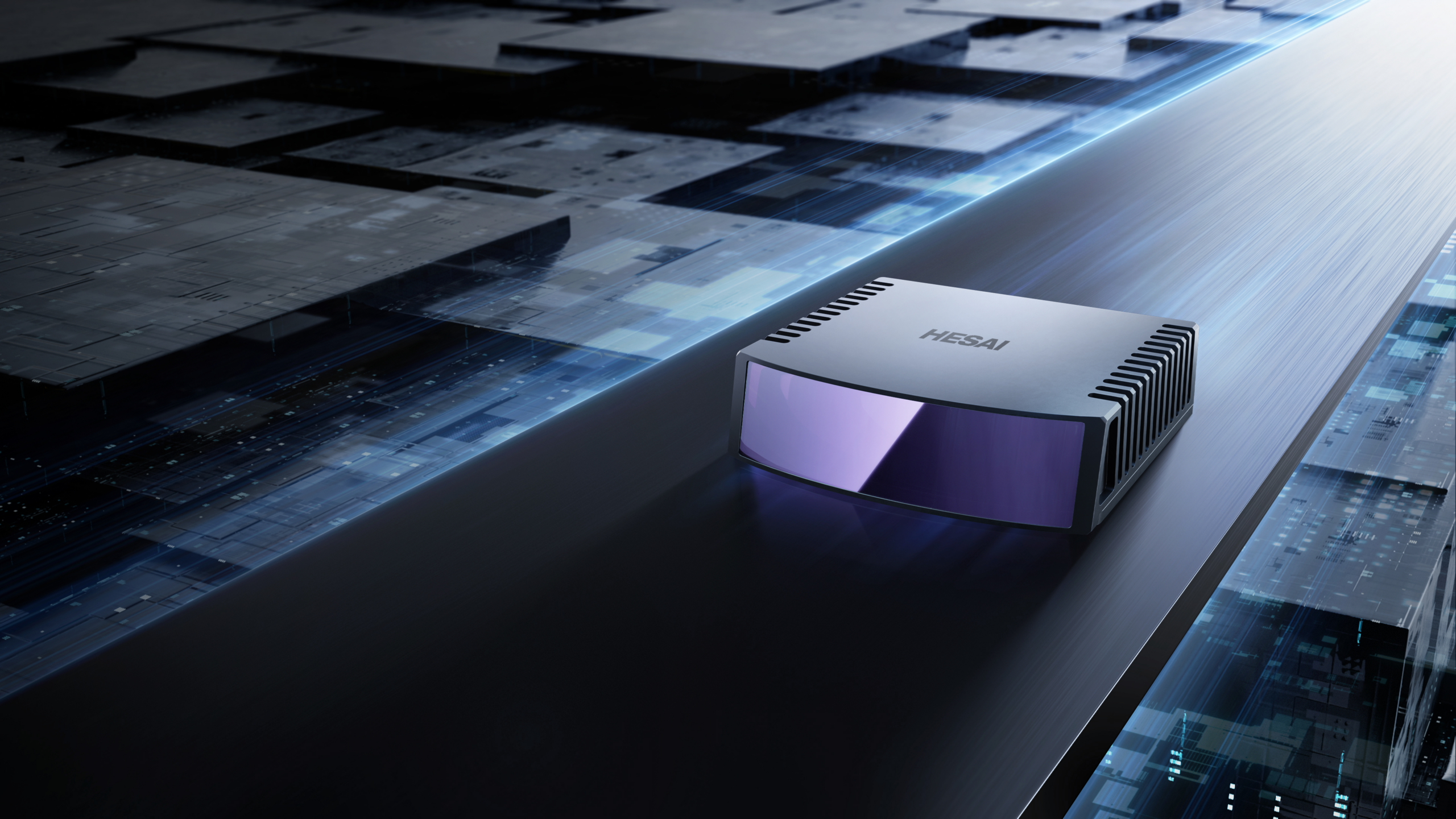
Hesai’s ETX is an industry leading automotive-grade ultra-long-range lidar engineered for L3 and L4 autonomous driving applications. Powered by Hesai’s 4th generation technology platform, ETX delivers high resolution, ultra-long ranging capability in a slim, low-profile form factor for seamless integration on the roof or behind the windshield.

0a41559b-f41d-4b2e-9b9d-0d205036dba6-scaled.png

This milestone builds on Hesai’s long-standing collaboration with NVIDIA, which began in 2019, and reinforces Hesai’s position as a trusted ecosystem partner in delivering high-performance, automotive grade lidar solutions that meet the industry’s most rigorous standards for safety, reliability, and integration.

Hesai is working closely with global automakers to bring next-generation autonomous driving technologies to market, driven by a shared vision for safer, smarter, and more accessible mobility.
 

Users who are viewing this thread

Pakistan Defence Latest

Country Watch Latest

Back
Top