
Navigation
Install the app
How to install the app on iOS
Follow along with the video below to see how to install our site as a web app on your home screen.
Note: This feature may not be available in some browsers.
More options
Style variation
You are using an out of date browser. It may not display this or other websites correctly.
You should upgrade or use an alternative browser.
You should upgrade or use an alternative browser.
China Auto Thread
- Thread starter StraightEdge
- Start date
More options
Who Replied?

NeptunesVortex
Banned

BEIJING, May 11 (Reuters) - China's domestic car sales fell for a seventh straight month in April amid intense competition in the world's biggest auto market but exports stayed strong as automakers increasingly targeted overseas markets.
Sales at home dropped 21.6% from a year earlier to 1.4 million vehicles last month, data from the China Passenger Car Association (CPCA) said on Monday.
The China Passenger Car Association (CPCA) estimated 1.52 million passenger vehicle retail sales for May 2026, which was still down 21.6% year-on-year.

Sales at home dropped 21.6% from a year earlier to 1.4 million vehicles last month, data from the China Passenger Car Association (CPCA) said on Monday.
The China Passenger Car Association (CPCA) estimated 1.52 million passenger vehicle retail sales for May 2026, which was still down 21.6% year-on-year.
CPCA estimates May passenger car retail sales volume at 1.52 million units
On May 22, the China Passenger Car Association (CPCA) announced that the May 2026 retail sales volumes of passenger cars (including sedans, SUVs, and MPVs, excl ...
www.marklines.com
Last edited:
Beijingwalker
VIP Member
Chinese carmakers BYD, Chery chart 80% growth overseas as EV demand spikes
‘Eye-catching’ numbers show efforts paying off amid growing brand recognition abroad and tepid sales at home, analysts say
Daniel Renin Shanghai
Published: 8:30pm, 4 Jun 2026
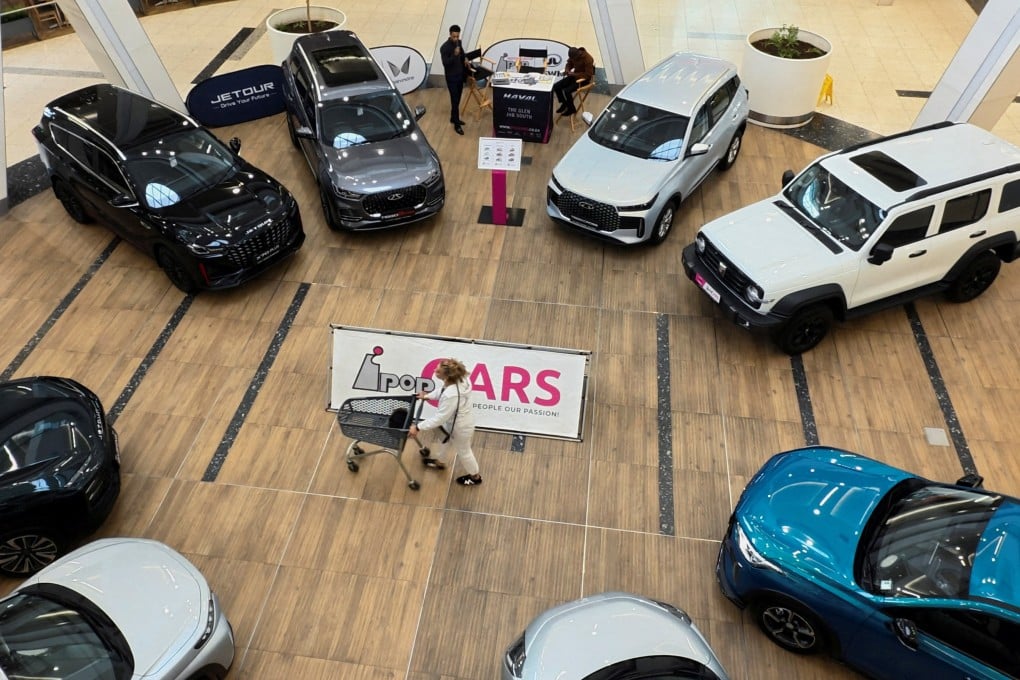
Leading Chinese carmakers like BYD and Chery Automobile are reaping rewards from their efforts to boost sales abroad, as they chase higher profitability amid rising demand for electric vehicles (EVs).
Chery, which spearheaded the go-global drive among mainland China’s automotive groups and is the country’s largest car exporter, delivered three times as many cars overseas as at home last month.
The state-owned company, based in eastern China’s Anhui province, handed 181,571 vehicles to customers outside the mainland in May, up 81 per cent from a year earlier. Overseas sales accounted for 73 per cent of its total sales for the month.
“The numbers are eye-catching because they show how Chery is evolving into a truly international player with overseas sales making up a majority of its total,” said Phate Zhang, founder of Shanghai-based data provider CnEVPost. “It is not alone, because its domestic peers, like BYD and Great Wall Motor, are also revving up their international expansions, banking on their technological and production advantages.”
BYD, the world’s largest EV builder, also posted an 81 per cent year-on-year jump in overseas sales last month, with its 160,177 units representing 42 per cent of its total sales.
Success abroad has been especially important to the Chinese carmakers this year amid a domestic sales slump owing to reduced government-funded buyer incentives.
The buoyant numbers would offset lost revenue on the mainland because Chinese-made cars commanded higher prices in markets like Europe and Southeast Asia, analysts said.
China’s BYD, Chery chart 80% growth overseas as EV demand spikes
‘Eye-catching’ numbers show efforts paying off amid growing brand recognition abroad and tepid sales at home, analysts say.
 www.scmp.com
Beijingwalker
VIP Member
Russian Oligarchs Are Buying Chinese Luxury Car That Costs More Than Rolls-Royce Ghost
Andre NalinFri, June 5, 2026 at 3:30 AM GMT+8
Image Credit: Hongqi.
Chinese luxury cars are entering territory that once seemed completely unimaginable. A new flagship sedan from Hongqi is preparing to launch in Russia with a price tag that pushes beyond even some Rolls-Royce models.
The car in question is the Hongqi Golden Sunflower Guoya, an enormous hybrid luxury sedan designed to compete with ultra-premium European brands. In Russia, the top version is expected to cost roughly $445,000 after import duties and taxes.
That price places the Chinese-built limousine directly against vehicles like the Rolls-Royce Ghost, Bentley Flying Spur, and Mercedes-Maybach S-Class. Under normal circumstances, that might sound absurd, but Russia's current automotive market is anything but normal.
European sanctions and the collapse of official luxury-car imports have created a major vacuum at the top end of the Russian market. Wealthy buyers who once flocked to German and British brands are increasingly turning toward Chinese alternatives instead.
Hongqi Sees An Opportunity
Image Credit: Hongqi.
Hongqi, which translates to "Red Flag," is China's oldest luxury automotive brand and operates under state-owned FAW Group. The marque has long served Chinese government officials and political elites, though it has recently expanded into private luxury markets.
Russia has become an increasingly important target for Chinese automakers following the departure of many Western brands. Companies like Hongqi now have access to a market where wealthy customers still want status symbols but have fewer legitimate options available.
According to reports from Autohome, the Golden Sunflower Guoya could become the most expensive Chinese car ever officially sold in Russia. Pricing is expected to start around $389,000 for the V6 hybrid and climb to roughly $445,000 for the V8-powered flagship.
Much of that massive price increase comes from Russia's elevated import tariffs that took effect in 2025. The same car reportedly costs about half as much in China.
Even so, Hongqi appears confident there is demand among wealthy Russian buyers looking for something exclusive. With official Mercedes-Benz, BMW, and Audi dealerships heavily affected by sanctions, Chinese luxury brands suddenly have room to move upscale.
Massive Dimensions And Traditional Luxury
The Guoya certainly looks the part of an ultra-luxury flagship. The sedan stretches more than 210 inches long and rides on a huge 128.3-inch wheelbase designed to maximize rear-seat comfort.A giant vertical waterfall grille dominates the front fascia, surrounded by extensive chrome trim and intricate lighting details. The rear styling incorporates taillights inspired by traditional Chinese palace lanterns, while decorative elements reference historic architecture.
Inside, the cabin mixes modern technology with classic luxury touches. The dashboard combines large digital displays with wood trim, physical detailing, and even a traditional quartz clock.
Rear-seat passengers receive the full executive-car treatment. The available four-seat configuration includes large reclining rear thrones with heating, ventilation, massage functions, memory settings, and individual control screens.
Hongqi also equipped the sedan with advanced lighting technology. Its megapixel DLP headlights can project warnings, road information, and pedestrian alerts directly onto the pavement ahead.
Hybrid Power And Serious Performance
Image Credit: Hongqi.
Despite its limousine proportions, the Guoya delivers serious performance figures. Buyers can choose between two hybrid powertrains paired with an eight-speed automatic transmission and standard all-wheel drive.
The entry-level setup combines a turbocharged 3.0-liter V6 with an electric motor for a total of 381 horsepower and 420 pound-feet of torque. The flagship version upgrades to a 4.0-liter twin-turbo V8 hybrid producing 476 horsepower and 501 pound-feet.
Hongqi claims the V8-powered model can sprint from 0-62 mph in just 4.3 seconds. That is remarkably quick for a luxury sedan of this size and weight.
There are still questions about how the complex hybrid systems will handle Russia's brutal winters and harsh operating conditions. However, Chinese automakers have rapidly improved both technology and refinement in recent years.
A Luxury Car America Will Probably Never See
The Guoya's arrival also highlights how quickly Chinese automakers are moving into segments once dominated entirely by European brands. A decade ago, the idea of a Chinese sedan competing with Rolls-Royce would have sounded laughable to most luxury buyers.Still, the chances of seeing the Golden Sunflower Guoya in the United States are effectively zero. American tariffs and political barriers currently make importing Chinese vehicles commercially unrealistic.
Brand recognition is another major obstacle. Buyers willing to spend nearly half a million dollars on a car typically care deeply about heritage, prestige, and exclusivity.
Rolls-Royce, Bentley, and Maybach have spent generations building that reputation. Hongqi may dominate headlines in Russia and China, but convincing American luxury buyers to spend Rolls-Royce money on a Chinese sedan would be an entirely different challenge.
For now, though, Russia may provide the perfect testing ground for China's ultra-luxury ambitions. And for wealthy buyers suddenly cut off from traditional European status symbols, the massive Hongqi might be exactly what they are looking for.
Russian Oligarchs Are Buying Chinese Luxury Car That Costs More Than Rolls-Royce Ghost
Chinese luxury cars are entering territory that once seemed completely unimaginable. A new flagship sedan from Hongqi is preparing to launch in Russia with a price tag that pushes beyond even some Rolls-Royce models. The ... Read more
ety
Trusted Member

@Nimble So you Indian just can't hide your sick jubilant joy of seeing Chinese car market taking a downturn, just love to see Chinese suffer ? Yeah, may your India suffer in economic misery as all your foreign investments run away and your rupee ends up trash, and may you people enjoy your boiling heat all summer long.BEIJING, May 11 (Reuters) - China's domestic car sales fell for a seventh straight month in April amid intense competition in the world's biggest auto market but exports stayed strong as automakers increasingly targeted overseas markets.
Sales at home dropped 21.6% from a year earlier to 1.4 million vehicles last month, data from the China Passenger Car Association (CPCA) said on Monday.
The China Passenger Car Association (CPCA) estimated 1.52 million passenger vehicle retail sales for May 2026, which was still down 21.6% year-on-year.
CPCA estimates May passenger car retail sales volume at 1.52 million units
On May 22, the China Passenger Car Association (CPCA) announced that the May 2026 retail sales volumes of passenger cars (including sedans, SUVs, and MPVs, excl ...www.marklines.com
Beijingwalker
VIP Member
China’s EV Exports Surge 40% in April 2026, Reinforcing Its Position as the Global Electric Vehicle Export Leader
China's electric vehicle industry achieved another major milestone in April 2026 as EV exports climbed 40% year-over-year to an impressive 278,081 units. The latest figures further solidify China's dominance in the global electric vehicle market and highlight the country's growing influence across international automotive supply chains.Despite increasing trade barriers, tariff concerns, and geopolitical tensions, Chinese automakers continue expanding aggressively into international markets, particularly across Asia, Europe, Latin America, and emerging economies.
The April export figures demonstrate that demand for Chinese electric vehicles remains exceptionally strong worldwide, driven by competitive pricing, rapid technological innovation, expanding model portfolios, and growing charging infrastructure across global markets.
China Extends Its Lead in Global EV Exports
Over the past decade, China has transformed from a domestic EV manufacturing powerhouse into the world's largest exporter of electric vehicles.Several factors have contributed to this remarkable rise:
- Large-scale battery manufacturing capacity
- Government support for EV development
- Advanced supply chain integration
- Aggressive international expansion strategies
- Competitive production costs
Brazil Emerges as the Fastest-Growing Market
Among all export destinations, Brazil delivered the most dramatic growth.Chinese EV shipments to Brazil surged by an extraordinary 221% year-over-year, reaching approximately 38,144 units during April 2026.
Several factors are driving this rapid expansion:
- Growing demand for affordable EVs
- Rising fuel costs
- Improving charging infrastructure
- Government support for cleaner transportation
Europe Remains a Critical Export Destination
Europe continues to represent one of the most strategically important regions for Chinese EV exports.Exports to Europe increased approximately 36% compared to the previous year, making it the second-largest destination for Chinese electric vehicles.
European consumers are increasingly attracted to Chinese EVs because of:
- Competitive pricing
- Advanced battery technology
- Strong feature-to-price ratios
- Rapid model innovation
Asia Remains the Largest Overall Market
Asia continues to be the largest destination region for Chinese EV exports.Countries across Southeast Asia and other Asian markets are experiencing rapid electrification as governments push for cleaner transportation solutions.
Key growth drivers include:
- Urbanization
- Fuel cost concerns
- Government EV incentives
- Expansion of charging infrastructure
Latin America Becomes a Major EV Growth Hub
Latin America is now emerging as one of the fastest-growing EV regions globally.Chinese manufacturers are benefiting from:
- Limited local EV production
- Competitive pricing advantages
- Growing consumer awareness
- Infrastructure investment
How Chinese Brands Are Winning Globally
Chinese EV manufacturers have evolved significantly over the last few years.Companies including BYD, SAIC, Chery, Geely, XPeng, NIO, and others have invested heavily in:
- Battery technology
- Software development
- ADAS systems
- Manufacturing efficiency
- Global distribution networks
Battery Leadership Gives China a Major Advantage
One of China's biggest strengths lies in battery manufacturing.The country dominates:
- Battery cell production
- Battery material processing
- Lithium supply chains
- LFP battery manufacturing
- Emerging sodium-ion technologies
Tariffs and Trade Barriers Have Not Stopped Growth
One of the most surprising aspects of the April export data is that growth continues despite increasing trade restrictions.Several regions have introduced:
- Import tariffs
- Anti-subsidy investigations
- Local manufacturing requirements
Many companies are now exploring local assembly operations and international production facilities to reduce trade-related risks.
Europe's Long-Term Outlook Remains Strong
According to forecasts from China Passenger Car Association Secretary General Cui Dongshu, Chinese EV exports to Europe could continue growing by approximately 20% annually between 2026 and 2028.This projection reflects:
- Strong consumer demand
- Expanding product portfolios
- Increasing EV adoption targets
- Growing charging infrastructure
Global EV Demand Continues Expanding
The latest export surge reflects broader global trends.Electric vehicle adoption continues accelerating due to:
- Lower operating costs
- Improved battery technology
- Expanded charging networks
- Government climate goals
- Consumer acceptance
Competition Intensifies Worldwide
While Chinese companies currently dominate EV exports, competition is increasing.Automakers from Europe, the United States, South Korea, and Japan are investing billions into electrification strategies.
Key competitive areas include:
- Battery innovation
- Software ecosystems
- Manufacturing efficiency
- Charging technologies
- Autonomous driving systems
EVTech.News Analysis
The April 2026 export figures confirm that China's EV industry has successfully evolved beyond its domestic market and become a truly global force.The country's combination of manufacturing scale, battery leadership, software integration, and aggressive pricing continues to reshape international automotive markets.
Perhaps most importantly, Chinese EV exports are proving resilient even in the face of growing geopolitical challenges and trade restrictions.
If current trends continue, Chinese manufacturers could play an even larger role in global EV adoption throughout the remainder of the decade.
Future Outlook
Looking ahead, several trends are expected to drive further export growth:- Expansion into emerging markets
- Affordable EV platforms
- Sodium-ion battery adoption
- Ultra-fast charging technologies
- Global manufacturing expansion
Conclusion
China's 40% surge in EV exports during April 2026 underscores the country's growing dominance in global electric mobility.Strong growth in Brazil, Europe, Asia, and Latin America demonstrates that demand for Chinese EVs remains robust despite tariffs and geopolitical challenges.
With continued innovation, aggressive expansion, and strong battery leadership, China appears set to remain at the center of the global EV revolution for years to come.
Stay updated with the latest EV industry insights at EVTech.News.
China EV exports April 2026, Chinese electric vehicle exports growth, China EV export statistics 2026, Brazil Chinese EV sales, Europe Chinese EV imports, global EV export market, Chinese EV market dominance, BYD export growth 2026, China electric car exports worldwide, EV export trends 2026, Chinese EV manufacturers global expansion, EV sales Latin America, Asia electric vehicle market growth, global EV adoption trends, EVTech.News China EV analysis

China’s EV Exports Jump 40% in April 2026 to 278,081 Units, Strengthening Global Market Dominance | EVTech.News
Chinese EV exports surged 40% year-over-year in April 2026, reaching 278,081 units as demand from Brazil, Europe, Asia, and Latin America continues to accelerat
Beijingwalker
VIP Member
Chinese car sales overtake Japan and Korea in UK surge
Chinese brands climb: Chinese manufacturers like BYD, Chery, MG and Polestar captured 15% of UK sales in 2026, surpassing Japanese and Korean rivals.EVs power growth: Battery electric vehicles surged over 30% in May, reaching a 27% market share, boosted by grants, discounts and high fuel prices.
Beijingwalker
VIP Member
BYD Overtakes Tesla as Top-Selling EV Brand Overseas, Dominates UK, Australia and Brazil Markets

BYD Overtakes Tesla as Top-Selling EV Brand Overseas, Dominates UK, Australia and Brazil Markets | EVTech.News
BYD overtakes Tesla as the leading EV brand in major overseas markets including the UK, Australia, and Brazil. Discover how BYD's global EV expansion, affordabl
神威98
Registered Member

I spotted the Xiaomi SU7/YU7 a total of five times within 10 days. 2 of those were display models in the mall. I think it was a 2nd gen standard SU7 that comes in blue. The thing about the Xiaomi SU7 is the standard or regular version don't look all that impressive in person. Only the ultra SU7 and regular YU7 are something that would turn heads.
If the CEO of Ford imported a Xiaomi SU7, I fail to see how its looks would have impressed him if it was the regular version.
I also thought that Xiaomi EVs were more pervasive. Seems Xiaomi still has plenty of growth for their cars
If the CEO of Ford imported a Xiaomi SU7, I fail to see how its looks would have impressed him if it was the regular version.
I also thought that Xiaomi EVs were more pervasive. Seems Xiaomi still has plenty of growth for their cars
Beijingwalker
VIP Member
BYD Exports Rose 80% Year Over Year In May
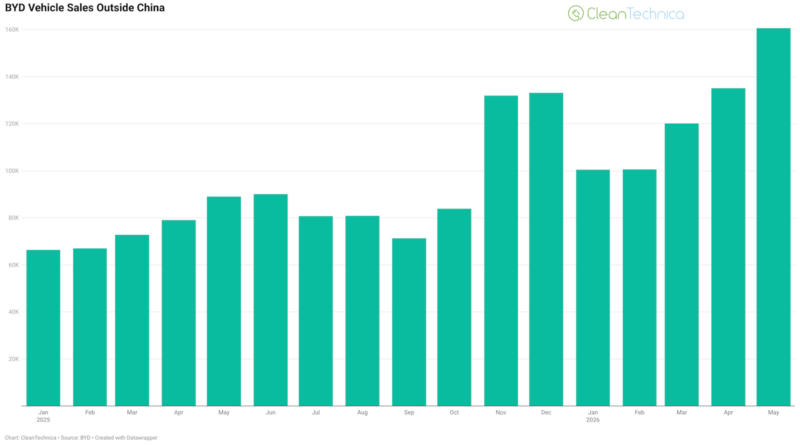
BYD’s May 2026 overseas sales were 80.4% higher than its May 2025 overseas sales, and they also rose 18.9% compared to the month before, April 2026. The company had 160,644 vehicle sales beyond China, compared to 89,047 in May 2025 and 135,098 in April 2026.

BYD Exports Rose 80% Year Over Year In May - CleanTechnica
Support CleanTechnica's work through a Substack subscription or on Stripe. I recently covered BYD’s monthly sales — passenger vehicles and commercial vehicles — as I’ve been doing for a long time now. However, there’s a sub-story there that I haven’t been covering that seems important to start...
 cleantechnica.com
冖_冖
Registered Member

China May Car Sales Fall 22% as High Fuel Prices Hit Gas Cars - Caixin Global
China May Car Sales Fall 22% as High Fuel Prices Hit Gas Cars - High oil prices have hit sales of internal-combustion-engine vehicles, driving NEVs to a record 62.9% market share in May, even as overall passenger-vehicle sales fell 22.1%
China’s domestic passenger car sales slumped 22.1% in May as a collapse in demand for fossil-fuel vehicles reshaped the world’s largest auto market.
Retail vehicle deliveries fell to 1.51 million units last month, according to data released Monday by the China Passenger Car Association (CPCA). Sales of internal combustion engine cars plummeted 39% year-on-year to 560,000 units, while new energy vehicle (NEV) deliveries saw a milder 7.5% decline to 950,000 units.
Cosco Shipping Holdings Co. will use a terminal it acquired in eastern Spain mainly for car imports, underlying the country’s growing importance for Chinese automobile manufacturers.
The plans mean about 300,00 new vehicles per year will arrive through the Port of Tarragona, its president, Santi Castellà, said in an interview.
冖_冖
Registered Member
Dongfeng’s 350 Wh/kg solid-state battery to exceed 1,000 km range, launching in 2026
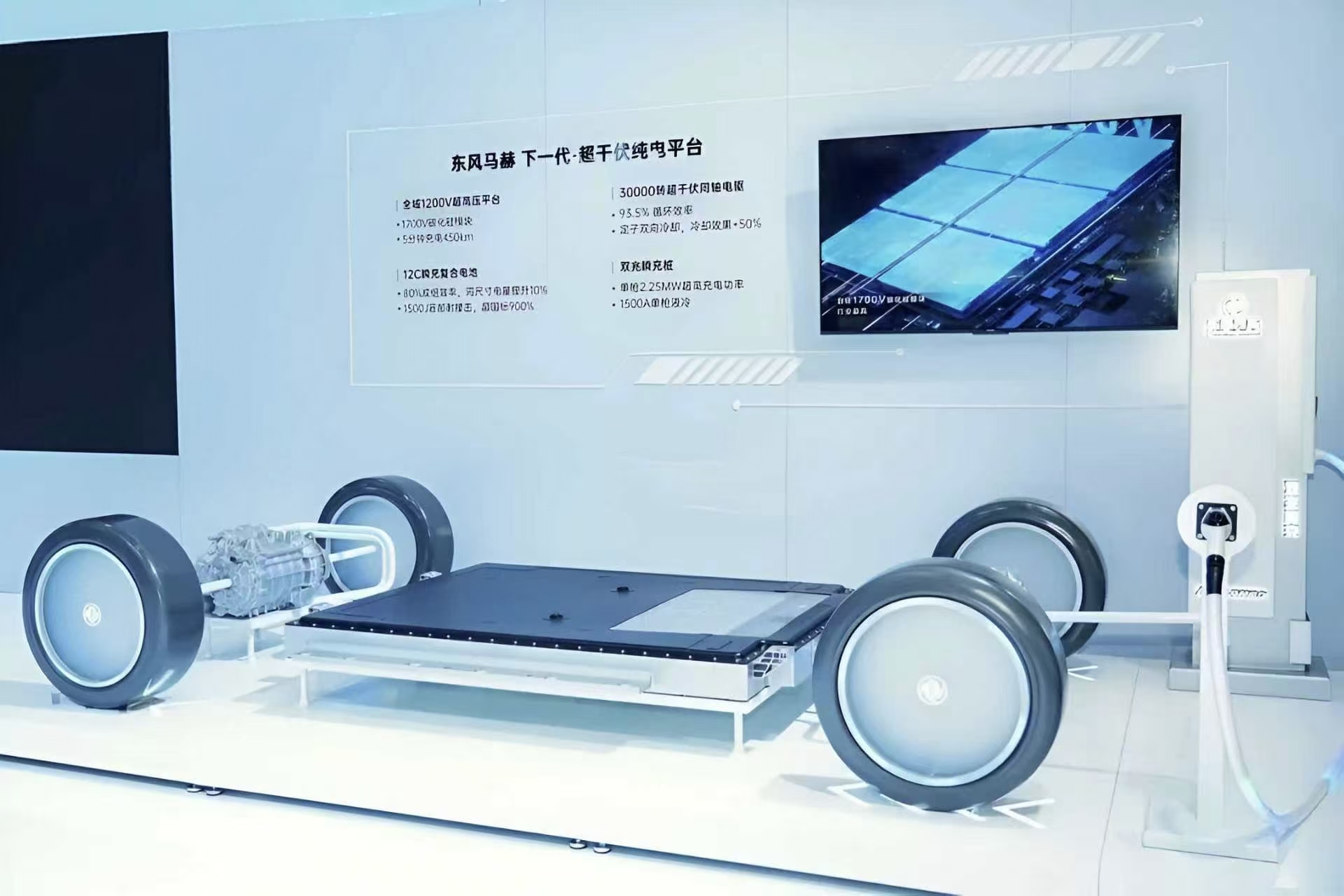
Dongfeng’s 350 Wh/kg solid-state battery to exceed 1,000 km range, launching in 2026
Dongfeng will deploy a 350 Wh/kg solid-state battery in 2026, offering over 1,000 km range and advanced safety features.carnewschina.com

Dongfeng to mass-produce solid-state batteries in H2 2026, enabling 1,000 km+ range
Dongfeng’s new solid-state battery set for mass production in H2 2026.
carnewschina.com
Dongfeng to mass-produce solid-state batteries in H2 2026, enabling 1,000 km+ range
Jun 9, 2026 12:24 PM CESTDongfeng Motor‘s solid-state batteries are scheduled for mass production and vehicle integration in the second half of 2026, as reported by Hubei government’s newspaper. This battery boasts an energy density of 350Wh/kg and is expected to enable new energy vehicles (NEVs) to exceed a driving range of 1,000km.
Dongfeng has adopted the oxide-polymer composite technical route, which is widely recognised in the industry as the most viable path for rapid mass-market adoption due to its mature raw material supply chain and compatibility with existing production equipment.
According to Zhang Wei, head of the solid-state battery laboratory at Dongfeng’s R&D Institute, the company has achieved 100% self-reliance in core technologies, covering everything from electrodes and solid electrolytes to full battery pack integration. The company has established a comprehensive R&D and production base that integrates laboratory testing, trial production, and pilot lines.
Testing conducted in the extreme cold of Mohe earlier this year demonstrated the battery’s resilience. In temperatures as low as -30°C, the battery retained over 74% of its charge, with a total range exceeding 1,000 km. Furthermore, the new battery pack is 30% lighter than traditional lithium-ion counterparts, allowing for increased range without adding weight to the vehicle.
 In early 2026, Dongfeng’s solid-state battery prototype underwent cold-weather calibration testing in Mohe, China.
Dongfeng is not alone in this race; other major players like GAC, CATL, and FAW are also aggressively pursuing solid-state battery technology with various timelines for mass production between 2026 and 2027. To accelerate its own progress, Dongfeng formed the Hubei Solid-State Battery Industry Technology Innovation Consortium in May 2026, partnering with 18 academic and industrial institutions.
Dongfeng’s R&D team is also working on next-generation fast-charging solid-state batteries and even higher energy density solutions, with plans to introduce further advancements by 2027.
Beijingwalker
VIP Member
China’s Car Market Just Hit a Historic First: Top 10 Best-Selling Cars Were All NEVs in May 2026
June 10 2026China’s passenger vehicle market has crossed a landmark moment in May 2026. For the first time, the country’s Top 10 best-selling passenger cars were entirely made up of New Energy Vehicles — battery electric vehicles, extended-range EVs and plug-in hybrids.
This is not just another EV milestone. It signals a structural shift in the world’s largest car market, where traditional ICE-only models have now been pushed out of the monthly Top 10 retail sales chart.
According to China retail sales data reported by CnEVPost, the Geely Xingyuan led the market with 38,751 units, followed by the Tesla Model Y at 28,911 units and the Xiaomi SU7 at 24,023 units. The full Top 10 list included 8 BEVs, 1 EREV and 1 PHEV, making May 2026 a symbolic month for China’s auto transition.


China’s Car Market Just Hit a Historic First: Top 10 Best-Selling Cars Were All NEVs in May 2026
China’s passenger vehicle market has crossed a landmark moment in May 2026. For the first time, the country’s Top 10 best-selling passenger cars were entirely made up of New Energy Vehicles — battery electric vehicles, extended-range EVs and plug-in hybrids.This is not just another EV milestone...
 www.autopunditz.com
Beijingwalker
VIP Member
China’s BYD aims to be world’s biggest car firm within five years
EV maker aims to overtake Toyota, as it plans to spend £1.8bn to build five-minute flash chargers in Europe
Wed 10 Jun 2026 10.59 BST

The Chinese car company BYD has said it aims to be the world’s biggest automaker within the next five years.
Targeting Toyota’s long-held top spot, BYD’s founder and chair, Wang Chuanfu said he was confident it could overtake global rivals through rapid advances in battery technology and fast charging, as well as growing production overseas, including Europe.
“BYD will truly become the number one automaker globally in terms of scale in five years,” he said at the company’s annual shareholder meeting in Shenzhen.
Overnight the company announced plans to spend nearly £1.8bn in Europe to develop infrastructure for five-minute “flash charging” of its cars.
The company, based in southern China, overtook Tesla last year as the world’s biggest EV maker by sales. In May it sold more than 160,000 vehicles abroad, up 80% from the year before. It aims to sell 1.5m vehicles overseas this year, up more than 40% from last year’s 1.05m.
In 2025, Toyota retained its crown as the world’s top-selling carmaker with 11.3m vehicles, while BYD sold 4.8m.
The company’s top international executive, Stella Li, separately told reporters in London that the company would start assembling cars at its new plant in Hungary in the fourth quarter of this year.
She also said BYD had paused work on a plant in Turkey while it focused on production in the EU, where locally assembled cars will help it beat tariffs Brussels introduced on Chinese electric vehicles (EVs) two years ago.
“Hungary is the number one priority right now,” she told Reuters. “The second priority will be to focus on finding a second [production] facility in Europe.”
BYD in Hungary recently faced allegations that EU employment laws were being breached, as it races to build its first European factory using Chinese migrant workers.
It is also facing claims that excavated soil from the site of the factory in Szeged was dumped on to surrounding farmland, potentially contaminating it; local authorities ordered the destruction of affected crops.
Earlier this week a spokesperson for Csongrád-Csanád county confirmed that authorities had placed sanctions on three companies involved in the factory’s construction and imposed a fine on at least one of them. However, the findings of the investigation had not yet been made public, said China Labour Watch, which conducted the investigation into workers.
BYD is also facing pressure in the US where the Pentagon overnight added it to a list of “Chinese military companies” deemed a national security risk to the US. Many of these businesses are competing directly with big US companies.
China responded on Wednesday by saying it believed its addition to the US list “lacks factual basis”.
 www.theguardian.com
EV maker aims to overtake Toyota, as it plans to spend £1.8bn to build five-minute flash chargers in Europe
Wed 10 Jun 2026 10.59 BST
The Chinese car company BYD has said it aims to be the world’s biggest automaker within the next five years.
Targeting Toyota’s long-held top spot, BYD’s founder and chair, Wang Chuanfu said he was confident it could overtake global rivals through rapid advances in battery technology and fast charging, as well as growing production overseas, including Europe.
“BYD will truly become the number one automaker globally in terms of scale in five years,” he said at the company’s annual shareholder meeting in Shenzhen.
Overnight the company announced plans to spend nearly £1.8bn in Europe to develop infrastructure for five-minute “flash charging” of its cars.
The company, based in southern China, overtook Tesla last year as the world’s biggest EV maker by sales. In May it sold more than 160,000 vehicles abroad, up 80% from the year before. It aims to sell 1.5m vehicles overseas this year, up more than 40% from last year’s 1.05m.
In 2025, Toyota retained its crown as the world’s top-selling carmaker with 11.3m vehicles, while BYD sold 4.8m.
The company’s top international executive, Stella Li, separately told reporters in London that the company would start assembling cars at its new plant in Hungary in the fourth quarter of this year.
She also said BYD had paused work on a plant in Turkey while it focused on production in the EU, where locally assembled cars will help it beat tariffs Brussels introduced on Chinese electric vehicles (EVs) two years ago.
“Hungary is the number one priority right now,” she told Reuters. “The second priority will be to focus on finding a second [production] facility in Europe.”
BYD in Hungary recently faced allegations that EU employment laws were being breached, as it races to build its first European factory using Chinese migrant workers.
It is also facing claims that excavated soil from the site of the factory in Szeged was dumped on to surrounding farmland, potentially contaminating it; local authorities ordered the destruction of affected crops.
Earlier this week a spokesperson for Csongrád-Csanád county confirmed that authorities had placed sanctions on three companies involved in the factory’s construction and imposed a fine on at least one of them. However, the findings of the investigation had not yet been made public, said China Labour Watch, which conducted the investigation into workers.
BYD is also facing pressure in the US where the Pentagon overnight added it to a list of “Chinese military companies” deemed a national security risk to the US. Many of these businesses are competing directly with big US companies.
China responded on Wednesday by saying it believed its addition to the US list “lacks factual basis”.
China’s BYD aims to be world’s biggest car firm within five years
EV maker aims to overtake Toyota, as it plans to spend £1.8bn to build five-minute flash chargers in Europe
www.theguardian.com
Beijingwalker
VIP Member
China car exports jump 73% in May as high fuel prices raise interest in EVs
June 10, 2026 at 12:52 am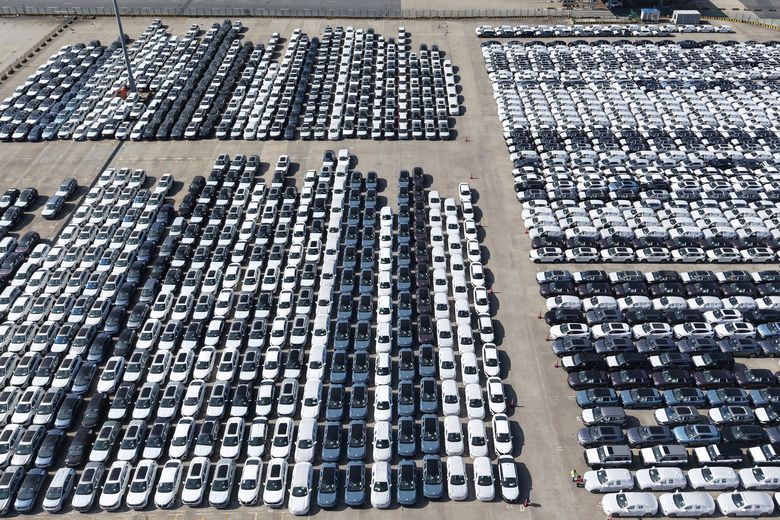
FILE -An aerial view of new cars awaiting export to oversea markets is seen at a port in Shanghai, March 10, 2026. (Chinatopix via AP, File)
The Associated Press
HONG KONG (AP) — China’s passenger car exports jumped 73% year-on-year in May to around 809,000 vehicles, an industry group reported Wednesday, as higher gasoline and diesel prices due to the war in Iran raised interest in electric vehicles.
That’s up from about 796,000 passenger cars exported in April, data from the China Association of Automobile Manufacturers showed.
Exports of new energy vehicles, including pure EVs and plug-in hybrids, more than doubled in May from a year earlier to about 435,000 passenger cars, or more than half the total.
Chinese automakers such as BYD have been stepping up their overseas expansions, targeting markets including in Latin America, Asia and Europe at a time when domestic demand is coming under pressure, partly due to scaled-back government incentives for drivers to switch to EVs.
Domestic passenger car sales in May fell 23.4% from a year earlier to 1.44 million vehicles, the CAAM said, the seventh straight month of year-on-year declines. Sales of cars with internal combustion engines — including gasoline and diesel vehicles — fell almost 42% from the year before as the share of EVs grew.
UBS bank expects China’s annual passenger car exports to rise about 40% in 2026 from a year earlier, with EV exports possibly up about 80%.
“The high oil price certainly has translated into further higher interest on the EV,” said Paul Gong, head of UBS’s China automotive industry research.
China’s car exports were stronger than expected in the first few months of this year, Gong said, while domestic car sales were weaker than expected.
Claire Yuan, an auto analyst at S&P Global Ratings, expects China’s passenger car exports to maintain strong momentum in 2026 and forecasts a year-on-year growth of 30% to 50%.
Roughly one in four new cars sold globally last year was electric, the International Energy Agency said in its latest annual global EV outlook, released in May, and that’s going to grow further this year despite a more sluggish start of the year.
EV sales could reach 23 million and make up nearly 30% of all cars sold in 2026, the IEA said.
China is the world’s largest producer of EVs, supplying the majority of EVs sold worldwide.
BYD, China’s largest EV maker, sold over 160,000 vehicles abroad in May, up 80% from the year before. It aims to sell 1.5 million vehicles overseas this year, up more than 40% from last year’s 1.05 million.
The automaker based in southern China overtook Tesla last year as the world’s biggest EV maker by sales.
Selling more cars overseas may also generate better profitability for Chinese carmakers, as an intense price war in China last year has eroded profitability for many automakers.
Yuan of S&P said China’s car sales could pick up in the second half of the year as buyers step up purchases after automakers launch fresh lineups.
Users who are viewing this thread
Total: 4 (members: 0, guests: 4)
Pakistan Defence Latest
-
Federal cabinet gives nod to imposition of emergency in KP; summary sent to president (31 Viewers)
- Latest: Optical216
-

-
-
-

Country Watch Latest


Latest Posts
-
Federal cabinet gives nod to imposition of emergency in KP; summary sent to president (31 Viewers)
- Latest: Optical216
-
Makkah Defence Alliance: Turkey, Saudi Arabia, and Pakistan, news & updates (26 Viewers)
- Latest: LHA4210
-

-
 Türkiye - Azerbaijan | Strategic Partnership, Regional Alliance, Military Cooperation - News & Updates (4 Viewers)
- Latest: Ali_Baba
-