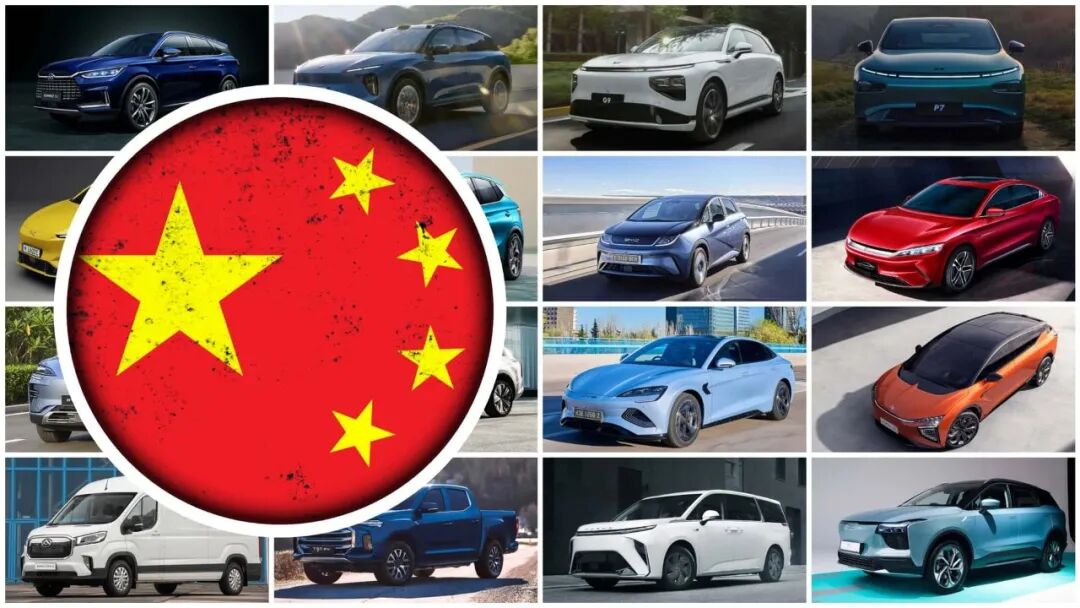
China Auto Thread

China Isn't Exporting EVs-It's Exporting Entire Industrial Ecosystems

Jul 11, 2026

Highlights

  • China's June vehicle exports surpassed one million units for the first time, with new energy vehicles growing over 160% year-over-year.
  • Companies like Chery, XPeng, and CATL are establishing full manufacturing and supplier ecosystems across Europe and Africa, becoming local producers.
  • China's upstream control of rare earths, graphite, and battery materials has enabled downstream dominance in EVs, robotics, and industrial automation.
  • Overcapacity at home is driving China to internationalize production, embedding its industrial platforms within foreign economies to sustain growth.
  • Tariffs alone cannot replicate vertically integrated industrial ecosystems; the real contest is over who owns the industrial platforms of the 21st century.

For years, many Western observers viewed China's electric vehicle success as a story of inexpensive labor, generous subsidies, or aggressive pricing. That explanation is no longer sufficient. A new report from the Shanghai Securities News illustrates something far more significant: China is no longer simply exporting automobiles—it is exporting complete industrial ecosystems. For Rare Earth Exchanges®, this is precisely what our Great Powers Era 2.0™ thesis has long anticipated.
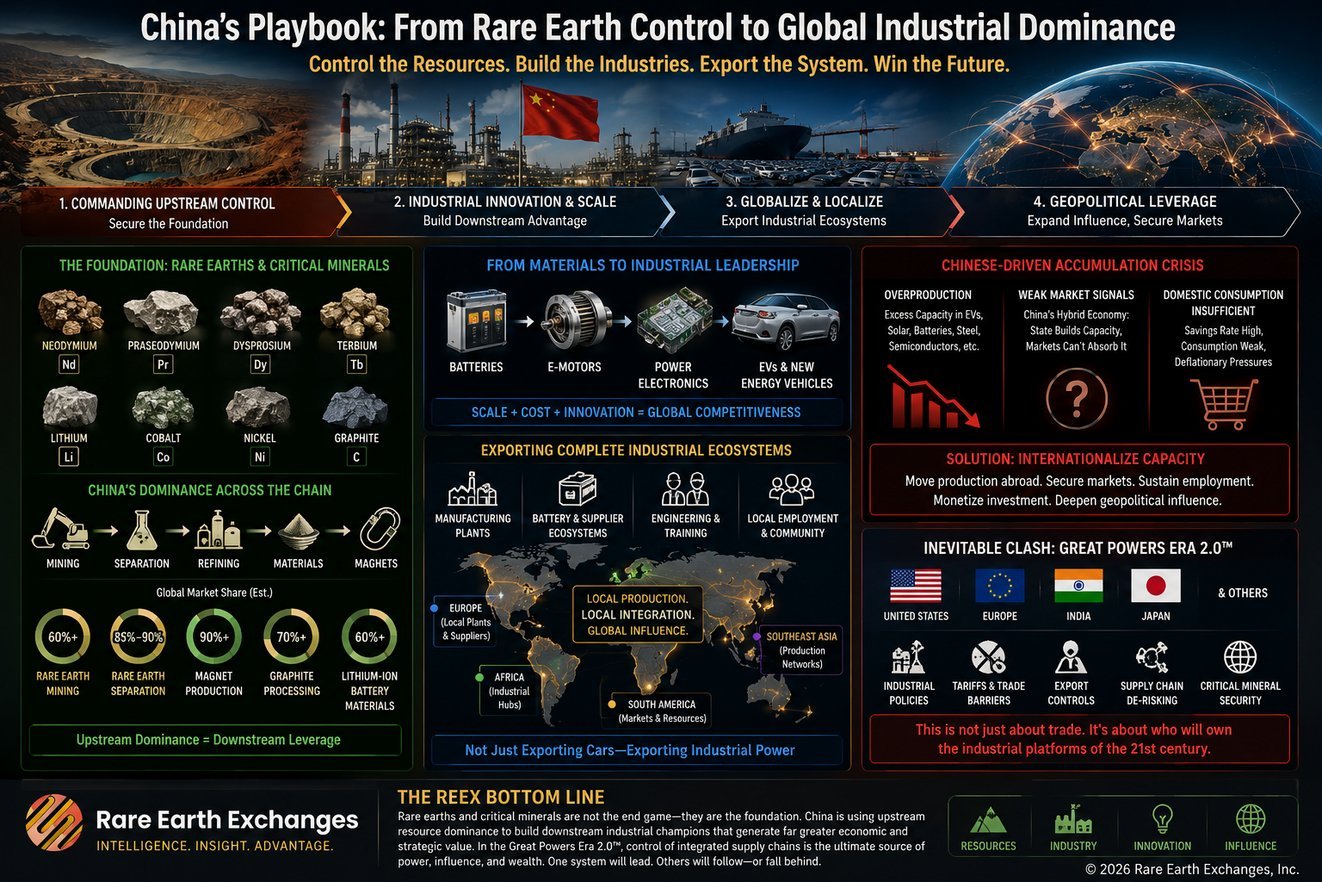
Rare Earth Exchanges infographic mapping China's 4-step playbook from rare earth mining dominance to geopolitical leverage in

China's strategy has never been merely to dominate rare earth mining or battery materials. The objective has been to leverage control over critical mineral supply chains to innovate downstream, capture higher-value manufacturing, and ultimately monetize entire industrial verticals. Electric vehicles are simply the first major proof of concept.

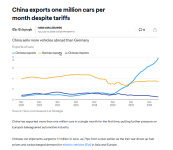
The numbers are striking. China's June vehicle exports surpassed one million units for the first time, with new energy vehicles accounting for more than half and growing over 160% year-over-year.

Yet the bigger story is not exports—it's localization. Companies such as Chery, XPeng, and CATL are establishing manufacturing, battery production, engineering, training, and supplier ecosystems across Europe and Africa. They are becoming local manufacturers rather than foreign exporters.

This reflects a deliberate industrial strategy decades in the making. China first secured commanding positions in rare earth separation, graphite processing, battery materials, and magnet manufacturing. Those upstream advantages enabled leadership in batteries, electric motors, power electronics, and ultimately electric vehicles. Today, those same capabilities are expanding into robotics, industrial automation, grid infrastructure, aerospace, and defense technologies.

This is where the U.S.-China trade conflict fundamentally misses the mark. Tariffs may slow shipments, but they do not easily replicate vertically integrated industrial ecosystems. Control over critical minerals enables control over advanced manufacturing, which in turn creates durable advantages in innovation, employment, exports, and geopolitical influence.

The same blueprint now emerging in EVs is likely to repeat across humanoid robotics, AI-enabled manufacturing, autonomous systems, and next-generation industrial equipment.

Chinese-driven Accumulation Crises​

China's push to export entire industrial ecosystems is driven not only by ambition but by economic necessity. Years of state-directed investment, abundant credit, and industrial policy have created enormous manufacturing capacity across electric vehicles, batteries, solar equipment, rare earth magnets, and other strategic sectors. Domestic demand, however, has struggled to absorb this output, contributing to persistent overcapacity, intense price competition, and shrinking profit margins.

This reflects a structural tension within China's hybrid political economy: state planning can rapidly build productive capacity, but market demand cannot always keep pace.

So the solution is to internationalize that capacity. By moving production overseas, embedding Chinese suppliers within foreign economies, and securing long-term access to customers, Beijing can sustain factory utilization, preserve employment, monetize decades of industrial investment, and deepen geopolitical influence.

Yet this strategy inevitably collides with the industrial ambitions of the United States, Europe, India, and other major economies seeking to rebuild domestic manufacturing and reduce strategic dependence on China. The resulting competition is not simply about trade balances or tariffs—it is a contest over who will own the industrial platforms of the twenty-first century. In the Great Powers Era 2.0™, this is a struggle for enduring economic and technological leadership, and the outcome will shape global supply chains for decades to come.

The REEx Bottom Line​

Rare earth elements and critical minerals are not the end game—they are the foundation. China is using upstream resource dominance to build downstream industrial champions that generate far greater economic and strategic value. Investors who focus only on mines or commodity prices risk missing the larger story.

In the Great Powers Era 2.0™, the winners will be those who control not simply the raw materials, but the integrated supply chains that transform them into globally dominant industries.

 
China: Tesla Model Y is the best-selling vehicle of any fuel type in June

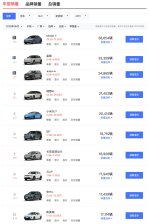
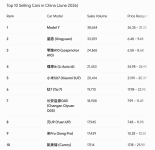
The Tesla Model Y took the top spot as China's best-selling passenger vehicle of any fuel type in June 2026, with 38,654 retail registrations, as per data from industry tracker Yiche.

chineseJune.png

englishJune.png
 
China: Tesla Model Y is the best-selling vehicle of any fuel type in June

The Tesla Model Y took the top spot as China's best-selling passenger vehicle of any fuel type in June 2026, with 38,654 retail registrations, as per data from industry tracker Yiche.

View attachment 205781

View attachment 205782
One Han Chinese trait I really hate is everyone wants to brag how well they are doing to their neighbors, siblings, and relatives. The reason Model Y is top selling in China has nothing to do with it being the best EV (or even a good EV).

It all has to do with it being the "IT" car you park in front of your property to tell everyone you are doing better than the taxi or car hailing drivers. India has an actual caste system, but China comes close with a psychological one. To own a Model Y means you are not part of the "lower caste" cattle... Simply a means of showing off without actually saying it out loud.

(High sales figure for Tesla Model Y simply tells you: 1. There are more ppl socioeconomically one rung higher than "lower caste" cattle than truly rich ppl, and 2. Just how superficial ppl are in China!)
 
Last edited:
One Han Chinese trait I really hate is everyone wants to brag how well they are doing to their neighbors, siblings, and relatives. The reason Model Y is top selling in China has nothing to do with it being the best EV (or even a good EV).

It all has to do with it being the "IT" car you park in front of your property to tell everyone you are doing better than the taxi or car hailing drivers. India has an actual caste system, but China comes close with a psychological one. To own a Model Y means you are not part of the "lower caste" cattle... Simply a means of showing off without actually saying it out loud.

(High sales figure for Tesla Model Y simply tells you: 1. There are more ppl socioeconomically one rung higher than "lower caste" cattle than truly rich ppl, and 2. Just how superficial ppl are in China!)

Are you saying because taxi fleets are full of BYD, GAC Aion, and Geely models the "face" pressure in China says you should buy something not associated with a lower level taxi driver?

While I don't think you are wrong I think there are some other mitigating factors contributing too. Most of the top selling New Energy Vehicles (NEVs) in China are Plug-In Hybrid Electric Vehicles (PHEVs) but Tesla is not...this is where the "snob" appeal of buyers comes into play.

Many people (including myself) consider PHEVs as "fake" electric vehicles and want a reliable Battery Electric Vehicle (BEV) to show they are completely rejecting ICE cars. Tesla is fitting the bill (the no-fuss superchargers all over the place helps too)...but the SU7 is closing the gap. Note how BYD is sliding off the top selling model charts at #8 and #9.
 
Last edited:
To view this content we will need your consent to set third party cookies.
For more detailed information, see our cookies page.
 
German car industry faces a brutal new era as competition from China grows
To view this content we will need your consent to set third party cookies.
For more detailed information, see our cookies page.
 
Are you saying because taxi fleets are full of BYD, GAC Aion, and Geely models the "face" pressure in China says you should buy something not associated with a lower level taxi driver?

While I don't think you are wrong I think there are some other mitigating factors contributing too. Most of the top selling New Energy Vehicles (NEVs) in China are Plug-In Hybrid Electric Vehicles (PHEVs) but Tesla is not...this is where the "snob" appeal of buyers comes into play.

Many people (including myself) consider PHEVs as "fake" electric vehicles and want a reliable Battery Electric Vehicle (BEV) to show they are completely rejecting ICE cars. Tesla is fitting the bill (the no-fuss superchargers all over the place helps too)...but the SU7 is closing the gap. Note how BYD is sliding off the top selling model charts at #8 and #9.
Tesla has no snob factor for being pure EV. Personally, I don't think anyone in China would care enough to walk around the car just to check if I has exhaust pipes on the rear end. Takes too much effort.

The reason why Model Y is top selling has to do with this: The design is so simple and odd/conspicuous/too minimalist even a kindergarten can tell the make with just a quick glance. While you have to squint and consult a car illustration encyclopedia just to determine the make of all other Chinese cars.

Basically anyone who drives a Model Y in China simply wants to tell without actually saying it: Fuk off, this isn't a taxi or ride hailing car.

It's actually a very precarious situation for Tesla. This kind of niche can easily be taken out overnight provided the car manufacturer is smart enough to realize it...
 
The reason why Model Y is top selling has to do with this: The design is so simple and odd/conspicuous/too minimalist even a kindergarten can tell the make with just a quick glance. While you have to squint and consult a car illustration encyclopedia just to determine the make of all other Chinese cars.

Basically anyone who drives a Model Y in China simply wants to tell without actually saying it: Fuk off, this isn't a taxi or ride hailing car.

It's actually a very precarious situation for Tesla. This kind of niche can easily be taken out overnight provided the car manufacturer is smart enough to realize it...

I think what is happening to BYD is "Analysis paralysis" due to too many choices for an expensive product. This is a well known consumer phenomenon which can wreak havoc on sales.
is a state of an individual or a group in which excessive analysis of a situation cause forward motion or decision-making to become paralyzed, meaning that no solution or course of action is decided upon within a natural time frame. It is one of the results caused by overanalyzing or overthinking a situation. A situation may be deemed too complicated and a decision is never made, or made much too late, due to anxiety
To view this content we will need your consent to set third party cookies.
For more detailed information, see our cookies page.

Analysis Paralysis: Why Smart People Can't Decide​


Since Tesla does the Apple thing and basically limits your choices to one or two (to avoid Analysis paralysis) the most people need to think about is the color. This "IT" car choice is much simplified.
 
Last edited:

China’s monthly car exports surge past 1mn for first time


搜狗截图20260714140000.png
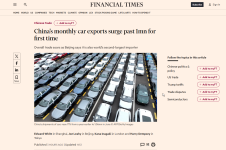
China’s monthly car exports rose to a record 1mn cars in June as part of an overall surge in trade that will heighten tensions with partners such as the EU.

Shipments of cars rose 71.2 per cent from a year earlier to 1.06mn, putting the country on track to export more than 10mn cars this year, up from 7.1mn last year and more than double the 4.9mn in 2023.

The surge in exports comes as domestic sales slow sharply following the phaseout of EV subsidies and a decline in demand for fuel-powered cars, but the pivot has prompted the EU and others to impose steep tariffs on Chinese car imports.

Wang Jun, vice-minister of the National Bureau of Statistics, said the surge in electric vehicles was in line with the global “low-carbon transition”, which was fuelling demand for “China’s green products”.

The wave of Chinese exports has been driven by lower-cost cars boasting superior software, further threatening carmakers from Japan, South Korea, Europe and the US.

As recently as 2021, EVs accounted for only about 15 per cent of China’s car exports, but the dynamics are rapidly changing as China’s EV makers launch a global assault.

China’s overall exports jumped 27 per cent year-on-year in June, compared with 19.4 per cent in May and a forecast of 18.2 per cent in an analyst survey by Reuters, as it also shipped more hardware for the AI boom.

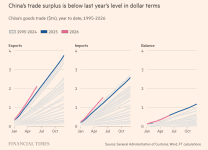
Imports jumped 36 per cent, figures from the General Administration of Customs of China showed. China’s trade surplus was $576bn in the first half, down 4.7 per cent from a year earlier.

Lyu Daliang, a China Customs spokesperson, added: “We are not only the world’s largest exporter but also the world’s second-largest importer.”

搜狗截图20260714140151.png
China’s exports of rare earths in June fell 34 per cent year on year and 6.4 per cent in the first half, following tight export controls on the minerals, which are essential for high-technology products.

China dominates production of rare earths and its controls are a particular source of tension with trading partners.

The NBS’s Wang said China’s exports of green energy-related products such as lithium batteries and wind turbines increased 37.6 per cent and 35.6 per cent, respectively, during the first half.
China’s imports were boosted by chips. It imported 53.7bn units of integrated circuits in June 2026, a 6.8 per cent increase from a year earlier. In the first half of the year, chip imports rose 8.1 per cent.

Among the carmakers driving the export boom, BYD sold 175,000 cars overseas in June, up 95 per cent year on year. The group’s foreign sales accounted for a record 43 per cent of its total production last month.

Geely reported overseas sales of 102,874 vehicles in June, up 157 per cent, marking the first time its monthly exports exceeded 100,000 units.

State-backed Chery exported overseas sales of 191,062 in June, an increase of 80 per cent. Chery’s sales last month set a new record for Chinese carmakers’ monthly exports for the fourth consecutive month.

Aside from electric vehicles, electric railway locomotives and electric motorcycle and bicycle shipments increased by 45.1 per cent and 31.5 per cent, respectively, Wang said.


For the first time, Chinese vehicle sales overtook Japanese ones, reshuffling the European auto market?​

2026-07-14 13:10

A car priced at 110,000 yuan can still achieve explosive sales when sold for 300,000 yuan? Chinese automobiles have firmly established a foothold in Europe
At the end of 2024, when the European Union wielded a tariff hammer of up to 45.3% on Chinese imported electric vehicles, the established European automotive giants probably breathed a sigh of relief, thinking that Chinese brands would no longer be able to sell well. Japanese automakers, which have taken root in Europe for many years, also smiled, believing they could finally hold onto a huge market share.

But more than a year later, they suddenly realized that they seemed to have picked up the wrong script.

v2_5f7b630362f845c09c851fa5164e0ecc@1743780481_oswg121892oswg1080oswg608_img_000


01: Chinese Automakers Make History Once Again

Statistics from the European Automobile Manufacturers' Association on new car sales in May show that among 31 major European countries, five Chinese automakers — BYD, SAIC, Geely, Chery, and Leapmotor — collectively sold 138,400 new vehicles, representing a 65% year-on-year increase. Among them, the three giants Geely, SAIC, and BYD had the highest sales, with monthly sales reaching 38,146, 30,527, and 32,380 units respectively.

v2_9f5193a558ef4cc293506759bc1a64f4@1743780481_oswg28331oswg640oswg365_img_000


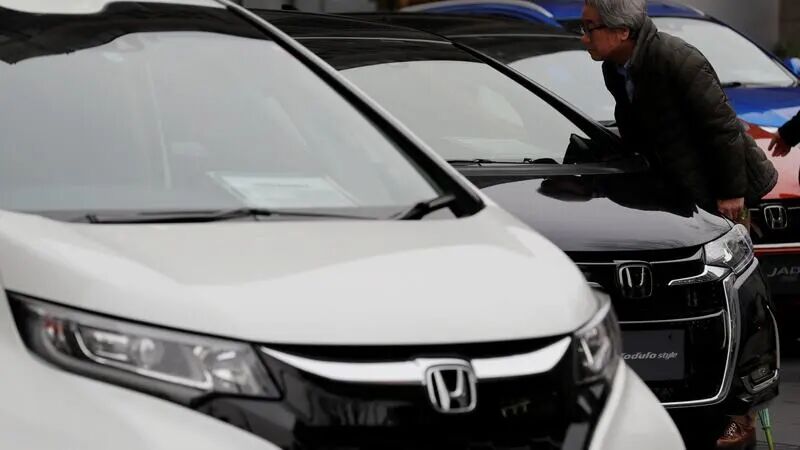
During the same period, six Japanese automakers — Toyota, Honda, Nissan, Suzuki, Mazda, and Mitsubishi — recorded combined sales of 130,000 units in the aforementioned European countries, a 3% year-on-year decline. By this calculation, the Chinese camp has surpassed Japanese brands by about 6%, marking the first time in recorded history that Chinese passenger vehicles have outperformed Japanese brands in monthly sales in the European market.

v2_fbdca85762d741bf91d1f4f7608fe2c4@1743780481_oswg39892oswg800oswg450_img_000


This outcome caught many by surprise, as the EU's anti-subsidy measures targeting Chinese pure electric vehicles, implemented at the end of October 2024, were quite harsh. On top of a 10% base tariff, additional anti-subsidy duties were imposed on specific automakers: SAIC Group faced a final tariff rate of 45.3%, Geely Auto 28.8%, and BYD 27.0%...

v2_04a325457e574889bc42671c2500609f@1743780481_oswg52384oswg739oswg415_img_000


The environment for Japanese automakers is far more lenient. Exporting complete vehicles from Japan to Europe typically only requires a 10% basic import tariff, which will be reduced to zero this year under the Japan-EU Trade Agreement. Moreover, Japanese brands entered Europe early and have established 8 major full-vehicle manufacturing plants there (not counting those that have already closed). Toyota alone has an annual production capacity of 700,000 units, with many models already produced locally, saving on transportation costs.

Even with these advantages, they still couldn't outsell Chinese automakers.

 
Japan's Car Empire in Australia Just Collapsed

To view this content we will need your consent to set third party cookies.
For more detailed information, see our cookies page.
 

Users who are viewing this thread

Pakistan Defence Latest

Country Watch Latest

Back
Top