China Auto Thread


New BAW BJ212 off-road vehicle will start pre-sale on July 25​


Reading Time: 3 minutes

Dong Yi Chen

July 21, 2024


0


News like this to your inbox or phone?​


Weekly summary to your inbox
I want this

Never miss and important news
Get Instant notification once the news is published.
Follow Us

Beijing Automobile Works (BAW) will officially open its new BJ212 off-road vehicle for pre-sale on July 25 as the first product under its new 212 brand. The price is expected to start around 100,000 yuan (13,800 USD) and the official launch date is expected to be later this year.

BJ212 Sniper Edition
The 212 brand was launched in June this year borrowing the name of the original BJ212 vehicle, which has a history of almost 60 years. The new BJ212 retains multiple off-road elements with a new overall design. For reference, the official price of the BJ212 Sniper Edition currently on sale is 99,900 – 105,900 yuan (13,700 – 14,600 USD).
The size of the new BJ212 measures 4749/1945/1999 (2070) mm, the wheelbase is 2640 mm, and the curb weight is 2265 kg, according to previously declared information by the Chinese MIIT. Positioned as an off-road vehicle, the new car has an approach angle of 43°, a departure angle of 39°, and a towing capacity of 2500 kg.

Power comes from a 2.0T turbocharged engine produced by Harbin Dongan Auto Engine Manufacturing with a maximum power of 185 kW (248 hp), which is 30 kW more than the current 2.4T engine, and mated to an 8AT. The top speed is 170 km/h. Additionally, the new BJ212 comes with a part-time four-wheel drive system, including the switching between high-speed four-wheel drive and low-speed four-wheel drive modes. At the same time, the car also provides ice and snow off-road modes as well as hill descent control, two front and rear locking differentials, and a detachable anti-roll bar.
Other notable design elements include the classic square box design, round taillights, an “air defense lamp”, a clamshell engine cover with the 212 logo at the center, a side-opening tailgate with a spare external tire, and traditional door handles. The new car also runs on LT285/70R17 tires.
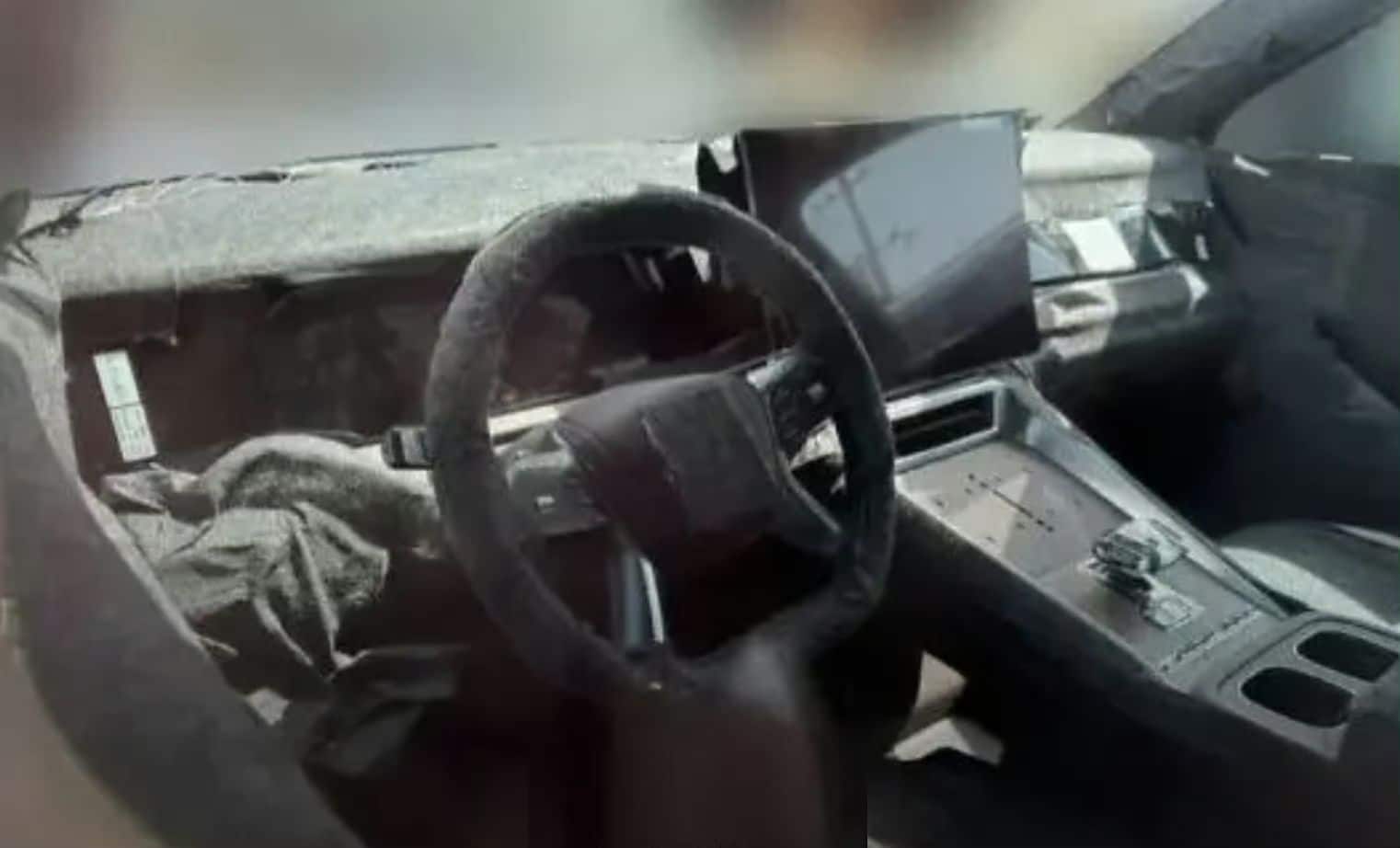
Interior spy shot
Inside, the 212 logo located in the center of the three-spoke steering wheel indicates its identity. Other features include a floating central control screen and a full LCD instrument panel (the dimensions have not been revealed). The air-conditioning outlets are located below the screen. At the same time, a large number of physical buttons are also being used.

We’ll watch closely for more details, stay tuned!
Source: YiChe, DongCheDi
 

BYD M6 all-electric MPV launched in Indonesia, price starts at 23,400 USD​


Reading Time: 3 minutes

Dong Yi Chen

July 21, 2024


0


News like this to your inbox or phone?​


Weekly summary to your inbox
I want this

Never miss and important news
Get Instant notification once the news is published.
Follow Us

On July 21, BYD revealed that it launched its BYD M6 pure electric MPV at the GAIKINDO Indonesia International Auto Show (GIIAS), making it BYD’s first MPV model launched in the Indonesian market and also the first pure electric MPV in the Indonesian market. Consumers can choose from three trims with a price range of 379,000,000 – 429,000,000 RP (23,400 – 26,500 USD), namely, Standard 7 Seater, Superior 7 Seater, and Superior Captain 6 Seater.

The BYD M6 is powered by 55.4 kWh and 71.8 kWh BYD Blade batteries as standard, with two NEDC ranges of 420 km and 530 km, respectively. Under fast charging with 115 kW power, the battery can be replenished from 10% to 80% in 40 minutes. Furthermore, the entry-level trim is equipped with an electric motor with a maximum power of 163 hp and a peak torque of 310 Nm. The high-end Superior trims have an electric motor that outputs 204 hp and has a 0 – 100 km/h acceleration time of 10.1 seconds and 8.6 seconds, respectively.
BYD e6BYD Song Max DM-iBYD M6
It is worth pointing out that the BYD M6 is developed based on the BYD Song Max (see spec here) and the appearance is similar to that of the BYD e6. Since 2010, the BYD e6 has been focusing on the taxi market. For the exterior, the BYD M6’s front face adopts a large closed area integrated with slender headlights connected by a chrome strip embedded with the BYD logo in the center.

BYD M6 right-hand drive version spy shots in China
Earlier, the BYD M6 right-hand drive version was spied on Chinese streets uncamouflaged. At the rear, the taillights are decorated with a horizontally extended chrome strip and the “BYD M6” logo is located in the lower right corner. The size of the BYD M6 is 4710/1810 /1690 mm with a 2800 mm wheelbase.
Inside, the BYD M6 offers a six-seater and seven-seater layouts. The dashboard comes with a 12.8-inch rotatable touch screen, which is equipped with the BYD DiLink system and supports CarPlay. Other standard configurations include keyless entry, one-button start, automatic air conditioning, cruise control, six airbags, and electronic stability control. In addition, the high-end trims also come with a panoramic sunroof, front seat ventilation, wireless charging, an electric tailgate, automatic emergency braking, adaptive cruise control, lane keep assist, and blind spot monitoring. The standard trunk volume is 652 L.
Source: ITHome, Sohu, Today Line
 

Zeekr 001 and Zeekr X launched in Mexico​


Reading Time: 3 minutes

Dong Yi Chen

July 21, 2024


2


News like this to your inbox or phone?​


Weekly summary to your inbox
I want this

Never miss and important news
Get Instant notification once the news is published.
Follow Us

On July 21, Zeekr announced that its Zeekr 001 and Zeekr X launched in Mexico with a starting price of 988,000 Mexican pesos (397,700 yuan or 55,000 USD) and 799,000 Mexican pesos (321,600 yuan or 44,000 USD). For reference, the Zeekr 001 starts at 37,000 USD while the Zeekr X starts at 27,500 USD in China.

Zeekr 001 and X launch event in Mexico
Just earlier on July 17, Zeekr introduced two variants of the right-hand drive version of the Zeekr X in Hong Kong and on July 11 in Thailand, available in RWD and AWD. In June, Zeekr announced that it had entered right-hand drive markets such as Malaysia and Indonesia. On June 24, the first batch of the Zeekr 001 and Zeekr X were officially shipped to Mexico.
So far, Zeekr has entered nearly 30 international markets including Sweden, the Netherlands, Thailand, and Mexico. By the end of 2024, Zeekr targets to enter 50 countries and regions around the world, including eight European countries, as well as Southeast Asia, the Middle East, Latin America, and Australia. The right-hand drive version of the Zeekr X (see spec here) is expected to start delivery in Thailand, Singapore, and Hong Kong in the third quarter of this year.

Zeekr June delivery poster | grey: 2023 delivery, orange: 2024 delivery
In June, Zeekr delivered 20,106 vehicles, a year-on-year increase of 89% and a month-on-month increase of 8%. This also marked the first time that Zeekr delivered more than 20,000 vehicles in a single month. From January to June this year, a total of 87,870 vehicles were delivered, a year-on-year increase of 106%. Among them, the Zeekr 001 has delivered more than 10,000 vehicles for three consecutive months. As of the end of June, Zeekr has delivered more than 280,000 vehicles cumulatively.
Furthermore, as of the end of June, Zeekr has opened 429 stores worldwide, including 402 stores in China, and aims to increase the number of stores to more than 520 by the end of the year. The Zeekr Home, which offers one-stop services such as experience, retail, delivery, and after-sales, has opened 75 stores and is expected to expand to 140 stores within the year.
As of June 30, Zeekr has also built 1,130 charging stations and 6,358 charging piles, including 515 charging stations and 2,731 charging piles that meet the 800V ultra-fast charging standard.

Source: Zeekr Weibo, YiChe, Zeekr
 

Sunday China Drive | 2024 Avatr 11 – global sales imminent with Huawei tech​


Reading Time: 7 minutes

Adrian Leung

July 21, 2024


1
Shenzhen Auto Show 2024

News like this to your inbox or phone?​


Weekly summary to your inbox
I want this

Never miss and important news
Get Instant notification once the news is published.
Follow Us

The 2024 Avatr 11 (see specs) SUV was launched at the Beijing Auto Show in April. Backed by CATL, Huawei, and Changan, the premium Avatr 11 SUV starts at 295,800 yuan (40,700 USD). We previously tested the Avatr 12 fastback (see specs) in June. It is time to take the Avatr 11 SUV on the road to see how it performs. Let’s head out with the Avatr 11 on this week’s Sunday China Drive!

Shenzhen Auto Show 2024
First Impressions
Nader Faghihzadeh’s design team (a former BMW designer) created the Avatr 11, applying the philosophy of “Future Elegance.” The daylight-running lights outline the edges that resemble an “E-shape” integrated into the front bumper. The hood has an optional halo display. In the seemingly simple front of the car, many sensors such as semi-solid-state lidar, millimeter wave radar, ultrasonic radar, and camera are hidden. The vehicle has frameless doors with retractable door handles.

The Avatr 11 SUV has a unique rear window design similar to that of the classic mid-engine sports car Dino Ferrari. A retractable rear spoiler and a continuous taillight complement it. Due to the rear window design, it has a drag coefficient of 0.308 cd, higher than that of the Avatr 12 fastback of 0.21 cd. The doors closed with a solid sound, with all the panels aligned and the paint well-finished.
The Interior
When the Avatr 12 fastback was launched in November 2023, owners of the Avatr 12 SUV complained that the interior’s luxury level could not match that of the fastback fastback. Also, there were misaligned panels. Fast-forward to 2024, and the new Avatr 11’s interior quality and luxury level have been upgraded. Avatr 11 boasts warm tones, plush finishes, and a unique purple and white color scheme. This is highlighted by integrated gold trims that enhance the new fluorescent gold paint, adding a touch of elegance.

It has a 10.25-inch LCD instrument panel behind the not-so-rounded steering wheel. The centerpiece is a 15.6-inch floating screen with split-screen functionality running on Huawei’s HarmonyOS. It displays navigation, games, and videos, allowing window transfers to the co-pilot screen while responding to voice commands. The most unique part of the dashboard is the “emotion vortex” above the floating screen. It houses the center speaker. Air vents are behind the vortex, blowing indirectly at the front-row seats.
The new Avatr 11 is about luxury, comfort, and convenience. It has a wireless charging pad and an additional screen for the front passenger. The panoramic roof enhances the sense of openness. The seats, upholstered in full-grain semi-aniline leather, are softer and more breathable than those of the previous model.
Unlike the Avatr 12 fastback, the window controls are in the right place in the Avatr 11 SUV, on the driver-side door. It is equipped with front zero-gravity seats, while the rear seats provide ventilation and heating for a more comfortable ride.
Audio enhancements feature a 25-speaker Meridian acoustic system, delivering a 7.1.4-channel surround sound and boasting China’s first PA3 DSP power amplifier platform with a 2016W power output. Additionally, Avatr has integrated simulated engine sounds and active noise cancellation.
Storage
The trunk is deep but has a capacity of only 394 liters. It has a large frunk of 95 liters to compensate for the small trunk.
Behind the Wheel
Our test car is the Avatr 11 2024 RWD Luxury, which costs 325,800 yuan (45,000 USD). After getting behind the wheel of the Avatr 11 SUV, I immediately felt the aggressiveness of the regenerative braking. With a slight tap of the foot, the car will come to a complete stop. I asked the Avatr test drive specialist to make adjustments. The issue was fixed within moments, and we were on our way.
Driving on the suburban roads in Zhuhai, I was delighted with the Avatr 11 SUV. It is very different to the Avatr 12 fastback. First, the steering wheel is more rounded, which is much easier to navigate compared to the oval-shaped steering wheel in the fastback. The driving dynamics of the Avatr 11 SUV are surprisingly sporty. The steering is quick and direct but lacks feedback from the road. Meanwhile, the fastback is a GT car tuned for cruising, which I found dull and boring to drive.
Based on the EP1 platform, the Avatr 11 is agile around corners and fun to drive. Avatr 11, being an SUV, has a higher ground clearance, so body roll is expected. Additionally, the Avatr 11 features a 50:50 weight distribution, which enhances its handling. This is also aided by the front double wishbone independent suspension and multi-link independent suspension at the rear. The suspensions are firm yet provide a comfortable ride, absorbing the vibrations from the surface of the road.
Our test car features a single Huawei DriveONE e-motor with 230 kW and a 730 km range. With 370 Nm of torque, it can hit 0 – 100 km in 6.9 seconds, providing a linear speed increase, yet the acceleration felt more rapid than that of the BYD Sea Lion 07.
At lower speeds, I noticed very little noise inside the cabin. However, like the Avatr 12 fastback, there was wind noise from the frameless doors at higher speeds.
Like the Aito M9 and Avatr 12, which we tested earlier, the Huawei ADS 2.0 driving assistance system offers a top-notch autonomous driving experience. The single-motor Avatr 11, with 34 intelligent driving sensors and standard high-speed NCA, effectively detects surrounding objects, adjusts speed, changes lanes, and makes U-turns, though occasional manual intervention is needed. Advanced technologies and updates enhance its autonomous driving capabilities and expand city NOA coverage. The APA intelligent parking assist function is also fast and precise. Cars from Huawei’s Harmony Intelligent Mobility Alliance and Avatr will soon receive ADS 3.0 via OTA update, where further enhancements will be seen.
Battery Range
Our test car has a 116 kWh battery with a 730 km range CLTC. It supports 240 kW DC charging, adding approximately 200 km of range 10 minutes of charging.
Safety Features
The 2024 Avatr 11 models feature a comprehensive collision prevention system, including front AEB/GAEB, side ELKA/LOCP, and rear RAEB components. The new LOCP system, leveraging the laser radar GOD network, enhances safety by steering the vehicle back to its lane if an obstacle is detected when driving between 30 km/h and 130 km/h.
Dealership Experience
As we tested the Avatr 12 fastback previously, I went on Wechat and contacted the Avatr rep we were with last time. Upon arriving at the same dealership, the Avatr rep greeted me with a friendly smile and promptly organized the paperwork. After signing the documents, we left the dealership with the Avatr 11. The rep accompanied me throughout the test drive, assisting when needed and explaining the car’s details. After the test drive, the Avatr rep and I reclined the front zero-gravity seats, played some relaxing music with a fireplace theme in the Avatr 11, and chatted about the car for a while.
Conclusion
The Avatr 11 has received various iterations since it released in China in 2022. Despite their similarities in aesthetics, each iteration has been seen with refinements and upgrades. This is a good demonstration of the term “Chinese speed” and its evolution.
The 2024 Avatr 11 is my favorite SUV that we have tested to date, especially with its driving dynamics. Its appearance may closely resemble its sibling, the Avatr 12 fastback, but they are very differently tuned.
2024 Avatr will expand into Southeast Asia, the Middle East, and Europe, opening over 90 stores in more than 40 countries. This follows April’s partnership agreements to enter Singapore, Nepal, and Azerbaijan. Changan, aiming to boost overseas sales, will introduce Avatr and its other NEV brands to Europe this year and establish a European company. By 2027, six new energy models will be launched in Europe. Avatr also aims to be a top Chinese brand in Thailand by 2025. Avatr’s sales have been steady, with 4,682 vehicles delivered in June, marking a 167% increase year-on-year. With a lower-priced model on its way, the Avatr 07, Avatr may increase its market share with a broader audience.
Stay tuned for next week’s Sunday China Drive at Car News China, where you can get more evaluations of Chinese cars from a first-person perspective.
 

Changan Nevo E07 electric SUV rolled off production line in China​


Reading Time: 3 minutes

Dong Yi Chen

July 20, 2024


0


News like this to your inbox or phone?​


Weekly summary to your inbox
I want this

Never miss and important news
Get Instant notification once the news is published.
Follow Us

On July 19, Changan’s Nevo E07 officially rolled off the production line at the Changan Digital Factory. The new car is expected to start at a price tag of 300,000 yuan (41,300 USD) and launched in October this year. The blind order was already opened since the 2024 Beijing Auto Show in April. Nevo is known as Qiyuan in the Chinese market.

According to Changan, its Digital Factory is only responsible for the production of high-end models, jointly built with Huawei and China Unicom. The welding workshop has a total of 185 welding stations and 471 robots while the assembly workshop has a total of 183 workstations on the main line, and takes 60 seconds to roll off a car.
The Nevo E07 is built based on Changan’s SDA platform, featuring an all-aluminum alloy chassis, and can realize both SUV and pickup truck modes, according to the brand. It has a length of 5045 mm, a width of 1996 mm, a height of 1640/1665/1695 mm, a wheelbase of 3120 mm, a five-seater layout, a curb weight of 2278 kg, a maximum ground clearance of 227 mm, and a wading depth of 600 mm.

The car also runs on 20-inch and 21-inch rims. Consumers can choose from both two-wheel drive and four-wheel drive. The two-wheel drive is equipped with a 252 kW (338 hp) electric motor while the four-wheel drive is equipped with 188/252 kW (252/338 hp) front and rear electric motors, paired with a ternary lithium battery pack. The four-wheel drive has a 0 – 100 km/h acceleration time of 4 seconds. The top speed is 210 km/h. At this time, the cruising range and other powertrain parameters have not been officially revealed.
In terms of safety, the Nevo E07 is the first to be equipped with Changan’s self-developed intelligent driving assistance system, realized via 11 cameras, five millimeter-wave radars, 12 ultrasonic radars, and two lidars.
It is also worth pointing out that the rear cabin has a load capacity of 300 kg.

When the rear seats are folded down and the electric flat-fold tailgate is closed, the space reaches 1667 mm long and 1028 mm wide, which can accommodate an adult of 186.5 cm tall. With the tailgate opened, the space goes up to 2880 mm long and 1550 mm wide.
Inside, the front row features dual zero-gravity seats with multiple electric adjustment functions. At the same time, the cockpit has a 15.4-inch central control screen, a ceiling entertainment screen, an AR-HUD, an 18-speaker audio system, and 256-color ambient lights.
Source: qctt, sohu
 

Chery Fulwin T10 set Guinness World Record for longest distance driven by a plug-in hybrid SUV​


Reading Time: 3 minutes

Dong Yi Chen

July 20, 2024


1


News like this to your inbox or phone?​


Weekly summary to your inbox
I want this

Never miss and important news
Get Instant notification once the news is published.
Follow Us

On July 20, Chery announced that its new plug-in hybrid SUV, the Fulwin T10, has set a new Guinness World Record, namely, “the longest distance driven by a plug-in hybrid SUV under a full fuel tank and full battery without recharging”. The car started from Shangri-La between July 17 and 20, passing through Kunming, Baise, Zhanjiang, and arrived at the end point Zhuhai, with a range of more than 2,100 km, exceeding the original record by 300 km.

The Fulwin T10 isn’t the first Chinese car to set a World Guinness Record. Just earlier on July 12, BYD’s Fang Cheng Bao brand announced that its Bao 5 off-road SUV set a Guinness World Record for the highest altitude reached by a plug-in hybrid vehicle at 5,980 meters.

The Chery Fulwin T10 is expected to officially launch on July 25, offering two seat-layout options: five-seater and six-seater; as well as two-wheel and four-wheel drives.

The car measures 4850/1930/1712 mm, with a 2820 mm wheelbase. The curb weight of the five-seater trim is 1935 kg while the six-seater trim weighs 2028/2069 kg.
The Fulwin T10 relies on Chery’s Kunpeng Super Hybrid C-DM plug-in hybrid system to generate a maximum power of 455 kW (610 hp) and a peak torque of 960 Nm for the four-wheel drive, and 280 kW (375 hp)/610 Nm for the two-wheel drive. The system consists of a 1.5T engine and electric motor(s). The 1.5T engine outputs 115 kW (154 hp) and 220 Nm. The four-wheel drive variant can accelerate from 0 – 100 km/h in 4.9 seconds and has a top speed of 240 km/h.
The battery pack is provided by CATL, with a capacity of 34.46 kWh and a density of 150 wh/kg, providing two pure electric ranges of 210 km and 200 km (CLTC), corresponding to fuel consumptions of 5.75L/100 km and 6.8L/100km, respectively. Both fast and slow chargings are supported. Under DC fast charging power of 71 kW, it takes 18 minutes to charge from 30% to 80%.

The cockpit is equipped with a 24.6-inch curved screen (serving the instrument panel and central control screen) and a 50-inch AR-HUD, powered by a Qualcomm Snapdragon 8155 chip. An L2.5 intelligent driving assistance system is also not absent, which supports driver fatigue monitoring, door opening warning, blind spot monitoring, rear collision warning, and rear cross-traffic alert.
Source: ITHome, DongCheDi
 

Neta enters Brazilian market, will launch three models in Q3 2024​


Reading Time: 2 minutes

Dong Yi Chen

July 20, 2024


0


News like this to your inbox or phone?​


Weekly summary to your inbox
I want this

Never miss and important news
Get Instant notification once the news is published.
Follow Us

On July 20, Hozon Auto‘s Neta brand announced that its first South American subsidiary officially settled in Paulista Avenue, Sao Paulo, Brazil, on July 16, and the first three models will be launched in Brazil in the third quarter.

This is the third global market that Neta has entered after Southeast Asia and Africa. In recent years, numerous Chinese automotive brands have entered Brazil, including BYD, Great Wall Motor (GWM), and Chery.
Neta’s first flagship store opened in Nairobi, Kenya
Furthermore, just last month, Neta’s first flagship store in Africa opened in Nairobi, the capital of Kenya. Additionally, Neta has continued to focus on the Southeast Asian market this year and has established three overseas factories in Thailand, Indonesia, and Malaysia:

  • April: Neta’s Indonesian eco-smart factory started production.
  • March 27: Neta signed an agreement with its partners to jointly manufacture and sell the Neta V-II and Neta X in Sri Lanka, also Neta’s first localized assembly project in South Asia.
  • March: Neta’s eco-smart factory in Thailand started large-scale production, with an estimated annual production capacity of 30,000 vehicles.
  • January: Neta signed a contract with its Malaysian partner to establish its third overseas factory in Malaysia.
Neta at the 40th Thailand Auto Show on November 29, 2023
According to data from the China Association of Automobile Manufacturers (CAAM), China’s exports of new energy vehicles reached 519,000 vehicles from January to May 2024, a year-on-year increase of 13.7%. Specifically, Neta ranked fifth in export volume with 16,400 vehicles. In addition, Neta’s overseas sales from January to June 2024 totaled 17,687 vehicles, a year-on-year increase of 154%.
At Neta’s new product launch event in October 2023, it announced its overseas plan to expand into 30 countries and regions, with more than 100 sales channels. By 2024, it aims to achieve overseas sales of 100,000 vehicles, covering 50 countries, and building 500 overseas sales and service outlets; by 2026, it targets to achieve a global market sales volume of 1 million vehicles, of which domestic sales account for 65% and overseas sales account for 35%.
Source: Neta Weibo
 

GWM’s new Wey Lanshan obtained TÜV’s Flicker-Free and Low Blue Light certifications​


Reading Time: 3 minutes

Dong Yi Chen

July 20, 2024


0


News like this to your inbox or phone?​


Weekly summary to your inbox
I want this

Never miss and important news
Get Instant notification once the news is published.
Follow Us
On July 19, Great Wall Motor (GWM) announced that the cockpit screens within its Wey brand’s Lanshan Intelligent Driving Edition have obtained the first TÜV Rheinland Flicker-Free Certification in the automotive industry. Previously, these cockpit screens have also obtained the TÜV Low Blue Light (Hardware Solution) Certification. The new car is expected to be officially launched in late August.

According to GWM’s official statements, the screens equipped with its Coffee Vision system reduce harmful blue light emission and flickers by changing the spectral distribution of LED backlight or using special filter materials, rather than relying solely on software color adjustment to achieve the effect, to reduce the risk of eye fatigue and vision damage after prolonged usage.
Positioned as a medium-to-large SUV, the new car has a size of 5156/1980/1805 mm, and the wheelbase is 3050 mm, which is the same as the existing DHT-PHEV trim (see spec here). The new car also continues the exterior design of the existing trim, with a watchtower Hesai 128-line lidar on the roof, three millimeter-wave radars, 12 ultrasonic radars, and 11 high-definition cameras, to support the Coffee Pilot Ultra intelligent driving assistance system.

The cockpit is equipped with dual 15.6-inch screens as the central control screen and co-pilot screen, a 12.3-inch full LCD instrument panel, a 17.3-inch ceiling entertainment screen, and a 29-inch Coffee SR-HUD. At the same time, the cockpit is powered by a Qualcomm Snapdragon 8295 chip. The operating system is supported by the latest Coffee OS 3.
Furthermore, the interior adopts a 2+2+2 six-seater layout. The rear passengers have access to small tray tables, independent air conditioning, window privacy curtains, heated/ventilated/massage seats, and leg rest. The 7L onboard refrigerator is located in the armrest box and there are 23 speakers throughout the interior.
The powertrain is composed of GWM’s Hi4 plug-in hybrid technology consisting of a 1.5T engine and front + rear electric motors, mated to a 4-speed DHT. The 1.5T engine has a maximum power of 125 kW (168 hp). Its 0 – 100 km/h acceleration time is 4.9 seconds. Additionally, the battery pack has been upgraded to two specifications, 44.5 kWh and 52.3 kWh. The former has a WLTC pure electric range of 185 km and a comprehensive range of 1,307 km; the latter has a pure electric range of 220 km and a comprehensive range of 1,342 km. The official powertrain parameters still need to be confirmed by GWM.

In the first half of 2024, GWM’s cumulative sales volume was 559,669 vehicles, of which 132,374 units were new energy vehicles, a year-on-year increase of 41.99%.
Source: ITHome, AutoHome, DongCheDi
 

Geely’s Zeekr 009 MPV global launch in Hong Kong with RHD, starts at 96,700 USD​


Reading Time: 5 minutes

Adrian Leung

July 19, 2024


1
Zeekr 009

News like this to your inbox or phone?​


Weekly summary to your inbox
I want this

Never miss and important news
Get Instant notification once the news is published.
Follow Us

Geely’s premium EV brand, Zeekr, has officially launched the global version of the Zeekr 009 (see specs) in Hong Kong, China’s international hub. The event marks Zeekr’s drive for international growth. Car News China was at the launch event, which was held at the AsiaWorld Expo in Hong Kong, China.

Andy An, chairman of Geely Auto, and CEO of Zeekr introduced the Zeekr 009 with a right-hand drive (RHD). It is offered in 6-seat and 7-seat configurations. It has a 400v architecture, and the battery is 116 kWh. Its dual motors offer a 582 km range WLTP. However, it comes without lidar. Zeekr 0009 RHD is intended for the international RHD markets. It supports different languages like Mandarin, English, Cantonese, and Thai. The Hong Kong RHD version starts at 755,000 HKD (96,700 USD).
The revised Zeekr 009 for mainland China has been launched, too. It is offered in 6-seat and 7-seat configurations. The 7-seat version features a 2+2+3 layout with a center aisle and third-row child safety seat interfaces. The 6-seat version provides more luxurious seating without an aisle. It has a 17.3-inch rear roof-mounted screen, a 17-inch 3K OLED ceiling screen, and starry ambient lights. The mainland China versions have a friendlier price tag, starting at 439,000 yuan (60,400 USD).

The 108 kWh 5C battery charges 10% to 80% SOC in 11.5 minutes. The Zeekr 009 continues to use the SEA architecture and now includes a rear-wheel drive version with maximum power options of 250 kW and 310 kW. The all-wheel drive models feature front and rear motors rated at 200/250 kW and 270/310 kW, with top trim using an 800V platform for a combined power output of 580 kW.
Andy An emphasized the Zeekr 009 is also meant for driving pleasure, unlike other MPVs on the market. The fastest spec accelerates from 0 to 100 km/h in 3.9 seconds, featuring standard dual-chamber air suspension and CCD dampers. A 140 kWh battery upgrade for the mainland version is an additional 50,000 yuan (6,900 USD). This upgrade offers 900 km CLTC, the longest range among BEV MPVs.
The new Zeekr 009 has 1,366 component updates while retaining the design of the previous version. It adds roof-mounted LiDAR, which was previously only available on the top trim. The dimensions remain unchanged at 5217/2024/1812 mm with a 3205 mm wheelbase. New colors will be introduced; these include azure gray, aurora green, polar night black, polar day white, and starry blue.

Both variants have a three-spoke steering wheel, Nappa full-grain leather seats, and first-row Sofaro first-class airline seats with headrest speakers, ventilation, massage, and heating functions to enhance comfort. The exclusive “lounge chair” mode allows passengers to stretch out and relax fully.
It has a 35.95-inch AR-HUD display. Advanced infotainment includes a 15.05-inch OLED screen in the front and a 17-inch OLED screen in the back, powered by two Qualcomm 8295 chips. A 30-speaker Yamaha 3000 w peak audio system is integrated with Atmos surround sound. An AI assistant predicts battery needs and reminds owners to charge. It also features wireless phone charging and a temperature-controlled refrigerator that can achieve -6°C to 50°C.
Zeekr 009 is the only MPV certified with front and rear collision tests; the Zeekr 009 drives into the truck’s rear at 60 km/h, and an SUV slams into the rear 009 at 50 km/h. Zeekr added extra protection to the electrical wiring to allow the doors to open successfully after the test. It is the only environmentally friendly cabin with dual certification. “Private Mode,” “Valet Mode,” and sound shield are to keep privacy secure.
Technologically advanced, the Zeekr 009’s dual 8295 chips and the AI EVA voice assistant allow the vehicle to interact actively with different driving scenarios. The Zeekr 009 represents a significant leap forward in the BEV MPV market, combining luxury, performance, and advanced technology to set a new benchmark.
Andy An highlighted that over Zeekr 87,800 units were delivered in the first half of the year, with the Zeekr 009 becoming the top-selling MPV with over 500,000 yuan (68800 USD). Within a week of its pre-sale, the new Zeekr 009 received over 3,000 orders from markets outside mainland China. Andy An also mentioned that 75% of those who bought the Zeekr 009 are company CEOs, executives, and public figures. Among them is Hong Kong superstar Aaron Kwok, who also attended the event.
Since its IPO on the New York Stock Exchange on May 10, 2024, Zeekr has been rapidly expanding, already reaching over 25 markets with a goal of 50 by the end of the year. At a recent event in Hong Kong, Vice President Chen Yu highlighted this ambitious growth strategy, showcasing the Zeekr X and the new Zeekr 009 with RHD as symbols of the company’s innovative spirit and global aspirations. Hong Kong, China’s international hub and a region within the Greater Bay Area where cars drive on the left, is the perfect location for launching the right-hand-drive Zeekr 009.
Updated: 22/07/2024
 

Denza N7 is the auto parking champion, beating Xpeng and Huawei cars​


Reading Time: 4 minutes

Mark Andrews

July 19, 2024


2


News like this to your inbox or phone?​


Weekly summary to your inbox
I want this

Never miss and important news
Get Instant notification once the news is published.
Follow Us

Recently, a group of bloggers evaluated automatic parking systems in various cars to see which performed best. The Denza N7 was a surprising winner. BYD is not known as a leader in intelligent driving systems, so Denza‘s win is an achievement.

Five car models participated in a series of four different tests. The competitors were the Avatr 12, Aito M7, Denza N7, Xpeng G6, and IM LS6. All of the cars are equipped with Lidar and represent the strongest intelligent driving capabilities from each brand. There were four different parking tests: a narrow backward perpendicular space, a narrow backward parallel parking space, an angled parking space with markings, and finally, a perpendicular space where a wall is blocking the front.

Chinese video of the test showing the scenarios and the highlights
In the first test, which involved reversing into a narrow perpendicular space, all of the cars except the IM LS6 (see specs) successfully completed the task. The IM LS6, while able to detect the space, was unable to complete the maneuver and stopped halfway into the space. The fastest car to complete the test was the Avatr 12 (see specs), which completed all three attempts in less than a minute each. No other car managed to complete the maneuver in under a minute. Along with the Avatr 12 the Denza N7 (see specs) and Aito M7 (see specs) were very smooth at recognizing the parking space and with the actual parking. All three of those cars managed to park in the center of the space, but this was not the case with the Xpeng G6 (see specs), which, although it did successfully park on all three attempts, was parked on the right of the space each time. Furthermore, the Xpeng recorded the slowest time of 1:27.12. For some reason, the Xpeng’s first attempt was much slower than any of the other cars and also the two subsequent attempts by the G6, requiring more back-and-forth maneuvering. The Avatr 12 was the champion for this test. The parking space was 6 meters long with a width of 2.5 meters, and in this case, the road was five meters wide.

In the parallel parking test, the winner was the Xpeng G6, which managed the fastest time of 1:04.03 seconds. Also, on one of the attempts, only two switches were needed between forward and reverse. Both the Avatr 12 and Denza N7 managed to park in the center on each attempt, whereas with the Xpeng G6 and Aito M7 on one occasion each, they parked more to the left. Once again, the IM LS6 performed the worst, failing to complete the second attempt and with the other two attempts parking too far to the left. Furthermore, it recorded the slowest time of 1:39.53 seconds. The parking space was six meters long by 2.5 meters wide and the road from which the car was trying to parallel park was four meters wide.
With the angled, or fishbone parking, scenario only three cars could complete it. Both the Xpeng G6 and the IM LS6 could not recognize the space on all three attempts and so failed. The other three cars managed to park successfully on all three attempts. The Denza N7 was the resounding winner, gaining all three fastest times and needing fewer changes between forward and reverse than the other two cars, even managing with just two changes on each attempt. Testers reported the Avatr 12 to be more anthropomorphic; this car was the runner-up in the test. They also noted that the Denza N7 maintained a robust style. In this case, the parking space was slightly bigger than in the other tests, being 2.8 meters wide and 6 meters long, with the road being used for the car 4.5 meters wide.
The final test, while testing perpendicular parking, is the most complex. In it, the car was driven forward towards a wall with a parking space perpendicular to the wall at the end. This simulates a scenario in a car park with an end parking space. Neither the Xpeng G6 or the IM LS6 were able to complete the task. While the Xpeng G6 just said that the parking space was unavailable the IM LS6 did try to plan a path and make a U-turn before giving up halfway through the U-turn.

Both the Aito M7 and Avatr 12 use the Huawei system and took a similar approach to tackle the space. Each car, on one attempt, managed to park while failing the other two attempts by not being able to recognize the space. Furthermore, both cars went in forwards when they did complete the task. The only car to pass this test was the Denza N7, which successfully passed all three attempts. Unlike the Huawei-powered cars, the Denza successfully reversed in on all three attempts and was correctly centered, unlike the M7 which was parked to the right. The space itself was six meters long by 2.5 meters wide, and the road the car was approaching on was six meters wide.

Editor’s note:​

The next biggest surprise of this test after the Denza N7’s victory was that the Xpeng car did so badly. SAIC’s IM brand seems to perform significantly worse than other brands when it comes to parking.
Source: Fast Technology
 

New Xiaomi SU7 Ultra with 1548 horsepower and V8s motor unveiled in China​


Reading Time: 4 minutes

Lawrence Ho

July 19, 2024


4


News like this to your inbox or phone?​


Weekly summary to your inbox
I want this

Never miss and important news
Get Instant notification once the news is published.
Follow Us

Xiaomi Auto surprisingly unveiled the full carbon Xiaomi SU7 Ultra prototype, during Xiaomi founder Lei Jun’s 2024 Annual Speech held last evening. The Xiaomi SU7 Ultra is the first car to be equipped with Xiaomi’s newly announced HyperEngine V8s.

The Xiaomi SU7 Ultra prototype is equipped with three Xiaomi developed motors, including two V8s and one V6s motor, providing a maximum horsepower of 1548, surpassing even the most top-end luxury sport cars like the 1,479 hp Bugatti Chiron.

More on the Xiaomi SU7 Ultra​

The Xiaomi-developed HyperEngine V8s has a maximum speed of 27,200 rpm, a maximum horsepower of 578, and a peak torque of 635 Nm, making it the most powerful motor produced by the Beijing-based company. Moreover, the Xiaomi SU7 Ultra is equipped with a CATL’s Qilin 2.0 high-power battery dedicated to racing, with a maximum output of 1330 kW. Even at 20% SoC, the battery can discharge 880 kW of power.

Interestingly, CATL’s Qilin batteries have iron phosphate (LFP) chemistry. SU7 Ultra will have 897V charging and support a 5.2C charge rate, meaning the car can be recharged in less than 12 minutes.
In terms of braking, it is equipped with AP Racing high-performance brake calipers specifically for racing, featuring six-piston forged fixed calipers at the front and rear, and racing brake pads capable of withstanding working temperatures of over 800 degrees.
Additionally, the Xiaomi SU7 Ultra uses motor reverse for brake energy recovery, providing a maximum of 0.6G braking force recovery. Under full braking conditions, it can provide a deceleration of more than 2.36G, with a 0-100 km/h braking distance of only 25 meters.

The SU7 Ultra can accelerate from 0 to 100 km/h in just 1.97 seconds and 0 to 200 km/h in just 5.97 seconds, reaching a top speed of 300 km/h in just 15 seconds. The maximum speed is reported to be 350 km/h and the vehicle weighs just under 1,900 kg.
The Xiaomi SU7 Ultra’s design is notably different from the standard SU7, featuring a massive carbon fiber rear wing to generate up to 2,145 kg of downforce. The rest of the car has also been modified for more aerodynamic structure, including the addition of two huge front vents and enlarging of the front-splitter and side skirts.
The car’s dimensions are 5260/2064/1406 mm, with a wheelbase of 3000m. The SU7 Ultra is notably wider and longer, due to its performance body-kit, than the standard SU7, while featuring the same wheelbase.

Nürburgring​

Xiaomi aims to set a new record for in the four-door electric sedan class at Nürburgring. Currently, the fastest electric car around the Nürburgring is the Volkswagen ID.R with a lap time of 6:05.336 minutes. The fastest four door electric car around Nürburgring is the Porsche Taycan Turbo GT with a lap time of 7:07.55 minutes. The company aims to break the lap record at the legendary Nürburgring Nordschleife track in October.

Xiaomi currently only sells the standard Xiaomi SU7 in China, with their second retail model undergoing road tests. Chinese performance focused EVs are currently comprised of the 1247 hp Zeekr 001 FR and BYD’s 1287 hp YangWang U9. It’s unknown if the Xiaomi SU7 Ultra will ever be road certified, but with its 1578 hp and max speed of 350 km/h, it completely outshines the aforementioned models as the world’s fastest 4-door car.
Sources: MyDrivers, Autohome
 

2025 Exeed Exlantix ES all-electric sedan pre-sale starts at 27,500 USD​


Reading Time: 3 minutes

Dong Yi Chen

July 19, 2024


0


News like this to your inbox or phone?​


Weekly summary to your inbox
I want this

Never miss and important news
Get Instant notification once the news is published.
Follow Us

On July 19, Chery opened its 2025 Exeed Exlantix ES all-electric sedan for pre-sale, available in four trims, with a pre-sale price range of 225,900 – 309,900 yuan ( 27,500 – 43,000 USD). The new car’s appearance remains unchanged while the configurations have been adjusted. The official market entry launch date is expected to be in mid-to-late August.

Compared with the previous trims, the 2025 Exeed Exlantix ES (see spec here) has been optimized in terms of configurations while the appearance remains largely the same, and introduced four new body color options: Morning Red, Aurora Purple, Fjord Blue, and Galaxy Blue. The body size also remains the same, with a length, width, and height of 4945 mm, 1978 mm, and 1489 (or 1467) mm, respectively, and the wheelbase remains at 3000 mm.
The car adopts a fastback shape with a drag coefficient of 0.205Cd and features ISD interactive lights composed of 740 LED units, an electric rear wing, hidden door handles, front soundproof glass, rear privacy glass, and electric folding exterior mirrors.

The car also runs on standard 19-inch rims and top-end 21-inch rims.
The 2025 Exeed Exlantix ES comes standard with an 800V architecture. The quickest fast charging time from 30%~80% is 9 minutes. The fastest 0 – 100 km/h acceleration time is 3.9 seconds and the top speed is 210 km/h. The powertrain parameters are detailed below:
  • Pro & Pro City Intelligent Driving: rear-wheel drive with a 230 kW/425 Nm electric motor, a 77 kWh CATL battery pack, 680 km CLTC range, 2080 kg curb weight
  • Pro 4WD: four-wheel drive with a 230 kW/425 Nm rear and a 123 kW/238 Nm front electric motor, a 77 kWh CATL battery pack, 605 km CTLC range, 2210 kg curb weight
  • Ultra Flagship: four-wheel drive with a 230 kW/425 Nm rear and a 123 kW/238 Nm front electric motor, a 100 kWh CATL battery pack, 710 km CLTC range, 2250 kg curb weight
In addition, the Pro and Pro City Intelligent Driving trims both offer an optional 100 kWh ternary lithium battery pack, with a CLTC range of 880 km.

Inside, the cockpit is equipped with a T-shape layout, featuring a multifunctional double-spoke steering wheel, a 15.6-inch 2.5K floating central control screen, an 8.2-inch embedded instrument panel, and a HUD. The three screens can be linked together. Other configurations include the Lion AI voice assistant, in-car WiFi, mobile phone remote control, OTA updates, seven airbags, 23 speakers, and dual mobile phone wireless charging panels on the center console.
Furthermore, high-speed intelligent driving assist is also supported which includes traffic sign recognition, automatic emergency braking, parking assist, and adaptive cruise control, to name a few. This is realized via a lidar (only on Pro City Intelligent Driving and Ultra Flagship trims), five millimeter-wave radars, 12 ultrasonic radars, and more than 10 cameras.
Source: Exeed
 

Huawei-backed Luxeed R7 SUV spotted in the wild ahead of launch​


Reading Time: 3 minutes

Mark Andrews

July 19, 2024


1


News like this to your inbox or phone?​


Weekly summary to your inbox
I want this

Never miss and important news
Get Instant notification once the news is published.
Follow Us

The new Luxeed R7 has been spotted ahead of its launch, a medium to large SUV coupe the car is expected to launch within the next few months. Previously known as the S9, the car is the second model from the Luxeed brand, which is a collaboration between Chery and Huawei under the Harmony Intelligent Mobility Alliance (HIMA) ecosystem created by the Huawei electronics brand.

The purple color that the Luxeed R7 has been spotted in appears to be the signature hue for the car, and is quite distinctive. At the front, the R7 is fully enclosed and has through-type daytime running lights and full LED headlights. This setup is echoed at the back with through-type tail lights. There is also a small tail wing just below the rear windshield. The side of the car is relatively smooth, with a wave running into the muscular haunches above the rear wheels.
Earlier this month Ministry of Industry and Information Technology (MIIT) listing information filled in many details about the Luxeed R7. We know that it measures in at 4956, 1981, and 1634mm (l/w/h), with a wheelbase of 2950 mm. There are four individual listings for the car, with the two lighter single-motor versions weighing in at 2148 kg and another at 2180 kg. The dual-motor version tops the scales at 2320 kg. All cars are available with a choice of 20 or 21-inch wheels.

The single-motor versions use a 215KW TZ210XYA02 electric motor from Huawei mounted on the rear axle. The dual-motor version adds a 150KW YS210XYA01 electric motor from Huawei to the front axle. All versions use ternary lithium batteries, but the capacities are currently unknown. The maximum range is expected to exceed 800 km under CLTC conditions.
From the MIIT listing, we know that the car will be available both with and without Lidar, similar to the car’s S7 sibling. Lidar-equipped versions of the R7 use a roof-mounted 192-line unit, which works in collaboration with a high-definition camera on the front fender. The Luxeed R7 will use the new Huawei Qiankun ADS 3.0 intelligent driving system. Versions not equipped with Lidar will still have a high degree of capability for intelligent driving thanks to the SE version of Huawei’s Qiankun ADS system. This uses a purely vision-based system that supports high-speed NCA and automatic parking.
MIIT listing pictures including the options
The Luxeed R7 uses an 800V silicon carbide high-voltage platform as standard and supports ultra-fast charging. Prices are expected to start around 300,000 yuan (41,250 USD), and deliveries should begin before the end of the year.

Under HIMA, Huawei not only provides an intelligent cockpit and intelligent driving solution but is also involved with elements including the design, production, sales, after-sales, and other vehicle stages but stops short of producing the car. There are currently three brands operating under this model. In addition to Luxeed, there is Aito, a collaboration with Seres, and Stelato, a collaboration with BAIC. Soon to be joining them is an as-yet-unnamed brand with JAC.
Sources: MIIT, Fast Technology
 

Is price war over? New BYD Seagull is higher-priced than its predecessor​


Reading Time: 3 minutes

Denis Bobylev

July 19, 2024


0
byd dolphin mini Seagull electric hatchbackBYD Seagull 2024

News like this to your inbox or phone?​


Weekly summary to your inbox
I want this

Never miss and important news
Get Instant notification once the news is published.
Follow Us

The new BYD Seagull 2025 (Dolphin Mini) will enter the Chinese market on August 8 with a few upgrades and a higher price. Could it be an indicator of BYD’s desire to stop a price war? The BYD Seagull sells under the Dolphin Mini name in South America.

The Seagull (see specs) is the BYD’s cheapest electric car launched in April last year. Its price range initially lay between 78,800 – 95,800 yuan (10,850 – 13,200 USD). BYD sliced the Seagull’s price in March 2024 as a part of the strategy to oppose ICE cars in China. The starting price of this EV dropped to 69,800 yuan (9,600 USD). Soon, BYD will launch the 2025 model year Seagull with a few upgrades and a higher price.

BYD Seagull 2025 upgrades and price​

BYD Seagull 2025
The exterior of the new BYD Seagull stays in line with the current model. Its headlights and a leek bonnet somehow remind us of the Lamborghini Huracan. The Seagull has flush door handles, blackened pillars, and a sizable roof spoiler. The major feature of the 2025 model year hatchback is a simple BYD logo on the back. It replaced the “Build Your Dreams” inscription.

BYD Seagull 2025
The BYD Seagull 2025 has a new rim design. The new model’s wheels looks quite close to the older car. But the tips of the rims’ spokes look different. The Seagull 2025 also has optional wheel covers, similar to its predecessor.
BYD Seagull 2025
The interior of the BYD Seagull 2025 also looks the same. However, its middle trim level offers an electrically powered driver’s seat and heated front seats. Another upgrades is 360-degree cameras. Like the old model, the Seagull 2025 has a 10.1-inch main screen, a 7-inch instrument cluster, and 4 speakers.
The price range of the new BYD Seagull will be 72,000 – 87,000 yuan (9,900 – 12,000 USD). It will become 2,200 yuan (300 USD) more expensive than the current model. This move could emphasize BYD’s intention to put an end to a price war in China. But BYD sold over 167,000 Seagulls in January-June domestically. So, the price increase can also indicate that BYD is satisfied with the sales volume and wants to increase its margin.

BYD Seagull specs​

The BYD Seagull is a small hatchback with dimensions of 3780/1715/1540 mm and a wheelbase of 2500 mm. Its curb weight lies in the 1460 – 1540 kg range. The entry-level Seagull has a 30 kWh battery pack powering the 55-kW (74 hp) electric motor. Its range reaches 305 km CLTC. The Seagull also has a bigger pack for 39 kWh and the same e-motor. Its range is 405 km CLTC.
BYD Dolphin Mini in Brazil (photo credits: InsideEVs Brasil)
We will remind you the BYD Seagull sells in South America under the Dolphin Mini name. Its price range here lies in the 21,990 – 23,990 USD range.
Source: WeChat, Autohome, Weibo
 

Denza’s flagship SUV the N9 spied again, and the interior is similar to the Z9 GT​


Reading Time: 3 minutes

Mark Andrews

July 19, 2024


0


News like this to your inbox or phone?​


Weekly summary to your inbox
I want this

Never miss and important news
Get Instant notification once the news is published.
Follow Us

New spy shots have emerged of the Denza N9 SUV, this time including a picture of the interior. The Denza N9 will be the flagship SUV for BYD’s Denza range and will fulfill a similar role to the Denza Z9 GT in the range. The car is expected to launch by the end of 2024.

A new image has emerged which shows an almost Range Rover look to the front. We can see two slender air intakes at the top of the bottom. The light clusters have not been finalized yet. However, from the test lights, we can see where the lights will be located, and this also gives us some idea of the shape of the final clusters. Chinese media believes that the car pictured is a plug-in hybrid version. More apparent in this shot than in previous shots is the running board, which appears quite wide.
We still have no clearer idea of the N9’s size other than that it is big. For reference, the Z9 is 5180 mm, and it is safe to say that the N9 should be at least similar in length. It will ride on 22-inch close-spoked wheels. There is a spoiler on the back of the roof, and the N9 is expected to have a through-type tail light.

From the interior spy shot, we can see that the N9 should look quite similar to the Z9 GT, which has now been fully exposed. Although this spy shot is not particularly clear, we can make out a 4-spoke steering wheel, which seems to be the same as in the Z9. Also carried over is the drive selector with physical buttons behind it. However, the angling of the center console does seem to be shallower. In front of the gear selector is a dual wireless mobile phone charging pad, and behind it are two drink holders, which appear on the N9 to be square rather than round on the Z9. The center console seems to have a floating design with storage space below. Clearly visible in the shot are two screens, the central infotainment unit, along with an LCD instrument panel in front of the driver. We can also probably make out a third screen in front of the passenger, and it is pretty safe to say that the N9 will have one.
The Denza Z9 GT attracted a lot of attention in China because it has two fridges. Denza justifies this supposed extravagance by saying that one could be used for cooling while the other is used for heating. It’s highly likely that the Denza M9 will also include the same setup.
Powertrain may also be carried over from the Z9 and will almost certainly consist of a three-motor setup. For reference, the Z9 in its all-electric version has a 230 kW front motor while it has two electric motors at the rear, each with a peak power of 240 kW, giving a combined total of 710 kW. The PHEV version of the Denza Z9 GT gets a BYD479ZQA 2.0T engine and three electric motors. Maximum power of the engine is 152 kW, and the front motor is 200 kW while both rear motors are 220 kW each.

Source: Autohome
 

Users who are viewing this thread

Country Watch Latest

Back
Top