China Auto Thread

BYD’s Yangwang U9 Xtreme becomes world’s fastest production car

Chinese hypercar hits 496.22 km/h in Germany, surpassing Bugatti and marking a milestone for electric performance

To view this content we will need your consent to set third party cookies.
For more detailed information, see our cookies page.


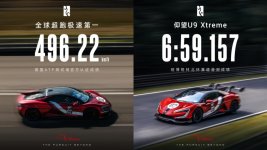
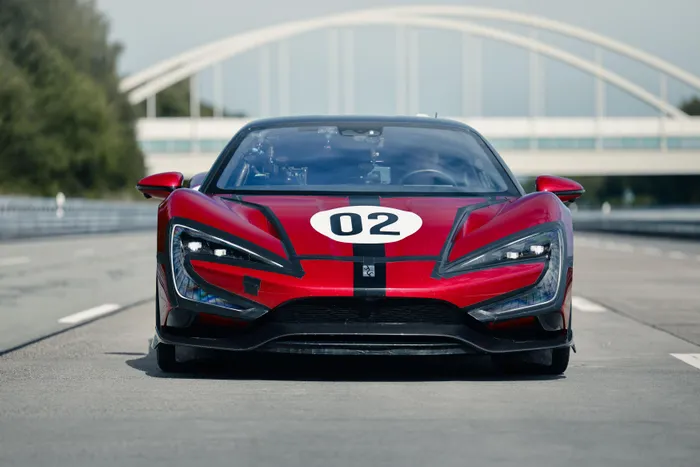
The 3000 horsepower BYD Yangwang U9 Xtreme 02 has just entered elite territory with an official Nürburgring Nordschleife lap time of 6 minutes 59.157 seconds, surpassing the Xiaomi SU7 Ultra’s 7:04.957 production EV record. That makes it one of the fastest electric supercars to ever take on the Green Hell.

Equipped with four high-output electric motors and advanced aerodynamics, the U9 Xtreme 02 is more than just raw power. Its precise engineering, stability at extreme speeds, and ability to handle the twists and turns of the Nürburgring prove that electric performance has reached a new level.

This achievement comes right after the U9 set a breathtaking top speed of 496.22 km/h, showing that BYD’s engineering is pushing boundaries in every direction.


To view this content we will need your consent to set third party cookies.
For more detailed information, see our cookies page.
 

Cars Made in China are Now Often Better Quality than Cars Made in Japan​

To view this content we will need your consent to set third party cookies.
For more detailed information, see our cookies page.
 
Yangwang Auto officially announced that the track-focused special edition of its Yangwang U9 model will be named the ‌Yangwang U9 Xtreme‌ (abbreviated as ‌U9X‌). Only ‌30 units‌ will be produced globally, and each will come with a ‌custom-built program‌ tailored to its owner.

In August this year, the car set a ‌global electric vehicle top speed record‌ in its engineering prototype form. Just one month later, the U9X pushed the boundaries further, achieving a new record-breaking top speed of ‌496.22 km/h (308.3 mph)‌.

Simultaneously, Yangwang Auto also revealed the U9X’s ‌first official lap time‌ on Germany's famed ‌Nürburgring Nordschleife circuit‌ — ‌6 minutes and 59.157 seconds‌. This achievement powerfully demonstrates the breakthrough in ‌high-speed performance and track-handling versatility‌ of Chinese new energy vehicles on the global high-performance automotive stage, showcasing the brand spirit of ‌“Beyond Extremes, Unprecedented.”

f9371b7c757d43bb8a03c9dc8076662b_wh1024x576.jpg
 
YW U9x now should measure the speed in Mach, this car can reach about 0.5 Mach.
 
I had hoped to buy BYD Atto 3 but ended up with Haval H6. Oh well! I got a Chinese vehicle in any case.
 

The world has a new fastest car: It comes from China and almost hit 500km/h​

Jason Woosey
Mon, September 22, 2025 at 1:00 AM GMT+8
a620728c9adc5640697608d859003c10874dde7e=w700

Yangwang U9 Xtreme is now the world's fastest production car.

And just like that, the world has a new fastest car and it’s not from Bugatti or that insane American outfit whose name sounds like Whisky. Planet Earth’s most brisk production vehicle now comes from China, and it’s fully electric.

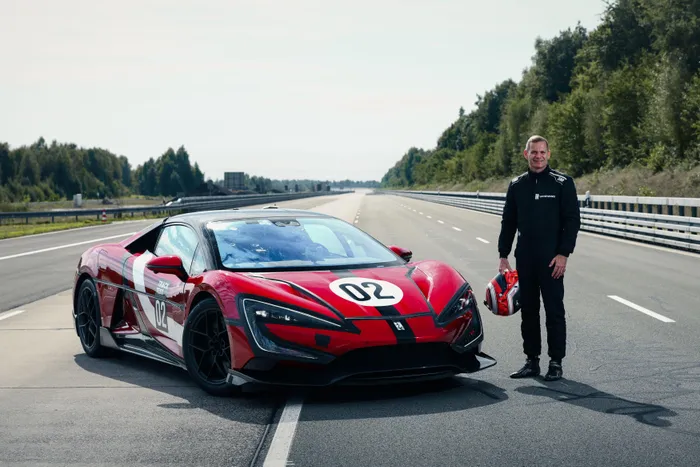
On September 14, the Yangwang U9 Xtreme hypercar hit a top speed of 496.22km/h at the ATP Automotive Testing Papenburg test track in Germany. With Marc Basseng behind the wheel, the electric hypercar narrowly ousted the Bugatti Chiron Prototype that hit 490.48km/h in 2019.

But what is the Yangwang U9 Xtreme?

Yangwang is a sub-brand of BYD, the world’s biggest electric car producer, and the U9 Xtreme (U9X) is a more extreme version of the ‘regular’ U9 hypercar. The company will be producing a limited run of just 30 vehicles.
1667960ebdca860bbf88ccf9b8bd8630ee47bb5b=w700

Driver Marc Basseng believes this feat would not be possible with a combustion engine.
Image: Supplied

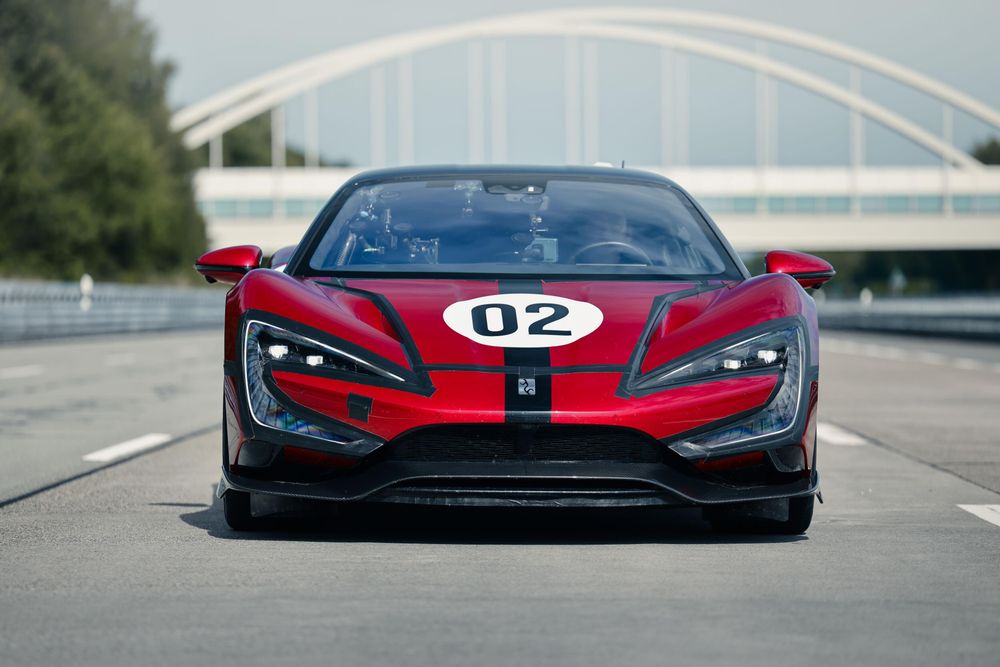
The U9X features a modified powertrain as well as revised DiSus-X suspension and semi-slick tyres.

Its electrical system has been upgraded from 800V to 1200V, while the four ultra-high-speed motors collectively produce over 2,207kW.

To give you an idea of the improvements made, the standard U9 produces 960kW and managed a top speed of ‘just’ 375km/h in 2024, also with Basseng behind the wheel. Yaqngwang has not announced acceleration times for the U9X, but for what it’s worth, the regular version sprints from 0-100km/h in 2.36 seconds.

Following the record run in the U9X, driver Basseng said:

“This record was only possible because the U9 Xtreme simply has incredible performance. Technically, something like this is not possible with a combustion engine. Thanks to the electric motor, the car is quiet, there are no load changes, and that allows me to focus even more on the track.”

BYD’s executive vice president Stella Li said the record was an incredibly proud moment for everyone in the research and development division.

“Yangwang is a brand that does not recognise the impossible, and only through this commitment to what’s coming next can you end up with a vehicle like the U9X. I extend my gratitude to the whole team, and my thanks to the driver, Marc Basseng, for his skill and technical input. It’s terrific that the fastest production car in the world is now electric.”


China will be exporting 10 million cars per year by 2030, association forecasts​

There is also still ‘vast potential’ to increase car sales in China’s less developed regions, association head says​

Electric cars made by the Chinese brand BYD are stacked ready to be loaded onto a cargo ship for export at a port in China’s eastern Jiangsu province. Photo: AFP


Published: 10:00pm, 23 Sep 2025

China’s auto industry is likely to sell more than 40 million vehicles per year over the next five years – including 10 million to the overseas market – as the sector still has “vast potential” for growth, according to an industry insider.

The estimate by Cui Dongshu, secretary general of the China Passenger Car Association (CPCA), indicates that China’s auto industry – already the world’s top exporter in volume terms – could see overseas sales nearly double by 2030.
Cui acknowledged in an article posted online on Saturday that his estimate may be more optimistic than the general consensus, but stressed that China had the ability to achieve it as there was still plenty of room for growth in both the domestic and global markets.

“There is still vast potential for market expansion in China’s less developed regions, such as mid-western districts and rural areas, where car ownership levels could gradually surpass those in metropolises like Beijing and Shanghai,” he said.

China’s vehicle ownership rate – 250 cars for every 1,000 people – remains relatively low compared with developed countries, Cui pointed out. In Europe, there were 641 vehicles in use for every 1,000 people as of 2020, while in the United States there were 860, according to data from the International Organization of Motor Vehicle Manufacturers.

The Global South will “inevitably” become a key growth market for Chinese cars, with more buyers choosing cost-effective Chinese brands rather than cheap second-hand vehicles from the US, Europe, Japan and South Korea, according to Cui.

Cui also noted that the shorter lifespan of electric vehicles – around 10 years, compared with 18 years for petrol-powered cars – was likely to boost overall demand as the adoption of electric cars continued to rise.


Car trade in reverse as Germany’s deficit with China jumps 143 per cent​

Carmakers from the EU’s biggest economy suffer decline in Chinese market while China’s models boom in Europe​

China was the largest source of foreign exhibitors at this month’s IAA Mobility trade fair in Munich, with 116 companies including EV makers BYD, Xpeng and Leapmotor, and battery giant CATL. Photo: Xinhua

Finbarr Berminghamin Brussels
Published: 5:00pm, 23 Sep 2025Updated: 5:40pm, 23 Sep 2025

Europe is buying Chinese hybrid vehicles by the shipload – imports are up more than 400 per cent this year – while Germany’s car exports to China have slumped, leaving gold as its biggest single shipment going the other way.

These are just two findings from new statistics that show how quickly the old trade model has shifted gears, while offering a stunning snapshot of the contrasting industrial fortunes of the European Union and China.

Germany – the bloc’s biggest economy and its manufacturing powerhouse – saw its trade deficit with China shoot up 142.8 per cent to US$17.4 billion in the first eight months of 2025, compared to US$7.2 billion a year earlier.

The findings, part of detailed Chinese customs data released on Saturday, will send alarm bells ringing in Berlin.

Long seen by Chinese buyers and suppliers as a symbol of Germany’s manufacturing prowess, cars remain its biggest industrial export to China, but no longer form the largest single line in the customs data.

In the period to August, saloon car shipments were overtaken by those of unwrought gold – at a time when Germany has no active mines – and medicines, an ironic development which will fuel debate that China is no longer the gold mine it once was for German carmakers.
 

Xiaomi's CEO says the company bought 3 Tesla Model Ys and ripped them apart to see what they could learn​


Xiaomi CEO Lei Jun launches the SU7 EV in Beijing on March 28

Xiaomi CEO Lei Jun said Tesla's Model Y was an "outstanding" car.

  • Xiaomi's CEO, Lei Jun, said he bought 3 Tesla Model Ys to disassemble them.
  • He said his team then studied every component carefully.
  • He said the Model Y was an "outstanding" car
 

Chinese car sales in Kazakhstan more than double in a year​

Published October 1, 2025 11:46

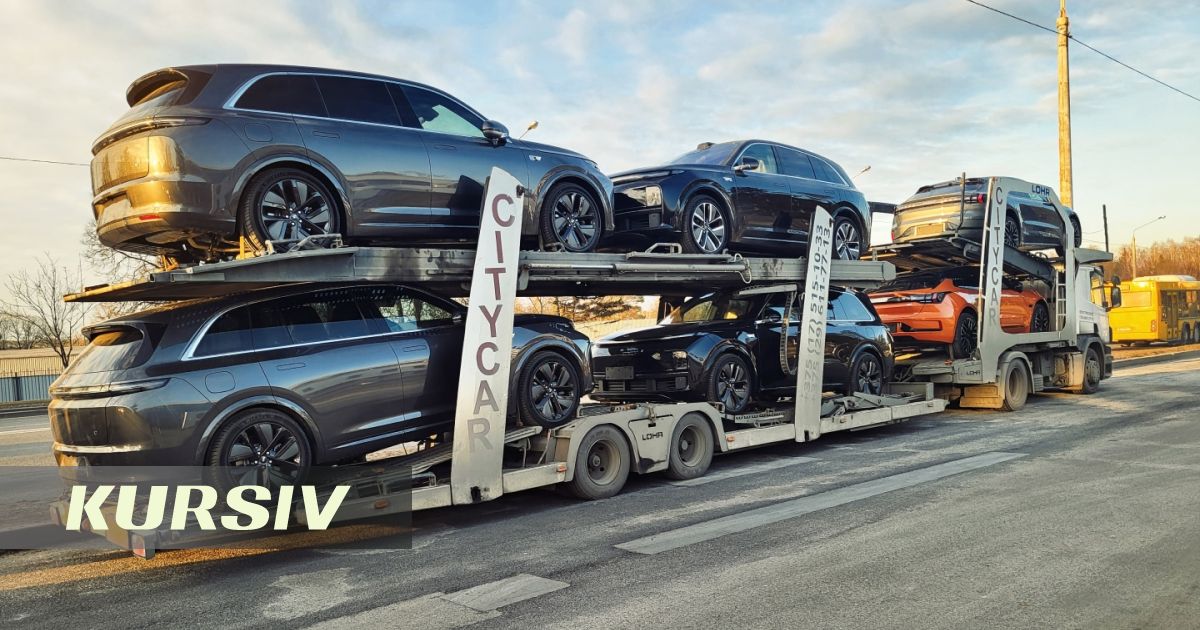
Car imports to Kazakhstan surged 59% in the first seven months of 2025, driven primarily by Chinese vehicles, which took the dominant share. Imports from China nearly tripled, reflecting a dramatic shift in sourcing, according to Finratings.kz.

More than 134,300 new and used cars were imported between January and July, a 59.4% rise from 2024, the Bureau of National Statistics reported. Notably, while imports from the U.S. declined, Chinese automakers significantly increased its shipments, signaling a shift in market dynamics.

Top car exporters to Kazakhstan (January-July 2025):
  • China: 94,606 vehicles (+247.5%)
  • U.S.: 12,891 (-29.3%)
  • Japan: 10,377 (-11.2%)
  • South Korea: 6,411 (-23.9%)
  • Russia: 5,912 (+217.9%)
  • Germany: 1,817 (+23.3%)
  • Canada: 605 (-41.6%)
  • Mexico: 358 (+90.4%)
  • Slovakia: 250 (+257.7%)
  • U.K.: 218 (+79%)
Only three vehicles were imported from Uzbekistan, up from zero the previous year.

Turning to exports, during the same period, Kazakhstan exported 683 passenger cars. The largest share went to Kyrgyzstan (240), followed by Belarus (104) and China (100).
 

What will happen with hybrid cars?​

Amid electrification, hybrid cars continue to play an important role as a transitional technology. According to Statista:

  • As of 2024, 66% of vehicles sold still use gasoline engines.
  • Hybrids represent a viable alternative for markets with limited infrastructure or consumers concerned about EV range.
This type of unit is more widely accepted in regions such as Latin America, Japan, or parts of Eastern Europe, where the transformation process will be more gradual.

This is ridiculous. Soon batteries in cars will reach well over 1000 miles fully charged.
There will be no reason to have gasoline as backup. Investing in hybrids is a waste of time.
 

BYD's quarterly car sales fall for first time since 2020, data shows​

A BYD logo is displayed on a car at a dealership in Sant Cugat del Valles

A BYD logo is displayed on a car at a dealership

BEIJING, Oct 1 (Reuters) - BYD's third-quarter sales fell 2.1% from a year earlier, according to Reuters' calculations based on a company filing released on Wednesday, the first quarterly decline for the Chinese EV and hybrid car maker in more than five years.
The Chinese market leader sold 1.106 million cars in the three months to the end of September, the company data showed, marking the first fall since the second quarter of 2020 when businesses were disrupted by the outbreak of COVID.

BYD sold 5.88% fewer cars in September than a year ago, the first monthly fall since February 2024, and the company cut its output by a further 8.47% last month, extending a trend of lower production at its mega factories.

BYD HAS CUT ITS 2025 SALES TARGET​

The slowdown adds to signs that BYD's era of record-setting expansion, fuelled by government support for electric vehicle adoption, could be drawing to a close. The company faces mounting challenges in maintaining competitiveness amid an intensifying price war in the world's largest auto market.
BYD has slashed its sales target for this year by as much as 16% to 4.6 million vehicles, Reuters reported previously. BYD's general manager of branding and public relations, Li Yunfei, confirmed the target with the South China Morning Post in a report on Monday.

Reporting by Zhang Yan and Brenda Goh
 

$74K Lotus EV Super-SUV gets 900HP— Eletre & Emeya Just Got Better​


To view this content we will need your consent to set third party cookies.
For more detailed information, see our cookies page.
 

Li Auto Launches the i6: A Super Impressive Rival to Tesla's Model Y​


To view this content we will need your consent to set third party cookies.
For more detailed information, see our cookies page.
 

Volvo's New XC70 PHEV gets 400kw Charging and 200 km range for $41,000​


To view this content we will need your consent to set third party cookies.
For more detailed information, see our cookies page.
 

Users who are viewing this thread

Pakistan Defence Latest

Latest Posts

Back
Top