Piyush Goyal Says India Will Build Own Tunnel Boring Machines, Instead Of Bowing Down To China
Goyal said India is exploring rare-earth-free motors with startups as China tightens export-licensing rules for tunnel-boring machines.
Nov 03, 2026 18:46 IST
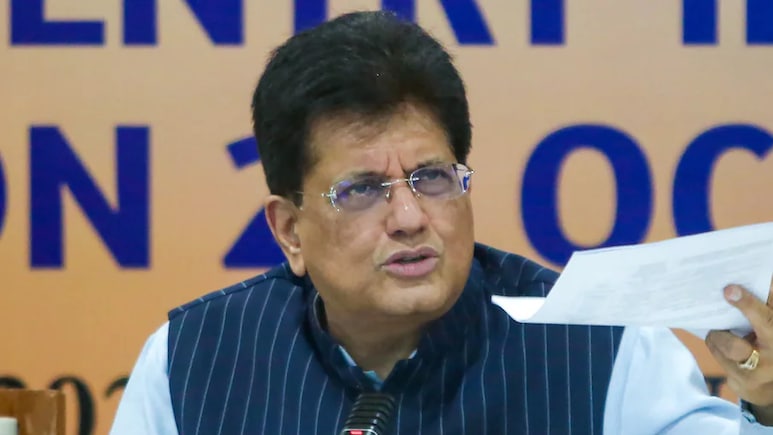
Piyush Goyal says India will build its own tunnel-boring machines if China restricts supplies.
Photo Source: NDTV
India will not go begging if China stops supplying tunnel-boring machines, Union Minister Piyush Goyal has said. Instead, the country will develop and manufacture them domestically.
Goyal was speaking at the Young Leaders Discourse Forum at Kirori Mal College, days after reports emerged that China was tightening export controls on construction equipment, including tunnel-boring machines.
“Regarding tunnel-boring machines, India's approach is different. Many other countries might bow down and enter into agreements,” Goyal said.
He made it clear that India was not looking for a confrontation. “We do not wish to spoil relations with anyone; even today, our relations with China remain good,” he said. “But if they refuse to provide tunnel-boring machines, we will develop them ourselves in India.”
Goyal also pointed to how India responded when China restricted rare earth exports. “When they restricted rare earths, we did not go around begging,” he said. The government instead met startups working in the field to explore whether motors could be developed without rare earth materials.
“Some startups in India have begun innovating and have started producing motors without rare earths that offer equal quality and efficiency,” he said.
#WATCH | Delhi | At the Young Leaders Discourse Forum at Kirori Mal College, Union Minister Piyush Goyal says, "...Regarding tunnel boring machines. India's approach is different. Many other countries might bow down and enter into agreements... We do not wish to spoil relations with anyone; even today, our relations with China remain good... But if they refuse to provide tunnel boring machines, we will develop them ourselves in India... When they restricted rare earths, we did not go around begging. We held a meeting with various startups in this field. Can we not build our own motors without relying on rare earths? After all, rare earths didn't always exist... Some startups in India have begun innovating and have started producing motors without rare earths that offer equal quality and efficiency..."
— ANI (@ANI)
November 3, 2026
China's New Export Controls
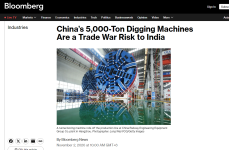
According to a Bloomberg report, China's new rules cover specialised machines used to dig tunnels for roads, railways and metro networks, along with equipment used to spray concrete at high altitudes. Certain spare parts are also covered. The new export-licensing requirements are set to come into force on November 18.
Beijing has cited the possible military as well as civilian applications of such equipment, saying that “sensitive countries and regions with disputes with China” will face tighter export rules.
Why It Matters For India
India is among China's major buyers of tunnel-boring machines. It has also been expanding roads and railway connectivity along the Himalayan border, where the two countries have a long-running territorial dispute, to facilitate faster troop movement.
China accounts for around 70% of the global market for these machines, according to figures from Chinese state media cited by Bloomberg.
India has faced supply-related delays before. In 2024, China delayed efforts by German firm Herrenknecht to sell tunnel-boring machines to India for projects including the Ahmedabad-Mumbai bullet train and the Delhi Metro.
Restrictions on spare parts could pose a bigger challenge. Ajay Srivastava, founder of the Global Trade Research Initiative, said India could move machines between priority projects if needed, but a shortage of components could affect machines already in use.
“When there is heavy wear and tear in these machines we require regular supply of parts,” he said.
Kyle Chan, a fellow at the Brookings Institution, said such moves raise the risk of dependency and push other countries to reduce their reliance on China.