
Han Patriot
Registered Member

So when they can't win, they just block and create protectionism.
Follow along with the video below to see how to install our site as a web app on your home screen.
Note: This feature may not be available in some browsers.
 abcnews.com

 www.scmp.com
 cryptobriefing.com

Lawmakers propose bill to block sale of robots built in China
A bipartisan group of lawmakers introduced legislation to block the importation of robots made in China, as experts sound the alarm over security risks from advanced robots made by U.S. rivals.www.washingtontimes.com
Lawmakers propose bill to block sale of robots built in China
By Vaughn Cockayne - The Washington Times - Thursday, June 4, 2026
A bipartisan group of lawmakers introduced legislation to block the importation of robots made in China, as experts sound the alarm over security risks from advanced robots made by U.S. rivals.
The Guarding the U.S. Against Adversarial Robotics Dominance (GUARD) Act would require national security agencies to begin a review process for any humanoid and quadruped robots made by China or other countries.
The legislation was introduced on Wednesday by Republican Reps. John Moolenaar of Michigan and Jay Obernolte of California and Democratic Rep. Jennifer McClellan of Virginia.
Last year, Mr. Moolenaar and every other member of the U.S. House Select Committee on China sent a letter to the Trump administration demanding that Unitree be added to the Pentagon’s 1260H Chinese military companies list, the Department of Commerce Bureau of Industry and Security (BIS) Entity List and the FCC’s Covered List to better reflect its potential security risks to U.S. companies.
The legislation comes as U.S. robotics manufacturers face an uphill battle in competing with Chinese companies. Beijing currently controls roughly 89% of the world’s critical minerals used in the production of advanced robots, meaning U.S. firms heavily rely on Chinese supply chains for their manufacturing needs.
“The GUARD Act is a commonsense step towards protecting our national security, supporting American robotics companies, and ensuring the United States leads in the next generation of trusted robotics technology,” Mr. Obernolte wrote in the release.
Published Mon, Jun 1 20261:00 AM EDTUpdated Mon, Jun 1 20261:45 AM EDT
Nvidia picks Unitree for humanoid robot platform as Chinese startup eyes IPO
The U.S. chipmaker's first publicly available humanoid robotics system will use humanoids from Chinese startup Unitree.www.cnbc.com
Nvidia is working with Chinese startup Unitree for a research-focused humanoid robotics system
Nvidia has selected Chinese humanoid robot maker Unitree for the first robotics system the U.S. chipmaker is selling to researchers from Stanford to ETH Zurich, the company announced Monday.
The system combines Unitree’s nearly 6-foot-tall H2 humanoid robot with Nvidia’s Jetson Thor hardware, which includes the company’s advanced Blackwell GPU for on-device artificial intelligence capabilities.
Now hiring: Nvidia’s robotics team ramps up its China talent hunt
The US chip giant says it is recruiting for more than a dozen roles as it looks to move robots from research labs to real-world deployment.
Nvidia ramps up hiring for China robotics team, adding 12+ roles
Nvidia is hiring 12+ robotics and AI roles in China, partnering with Unitree Robotics, and expanding its workforce despite US-China export control tensions.
The chipmaker is doubling down on robotics and AI talent in China despite ongoing US export tensions
Nvidia ramps up hiring for China robotics team
Published: 9:30pm, 30 Jun 2026
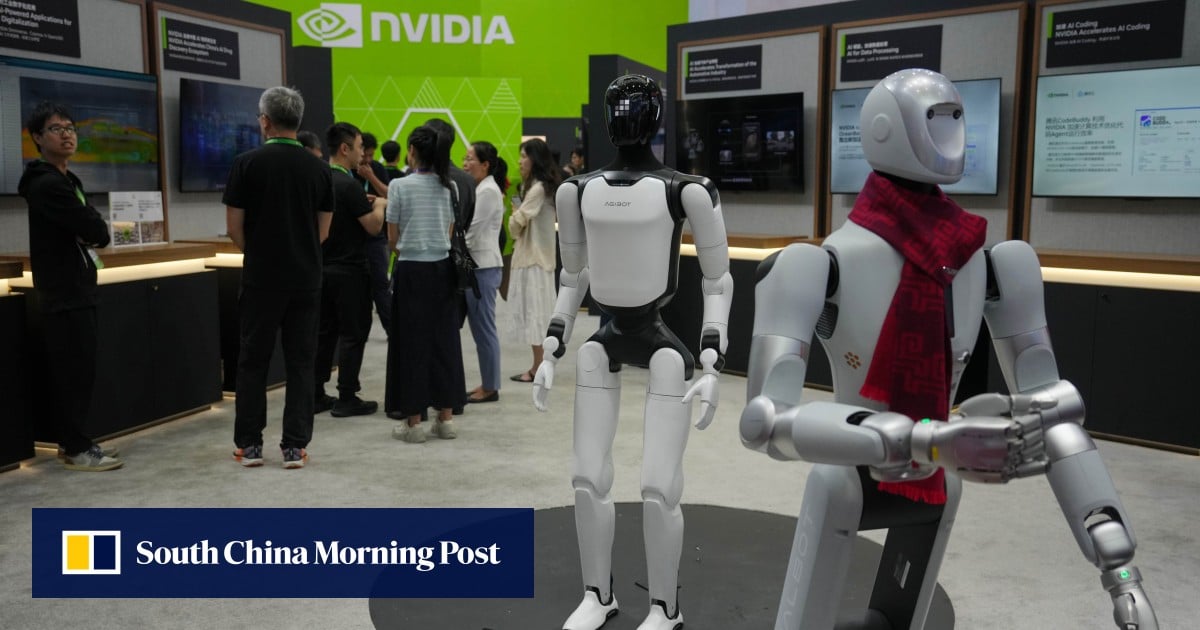
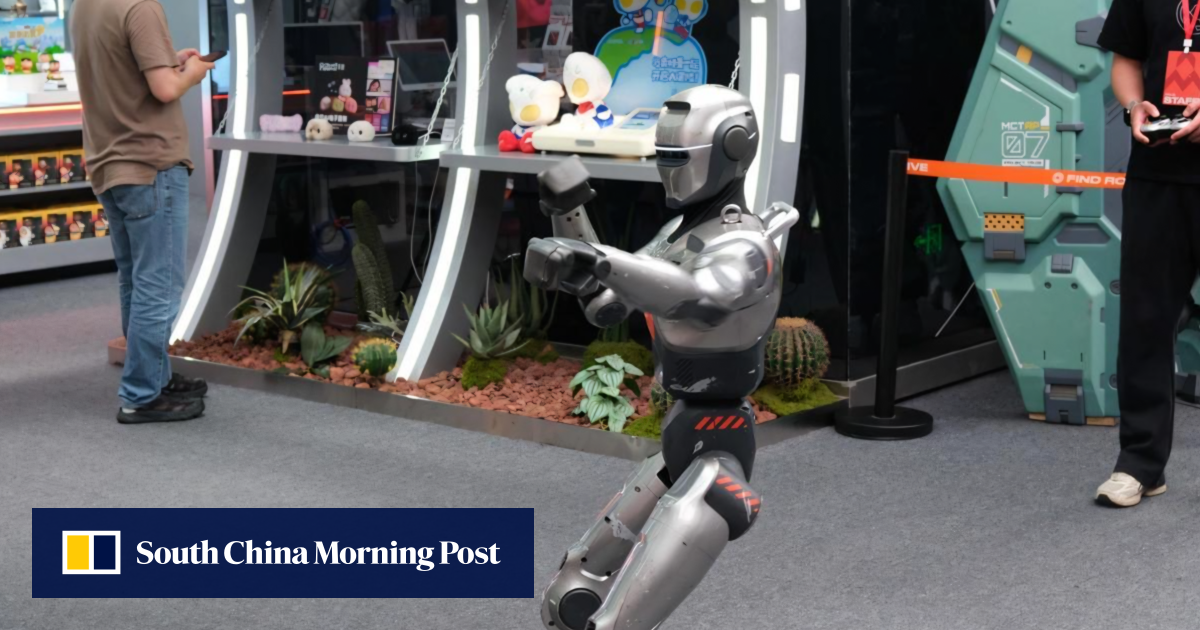
US chip giant Nvidia is ramping up a talent drive for its robotics team in China, a market whose vendors account for the lion’s share of global shipments.
The Silicon Valley firm is recruiting for more than a dozen roles across Beijing, Shanghai and Shenzhen, according to a post on its official WeChat account on Monday. The positions span four key domains: embodied intelligence, simulation, implementation and solutions.
Nvidia said its robotics team planned to build a “leading robotics platform and ecosystem to help developers and companies create autonomous machines”, with the aim of accelerating the journey of robots from research labs into real-world deployment across various business scenarios.
 www.scmp.com
 www.scmp.com

 www.foxbusiness.com
So when they can't win, they just block and create protectionism.
Lawmakers propose bill to block sale of robots built in China
A bipartisan group of lawmakers introduced legislation to block the importation of robots made in China, as experts sound the alarm over security risks from advanced robots made by U.S. rivals.Lawmakers propose bill to block sale of robots built in China
By Vaughn Cockayne - The Washington Times - Thursday, June 4, 2026
A bipartisan group of lawmakers introduced legislation to block the importation of robots made in China, as experts sound the alarm over security risks from advanced robots made by U.S. rivals.
The Guarding the U.S. Against Adversarial Robotics Dominance (GUARD) Act would require national security agencies to begin a review process for any humanoid and quadruped robots made by China or other countries.
The legislation was introduced on Wednesday by Republican Reps. John Moolenaar of Michigan and Jay Obernolte of California and Democratic Rep. Jennifer McClellan of Virginia.
Last year, Mr. Moolenaar and every other member of the U.S. House Select Committee on China sent a letter to the Trump administration demanding that Unitree be added to the Pentagon’s 1260H Chinese military companies list, the Department of Commerce Bureau of Industry and Security (BIS) Entity List and the FCC’s Covered List to better reflect its potential security risks to U.S. companies.
The legislation comes as U.S. robotics manufacturers face an uphill battle in competing with Chinese companies. Beijing currently controls roughly 89% of the world’s critical minerals used in the production of advanced robots, meaning U.S. firms heavily rely on Chinese supply chains for their manufacturing needs.
“The GUARD Act is a commonsense step towards protecting our national security, supporting American robotics companies, and ensuring the United States leads in the next generation of trusted robotics technology,” Mr. Obernolte wrote in the release.
Published Mon, Jun 1 20261:00 AM EDTUpdated Mon, Jun 1 20261:45 AM EDTNvidia picks Unitree for humanoid robot platform as Chinese startup eyes IPO
The U.S. chipmaker's first publicly available humanoid robotics system will use humanoids from Chinese startup Unitree.
Nvidia is working with Chinese startup Unitree for a research-focused humanoid robotics system
Nvidia has selected Chinese humanoid robot maker Unitree for the first robotics system the U.S. chipmaker is selling to researchers from Stanford to ETH Zurich, the company announced Monday.
The system combines Unitree’s nearly 6-foot-tall H2 humanoid robot with Nvidia’s Jetson Thor hardware, which includes the company’s advanced Blackwell GPU for on-device artificial intelligence capabilities.


 www.scmp.com

 www.indexbox.io

 www.ksl.com


