Easing Chinese EV tariffs on the table, federal ag minister says
Premiers have called on Ottawa to lift duties as retaliatory tariffs hurt canola industry
The Canadian Press · Posted: Sep 09, 2025 3:46 PM EDT | Last Updated: 10 hours ago
Any decision on easing tariffs on electric vehicles from China would have to take into consideration impacts on other sectors, federal Agriculture Minister Heath MacDonald said in Winnipeg Tuesday.
Canada, following the lead of the United States,
slapped a 100 per cent tariff on Chinese electric vehicles last year and committed to a review within 12 months.
China later
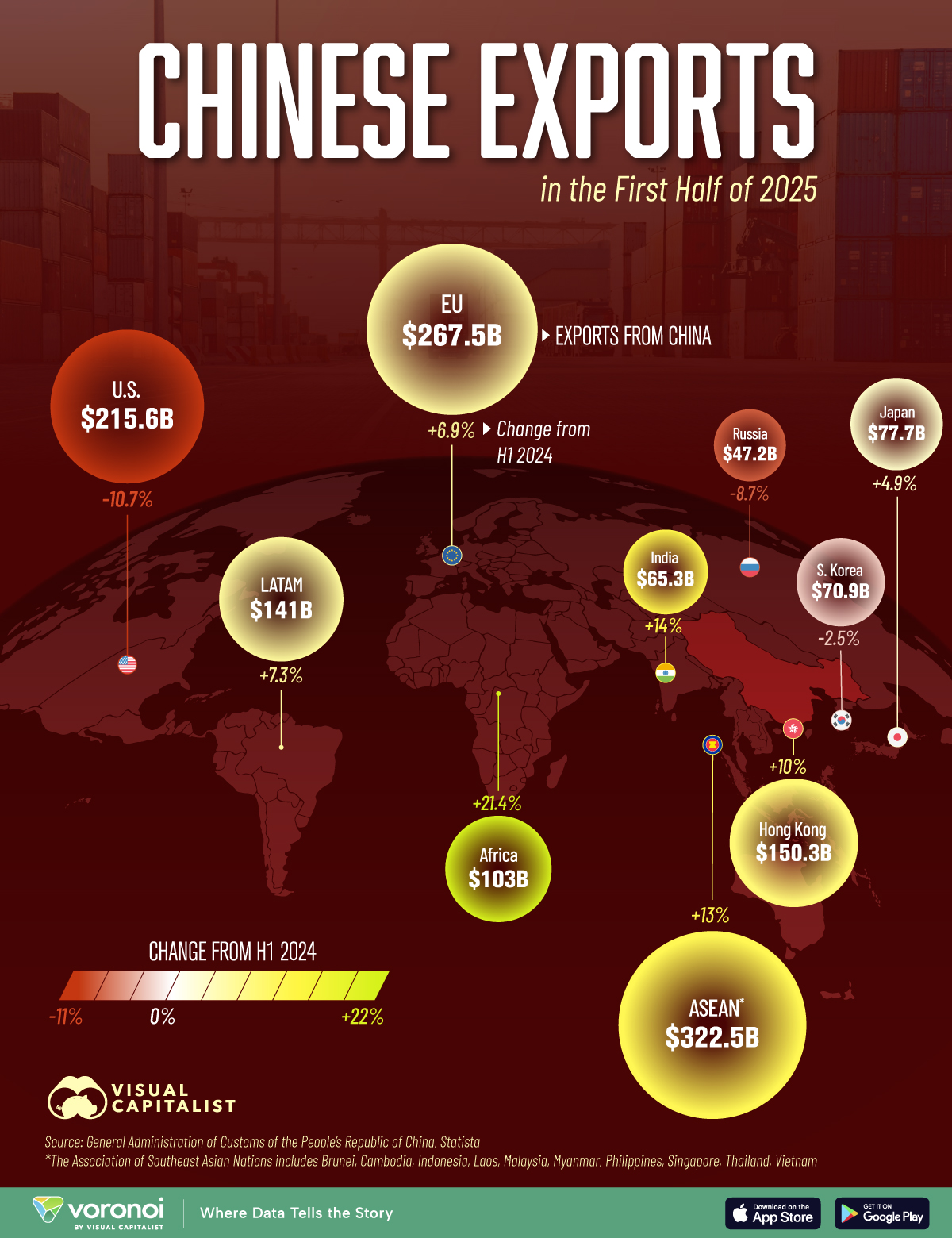
imposed tariffs on Canadian canola, in what was widely seen as a retaliatory move that has hurt Canadian producers.
Saskatchewan Premier Scott Moe, who is currently in China, and Alberta Premier Danielle Smith have called on Ottawa to lift its tariffs.
When asked whether Canada might do so, MacDonald said it's "certainly something that we're looking at" but cautioned that other trade concerns are being kept in mind. MacDonald didn't specifically mention the United States, which is also a big importer of Canadian canola and was the first to slap a tariff on Chinese EVs.
"Every decision that we make as a federal government, we want to ensure that we're not jeopardizing a situation that could be ever broader," MacDonald told reporters at the end of a meeting with his provincial and territorial counterparts.
"And not knowing the ... ask of the Chinese government specifically at this point in time, to speculate on any decisions that we make, and to put that speculation into possible jeopardy of another industry or sector, would be inappropriate."
Manitoba Agriculture Minister Ron Kostyshyn said all provinces should be consulted on any possible change to the EV tariffs.
MacDonald said he hadn't yet been briefed on the Canadian delegation to China. Kody Blois, parliamentary secretary to the prime minister, joined Moe on the trade trip.
As part of the meeting in the Manitoba capital, the federal and provincial ministers toured farms and heard from producers who said the tariffs on their canola are hurting.
The canola industry represents 200,000 jobs and $43 billion for the economy, the Canadian Chamber of Commerce has said.
Last Friday, Prime Minister Mark Carney announced a series of trade-related measures, including a $370-million production incentive for the canola sector to help soften the blow of the Chinese tariffs.
The Canadian Canola Growers Association said the package doesn't go far enough and doesn't recognize the tariffs' effects on exporters and processors.
MacDonald said Tuesday that everyone's main goal is to reopen the Chinese market, and he repeated assurances from Carney that more help could be coming in the meantime.
"We said that it wasn't the end," MacDonald said.
If Canadians were in the driver’s seat, tariffs imposed by Ottawa on Chinese electric vehicles (EV) would have an easier road to the Canadian market.

www.ctvnews.ca
Published: September 10, 2025 at 5:00AM EDT
If Canadians were in the driver’s seat, tariffs imposed by Ottawa on Chinese electric vehicles (EV) would have an easier road to the Canadian market.
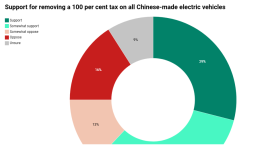
At least that’s according to a Nanos Research survey with CTV News, which found 62 per cent of respondents either support or somewhat support removing a 100 per cent tax on all Chinese-made EVs, in the hopes that China may remove tariffs against Canadian crops like Canola.
Agriculture Minister Heath MacDonald said Tuesday a decision to scrap or ease these tariffs is under review, but would include consideration of the impacts on other sectors, and that China had not yet communicated what exactly it wants.
“The prime minister did say there is an EV review. We will see where that leads … the discussions are ongoing,” said Macdonald. “We are in a fragile position, but we are here to support the farmer first and foremost, and if that decision has to be made, then that decision has to be made.”
Canada imposed the tariffs in October 2024, with the government saying at the time it was protecting local manufacturers from China’s unfair trade practices. But since then, the EV market has hit a series of bumps in the road.
Statistics Canada released new numbers Tuesday that show sales of fully electric vehicles dropped 39.2 per cent, while sales of plug-in hybrids have gone down 2.2 per cent. New registrations for hybrid electric vehicles, however, increased 60.7 per cent.
Statistics Canada pointed to new zero-emission vehicle registrations having continued a downward trend, as incentive programs in several parts of the country had dried up.
Last week, Prime Minister Mark Carney announced a pause in the federal government’s EV target of 20 per cent of light-duty vehicles sales to be zero-emission by 2026.
Simon Fraser University professor Jonn Axsen says in the long term, Canada is heading towards electric mobility and that dips in the market reflect normal variations in a transition. He also says a strategy to boost sales is likely to include incentives, mandates and a more open market.


 time.com
 newrepublic.com


 www.visualcapitalist.com

 www.independent.co.uk

 www.ft.com


 www.rferl.org